
2つの提案が同じカバーを見積もっていても、材料、二次加工、検証範囲が異なる場合があります。射出成形と圧縮成形の比較は、材料システムと完成部品の要件が定義されて初めて有用になります。これらのプロセスは材料を金型に導入する方法が異なりますが、その違いだけではコスト、精度、適合性を決定できません。価格を比較する前に、各ルートが実際に何を提供しなければならないかを明確にしてください。.
熱可塑性樹脂の筐体、シリコーンシール、強化熱硬化性部品は互換性のある例ではありません。それらの材料調製、成形、冷却または硬化、および検証は大きく異なる場合があります。このガイドでは、購入者が真のプロセス選択と材料または製品の再設計をどのように区別できるかを説明します。ここで論じるすべてのルートが同じ工場から提供されるサービスであることを意味するものではありません。.
まず、材料が同じままであるかどうかを確認する
指定されたグレード、その供給形態、関連する充填材、および必要な完成部品特性を記録します。材料ファミリーは完全なプロセス仕様ではありません。同じファミリーには、異なる流動挙動や加工ルート向けに開発されたグレードが含まれる場合があり、一見類似した2つのコンパウンドが実際の部品で異なる特性を生み出すことがあります。.
熱可塑性樹脂の射出成形では、通常、適切な樹脂を溶融し、閉じたキャビティを充填し、離型前に熱を除去します。一方、熱硬化性コンパウンドは、その硬化挙動に適したプロセスが必要です。圧縮プロセスは異なる材料システムやチャージ形態に対応できるため、「圧縮成形」を1つのレシピとして扱ったり、シリコーン製造の同義語として扱ったりすべきではありません。.
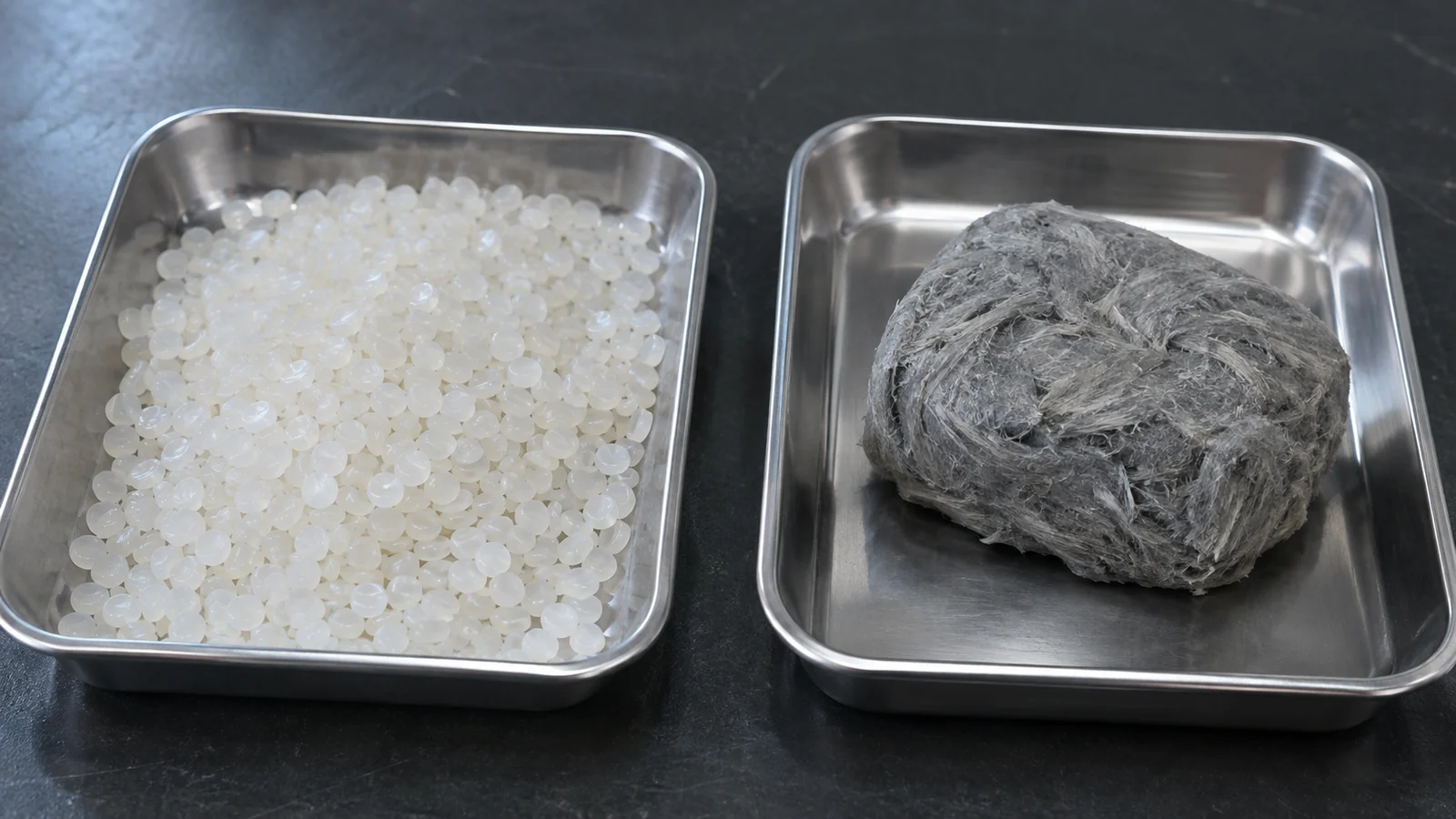
比較が熱可塑性樹脂から強化熱硬化性樹脂に変わる場合は、材料とプロセスの代替案として位置づけてください。衝撃、剛性、温度曝露、耐薬品性、外観、接合、および必要なコンプライアンス証拠を再確認してください。見積もられた成形価格が低いだけでは、これらの変更を承認することはできません。 材料選定ガイド は、要件と証拠のレビューを整理する方法を提供します。.
材料が金型に入るときに何が変わるのか?
In conventional injection molding, the material travels through a delivery path and gate into the cavity. That path creates questions about flow distance, pressure, local shear, meeting flow fronts, and gate location. The proposed tool must support filling, temperature control, release, and the required product surfaces.
In compression molding, a defined charge is placed into an open or partially open tool and shaped as the tool closes under a controlled process. Charge quantity, placement, material behavior, tool closure, and venting therefore become important inputs. The detailed sequence depends on the actual material system and equipment, not on a single generic diagram.
Neither route removes the need for a tooling and validation plan. Injection does not guarantee a mark-free part, and compression does not guarantee negligible scrap or simpler inspection. Identify the marks, flash, trimming, and handling that the proposed process may leave on the finished component. Compare the complete route needed to meet acceptance, not an idealized process with its difficult operations omitted.
各ルートが実際に提供しなければならない形状を比較する
Use the same functional drawing as the starting point, then mark any geometry that must change. Mounting features, deep returns, internal details, thin regions, and critical surfaces can impose different demands on the proposed routes. Avoid declaring that one process always makes complex parts and the other always makes simple ones; the material, tooling architecture, and feature determine feasibility.
For a hypothetical electrical cover, an injection concept might integrate mounting posts and a local latch. A compression alternative might use a different compound or arrangement. These are illustrative concepts, not a customer case. If the alternative requires a separate bracket, additional machining, or another fastening method, include those items in the comparison and verify the assembled function.
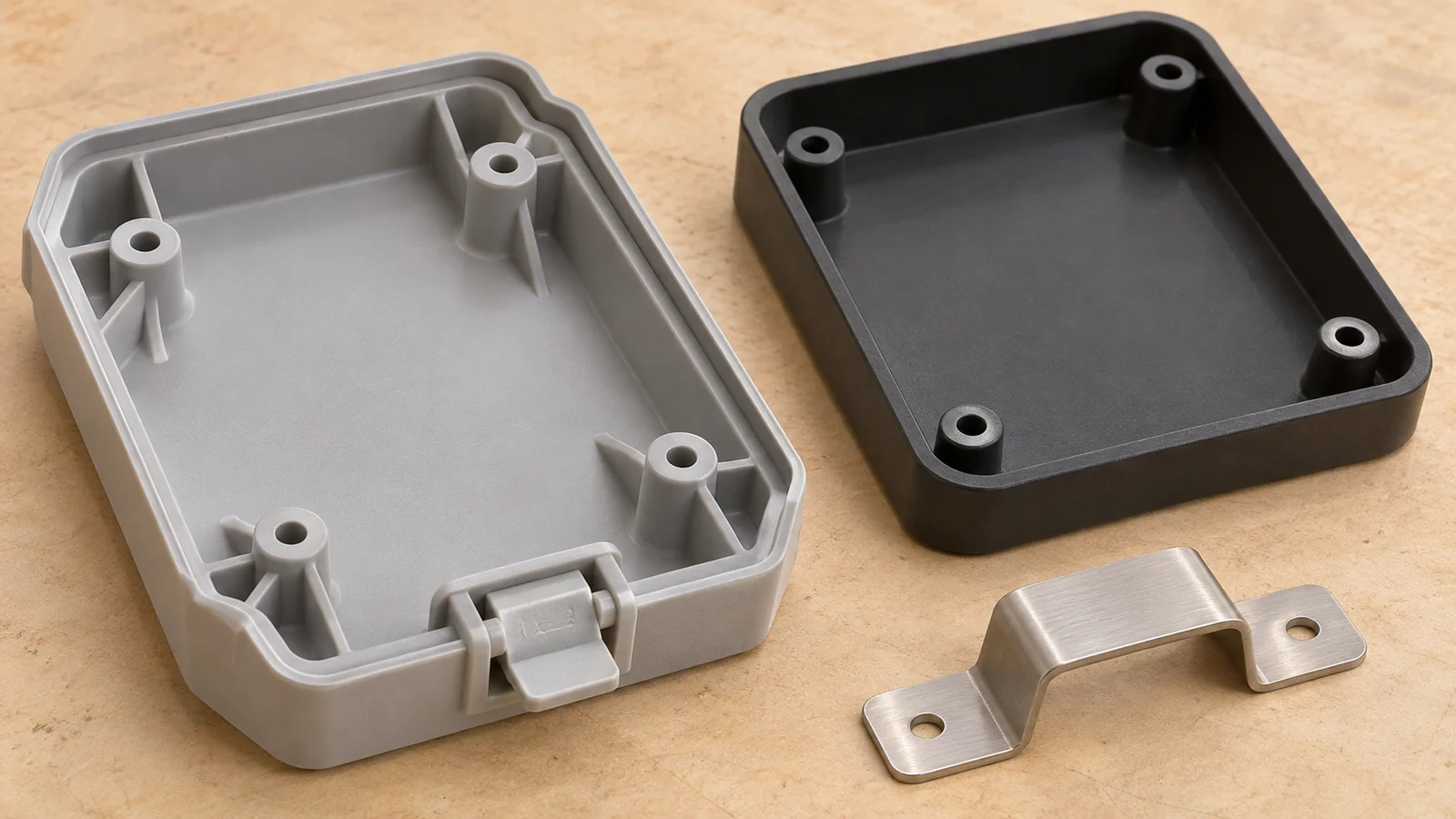
Within プラスチック射出成形, the relevant question is whether the selected resin, tool concept, and process can deliver the specified features consistently. An alternative route should be asked the same functional question. Do not compare one as-molded component against another route’s fully finished and inspected assembly without accounting for the difference.
通常の比較表を崩す2つの例外
Compression is not always a slow, manually loaded low-volume route
That description can fit particular operations, but not the entire process family. SACMI describes continuous compression molding for small closures and compares it with injection in that specific application. Its product scope matters: conclusions about flat-top caps and dedicated rotary systems cannot be transferred directly to a large instrument cover.
の SACMI closure comparison is useful precisely because it identifies its boundary. Ask a supplier to name the actual loading, forming, and removal arrangement before accepting claims about labor or throughput. A process label is not enough to calculate the economics of a different part.
Injection molding is not restricted to thermoplastics
Specialized injection processes also handle suitable elastomeric or thermosetting systems. For example, ENGEL documents thermoset injection molding, including bulk molding compounds. That establishes the existence of a processing route, not compatibility of every compound or a capability of the supplier preparing this article.
熱硬化性であるという理由だけで材料を圧縮成形専用と分類したり、通常の熱可塑性樹脂のセルがそのまま加工できると仮定したりしないでください。そのグレードが対応する成形方法と、提案された設備構成を確認してください。射出圧縮成形などの特殊なプロセスは、比較対象となる従来の成形経路とは区別して扱ってください。ハイブリッドという名称だけでは、それらの挙動が同等になるわけではありません。.
勝者表の代わりに整合した証拠シートを使用する
有用な比較では、結論を左右する前提条件を記録します。以下の表は、見積もりや技術レビューでの使用を想定しています。実際の提案情報を記入し、相違点を特定してください。空欄は未解決の疑問点であり、同じ値と仮定してよいという許可ではありません。.
| 比較項目 | 可能な限り整合させる | 変化する場合は明示的に記録する |
|---|---|---|
| 製品機能 | 荷重、環境、インターフェース、および合格基準 | それらを満たすために必要な再設計 |
| 材料 | 承認グレードと供給状態 | 新しいコンパウンド、強化材、硬化システム、または検証範囲 |
| 納入形状 | 必要な特徴と組立結果 | 追加の機械加工、ブラケット、トリム、または接合 |
| 生産基準 | 需要シナリオ、ロット前提、および検査範囲 | Cavities, loading, yield assumptions, or automation |
| Investment and change | Quoted deliverables and design revision | Tool scope, fixtures, maintenance terms, and modification work |
Separate quoted facts from estimates. Tool investment, cycle assumptions, scrap, inspection effort, and expected demand should have identifiable sources and dates. Where measured production data does not exist, use clearly labeled scenarios and test sensitivity to uncertain inputs. Do not turn an optimistic cycle or yield assumption into a promised unit price.
For an injection molding vs compression molding review, send the controlled drawing, assembly requirements, specified material, demand range, cosmetic criteria, and required evidence. Ask each proposed route to state exclusions and secondary operations. This makes a difference in scope visible before it becomes a dispute about the first sample.
未解決のリスクに応じて選択を条件付きにする
Choose the next step according to what remains uncertain. If material equivalence is unresolved, establish the required properties and evidence before buying tooling. If the material is acceptable but a particular feature is difficult, review that geometry and the tool concept. If both routes appear technically viable, compare delivered-part economics under matched assumptions.
Approval should connect the selected material and process to representative parts. Check dimensions under agreed conditions, assembled fit, appearance, and the relevant functional or environmental requirements. A good sample from an unidentified material or uncontrolled process cannot establish repeatability. Likewise, an analysis can identify risks without proving that the final tool has resolved them.
Injection molding vs compression molding should finish with a conditional decision: what the chosen route must deliver, which assumptions support it, and what evidence closes the remaining risk. There is no useful universal volume threshold or cost winner across all materials and products. The right outcome is a defensible route for the actual component.
比較後に残る疑問
Can compression and injection use the same material?
Some material systems have grades or formulations suited to more than one route, but this must be confirmed for the exact proposed compound. Even then, processing history and geometry can affect the resulting part, so route substitution still requires review.
Does a lower tooling quote make compression the economical choice?
Not by itself. Include material preparation, loading, forming, trimming, secondary work, inspection, yield assumptions, demand, and design changes. Compare what is delivered against the same product requirements.
射出圧縮成形は単に圧縮成形の別名ですか?
いいえ。射出と制御された圧縮段階を組み合わせたものであり、独自のプロセス定義が必要です。実際の構成と用途を確認せずに、その報告結果を従来の射出成形や圧縮成形に転用しないでください。.