
Flawless light transmission in optical lenses, light pipes, and sensor covers requires strict control over polymer purity and molding thermal dynamics. Microscopic airborne dust particles, surface splay marks, or internal stress-induced birefringence cause light scattering and optical distortion. Manufacturing high-transmittance polymer components relies on cleanroom processing, high-polish mold cavity steels, and precise melt temperature profiling. JUCHENG operates specialized particle-controlled manufacturing cells, producing high-clarity plastic optics strictly according to customer technical drawings.
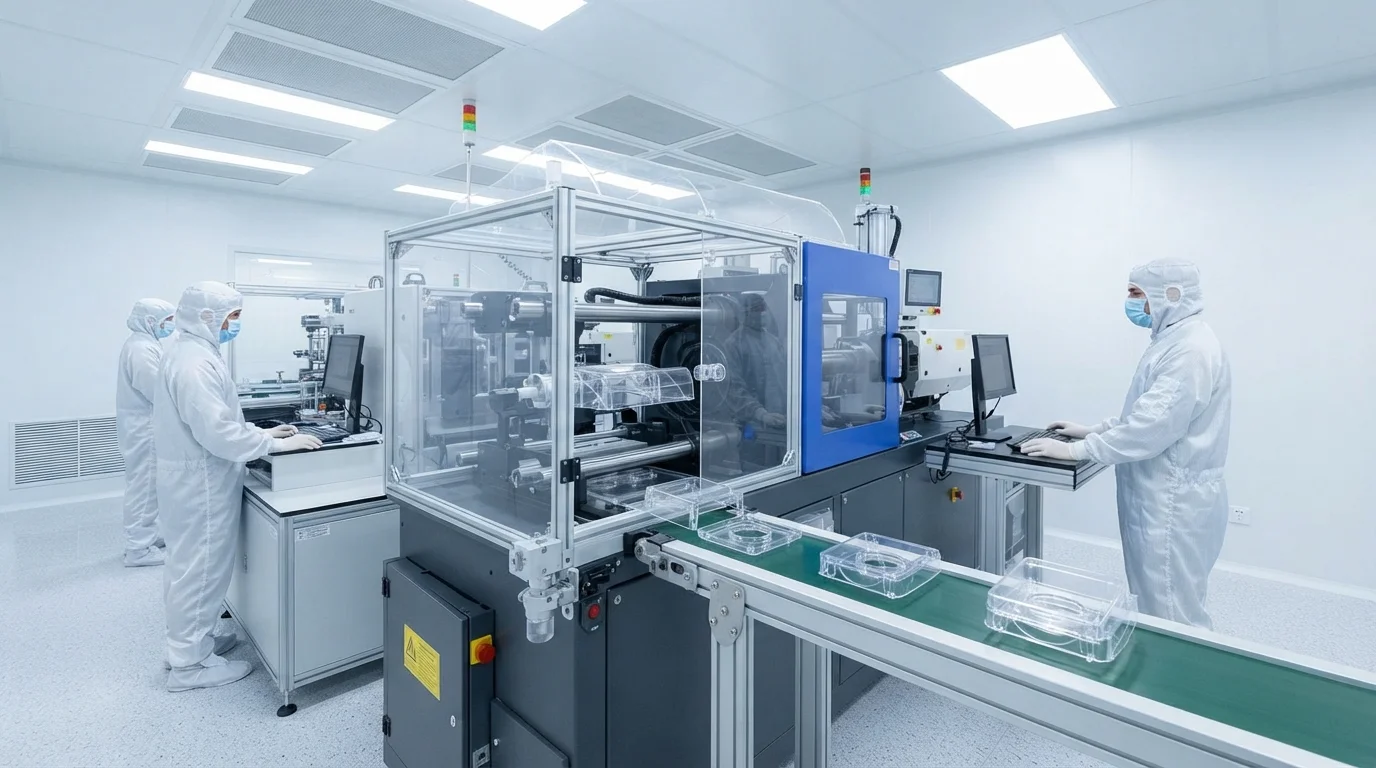
Tabla de contenido
Birefringence Control & Residual Stress Reduction in PMMA/PC
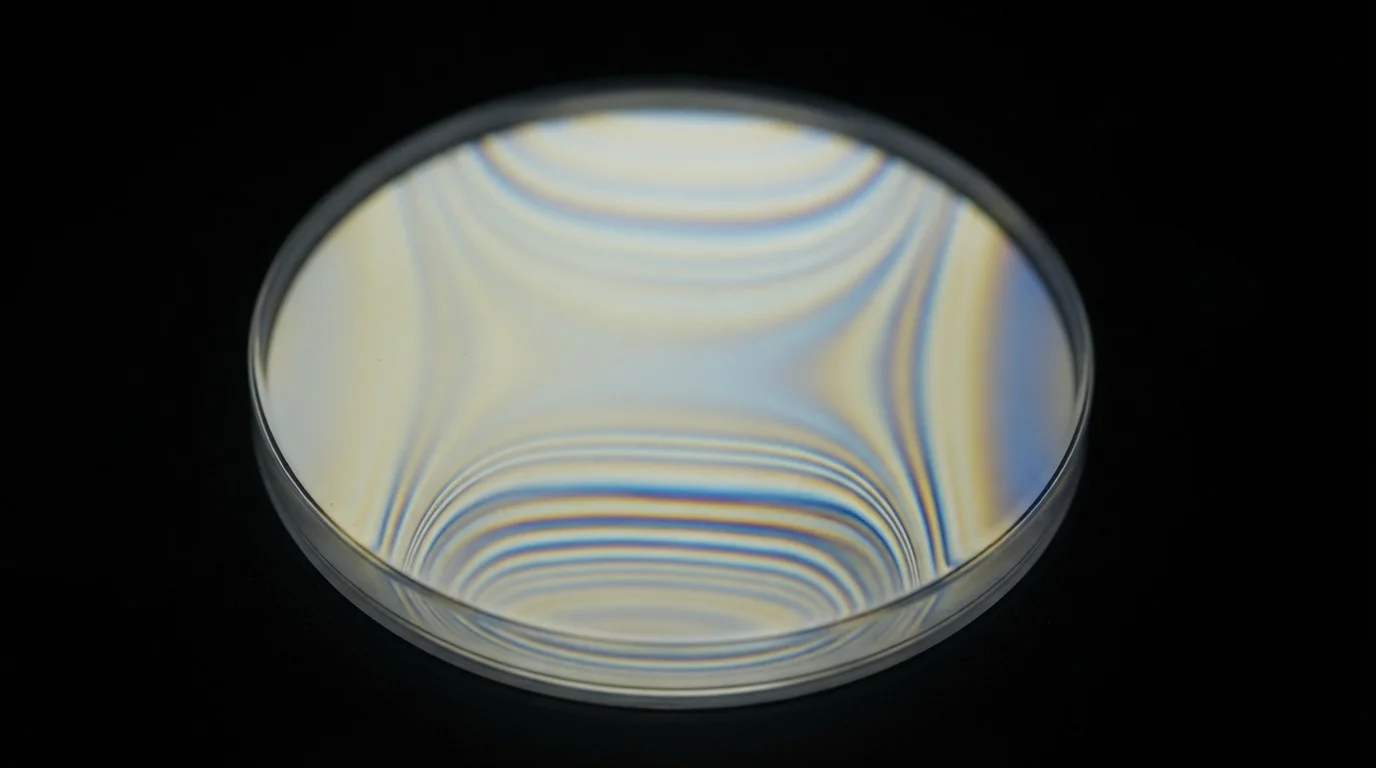
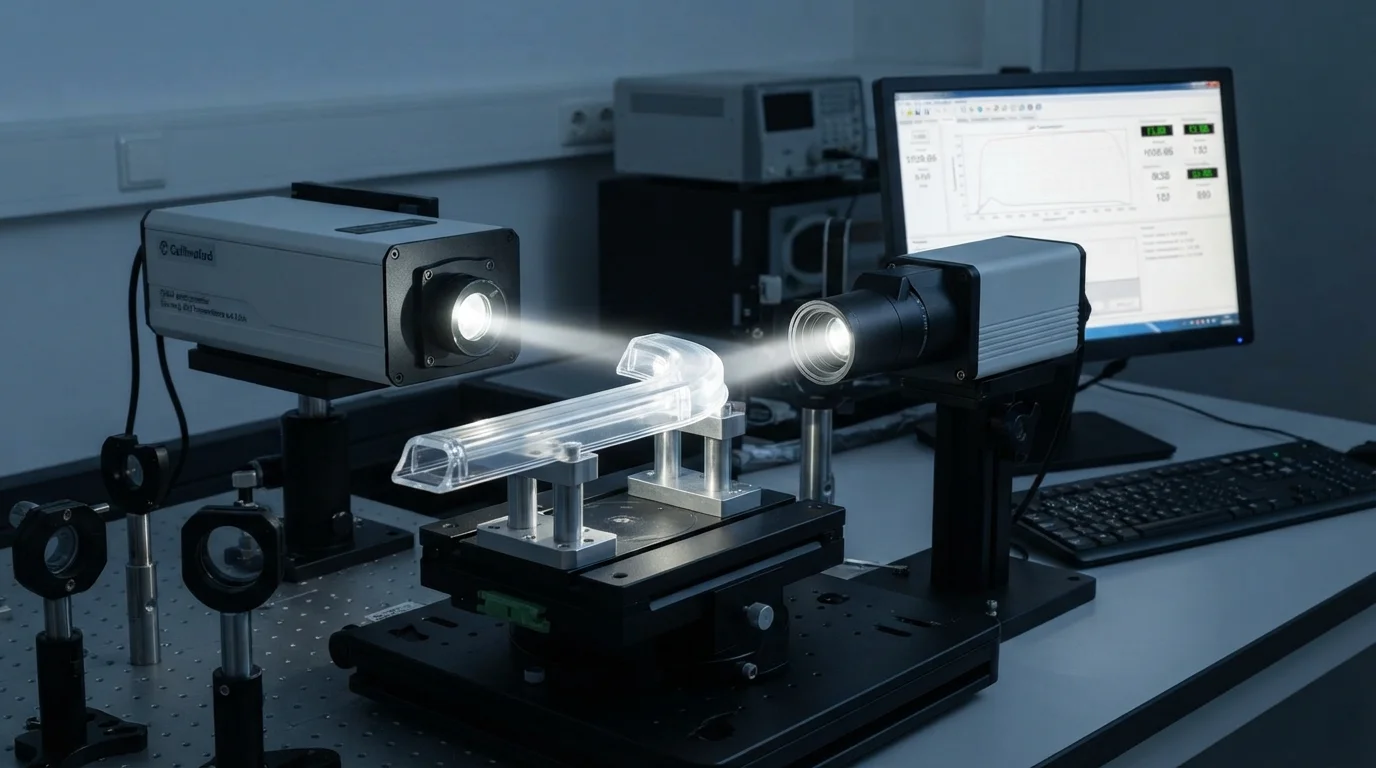
Controlling internal molecular orientation and preventing residual stresses during optical clear plastic molding requires balancing melt temperatures and mold cooling rates. High injection pressures and rapid cooling trap shear stresses inside the polymer matrix, creating localized refractive index variations known as birefringence. Polarized light passing through a stressed optical lens undergoes double refraction, compromising optical clarity. Maintaining high mold temperatures allows polymer chains to relax before solidifying, minimizing frozen-in orientation stresses. Slowing down injection velocity near the gates further reduces localized shear stresses, eliminating gate blush and optical haze.
High-Transmittance Polymer Resins (PMMA, Optical PC, COC, COP)
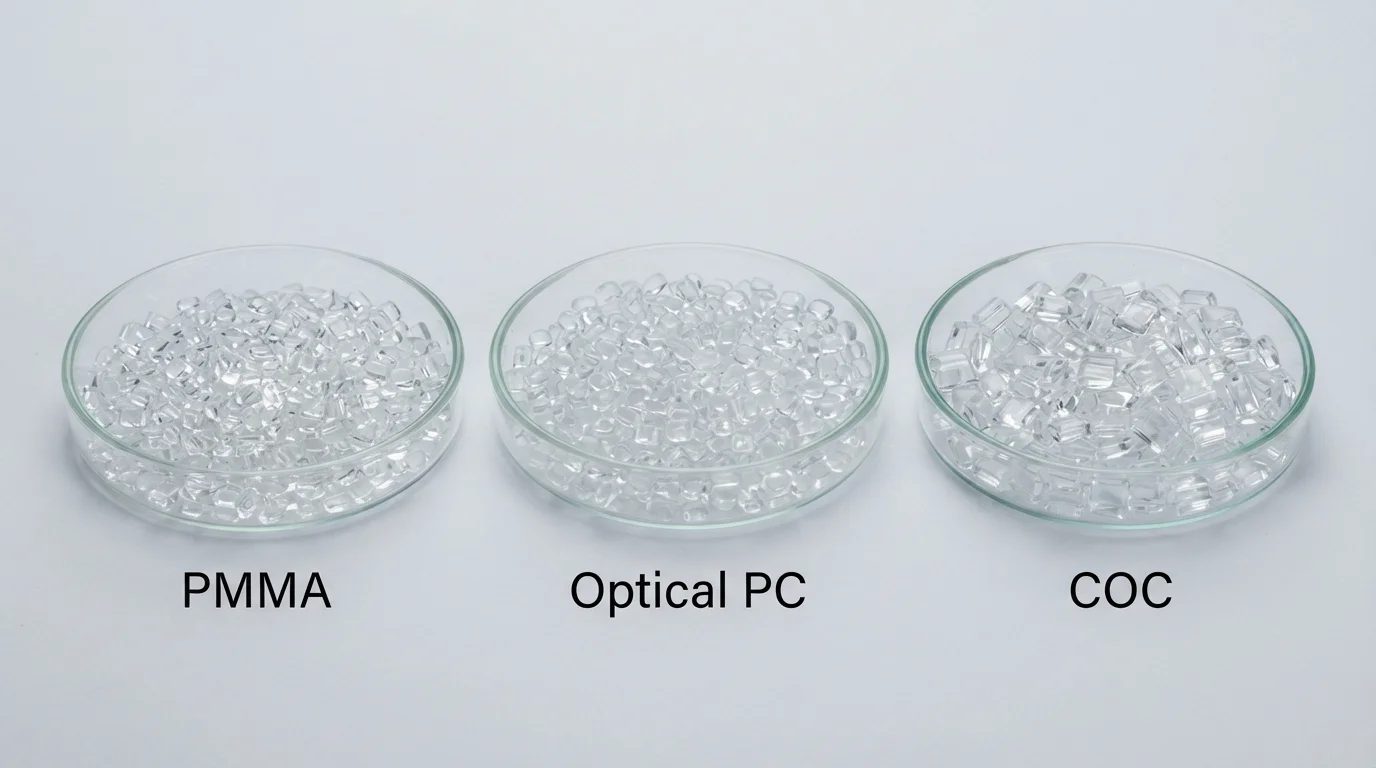
Selecting appropriate resins for optical clear plastic molding ensures maximum light transmission and thermal endurance. Polymers like PMMA (acrylic) offer over 92% luminous transmittance, making them ideal for automotive light guides and instrument covers. Optical grade policarbonato (PC) provides high impact resistance alongside 89% light transmission for protective sensor covers. Advanced diagnostic optics utilize cyclic olefin copolymer (COC) or cyclic olefin polymer (COP) due to their near-zero autofluorescence and glass-like clarity.
| Optical Polymer Resin | Luminous Transmittance (%) | Índice de refracción | Temperatura de Deflexión Térmica (°C) | Primary Optical Application |
|---|---|---|---|---|
| PMMA (Plexiglas 8N) | > 92% | 1.49 | 95°C | Automotive light guides & HUD displays |
| Optical PC (Makrolon 2407) | ~ 89% | 1.58 | 125°C | Protective sensor covers & headlamp lenses |
| COC (TOPAS 5013) / COP | > 92% | 1.53 | 130°C | Microfluidic diagnostic cuvettes & lenses |
SPI A-1 Mirror Polish & S136 Hardened Stainless Steel Molds
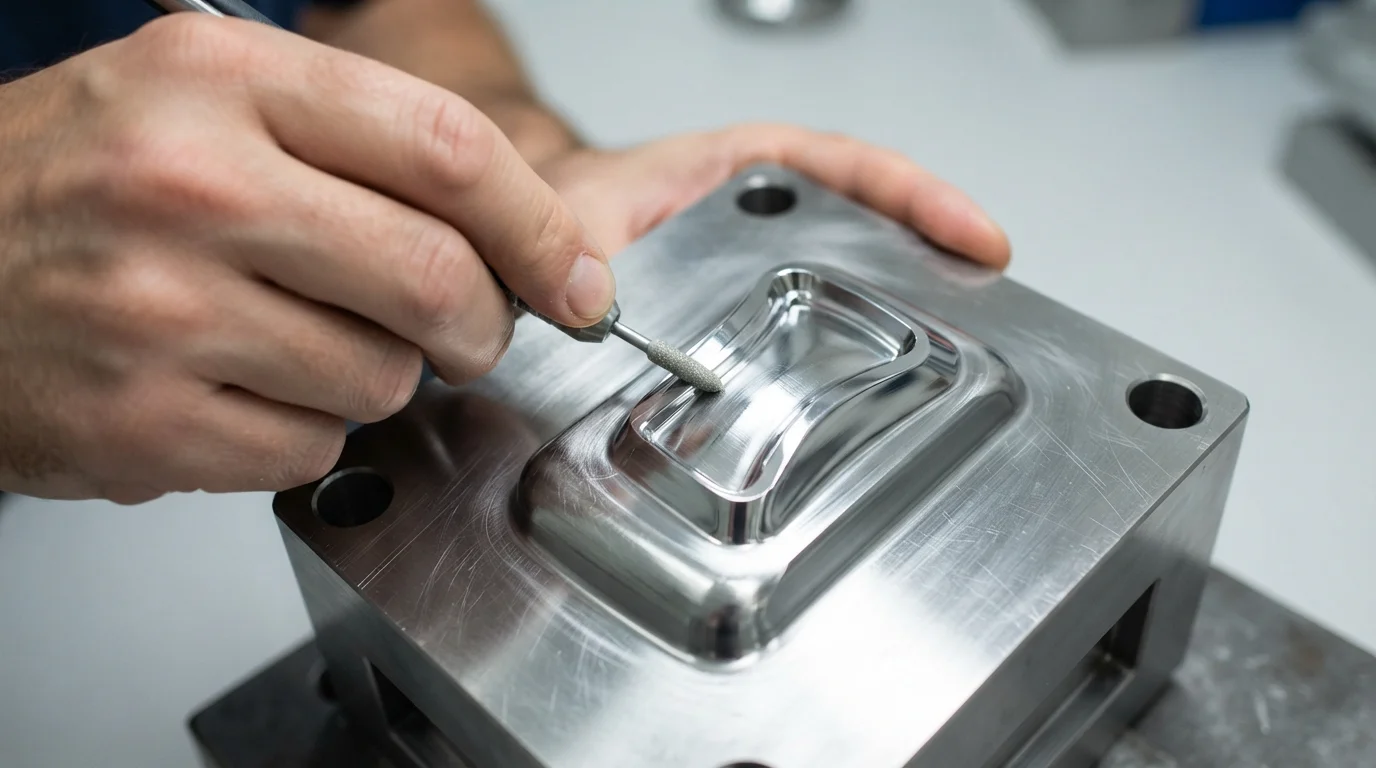
Machining high-polish cavity steels for optical clear plastic molding demands specialized toolmaking protocols. Cavity surfaces must be machined from premium acero inoxidable S136, heat-treated to HRC 48-52 to resist corrosion and microscopic scratching. Achieving an SPI A-1 mirror polish requires progressive hand-polishing using diamond paste compounds down to 3-micron particle sizes. Mirror-polished tool cavities eliminate surface micro-roughness, ensuring clean mold release without requiring liquid internal lubricants.
Optical toolmaking standards include:
- S136 stainless steel selection—Using high-chrome stainless steel prevents micro-pitting caused by ambient moisture or outgassing.
- Progressive diamond polishing—Lapping cavity surfaces with diamond paste achieves an SPI A-1 optical mirror finish.
- Electro-discharge machining optimization—Fabricating EDM electrodes with fine grain graphite ensures smooth cavity textures prior to hand polishing.
- Conformal cooling channel layout—Configuring water lines close to the optical cavity surfaces maintains uniform mold core temperatures.
Cleanroom Environment to Eliminate Dust and Black Specs
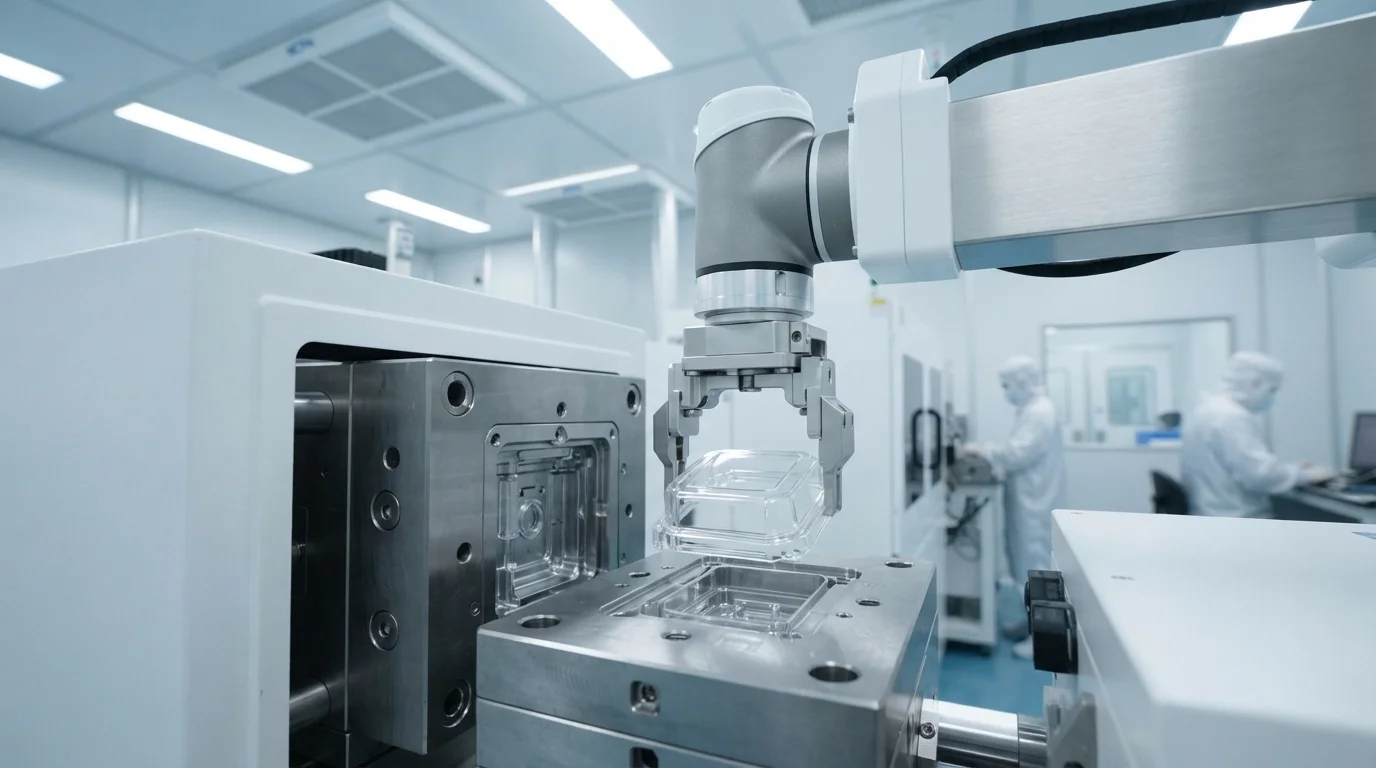
Executing optical clear plastic molding inside particle-controlled environments prevents airborne dust from embedding into hot polymer melt. Single microscopic dust particles landing on a warm lens surface create black specs, causing total optical part rejection. Operating positive-pressure cleanroom molding cells with multi-stage HEPA filtration maintains pristine air quality during plasticization and drop-packaging. Automated three-axis robots handle molded lenses directly, eliminating manual handling risks and skin oil transfers.
Preguntas frecuentes (FAQ)
What causes birefringence in optical plastic molding?
Birefringence is caused by residual molecular stress trapped inside the polymer during rapid cooling or high shear injection. Raising mold temperatures and optimizing packing pressure profiles allows polymer chains to relax, eliminating double refraction in transparent parts.
What is the difference between SPI A-1 and SPI A-2 mold finishes?
SPI A-1 polish represents the highest optical mirror finish, polished with 3-micron diamond paste on hardened steel. SPI A-2 polish uses 6-micron diamond paste, leaving micro-scratches that are unacceptable for high-transmittance optical lenses.
Why is PMMA preferred over PC for light guide applications?
PMMA provides higher light transmission (92% vs 89%) and lower optical chromatic dispersion than PC. However, PC is chosen when superior impact resistance or higher heat deflection temperatures are mandatory.