
Selecting suitable engineering polymers for multi-material encapsulation directly dictates whether a component survives dynamic mechanical loads, thermal shock, and chemical exposure. Community discussions across engineering forums frequently highlight delamination risks when combining incompatible rigid substrates with soft elastomeric overmolds. Interfacial adhesion relies on selecting chemically compatible polymer pairs that permit molecular chain interdiffusion during secondary processing. This technical guide reviews resin compatibility matrices, processing melt temperature windows, raw material yellow card verification, and application selection criteria.
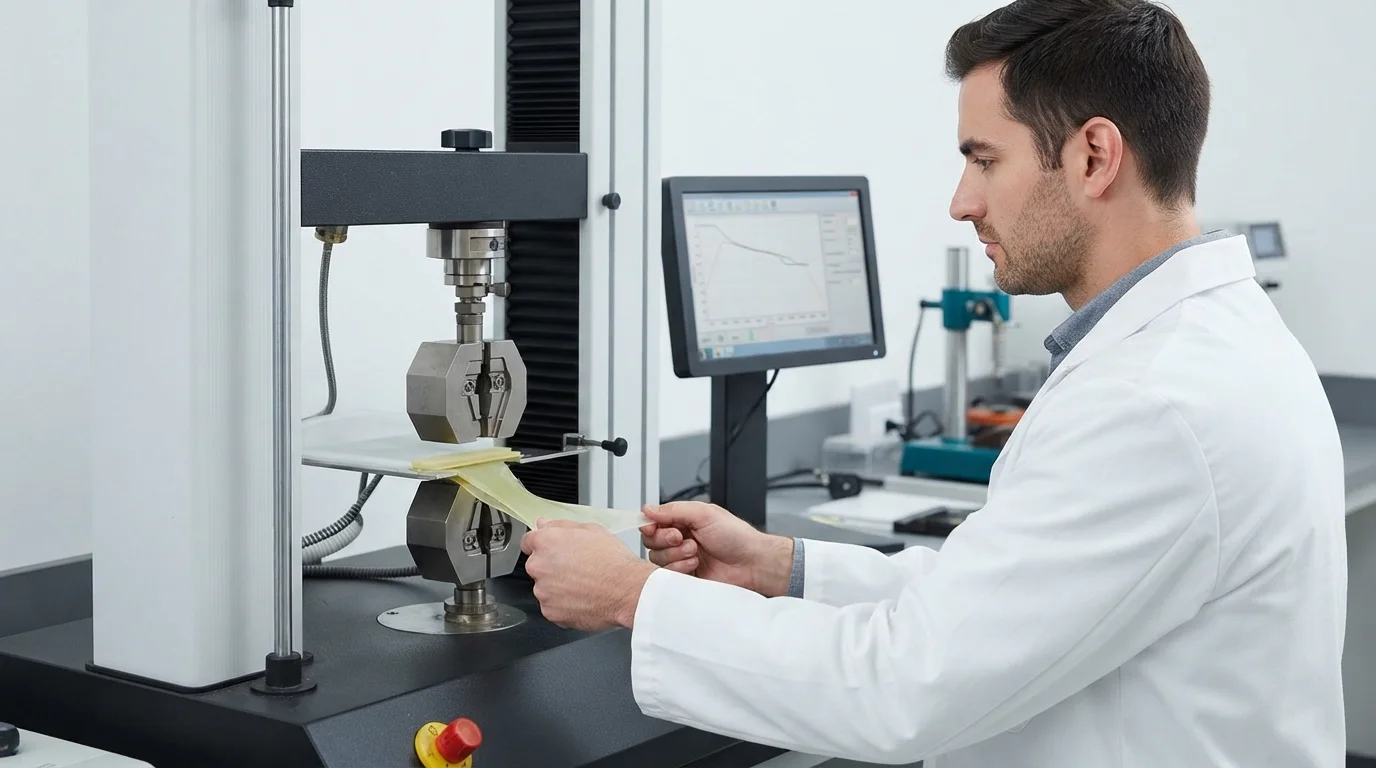
Polymer Compatibility Matrix: Rigid Substrates vs. Flexible Elastomers
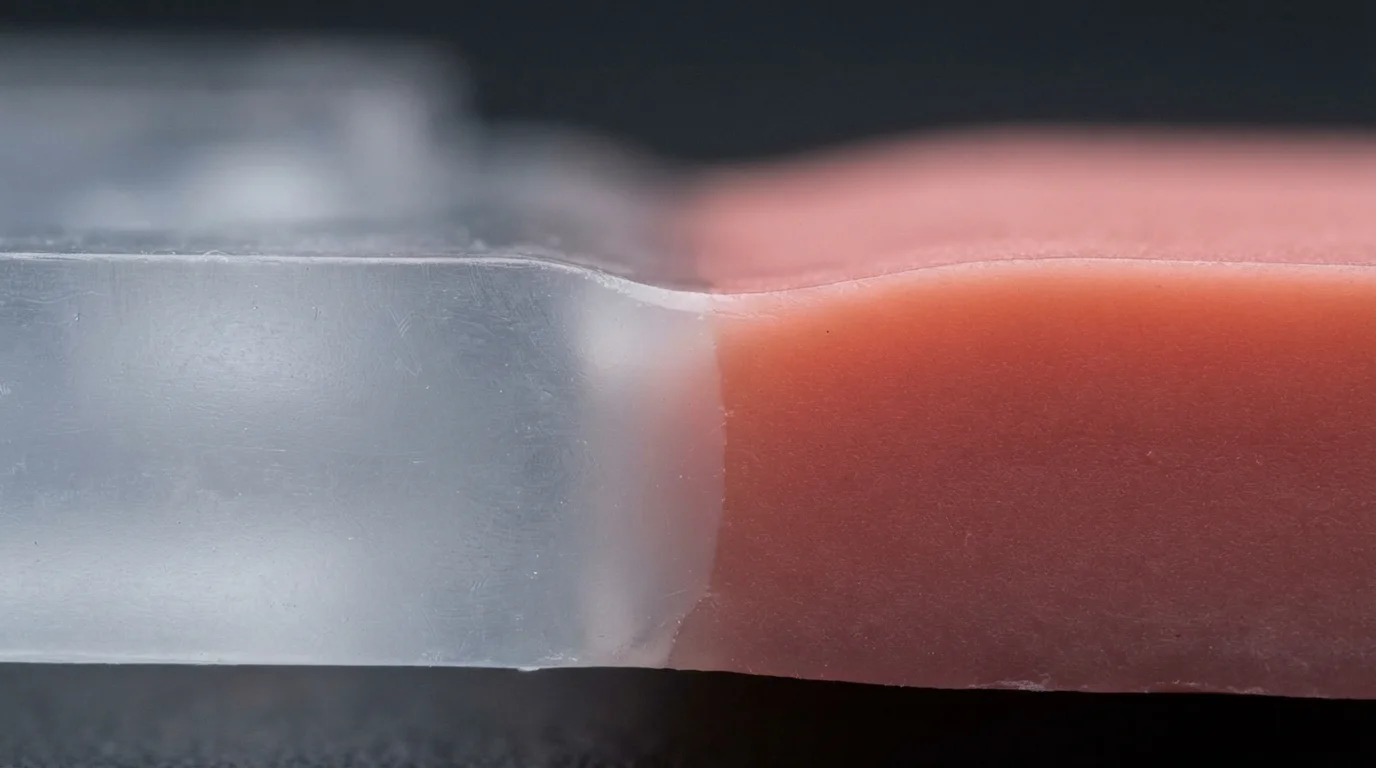
Understanding polymer physics begins with evaluating chemical affinity between rigid structural frames and flexible overmold layers. Specifying compatible overmolding materials ensures that molten elastomers melt a microscopic boundary skin on the substrate, creating a cohesive molecular weld. Rigid substrate foundations typically consist of engineering thermoplastics like ABS, polycarbonate (PC), glass-filled PA66, or PBT. Elastomeric overmold layers utilize modified compounds including TPE, TPU, and TPV to provide custom Shore hardness profiles and ergonomic grips.
Community reviews among plastics evaluators emphasize that polarity alignment between the two polymers governs bond strength. Non-polar elastomers like SEBS-based TPE bond naturally with non-polar substrates like polypropylene, whereas polar resins like nylon require adhesion-modified TPE grades. Table 1 below outlines polymer compatibility ratings for common overmolding material combinations:
| Rigid Substrate Resin | Overmold Elastomer Grade | Interfacial Bond Strength | Adhesion Mechanism | Recommended Processing Tip |
|---|---|---|---|---|
| ABS (Polylac PA-757) | SEBS-based TPE / TPU | Excellent Chemical Fusion | Molecular Chain Diffusion | Maintain 2nd shot melt temp 10-20°C below ABS Tg |
| Polycarbonate (Lexan 141R) | Ester-based TPU (Desmopan) | Outstanding High-Strength Bond | Chemical Interdiffusion | Preheat substrate mold cavity to 70°C – 90°C |
| Polyamide 66 (Zytel 70G33L) | Adhesion-Modified TPE / Santoprene | Moderate to Strong Bond | Chemical + Mechanical | Incorporate 90-degree mechanical locking dovetails |
| Polypropylene (PP-HP500N) | Olefinic TPE / TPV | Excellent Non-Polar Fusion | Co-Crystallization | Avoid polar additives; ensure clean mold shut-off lands |
Chemical Affinity & Melt Temperature Matching
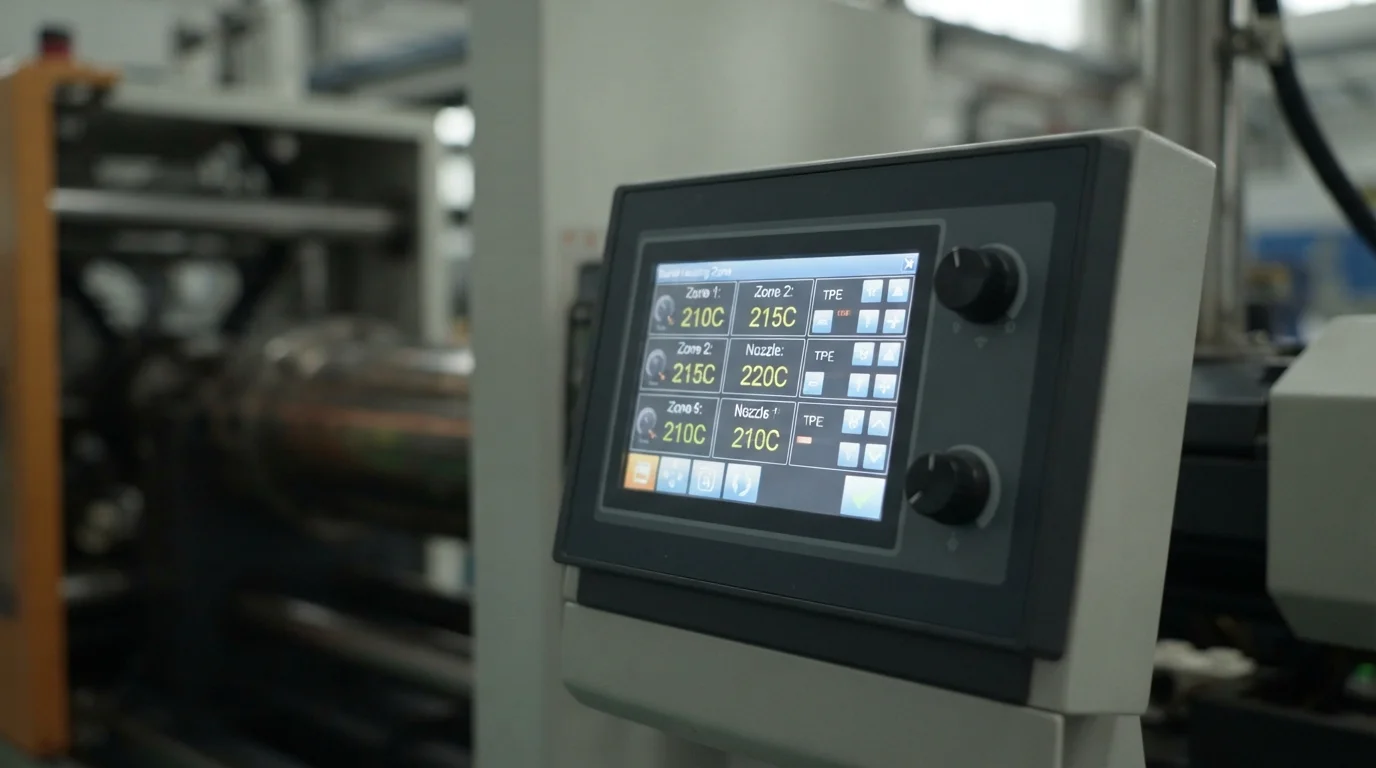
Thermal dynamics during secondary injection control the depth of interfacial chain entanglements. Second-shot melt temperatures must enter the cavity hot enough to soften the rigid substrate skin without causing wall deformation. Injecting TPU over a PC or PC/ABS substrate yields high peel strength because both polymers contain polar functional groups that interdiffuse rapidly. Maintaining proper mold wall temperatures prevents premature quenching, allowing polymer molecules sufficient time to entangle before cooling.
When chemical affinity between selected resins remains low, mold designers incorporate mechanical retention features. Mechanical undercuts, dovetail grooves, and through-holes physically lock the elastomeric layer onto the substrate frame. Combining chemical adhesion with mechanical anchoring guarantees that soft gaskets and grips resist edge peeling under cyclic shear stress during daily use.
Processing rules for maximizing overmolding adhesion include:
- Substrate cavity preheating—Warming rigid substrate tool cavities to 70°C to 90°C promotes interfacial chain mobility.
- Melt temperature alignment—Setting second-shot melt temperatures near the upper limit of the elastomer processing window maximizes skin softening.
- Mechanical undercut incorporation—Machining perimeter dovetails and mechanical through-holes prevents edge peeling under dynamic shear.
- High-speed injection velocity—Injecting soft resin rapidly delivers thermal energy to the boundary layer before premature quenching occurs.
200+ Production Resin Library & Material Yellow Card Verification

Executing reliable custom overmolding injection molding requires sourcing certified raw materials with full lot traceability. Verifying resin shipments against Underwriters Laboratories (UL) Yellow Card records confirms that flammability ratings like UL94 V-0 remain valid after multi-shot processing. Sourcing certified material lots backed by official Certificate of Analysis (COA) documents ensures zero batch-to-batch performance variations in high-reliability components.
Clinical healthcare applications process medical-grade thermoplastics meeting USP Class VI and ISO 10993 biocompatibility criteria. Biocompatible TPE and TPU formulations resist repeated autoclave steam sterilization, chemical disinfectant wipes, and skin oil exposure without degrading. Maintaining complete raw material documentation protects medical device OEMs from regulatory non-compliance during clinical audits.
Key Application Scenarios for Overmolded Polymers
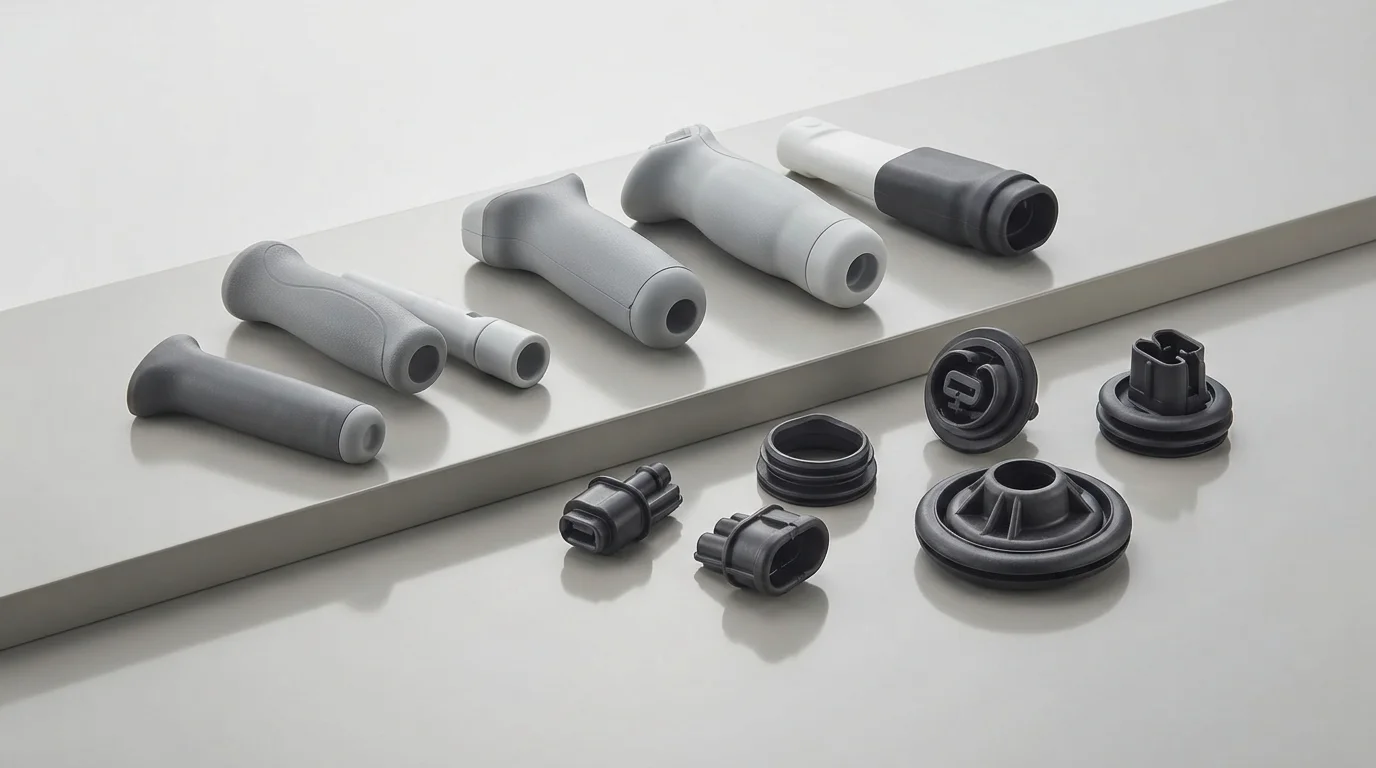
Industrial, healthcare, and automotive programs specify multi-material polymer combinations across a wide spectrum of functional applications. Automotive interior cockpits utilize TPU overmolded onto PC/ABS door handles, climate control knobs, and dashboard bezels to deliver premium soft-touch aesthetics and vibration dampening. Medical device engineers specify USP Class VI TPE overmolded onto rigid PC surgical tool handles to provide slip-resistant, sterilizable grips for operating room personnel.
Electronic device enclosures incorporate Santoprene TPV or TPE seals overmolded onto structural housings, creating IP67 waterproof barriers for outdoor diagnostic monitors. Eliminating manual gasket insertion cuts assembly labor while ensuring consistent environmental sealing under dynamic drop impacts.
Target industry overmolding solutions include:
- Medical surgical instruments—USP Class VI TPE overmolded over rigid polycarbonate for ergonomic, sterilizable grips.
- Automotive interior controls—Desmopan TPU overmolded over PC/ABS for scratch-resistant soft-touch handles and knobs.
- Industrial electronic housings—Santoprene TPV overmolded over glass-filled nylon for IP67 waterproof sealing and impact protection.
Why Choose JUCHENG for Custom Overmolding
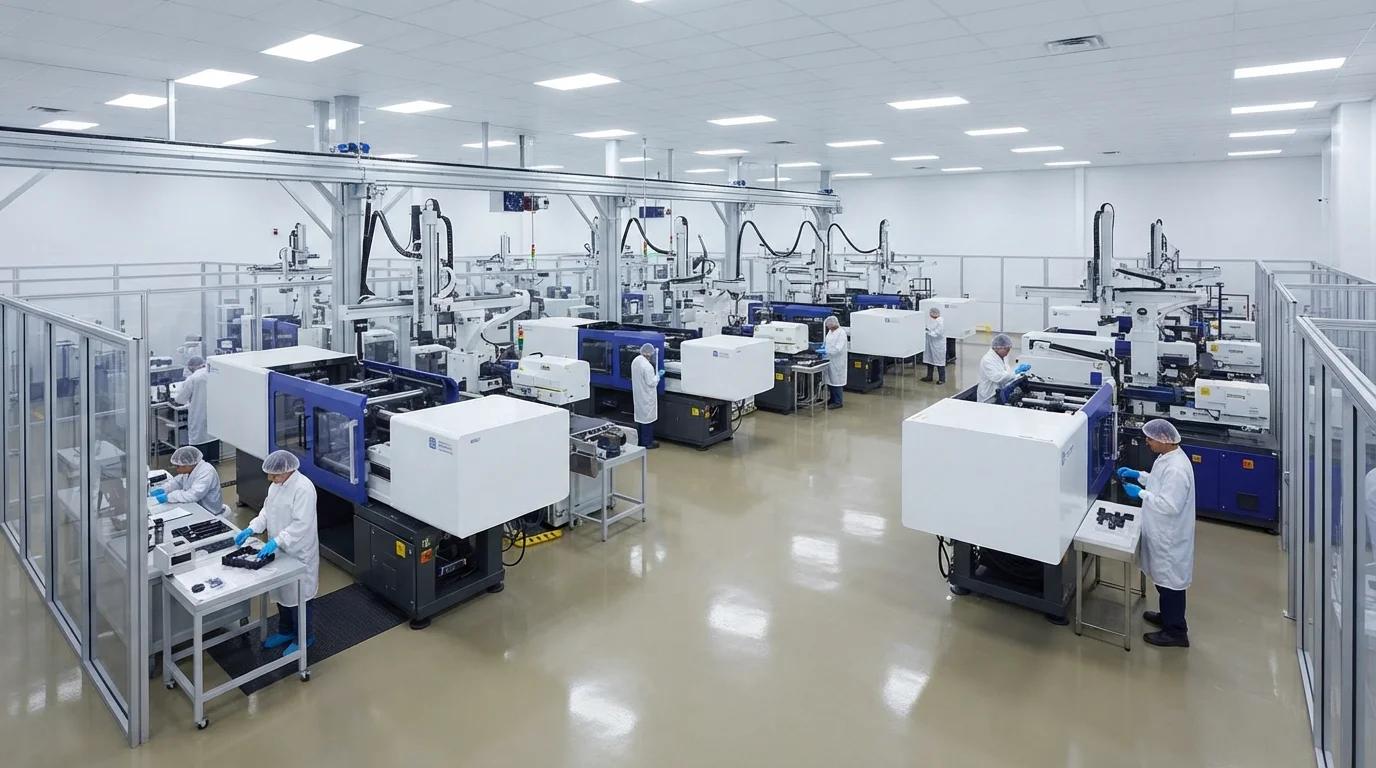
Partnering with JUCHENG for multi-material encapsulation projects provides access to an extensive production floor equipped with 35+ automated injection presses ranging from 15T to 3000T clamping force. Operating an in-house tool room with 25 sets of 5-axis CNC machines permits precise machining of shut-off steel lands, ensuring flash-free elastomeric boundaries down to sub-millimeter tolerances. Our engineering team delivers a free 24-hour DfM review for every CAD submission, analyzing substrate wall thickness, draft angles, and shut-off feasibility before cutting steel.
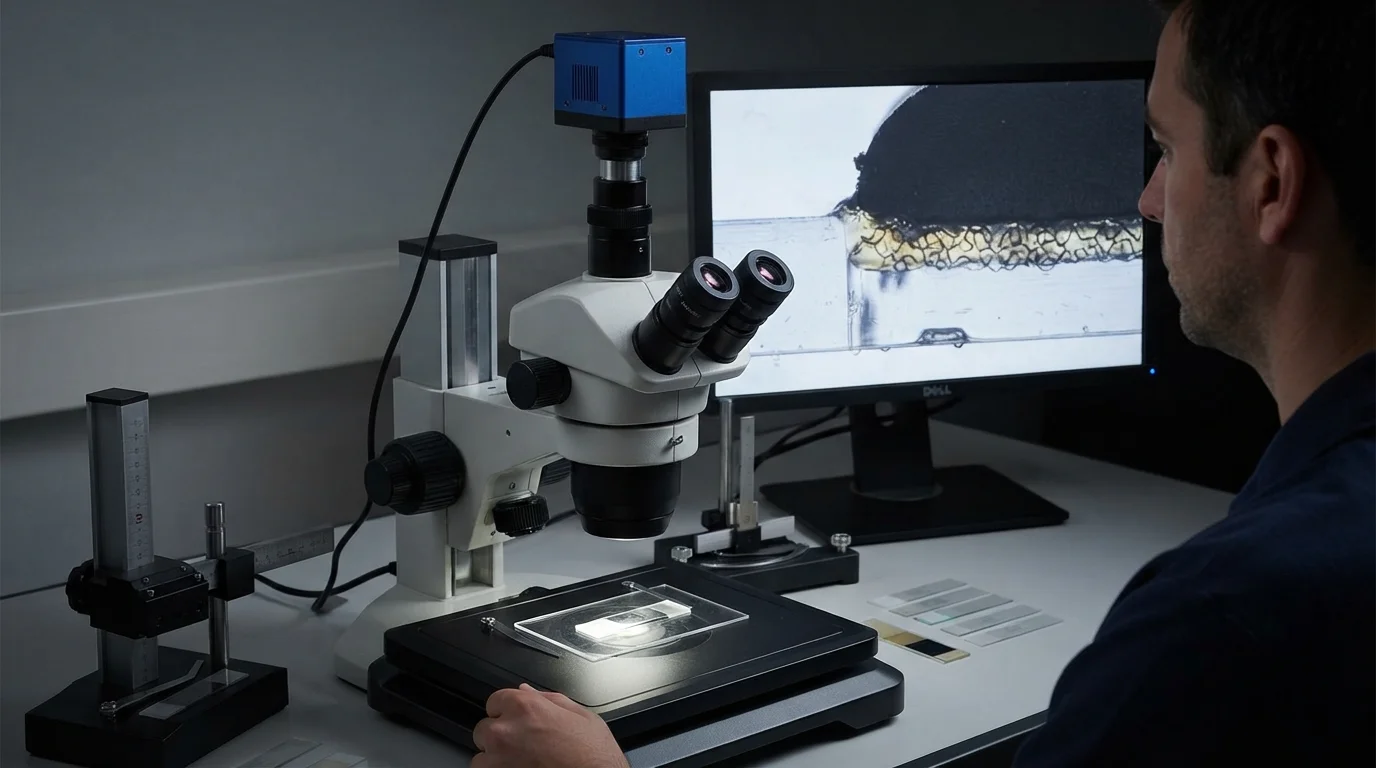
Quality management systems certified to IATF 16949 and ISO 13485 back every multi-shot production run, offering full PPAP Level 3 documentation for automotive programs. Operating an ISO Class 8 cleanroom molding department protects medical components from particulate contamination during molding and drop-packaging. Automated Zeiss CMM scanning with ±0.003 mm precision verifies critical sealing geometries, delivering zero-defect quality across prototype and high-volume series manufacturing.
Frequently Asked Questions (FAQs)
Why do some TPE materials peel off rigid plastic substrates after molding?
Peeling or delamination occurs when the selected TPE grade is chemically incompatible with the rigid substrate or when mold temperatures are too low during secondary injection. Cold substrate surfaces prevent molecular chain interdiffusion. Raising mold temperatures to 70°C-90°C and incorporating mechanical undercut grooves prevents edge peeling.
What is the difference between TPE, TPU, and TPV for overmolding applications?
TPE offers low cost and a wide Shore hardness range, making it ideal for consumer soft-touch grips. TPU provides superior abrasion resistance and high tensile strength, perfect for rugged automotive handles. TPV (like Santoprene) delivers exceptional heat deflection and chemical resistance, making it the preferred choice for IP67 weather-resistant seals.
How does preheating the rigid substrate improve overmolding bond strength?
Preheating the rigid plastic substrate to 70°C-90°C slows the initial cooling rate of the incoming second-shot melt. Keeping the boundary skin warm permits polymer chains from both materials to interdiffuse deeply, creating a strong cohesive chemical bond rather than a weak mechanical boundary.
Can glass-filled Nylon (PA66-GF) be overmolded with soft TPE?
Standard unfilled TPE does not bond chemically to polar glass-filled Nylon. Overmolding PA66-GF requires specifying adhesion-modified TPE grades formulated with polar functional groups or incorporating 90-degree mechanical locking dovetails in the substrate CAD design.
How do tooling shut-off lands prevent TPE flash during secondary injection?
Tooling shut-off lands are precision-ground steel sealing faces that clamp firmly against the rigid substrate perimeter during the second shot. Maintaining shut-off steel fitment tolerances tighter than 0.01 mm prevents low-viscosity soft elastomer melt from bleeding over cosmetic substrate surfaces.
Why is UL Yellow Card material verification important for overmolded electronics?
UL Yellow Card verification confirms that both the rigid substrate and elastomeric overmold meet certified flammability and electrical isolation parameters certified by Underwriters Laboratories. Verifying yellow card documentation ensures that multi-material electronic enclosures satisfy UL94 V-0 safety compliance.