
Thermoplastic Vulcanizate (TPV)

Thermoplastic Vulcanizates (TPV), most notably ExxonMobil’s Santoprene, consist of chemically cross-linked EPDM rubber particles dispersed inside a continuous polypropylene matrix. This unique structure allows TPV to replace thermoset EPDM rubber in severe outdoor and automotive environments, offering excellent compression set, ozone resistance, and elastomeric recovery. Jucheng Precision provides certified IATF 16949 TPV injection molding and dual-material overmolding (TPV onto PP). Driven by 35+ advanced molding presses, our engineers systematically mitigate shear-induced cosmetic flaws and flow lines common in highly viscous elastomers. We calculate precise mold shrinkage (1.5%-2.5%) during our 24-hour DFM phase to ensure long-term dimensional sealing accuracy.

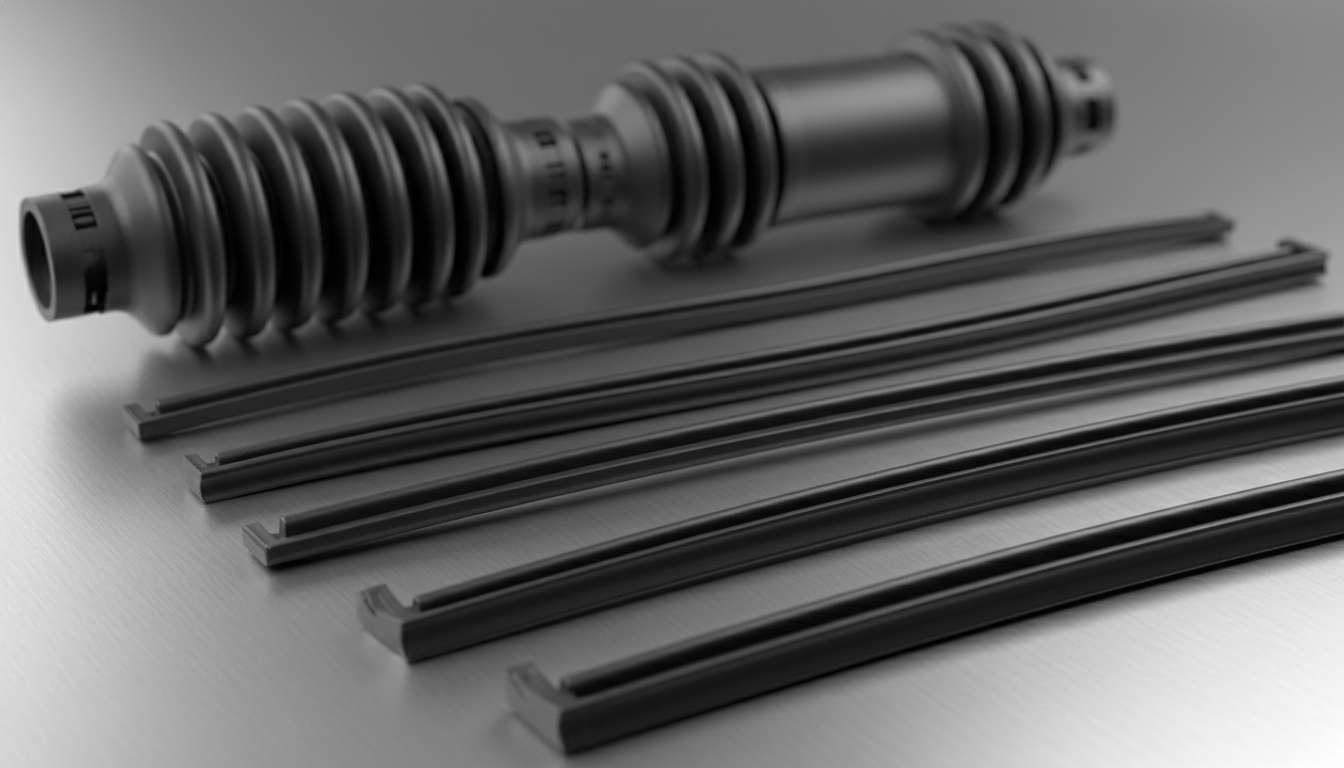
High-durability-custom-injection-molded-matte-black-TPV-automotive-weather-seals-and-flexible-bellows-1

Our available materials

TPV-ExxonMobil Santoprene 101-55

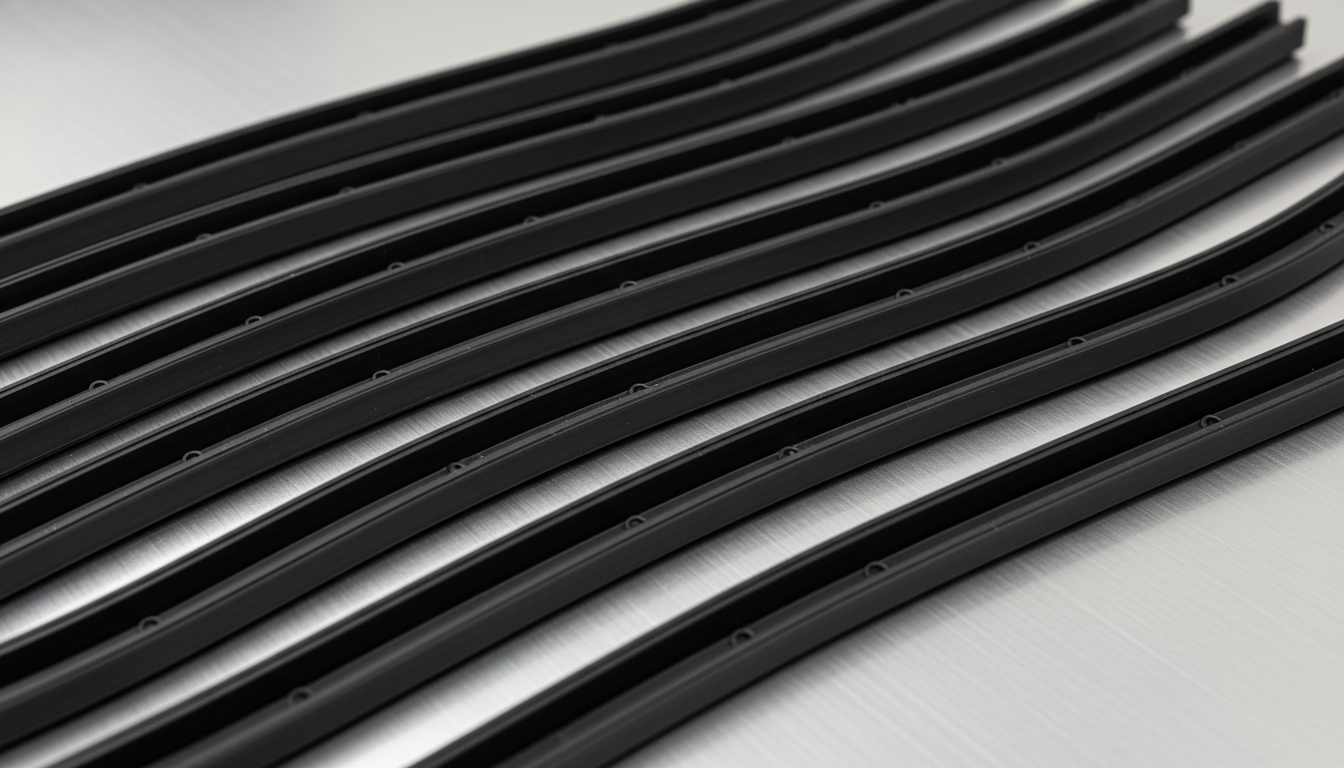
Substituting vulcanized EPDM rubber in demanding automotive and industrial sealing environments without the processing limits of thermosets requires a specialized elastomer, which ExxonMobil’s Santoprene 101-55 (now Celanese) delivers through its chemically cross-linked EPDM rubber phases dispersed inside a continuous polypropylene matrix. Boasting a density of 0.97 g/cm³ and a soft hardness of 55 Shore A, this thermoplastic vulcanizate (TPV) provides outstanding compression set, ozone resistance, and low-temperature flexibility down to -60°C. Jucheng Precision, operating under strict ISO 9001 and IATF 16949 standards, specializes in precision injection molding of Santoprene 101-55. Utilizing in-house 5-axis CNC-machined S136 tool cavities, we optimize gate geometry to mitigate shear-induced flow lines, delivering dynamic seals verified by Zeiss CMM.
READ MORE

TPV-ExxonMobil Santoprene 121-67

Sustaining extreme dynamic flex fatigue and resisting continuous solar ultraviolet degradation in outdoor automotive and architectural weather seals without structural cracking requires a highly resilient elastomer, which Celanese’s Santoprene 121-67W175 (formerly ExxonMobil) delivers. Boasting a density of 0.970 g/cm³ and a hardness of 72 Shore A, this specialized thermoplastic vulcanizate (TPV) is engineered for exceptional ozone resistance and outstanding thin-walled profile definition down to a 0.33mm radius. Jucheng Precision, under IATF 16949 and ISO 9001 quality systems, specializes in high-precision molding of Santoprene 121-67. Utilizing S136 stainless steel tooling and pressurized cooling channels, we control its anisotropic shrinkage (1.5%-2.5%) to deliver flash-free weatherstripping parts verified by Zeiss CMM.

READ MORE

TPV-ExxonMobil Santoprene 8211-75

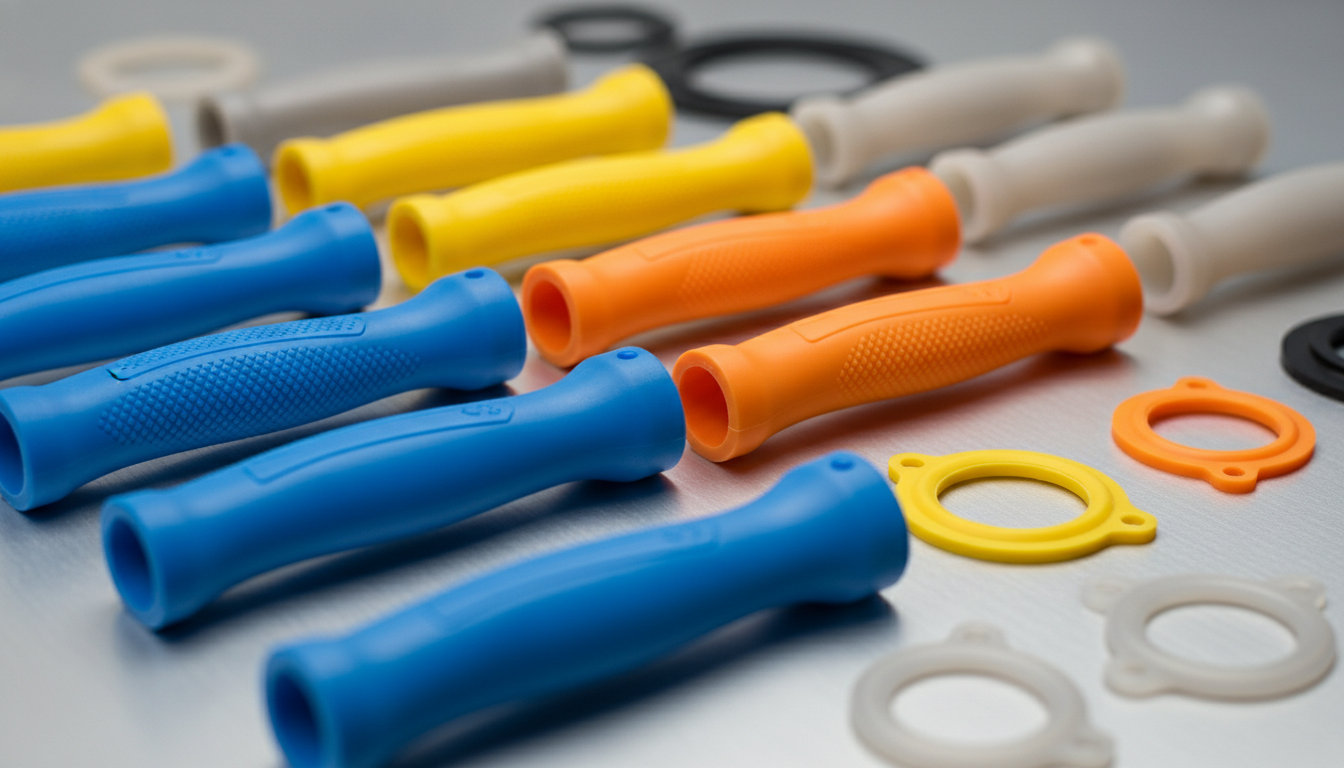
Achieving vibrant, custom-colored soft-touch surfaces and complex dynamic gaskets without the processing limits of hygroscopic elastomers requires a premium material, which Celanese’s Santoprene 8211-75 (formerly ExxonMobil) delivers through its unreinforced, neutral-colored thermoplastic vulcanizate (TPV) matrix. Featuring a density of 0.930 g/cm³ and a hardness of 75 Shore A, this highly colorable grade offers an improved-flow, shear-dependent melt behavior designed for intricate multi-cavity tool filling. Jucheng Precision, under IATF 16949 and ISO 9001 quality systems, specializes in high-precision molding of Santoprene 8211-75. Utilizing 5-axis CNC-machined S136 stainless steel tooling, we control its anisotropic shrinkage (1.5%-2.5%) to deliver flash-free cosmetic grips and seals verified by Zeiss CMM.

READ MORE

TPV-Teknor Apex Sarlink 3140

Delivering exceptional micro-sealing compliance and dynamic flex-fatigue life under lightweight constraints requires a specialized low-hardness elastomer, which Teknor Apex’s Sarlink 3140 delivers through its unreinforced, polypropylene-based thermoplastic vulcanizate (TPV) matrix. Featuring a low density of 0.93 g/cm³ and an injection-molded hardness of 46 Shore A, this highly ductile grade is engineered for excellent compression set (18% at 23°C) and robust thermal performance up to 125°C. Jucheng Precision, under ISO 9001 and IATF 16949 certified quality systems, specializes in high-precision molding of Sarlink 3140. Utilizing five-axis CNC-machined S136 stainless steel tooling, we control its high crystallization shrinkage and prevent parting-line flash, delivering flawless components verified by Zeiss CMM.

READ MORE

Leading TPV Brands & Specific Grades We Mold

We process high-performance Thermoplastic Vulcanizate resins from global market leaders, offering excellent compression set and continuous outdoor weatherability:

TPV Material Sub-Class Typical Brand & Grade Key Characteristics & Advantages
General Purpose & Automotive • ExxonMobil Santoprene 101-55 / 101-73
• Teknor Apex Sarlink 3140 / 3180
• ExxonMobil Santoprene 121-67W175 (Glass Run Channel)
Highly resistant to ozone, UV radiation, and extreme temperatures. Excellent low compression set at high temperatures. Designed for automotive glass run channels, engine air ducts, and weather seals.
Medical & Food Contact • ExxonMobil Santoprene 8211-75
• Teknor Apex Sarlink ME-2255
USP Class VI and FDA compliant. Low extractables and excellent seal integrity. Perfect for peristaltic pump tubing, medical gaskets, and pharmaceutical vial closures.

Applicable Molding Processes for TPV

TPV’s high non-Newtonian flow properties support highly specialized molding configurations:

Molding Process Process Suitability & Application
Overmolding (Multi-Shot) Excellent. LCP/PP-compatible TPV grades easily overmold onto polypropylene (PP) substrates to form permanent, weather-resistant structural seals in automotive door panels.
Standard Injection Molding Excellent. Optimized for high-speed cycle times to produce stand-alone heavy-duty expansion joints, dynamic seals, and plumbing gaskets.

Thermoplastic Vulcanizate (TPV) Tooling & Processing Guide

TPV consists of cross-linked EPDM rubber dispersed inside a PP matrix. It exhibits strong shear-thinning behavior, which requires specialized manufacturing parameters to prevent cosmetic flow lines:

  • Pre-Drying: TPV is highly hygroscopic (especially EPDM phases). Raw resin must be dried in desiccant dryers at 80°C–90°C (176°F to 194°F) for 3–4 hours, keeping moisture strictly below 0.08% to prevent bubbling and weld line separation.
  • Shear-Thinning Gate Design: TPV is non-Newtonian; its viscosity decreases drastically under high shear. Our in-house tooling division uses 5-axis CNC machines to cut generous gate channels and wide runners. This reduces shear stress and prevents visible flow line defects.
  • Temperature Controls: Melt temperatures are kept at 180°C–220°C (356°F to 428°F), and mold temperatures are managed cold at 20°C–50°C (68°F to 122°F) to ensure fast cycle times and prevent mold sticking.
  • Shrinkage: TPV exhibits high and anisotropic shrinkage (typically 1.5% to 2.5%). Our engineers analyze EPDM dispersion flow paths using DFM software to adjust mold tolerances precisely.

Key Application Industries for Molded TPV Components

  • Automotive Sealing Systems (IATF 16949 Certified): Glass run channels, weatherstripping seals, engine air ducts, flexible under-the-hood boots, rack-and-pinion bellows, and expansion joints.
  • Plumbing & Fluid Systems: Drinking water gaskets, chemical pump diaphragms, flexible pipe seals, and wastewater sealing couplings.
  • Medical & Food Service (ISO 13485 Compliant): Peristaltic pump tubing connector gaskets, medical device handles, sterilizer door seals, and baby product valves.

Material Properties

Density 35A - 50D g/cm³
Hardness Range 0.90 - 0.98 Shore A / Shore D
Tensile Strength 5.0 - 15.0 MPa
Tensile Elongation at Break 350 - 600 %
Tear Strength 20 - 45 kN/m
Compression Set (125°C, 70h) 25 - 45 %
Ozone Resistance No Cracking Rating (ASTM D1171)
Melt Temperature 180 - 220 °C
Linear Mold Shrinkage 1.5 - 2.5 %
Dielectric Strength 20 - 28 kV/mm
Volume Resistivity 1.0E+16 Ohm·cm
Maximum Part Size 800 x 600 mm
Minimum Part Size 1 x 1 mm