
Selecting between two-step transfer overmolding and single-press two-shot (2K) molding represents one of the most critical decisions in multi-material product development. Product development teams must balance initial mold tooling budgets against long-term piece-part manufacturing efficiency. Choosing the wrong process can lead to excessive upfront capital expenditure on low-volume projects or uncompetitive labor costs during high-volume series production.
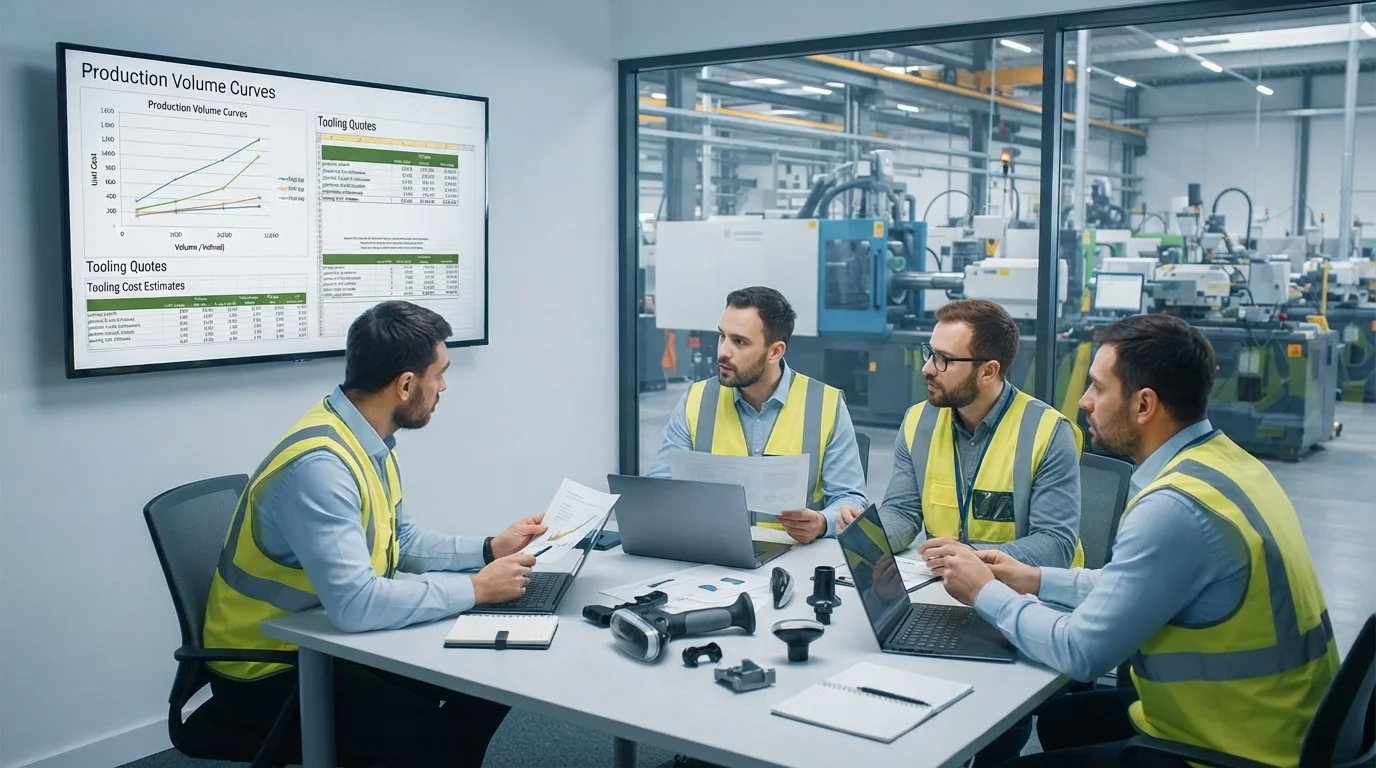
Understanding machine architectures, tooling complexity, and program volume allows engineering teams to optimize unit economics. This technical comparison guide evaluates processing mechanics, tooling investments, production volume break-even curves, and quality considerations.
Overmolding (Two-Step Process) vs. Two-Shot/2K (Single-Press Process)
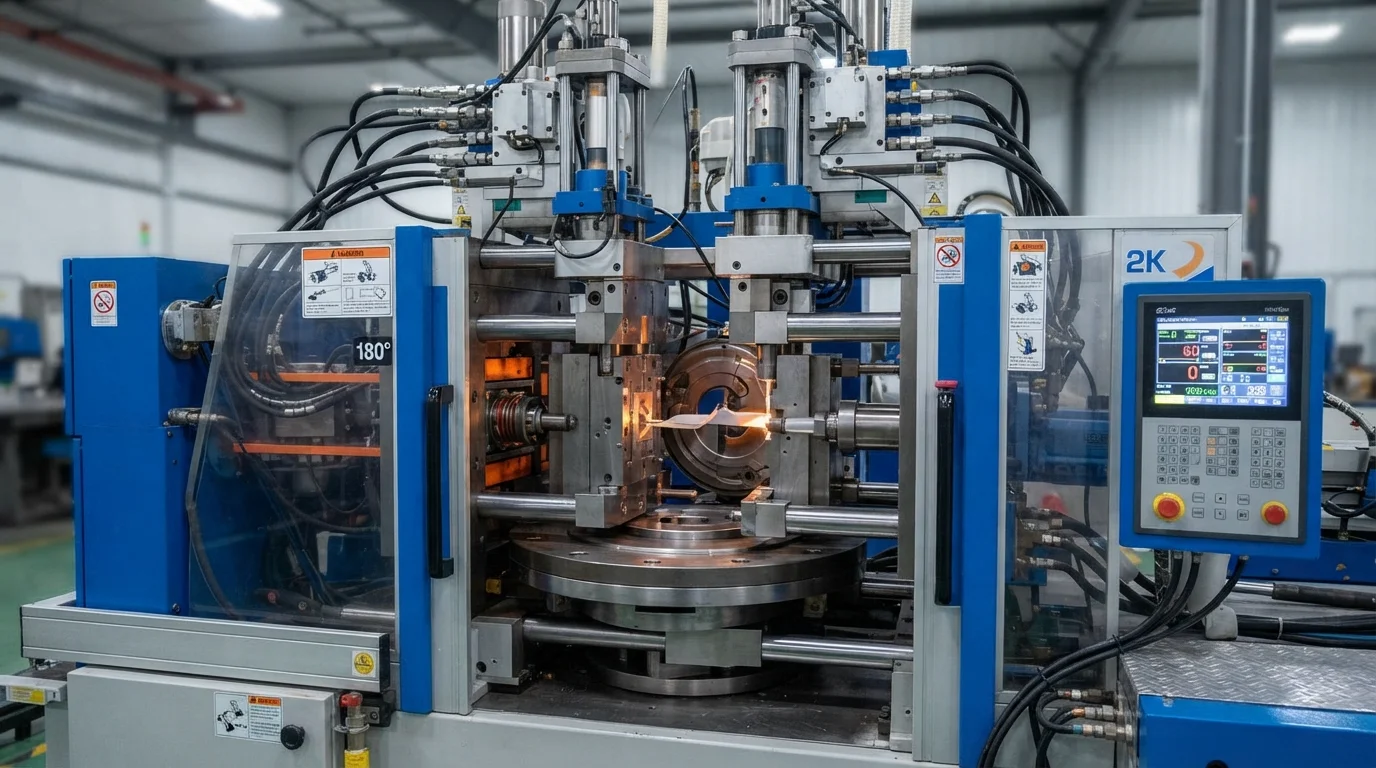
Evaluating overmolding vs two shot molding requires analyzing how raw materials are sequenced inside the injection machinery. Standard two-step transfer molding molds the rigid substrate in a separate operation and loads it manually or automatically into the overmold tool, outside an integrated two-shot cycle. Substrates molded from rigid resins like ABS, polycarbonate (PC), or nylon may be conditioned, stored or loaded warm depending on the grade pair and validated process.
Conversely, two-shot molding—commonly known as 2K molding—carries out both shots within a coordinated machine cycle. Options include rotary platen tooling, in-cycle transfer and core-back designs. Separate injection units can mold rigid resin and soft TPE or TPU in the same cycle without off-line substrate loading. Temperature and timing matter, but verify adhesion and appearance on molded samples of the exact grades.
Production Volume Thresholds: When to Switch from Overmolding to 2K
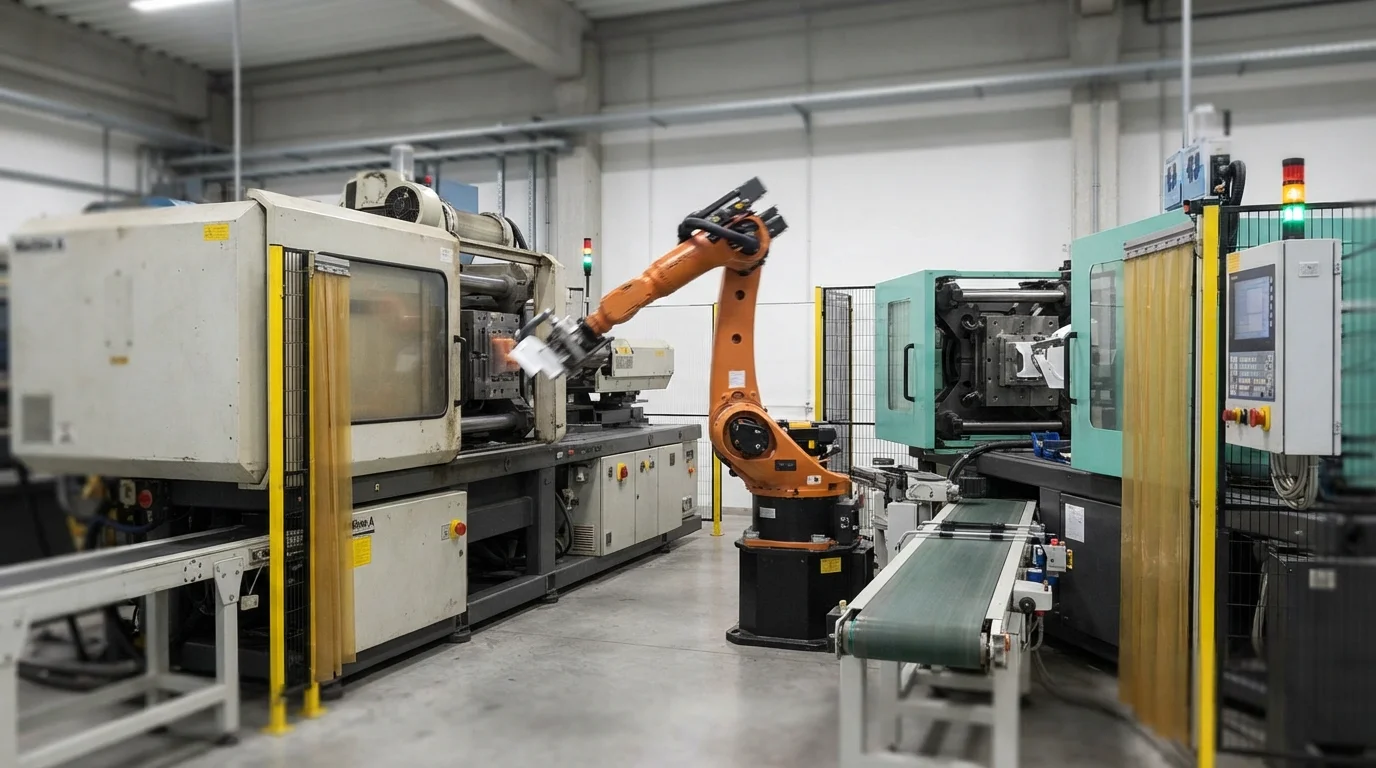
Compare the routes at the same program volume, release schedule and acceptance criteria. Separate transfer may suit early runs or uncertain demand if the quoted fixed investment and timing are favorable, but include loading, storage and inspection.
Integrated two-shot can reduce off-line handling, but no fixed quantity, cycle-time savings or scrap rate applies across projects. Compare net cavity output, bottleneck cycle, handling, availability and yield to estimate accepted parts per hour and confirm capacity against the release schedule.
Production volume selection criteria include:
- Prototype and smaller runs—Compare tool investment, qualification timing and loading cost.
- Larger or repeat production runs—Confirm accepted parts per hour, yield and cost at the planned releases.
- Tight-tolerance cosmetic components—Agree on bond, flash, registration and cosmetic acceptance; confirm with representative molded parts.
Tooling Cost, Lead Times & Production Economics
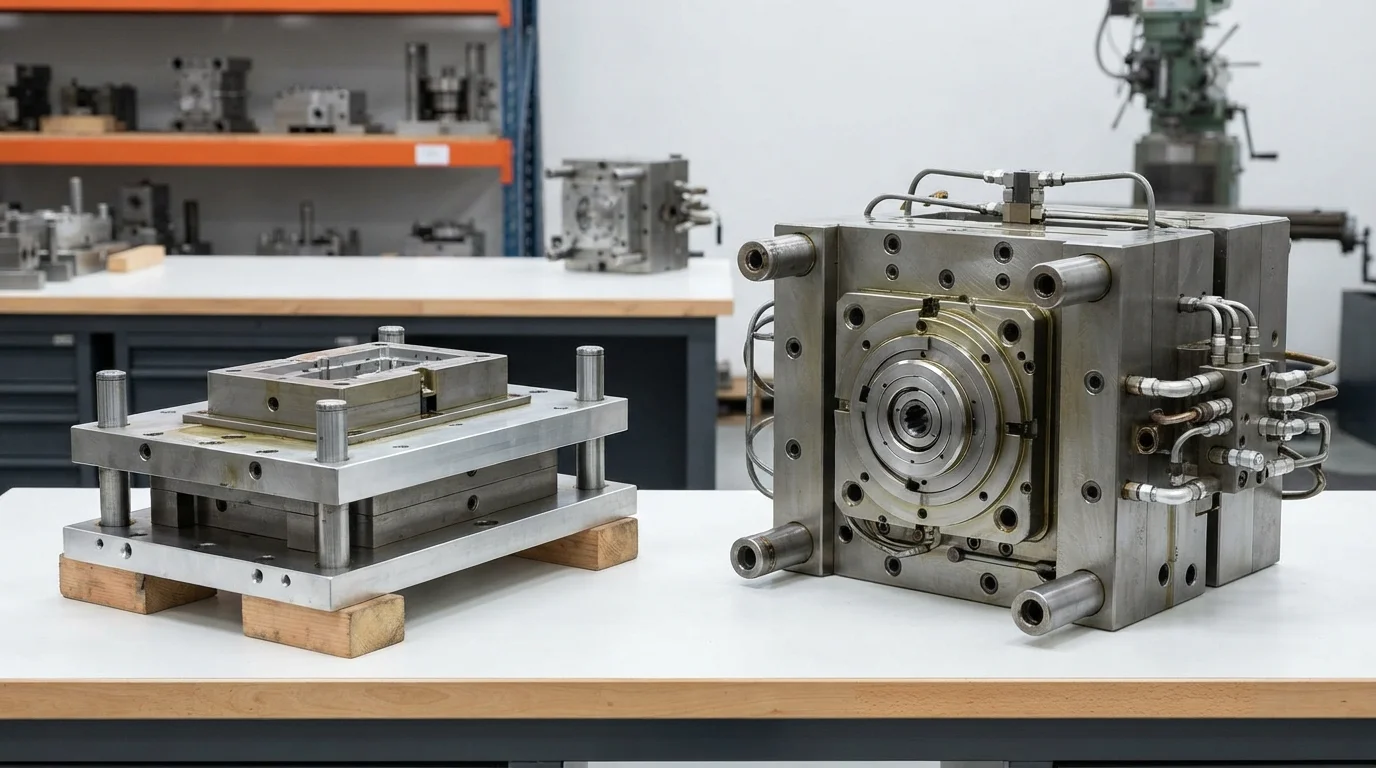
Compare tooling, fixtures, automation and qualification on the same quote scope. Mold complexity, cavity count, the transfer or indexing design, trial iterations and press availability influence cost and lead time. Compare dates for first samples and for qualified production separately.
Compare fixed tooling and qualification costs plus recurring costs per accepted part at the same quantity and acceptance criteria. Include material loss, handling, inspection and rework where applicable. Use the same assumptions about release timing and capacity when comparing both routes:
| Comparison Metric | Two-Step Transfer Overmolding | Integrated Two-Shot (2K) Molding | Engineering Selection Guideline |
|---|---|---|---|
| Machine Architecture | Separate substrate molding and loading into an overmold tool | Integrated equipment with rotary, transfer or core-back options | Quote the tool and press as a matched system |
| Upfront Tooling NRE Cost | Quote both operations, fixtures and qualification | Quote integrated tooling, automation and qualification | Compare equivalent scope and remaining investment |
| Mold Fabrication Lead Time | Quote tool build and first trials | Quote integrated tool build and first trials | Compare sample and qualified release dates |
| Accepted Parts per Hour | Use the bottleneck, cavity output, loading and yield | Use the integrated cycle, cavity output and yield | Measure output and confirm available capacity |
| Program Volume | Quote at the planned accepted quantities | Quote at the same quantities and release schedule | Compare total cost or cost per accepted part |
Why Choose JUCHENG for Multi-Material Molding Solutions
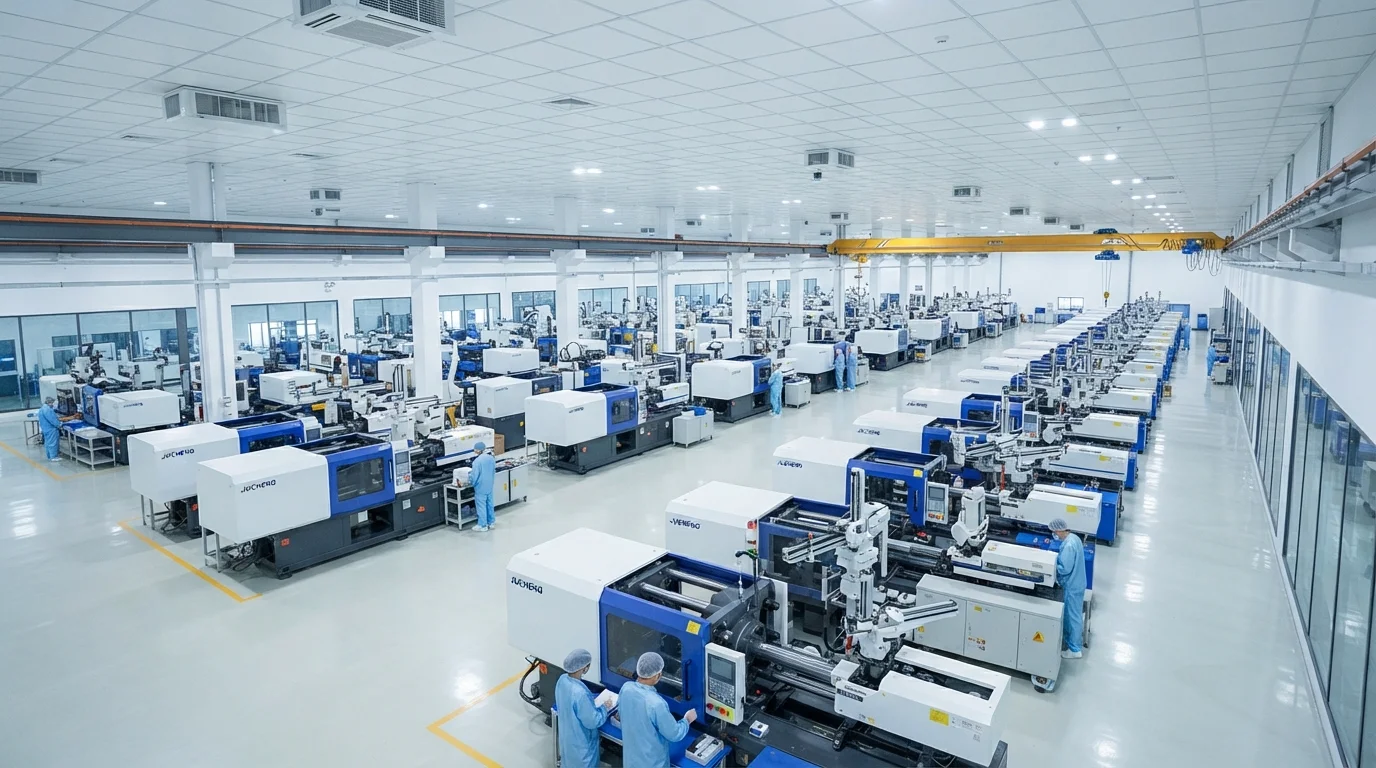
Partnering with JUCHENG provides access to an advanced manufacturing facility housing 35+ automated injection presses ranging from 15T to 3000T clamping force. Operating an in-house tool room with 25 sets of 5-axis CNC machines permits precise machining of shut-off steel lands from hardened S136 stainless steel or H13 tool steel.
Evaluating overmolding vs two shot molding helps select the optimal approach for custom overmolding injection molding. Quality management systems certified to IATF 16949 and ISO 13485 back every multi-shot production run, offering full PPAP Level 3 documentation for automotive programs. Operating an ISO Class 8 cleanroom molding department protects medical components from particulate contamination during molding and drop-packaging.
Frequently Asked Questions (FAQs)
What is the primary difference between overmolding and two shot molding?
In separate transfer overmolding, a pre-molded substrate is loaded outside the integrated cycle into the overmold tool. In integrated two-shot molding, both shots occur in a coordinated machine cycle. The mold may use rotary indexing, in-cycle transfer or core-back, depending on the part.
When does it make financial sense to switch from transfer overmolding to 2K molding?
There is no universal cutoff. Compare total quoted cost at the same accepted quantity and quality standard. If fixed and recurring costs are constant in the compared quantity range, and 2K has both higher fixed cost and lower recurring cost, divide its extra fixed cost by its recurring savings per accepted part to estimate the break-even quantity. Confirm capacity and adjust if rates change by tier.
Does two-shot 2K molding produce stronger material bonds than transfer overmolding?
Not necessarily. A warmer substrate can help some grade pairs, but surface condition, transfer timing and second-shot settings also matter. Confirm bond and surface appearance against agreed criteria on representative samples from the intended process.
Can regular injection molding machines run two-shot 2K molds?
An integrated two-shot process needs equipment capable of delivering both materials and supporting the required mold movements. Rotary control is required only for rotary designs; confirm equipment compatibility for the chosen architecture.
Which process is better suited for rapid prototyping and bridge production?
Separate transfer can be a bridge option if its quoted tooling cost, sample date, capacity and molded acceptance meet the project needs. Compare both routes for the planned releases rather than relying on a fixed quantity or tool-build time.
How does part geometry influence the choice between overmolding and 2K molding?
Parts with simple, concentric overmolded sections easily adapt to rotary 2K tools. Complex geometries requiring deep side-action sliders or hand-loaded inserts are often more economical to manufacture using two-step transfer overmolding.