
Surveying real-world over-moulding applications reveals how multi-material polymer processing eliminates mechanical fasteners while dramatically elevating product durability. Integrating flexible elastomeric layers directly over rigid structural substrates allows engineers to achieve tactile comfort, shock absorption and integrated sealing features. Actual sealing performance depends on the finished assembly. Rather than viewing multi-resin encapsulation as a generic process, top-tier engineering teams tailor specific polymer combinations to distinct environmental demands across automotive, medical, and industrial sectors.
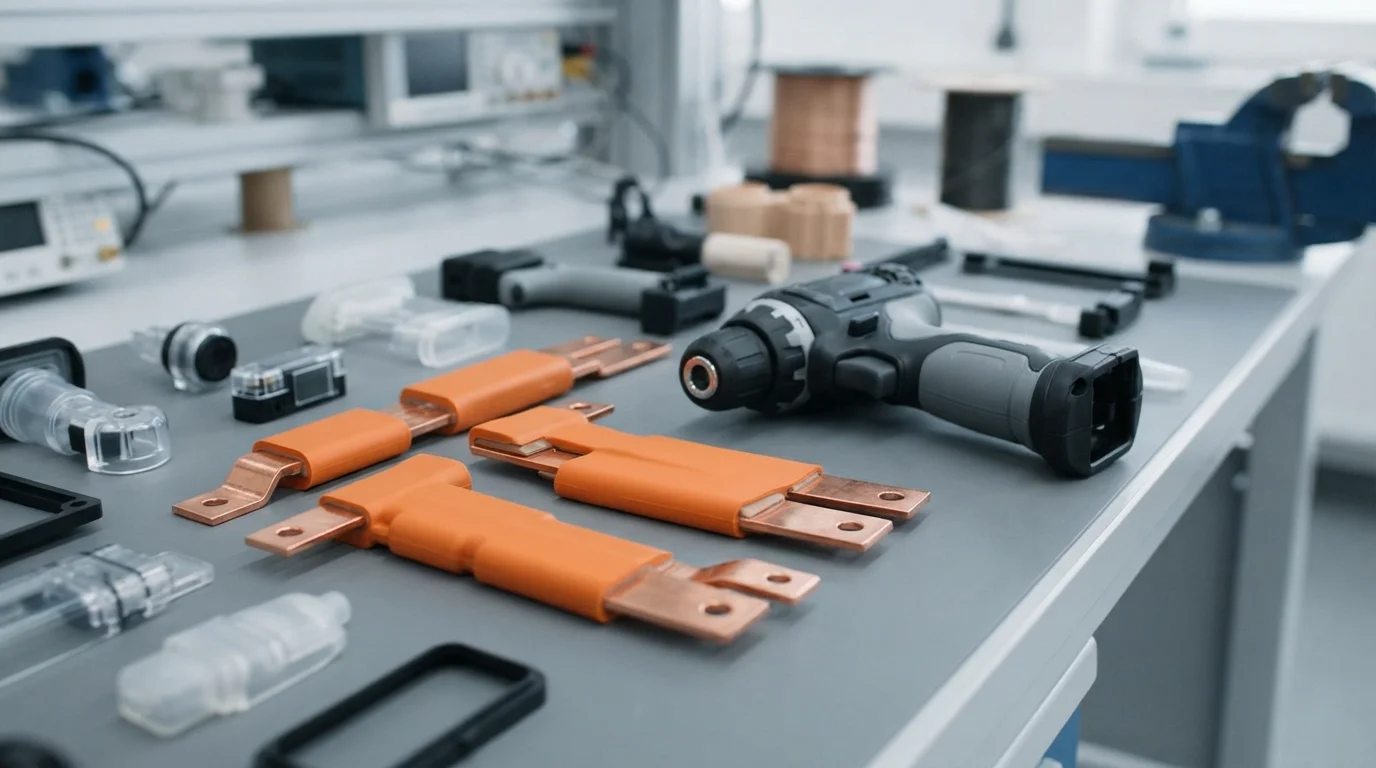
This technical industry showcase analyzes proven multi-material designs, examining material pairing chemistry, failure mode prevention, and production quality standards across three mission-critical sectors.
Medical Devices: Ergonomic Handles & Sterile Sealed Instruments (ISO 13485)
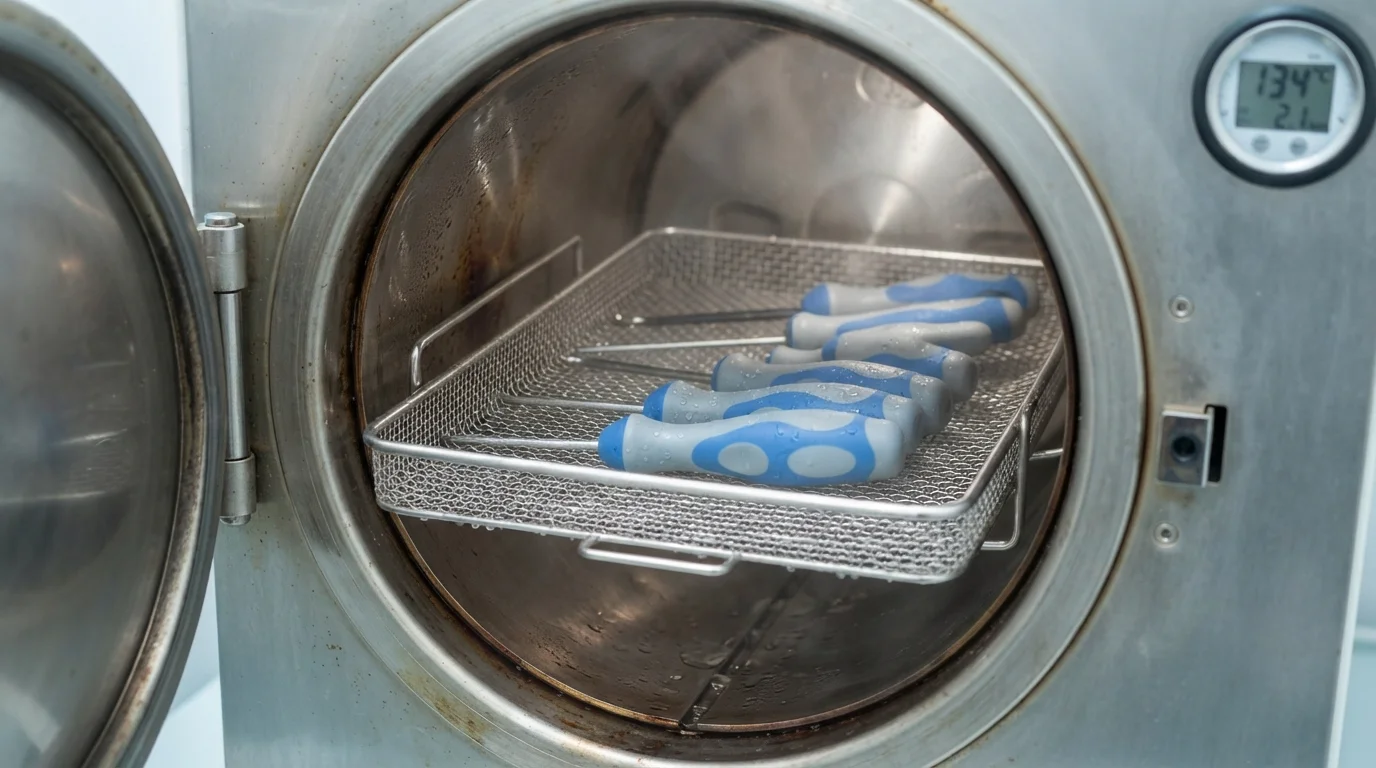
An overmold can add a gripping surface or integrate a seal into a surgical instrument or diagnostic cartridge. Determine contamination controls from the intended use and actual device risks. Overmolding medical-grade TPE or liquid silicone rubber directly onto rigid polycarbonate (PC) handles is one design option. Inspect the actual interface and validate cleanability, leakage or reprocessing where required; eliminating a seam does not establish control of bioburden. ISO 14644-1 classifies airborne particle concentration, and ISO 13485 addresses the quality management system. Neither establishes sterility or biocompatibility. Material data such as USP Class VI results can inform evaluation under ISO 10993, which considers the final finished device and intended contact. Validate any claimed sterilization process separately.
Medical encapsulation design criteria include:
- Autoclave thermal endurance—If steam sterilization is specified, verify the chosen grades and finished device for the validated cycle and claimed number of reuses.
- Disinfectant exposure—Verify the finished interface with the actual disinfectant, concentration, contact time and expected reuse conditions.
- Slip-resistant tactile texture—Molding micro-textured grip zones to maintain precise operator tactile feedback during wet surgical procedures.
Automotive Interiors & Controls: Knobs, Seals & HV Connectors (IATF 16949)
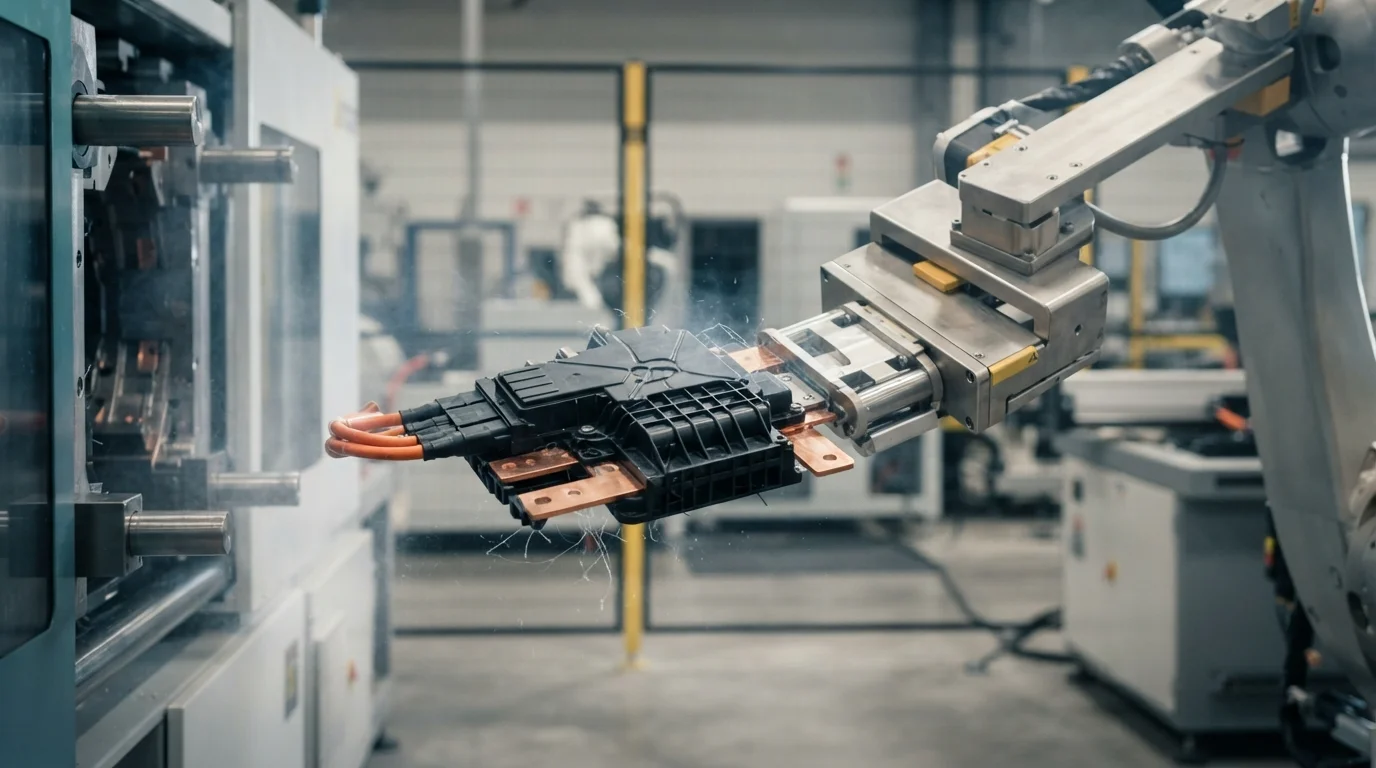
Modern automotive cabins and electric vehicle (EV) powertrains utilize multi-resin processing to enhance tactile comfort and electrical safety. Interior climate control knobs combine opaque PC/ABS cores with translucent TPU perimeter grips to produce wear-resistant backlit indicators. High-voltage battery packs encapsulate stamped copper busbars with insulating polymers; a selected PA66-GF30 grade may be one candidate. In an 800 V architecture, verify the assembly’s insulation under the applicable product requirements, not from a resin family or flame classification. Operating large-format presses equipped with Sequential Valve Gating (SVG) eliminates visible weld lines on heavy overmolded door trim panels.
Consumer Electronics & Power Tools: Impact-Resistant Soft Rubber Shells
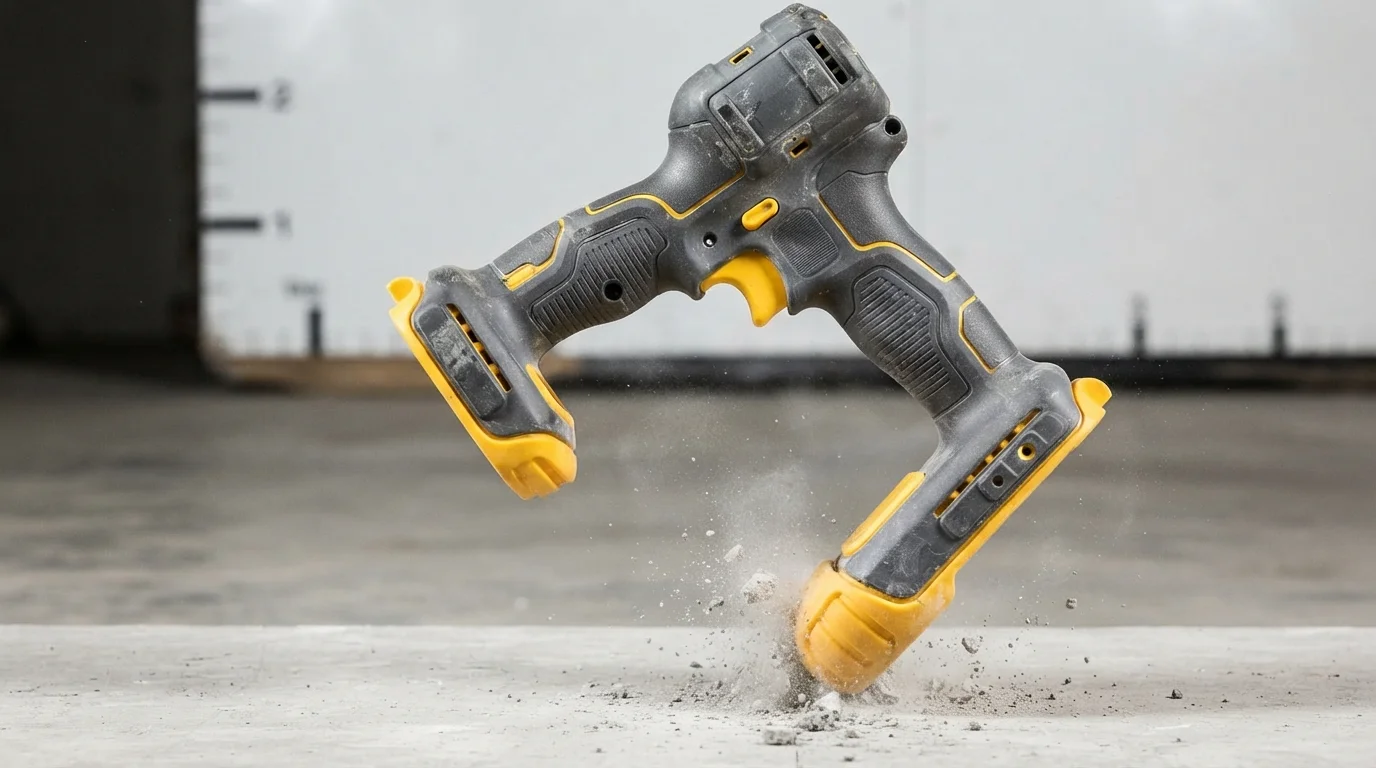
Heavy-duty industrial power tools and handheld barcode scanners must survive repeated two-meter concrete drop tests without mechanical housing rupture. Encapsulating structural ABS frameworks with energy-absorbing Santoprene TPV cushions sensitive internal circuit boards against severe shock loads. Molded perimeter ribs can form part of an enclosure seal. Verify IP67 on the assembled enclosure: it covers dust-tightness and temporary immersion, not water jets. If jets are part of service, specify and verify the applicable exposure separately. Specifying custom overmolding injection molding replaces manual rubber gasket insertion, eliminating assembly errors and lowering unit manufacturing costs.
Polymer Matrix Reference: Choosing Materials by Application Sector

Selecting the correct polymer pair requires balancing chemical bonding mechanisms against operating environment stresses. Reviewing proven over-moulding applications highlights how material affinity dictates long-term joint durability. Table 1 below outlines standard polymer combinations across major industrial manufacturing sectors:
| Application Showcase | Structural Substrate | Overmolded Polymer | Primary Performance Metric | Failure Mode to Evaluate |
|---|---|---|---|---|
| Automotive EV Busbars | Stamped Copper (C11000) | Selected PA66-GF30 grade (candidate) | Verify insulation for the actual assembly | Check tracking and insulation-design risks |
| Medical Scalpel Grips | Polycarbonate (PC) | Application-specific TPE grade (candidate) | Validate grip and specified reprocessing | Assess fluid retention and cleanability |
| Industrial Power Drills | ABS / PC+ABS Alloy | Santoprene TPV (60A) | Drop impact shock absorption | Prevents housing fracture on concrete |
Executing complex over-moulding applications with high-tonnage multi-barrel presses guarantees flash-free boundaries and dimensional repeatability.
Frequently Asked Questions (FAQs)
Why are over-moulding applications growing rapidly in EV battery manufacturing?
Over-moulding can integrate solid insulation around a busbar. Verify the actual assembly’s creepage, clearance and solid insulation against its electrical and environmental requirements, including the intended voltage and any required vibration testing. UL 94 flame classification does not prove insulation performance. Verify any IP67 requirement on the assembled enclosure separately.
How do overmolded medical handles survive aggressive hospital disinfectants?
Chemical resistance depends on the exact TPE or silicone formulation, substrate and exposure. Check the finished device under the intended cleaning or disinfection conditions, including the specified agent, contact time and repeated use. Inspect for changes such as tackiness, cracking or loss of adhesion.
What prevents delamination between rubber and plastic in power tool handles?
Preventing delamination relies on thermal molecular diffusion between compatible resins like ABS and TPE, reinforced by 90-degree mechanical dovetail undercuts in the substrate. Physical locking channels ensure the rubber cannot peel off even under intense cyclic twisting loads.
Can overmolding achieve hermetic airtight seals on electronic sensor housings?
An ingress rating does not establish airtightness. Test the assembled enclosure, including wire exits and parting lines, for the required IEC 60529 ingress condition. IP67 covers temporary immersion, while IP68 uses specified conditions for continuous immersion. If gas tightness is required, define and verify a separate leak-rate criterion.
Why is ISO Class 8 cleanroom molding mandatory for medical overmolded parts?
It is not automatically mandatory. Set the molding, handling and packaging controls based on the device’s intended use and contamination risks. ISO 14644-1 classifies airborne particles; ISO 13485 covers the quality system. Neither establishes sterility, bioburden or finished-device biocompatibility. Verify each applicable device requirement separately.
How does tooling shut-off precision affect overmolded part quality?
Tooling shut-off lands clamped under tight fitment tolerances (<0.01mm) prevent soft elastomer melt from bleeding over appearance faces. Sharp 90-degree shut-off steps eliminate razor-thin flash edges that trigger peeling under everyday mechanical wear.