
Biocompatible & Medical Grade Resin

Biocompatible resins—complying with stringent ISO 10993 and USP Class VI biocompatibility regulations—are formulated to eliminate heavy metals, volatiles, and phthalates, ensuring safe interaction with human tissues and pharmaceutical fluids. At Jucheng Precision, an ISO 9001 and ISO 13485 certified contract manufacturer, we specialized in medical-grade plastic molding (including clear COC, COP, and PC-Rx) operating in certified Class 7 and Class 8 cleanrooms. Utilizing over 35 advanced molding presses and 25+ in-house 5-axis CNC machines, we manufacture rust-resistant mirror-polished S136 steel molds to guarantee zero contamination. We provide free DFM analysis within 24 hours and strict IQ/OQ/PQ validation, ensuring high-purity medical devices verified by Zeiss CMM inspection.

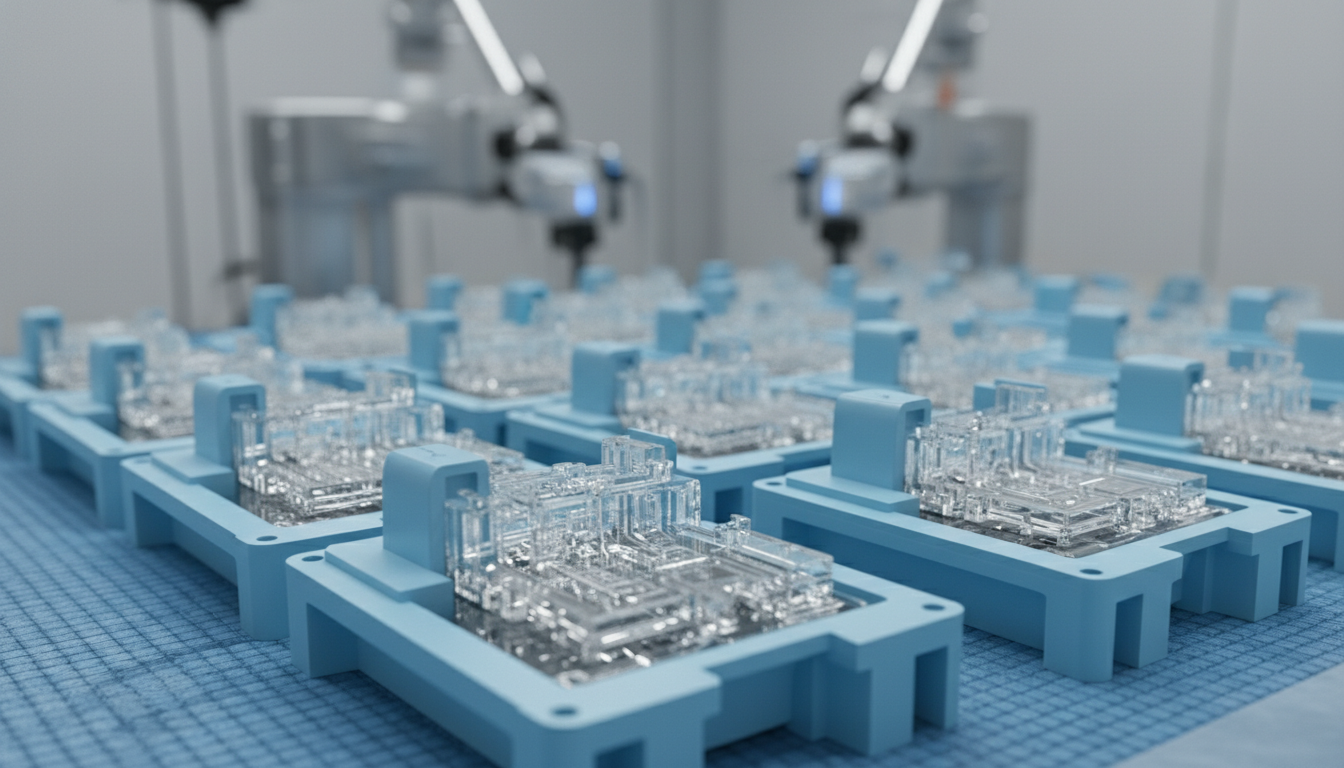
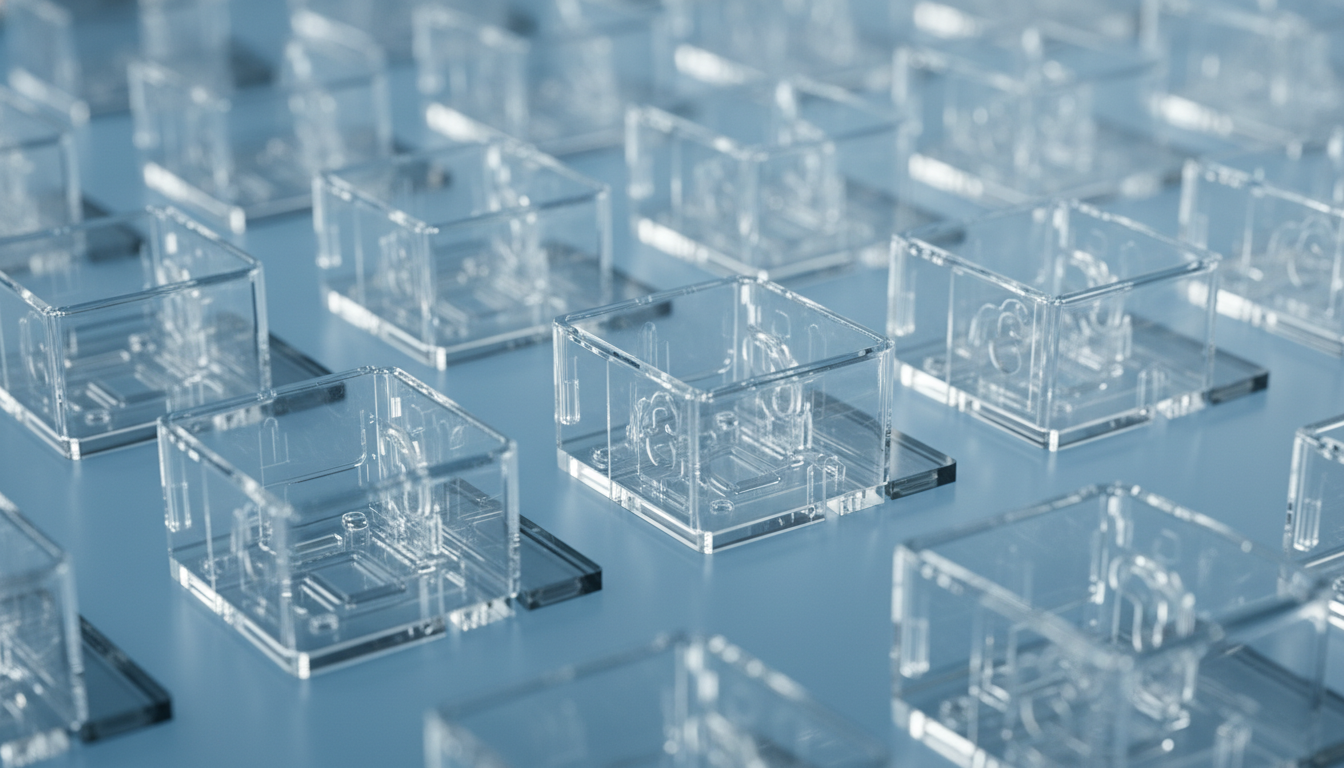
Precision-injection-molded-clear-COC-microfluidic-chips-and-medical-grade-polycarbonate-diagnostic-cassettes-in-a-cleanroom-1

Our available materials

COC-TOPAS 5013

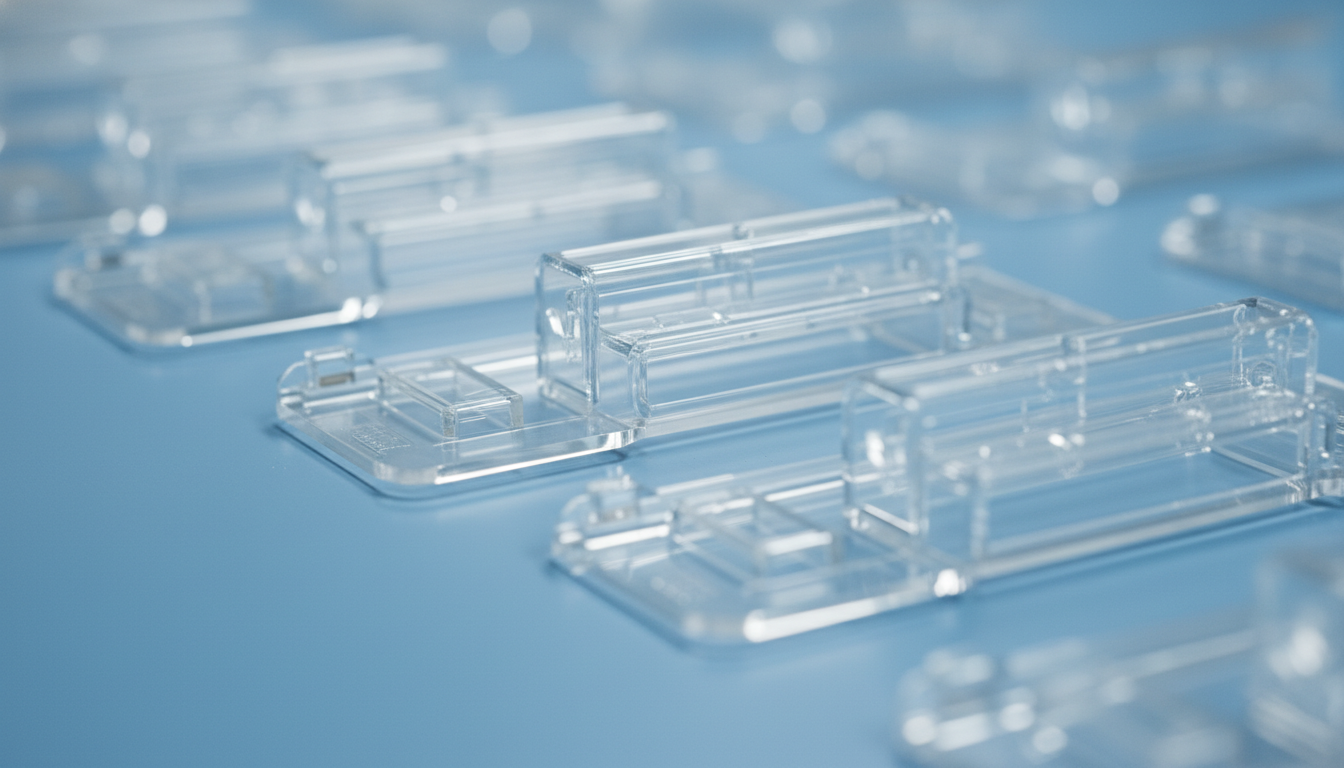
Substituting optical glass and quartz in microfluidic chips, labware, and diagnostic cuvettes without compromising heat resistance during high-temperature PCR protocols requires an ultra-pure amorphous polymer, which Polyplastics’ TOPAS 5013S-04 Cyclic Olefin Copolymer (COC) delivers. Featuring a density of 1.02 g/cm³ and a glass transition temperature (Tg) of 130°C, this USP Class VI and ISO 10993 compliant resin provides 92% light transmittance, ultra-low birefringence, and a nearly non-existent moisture absorption of 0.01%. Jucheng Precision, under ISO 13485 certified medical frameworks, specializes in micro-molding TOPAS 5013. Supported by certified ISO Class 7/8 cleanrooms and in-house 5-axis CNC-machined S136 stainless steel tooling, we guarantee zero-particulate contamination and pristine detail replication verified by Zeiss CMM.
READ MORE

COP-Zeon Zeonor 1420R

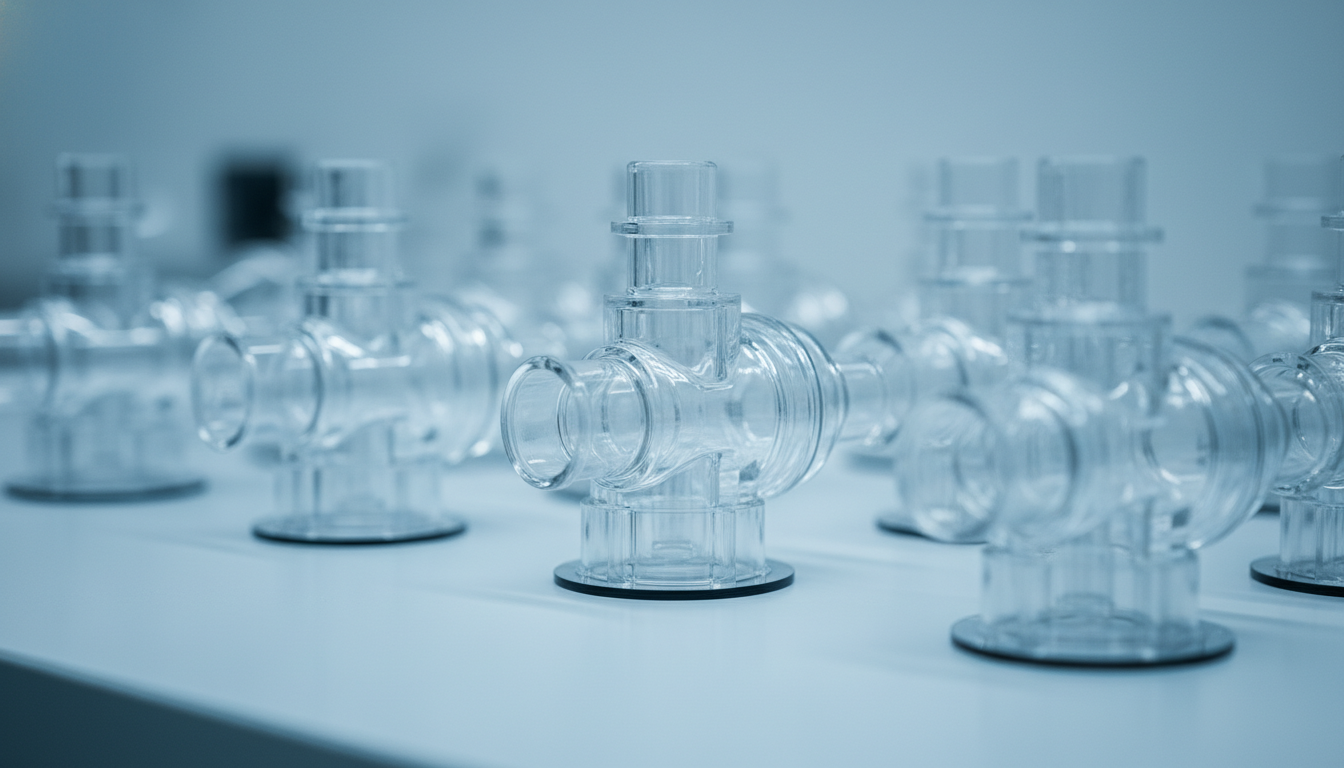
Replacing optical glass and quartz in high-precision pre-filled syringes, diagnostic cuvettes, and microfluidic chips without introducing chemical extractables or leachables requires an ultra-pure amorphous polymer, which Zeon’s Zeonor 1420R Cyclic Olefin Polymer (COP) delivers. Featuring an extremely low density of 1.01 g/cm³ and a glass transition temperature (Tg) of 136°C, this USP Class VI and ISO 10993 certified resin provides 92% light transmittance, exceptionally low birefringence, and nearly non-existent water absorption (less than 0.01%). Jucheng Precision, under ISO 13485 certified medical frameworks, specializes in micro-molding Zeonor 1420R. Supported by certified ISO Class 7/8 cleanrooms and in-house 5-axis CNC-machined S136 stainless steel tooling, we guarantee zero-particulate contamination and pristine detail replication verified by Zeiss CMM.

READ MORE

PC-Covestro Makrolon Rx1805

Maintaining absolute structural clarity and high impact strength under repeated gamma-radiation sterilization and aggressive clinical lipid exposure requires a specialized amorphous polymer, which Covestro’s Makrolon Rx1805 delivers through its unreinforced, medical-grade polycarbonate matrix. Certified to USP Class VI and ISO 10993 biocompatibility standards, this premium easy-release resin provides outstanding tensile yield strength (66 MPa) and a high heat deflection temperature (HDT) of 125°C. Jucheng Precision, operating under strict ISO 13485 medical device certified frameworks, specializes in cleanroom molding of Makrolon Rx1805. Utilizing 5-axis CNC-machined S136 stainless steel tooling and pressurized water controllers, we eliminate internal residual molding stresses, delivering high-purity medical components verified by Zeiss CMM.

READ MORE

Comprehensive Biocompatible & Medical Resin Grades We Mold

We process premium-grade biocompatible polymers from global chemical leaders, fully traceable and certified to ISO 10993 and USP Class VI standards:

Biocompatible Class Typical Brand & Grade Key Characteristics & Advantages
Biocompatible PC
(Medical Polycarbonate)
• Covestro Makrolon Rx1805 / Rx2440
• Sabic Lexan HP2 / HP1
High impact strength, glass-like optical clarity, and strict sterilization stability (Gamma and ETO). Used for hemodialysis housings, surgical instruments, and fluid connectors.
COC / COP Polymers
(Cyclic Olefin)
• TOPAS COC 5013 / 6013
• Zeon Zeonor 1420R / ZEONEX
Ultra-pure resins outperforming glass. Hydrophobic with exceptionally low moisture uptake, high UV-light transmission, and minimal leachables. Ideal for microfluidics, pre-filled syringes, and cuvettes.
Medical Sulfone / PEI
(Autoclavable Resins)
• Solvay Radel HU (PPSU)
• Sabic Ultem HU1000 (PEI)
Outstanding mechanical strength and resistance to repeated steam autoclaving (1000+ cycles) without degradation. Specified for surgical sterilization trays, dental tools, and medical manifolds.
Biocompatible TPE / LSR
(Medical Elastomers)
• KRAIBURG Thermolast K TC6LMN
• Platinum-cured Liquid Silicone (LSR)
Latex-free and phthalate-free flexible compounds. High skin-contact safety and chemical resistance. Used for medical gaskets, dynamic syringe plunger tips, and soft-touch device grips.

Applicable Molding Processes for Biocompatible Resins

Medical device production requires specialized clean manufacturing processes to prevent bio-contamination:

Molding Process Process Suitability & Application
Cleanroom Injection Molding Excellent. Run inside certified ISO Class 7/8 cleanrooms to mold diagnostic cartridges, syringe barrels, surgical implants, and IV connectors.
Precision Micro-Molding Excellent. Configured for microfluidic chips, lab-on-a-chip diagnostic devices, and tiny orthopedic pins with channels down to 0.1mm.
2-Shot (2K) Molding Good. Allows co-injecting transparent rigid PC/COC medical shells with soft medical TPE sealing lips in a single clean cycle.

Biocompatible & Medical Resin Manufacturing & Tooling Guide

Molding medical-grade resins requires uncompromising cleanliness controls, corrosion-resistant molds, and standardized validation protocols:

  • Cleanroom Production (Contamination Prevention): To prevent microscopic dust or particulate cross-contamination, molding machines operate inside certified ISO Class 7 or Class 8 cleanrooms. Raw material transport is fully enclosed and automated.
  • Rust-Resistant Mold Steel: High-performance medical resins can generate minor volatiles during high-temp runs, and corrosive water mist is used for cooling. Jucheng’s tooling division uses mirror-polished, corrosion-resistant stainless steel (such as S136 or M340 hardened to 48–52 HRC) to prevent mold rusting and preserve part purity.
  • Exhaustive Desiccant Drying: Biocompatible PC, PEI, and copolyesters are highly hygroscopic. Moisture causes splay, micro-voids, and severe loss of mechanical strength. We dry raw material in dedicated clean-air desiccant dryers at 80°C–150°C (depending on grade) to ensure absolute dryness.
  • IQ/OQ/PQ Validation: Every medical-grade molding run conforms to rigorous process validation under ISO 13485 quality frameworks. Process parameters are locked and continuously logged to ensure full lot traceability.

Key Application Industries for Molded Biocompatible Components

  • In-Vitro Diagnostics & Microfluidics: Clear diagnostic cassettes, microfluidic lab-on-a-chip assemblies, cuvettes, assay wells, blood collection tube closures, and pipette tips (utilizing pure COC/COP).
  • Surgical & Orthopedic Devices: Autoclavable surgical instrument housings, sterilization trays, radiolucent targeting guides, orthopedic templates, and handles.
  • Drug Delivery Systems & Packaging: Auto-injector pens, pre-filled syringes, dry-powder inhalers (DPI), medical caps, and pharmaceutical blister barrier shells.
  • Surgical & Cardiovascular Consumables: Hemodialysis dialyzer housings, IV connectors, drip chambers, blood filtration manifolds, and dynamic valve ports.

Material Properties

Density 1.01 - 1.03 g/cm³
Light Transmission 91 - 92 %
Birefringence Ultra-Low -
Tensile Strength at Yield 55 - 70 MPa
Flexural Modulus 2,100 - 2,400 MPa
Moisture Absorption < 0.01 %
Flammability Rating UL 94 HB Class
Glass Transition Temperature (Tg) 130 - 140 °C
Heat Deflection Temperature (HDT @ 1.8 MPa) 115 - 125 °C
Linear Mold Shrinkage 0.45 - 0.65 %
Extractables & Leachables Extremely Low -
Biocompatibility Compliance USP Class VI / ISO 10993 -
Maximum Part Size 600 x 400 mm
Minimum Part Size 0.1 x 0.1 mm