
An injection mold lifter is useful when an internal undercut blocks ejection but can clear through a controlled angled movement. It is not simply a smaller side slide: the lifter travels with the ejector system, so its motion, part contact, and timing must work together. Review the feature within the whole カスタム金型設計 before choosing the mechanism.
Start with the trapped surface and draw its release path. If redesign, an open slot, or a parting-line change preserves function, those options may reduce moving steel and maintenance. Use a lifter when the feature justifies its added motion.
このガイドでは:
When is a lifter a better fit than a slide?
A lifter is considered for an internal undercut that can move diagonally away from the molded feature during ejection. A straight side core is often more direct when the feature needs dedicated lateral withdrawal. Geometry, travel, and mold layout decide; neither mechanism is a universal default.
Undercut depth, draft, wall thickness, ejection direction, and nearby ribs determine whether the lifter can clear without dragging. Deep features may require excessive travel or leave the lifter too slender to remain rigid. Review the part in section as well as in the full mold assembly.
How should lifter movement be coordinated?
The ejector plate drives the lifter forward while its guide path creates lateral displacement. The part must stay supported as the undercut clears. Otherwise, the feature can flex, whiten, crack, or remain caught. Show the full motion and confirm that the lifter clears before handling or robot takeout.
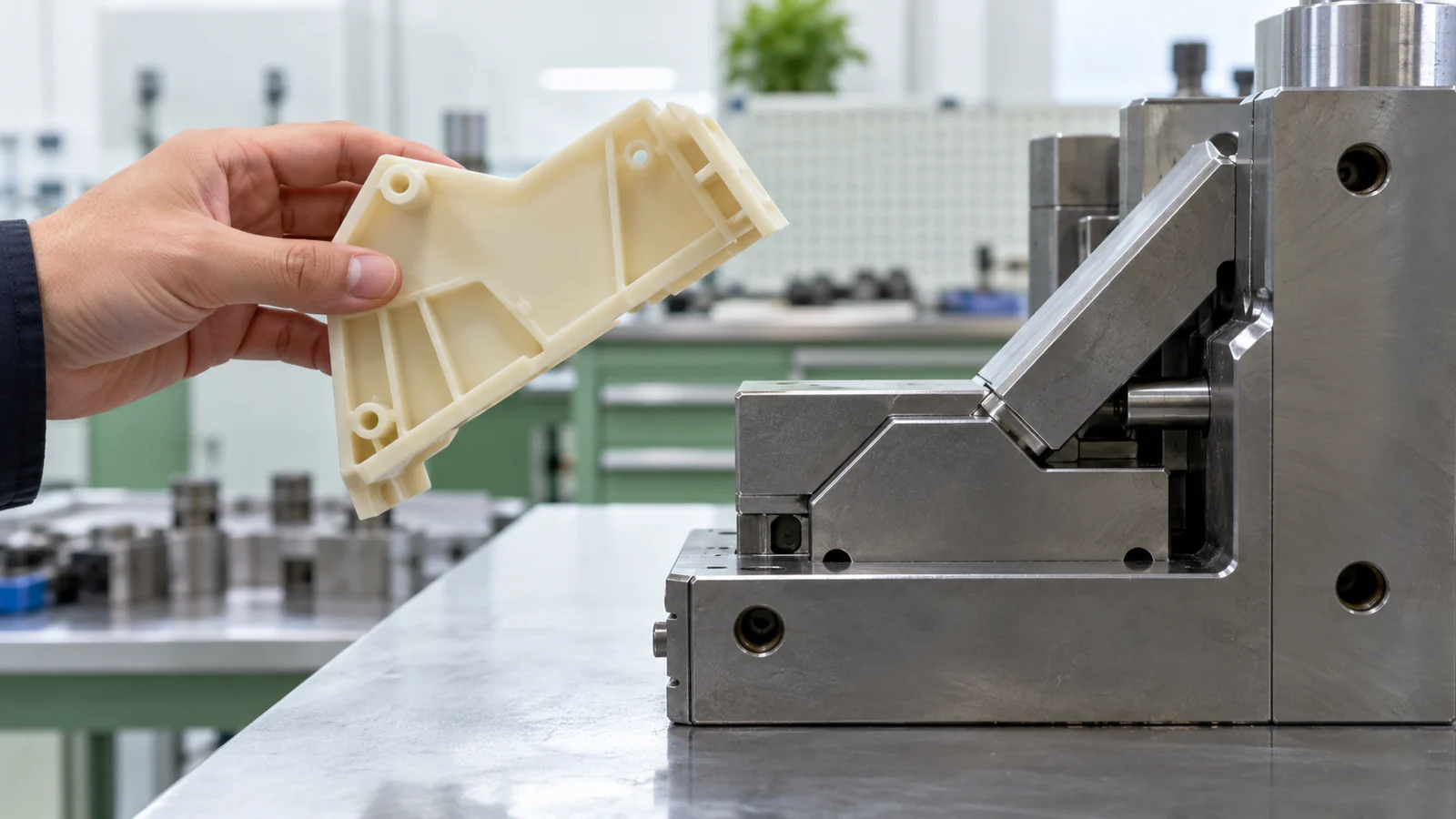
Check head contact area, guide length, support at full extension, and clearance to adjacent ejectors. Shrinkage can tighten the part around the steel; texture can also change release. A CAD animation helps expose collisions but does not prove that the molded part will eject without damage.
どのような不具合がリフター設計上の問題を示唆しますか?
アンダーカット部のスカッフィングは、クリアランス、抜き勾配、または表面を引きずる経路が不十分であることを示す場合があります。フィーチャの割れは、過剰な保持力やサポートされていない突き出しを示唆することがあります。リフターのガーリングや摩耗は、ガイダンスの不良、汚染、熱、またはサービスアクセスの制限を示す場合があります。接触点を特定する前に突き出し力を増やすと、損傷が悪化する可能性があります。.
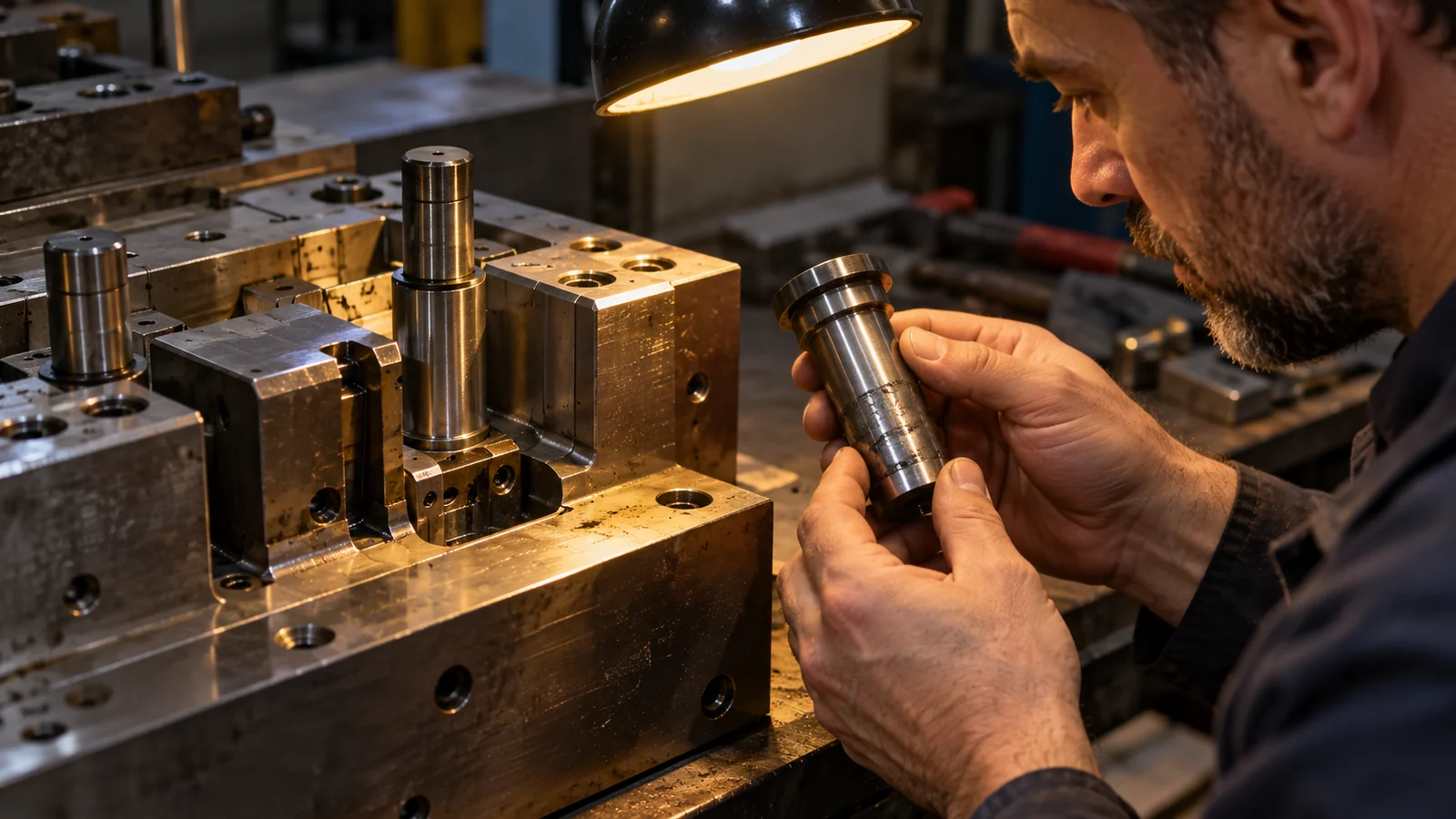
部品が張り付く場合は、そのフィーチャをサイトの 抜き勾配と突き出しに関するガイダンス. と比較してください。マークが現れる場所とその方向を記録してください。これは、動作の問題と焼き嵌めや表面摩擦を区別するのに役立ちます。.
金型離型の前に何を確認すべきですか?
- 断面図でアンダーカット、抜き勾配、ストローク、離型ベクトルを示してください。.
- 突き出しの両端でサポートとクリアランスを確認してください。.
- 許容されるウィットネスマークと外観上の限界を定義してください。.
- 樹脂、収縮挙動、表面テクスチャを確認してください。.
- 検査、潤滑、可動部品へのアクセスを計画してください。.
実際の部品と金型レイアウトに照らして、ツールメーカーにシーケンスを確認してもらってください。公称CAD形状をクリアしていても、生産用金型でサポートやサービスができないリフターは、完全なソリューションとは言えません。.
射出成形金型のリフターについて買い手が尋ねる質問
リフターはすべての内部アンダーカットを成形できますか?
いいえ。深さ、方向、フィーチャの強度、利用可能な移動量、金型スペースが限界を定めます。深いフィーチャや側面を向いたフィーチャには、別の機構や部品の設計変更が必要になる場合があります。.
リフターは跡を残しますか?
位置、嵌合、仕上げ、および突き出し荷重によって、ウィットネスマークまたはコンタクトマークを残す可能性があります。ツーリング前に外観ゾーンと許容基準を定義してください。.
ドラフトを増やせばリフターを不要にできますか?
アセンブリや機能に影響を与えずに離型形状を変更できる場合は、可能なことがあります。アンダーカットを除去する前に、部品全体を確認してください。.