
경질 열가소성 기판 위에 연질 엘라스토머 층을 통합하는 것은 현대 제품 인체공학 및 환경 밀봉에 있어 주요한 진전을 나타냅니다. 다중 재료 폴리머 구조는 미끄럼 방지 핸들, 충격 흡수 및 유체 차단을 제공하며, 2차 기계적 체결구나 접착제가 필요하지 않습니다. 외관상 플로우 라인이나 기판 변형 없이 높은 접합 강도를 달성하려면 신중한 재료 매칭과 금형 정밀도가 필요합니다.
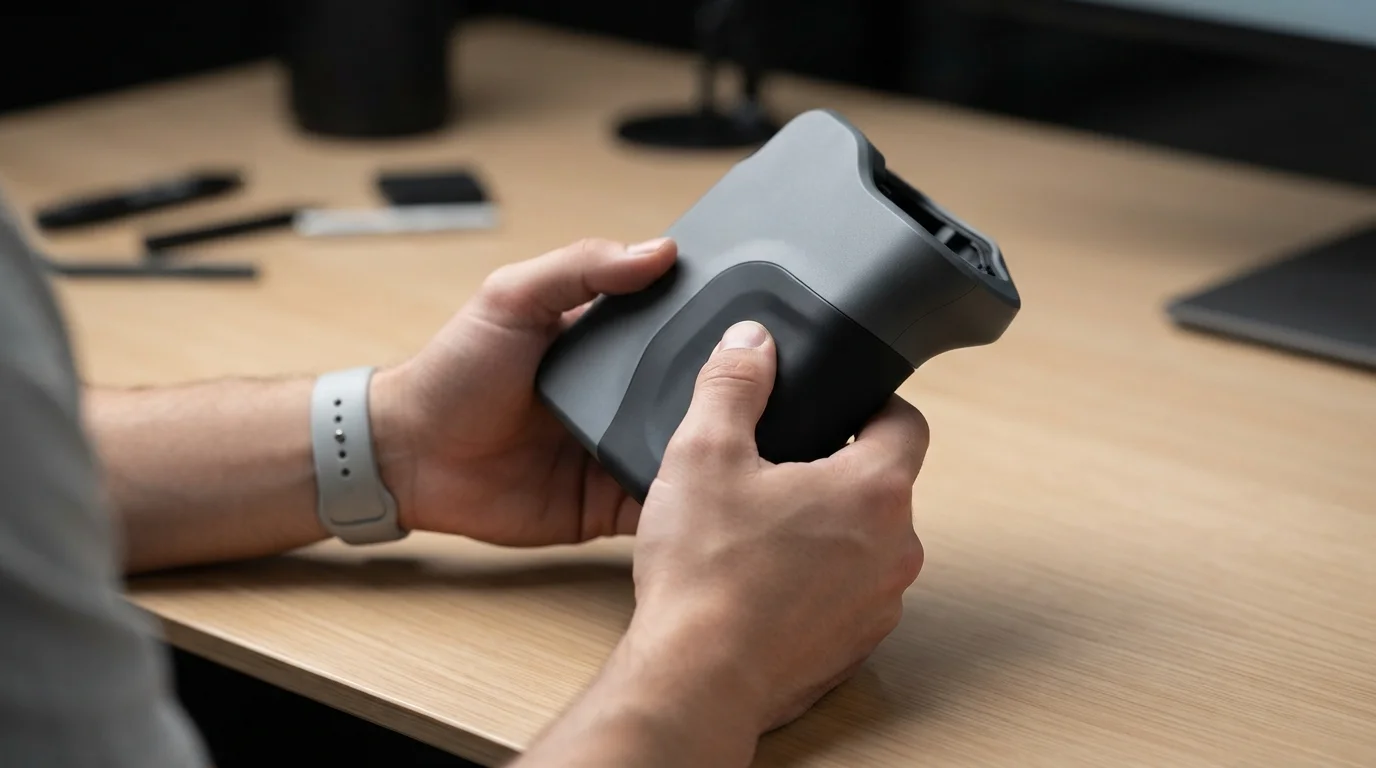
플라스틱 평가자들 사이의 커뮤니티 토론에서는 다중 수지 처리 중 접합 박리와 가장자리 플래시가 주요 고장 모드로 자주 언급됩니다. 폴리머 경계층의 열 관리는 오버몰딩된 엘라스토머가 영구적으로 융합되는지 또는 동적 핸들링 중에 벗겨지는지를 결정합니다. 이 기술 가이드는 산업적 이점, 금형 설계 매개변수, 품질 테스트 표준 및 공정 최적화 전략을 검토합니다.
소프트-온-하드 수지 조합의 주요 산업적 이점
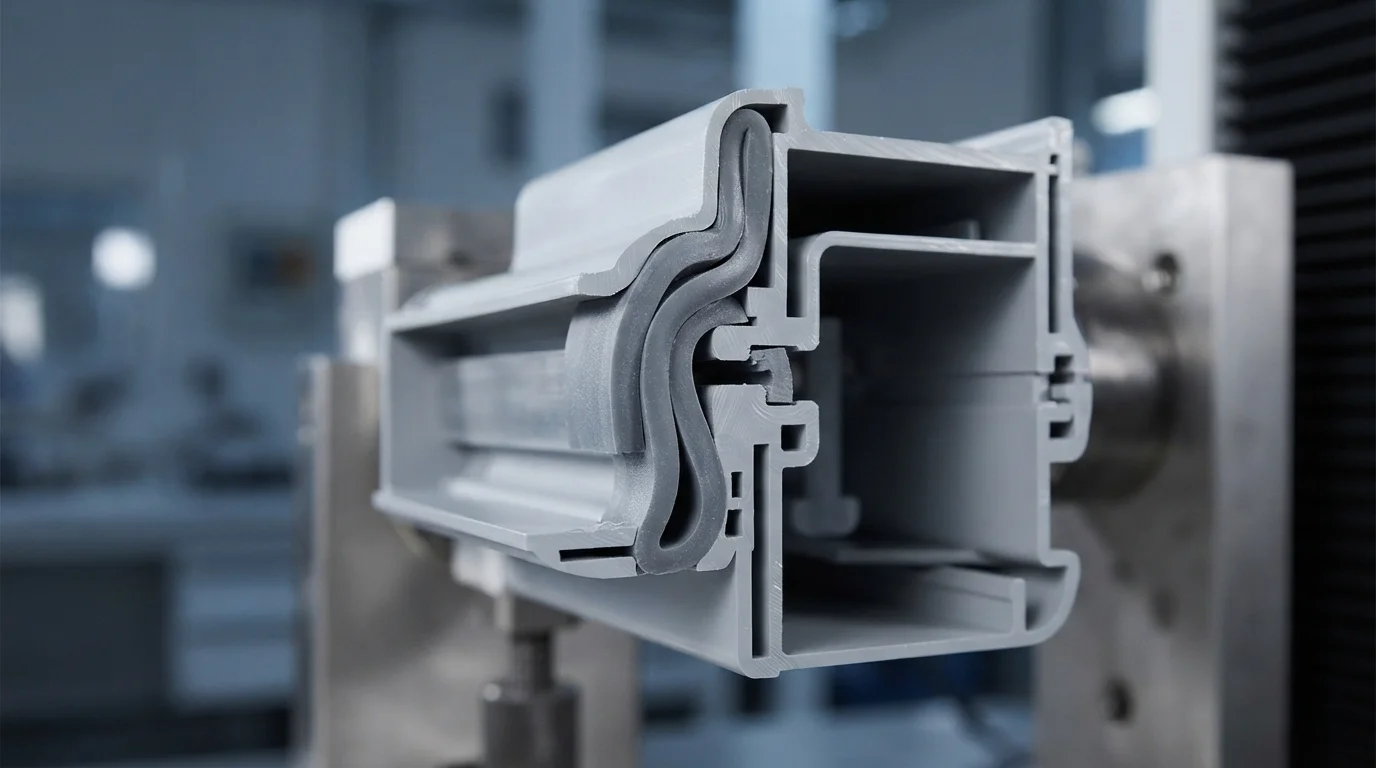
실행 플라스틱 오버몰딩 을 통해 제품 설계자는 대조적인 물리적 특성을 통합된 단일 부품으로 결합할 수 있습니다. 경질 구조 프레임을 ABS, 폴리카보네이트(PC), 또는 PA66 과 같은 연질 엘라스토머와 결합하면 우수한 TPE 또는 TPU 이 생성됩니다. soft-touch ergonomics. Soft-touch grips enhance user comfort and operator safety on medical surgical instruments and industrial power tools.
Elastomeric overmold layers provide exceptional vibration dampening, protecting delicate internal electronics from mechanical shock and dynamic road impact. Forming a continuous chemical seal over enclosure parting lines achieves IP67 environmental sealing without manual gasket installation. Furthermore, multi-material processing enables integrated multi-color styling that enhances retail product aesthetics.
Core mechanical and ergonomic benefits include:
- Tactile ergonomic comfort—Layering soft TPE or TPU over rigid handles improves grip friction and reduces operator fatigue.
- Mechanical shock absorption—Elastomeric outer boundaries cushion sensitive internal printed circuit boards against drop impacts.
- Integrated fluidic sealing—Encapsulating perimeter grooves directly creates leak-proof barriers against water, oil, and dust ingress.
Key Tooling Considerations for Multi-Resin Components
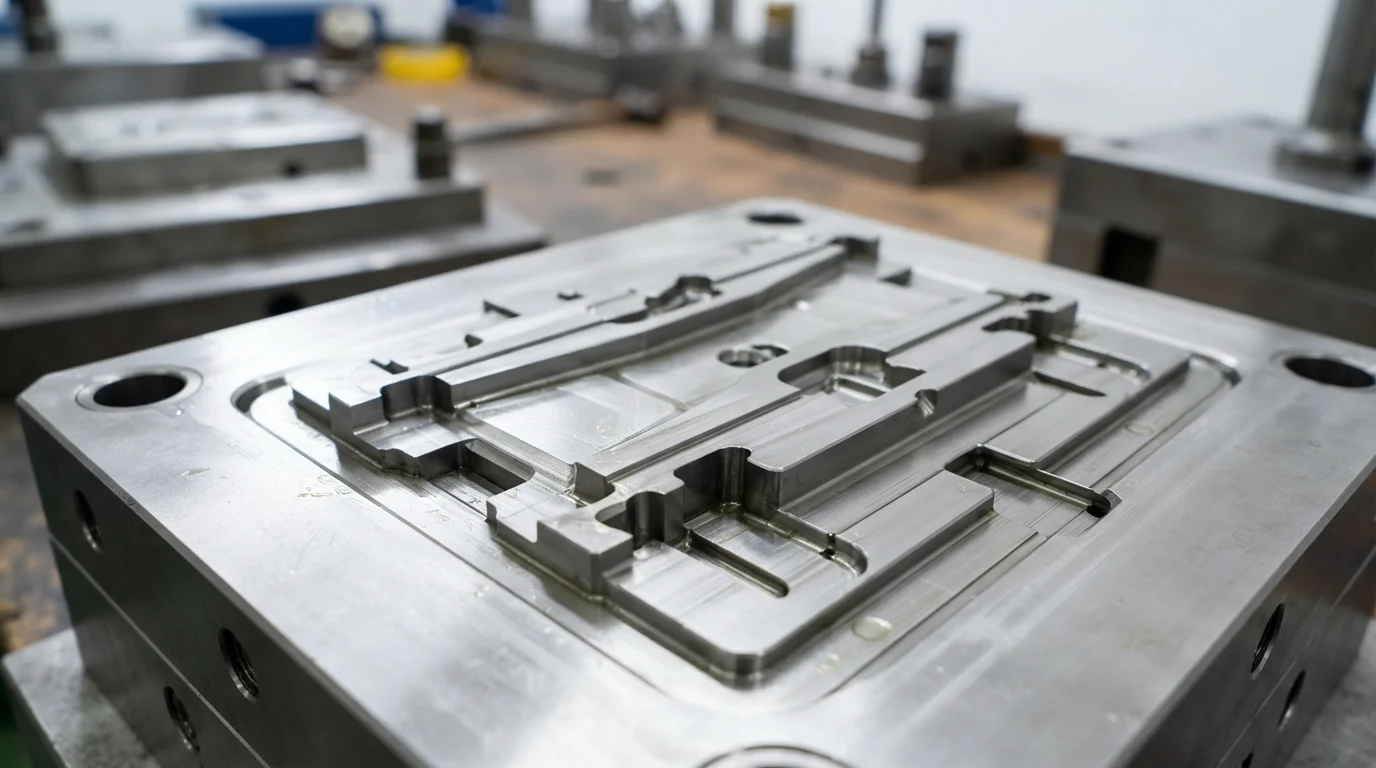
Tooling geometry directly controls the flash-free encapsulation and edge peel resistance of overmolded assemblies. Low-viscosity soft resins flow easily under injection pressure, creating cosmetic flash if mold shut-offs are improperly fitted. Machining tool cavity steel with fitment tolerances under ±0.01 mm ensures that shut-off lands clamp firmly against the rigid substrate, preventing rubber leakage.
Designing mechanical locking features along the border of the elastomeric boundary provides secondary physical retention. Mechanical dovetails, undercuts, and through-holes physically trap the second material inside the rigid substrate frame. Preheating the rigid substrate cavity to 70°C-90°C promotes interfacial molecular diffusion, preventing edge peeling during secondary injection.
Multi-resin tooling design guidelines include:
- Precision shut-off land fitting—Grinding tool steel sealing faces to sub-micron accuracy eliminates soft elastomer flash.
- Mechanical undercut placement—Incorporating 90-degree mechanical locking channels along edges prevents delamination under dynamic shear.
- Substrate temperature management—Maintaining warm tool cavities preserves boundary heat needed for molecular chain interdiffusion.
- Balanced gate location—Positioning fan or tab gates on thick substrate sections prevents local wall wash-out and thermal distortion.
Quality Control: Testing Bond Strength and Surface Uniformity
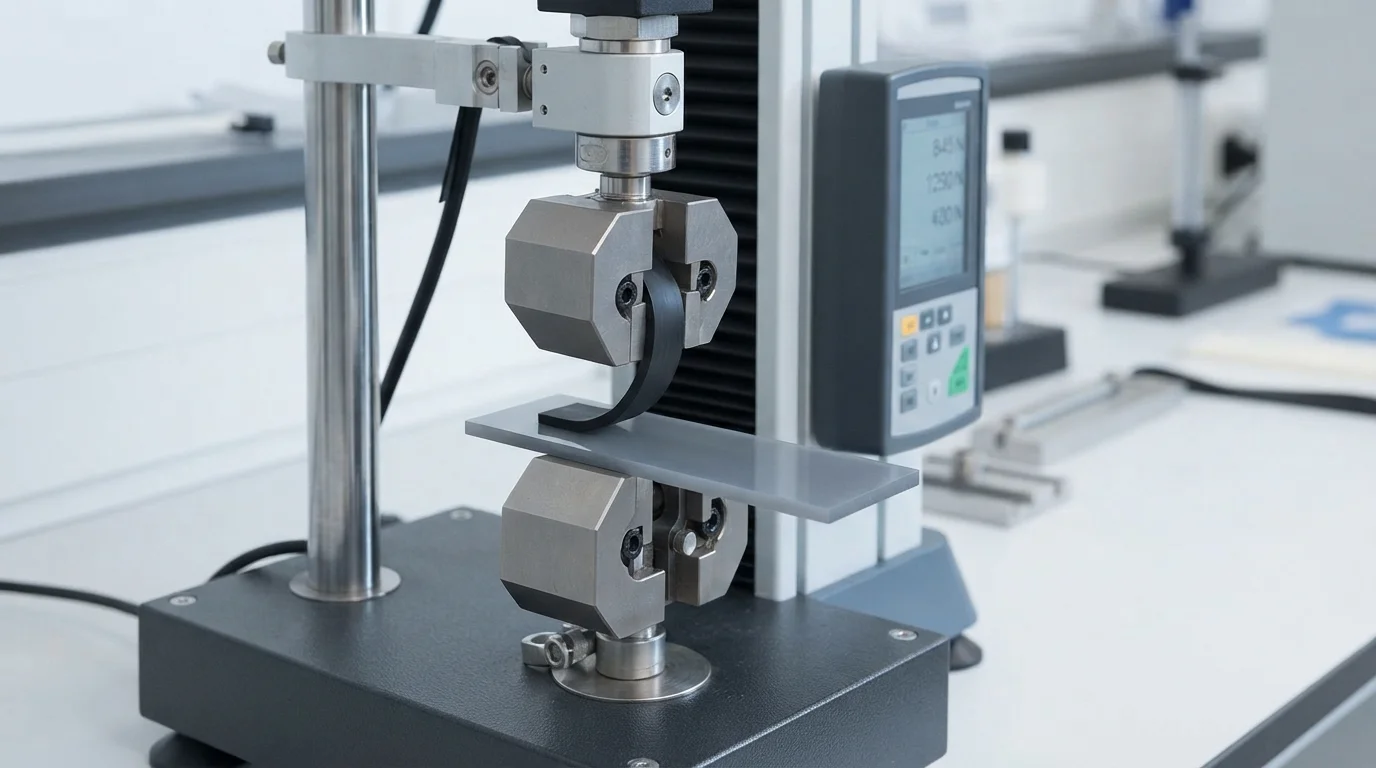
Validating multi-material component quality requires rigorous mechanical testing and non-contact metrology. Evaluating interfacial peel strength utilizes 90-degree pull testing fixtures to measure the force required to separate the elastomer from the rigid substrate. High-quality chemical adhesion causes the elastomer to tear internally before separating from the substrate interface.
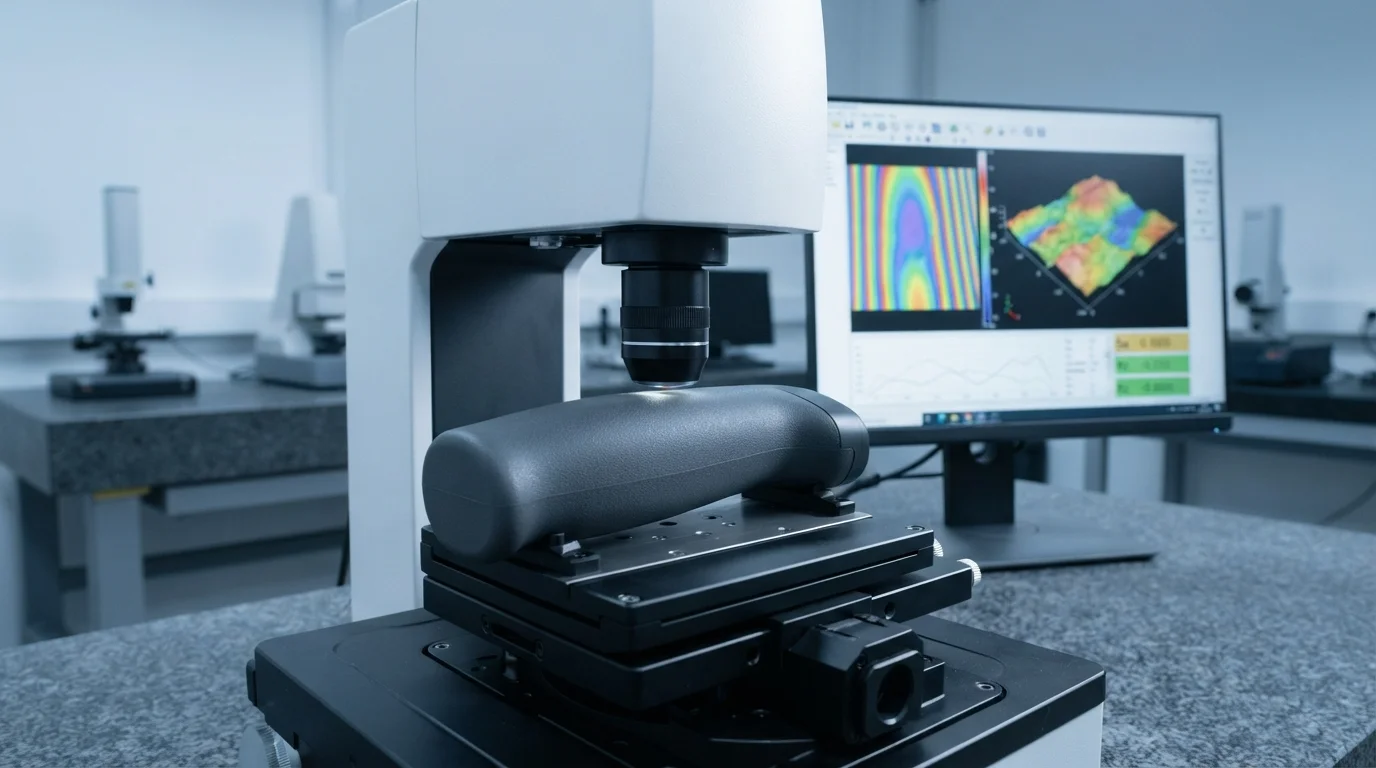
Metrology inspection laboratories utilize automated Zeiss CMM coordinate measuring machines and 3D optical profilers to verify wall thickness uniformity. Inspecting critical-to-quality dimensions under IATF 16949 and ISO 13485 standards ensures complete batch-to-batch repeatability. Automated vision systems detect microscopic surface splay marks, sink shadows, or parting line flash before components leave the press.
Why Choose JUCHENG for Precision Plastic Overmolding
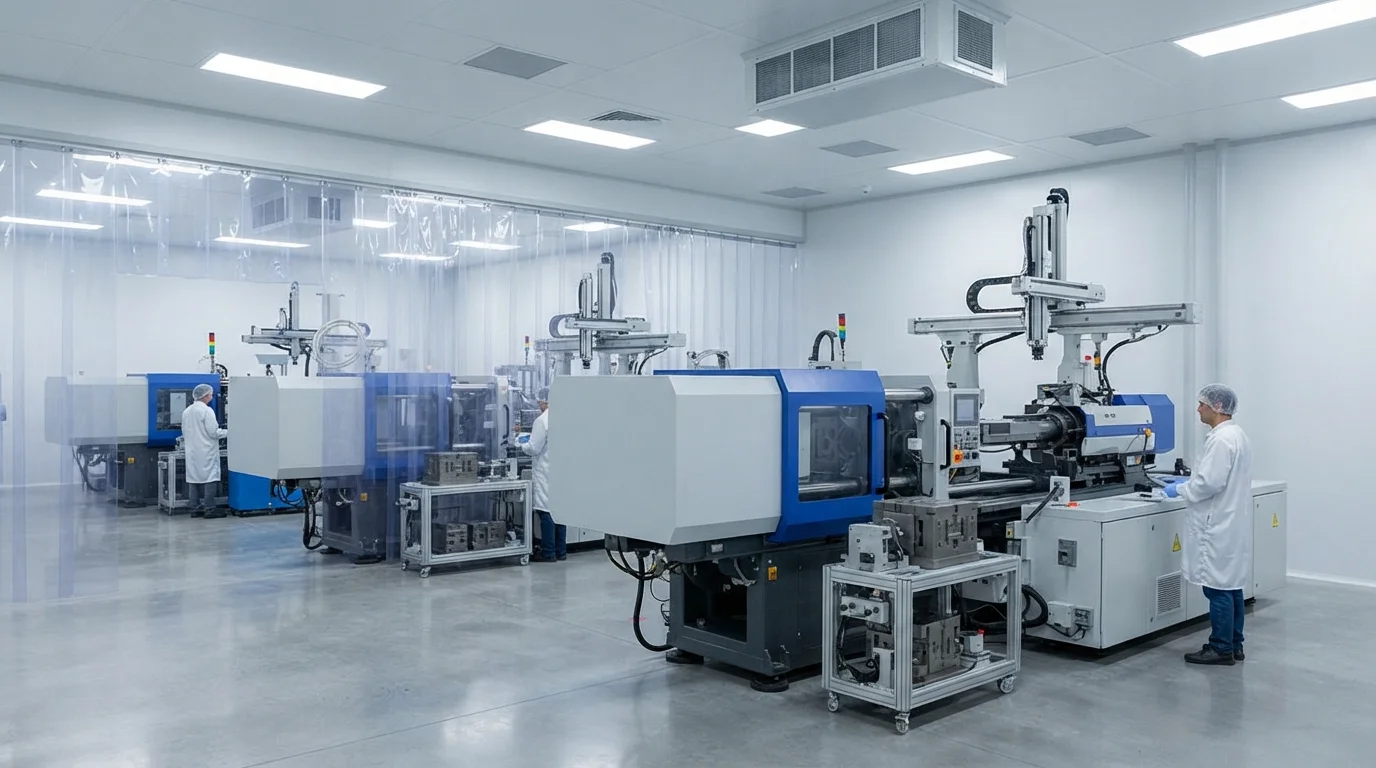
Partnering with JUCHENG for multi-material encapsulation projects provides access to an extensive production floor equipped with 35+ automated injection presses ranging from 15T to 3000T clamping force. Operating an in-house tool room with 25 sets of 5-axis CNC machines permits precise machining of shut-off steel lands, ensuring flash-free elastomeric boundaries. Our engineering team delivers a free 24-hour DfM review for every CAD submission, analyzing substrate wall thickness, draft angles, and shut-off feasibility before cutting steel.
Quality management systems certified to IATF 16949 and ISO 13485 back every multi-shot production run, offering full PPAP Level 3 documentation for automotive programs. Operating an ISO Class 8 cleanroom molding department protects medical components from particulate contamination during molding and drop-packaging. Executing custom 오버몰딩 사출 성형 under strict quality controls delivers zero-defect parts across high-volume production runs.
| Manufacturing Metric | JUCHENG Overmolding Capabilities | Primary Customer Benefit |
|---|---|---|
| Press Clamping Range | 15T to 3000T (35+ Automated Presses) | Handles both micro medical parts and large automotive panels |
| Tooling Fabrication Precision | 25 Sets of 5-Axis CNCs (±0.01 mm Tooling) | In-house toolmakers guarantee flash-free elastomeric shut-offs |
| Regulated Cleanroom Environment | ISO Class 8 (10,000-class) Cleanroom | Particle-controlled production for sterile medical devices |
자주 묻는 질문 (FAQ)
What is the main benefit of plastic overmolding over traditional single-resin molding?
Plastic overmolding allows engineers to combine contrasting material properties—such as rigid structural strength and soft elastomeric grips—into a single integrated component. This multi-material fusion improves tactile ergonomics, absorbs mechanical vibration, and provides waterproof sealing without secondary manual assembly.
How do engineers prevent edge peeling on overmolded soft grips?
Preventing edge peeling requires preheating the rigid substrate cavity to 70°C-90°C during secondary injection and incorporating perimeter mechanical undercuts or 90-degree dovetail grooves. Mechanical locking anchors the elastomer edge firmly into the substrate, preventing peel-off under dynamic shear stress.
Which plastic resins provide the best chemical adhesion for TPE overmolding?
Rigid thermoplastics like ABS, PC, and PC/ABS alloys offer outstanding chemical affinity with SEBS-based TPE and TPU elastomers. Polar engineering polymers like PA66-GF require adhesion-modified TPE grades or mechanical locking features to achieve robust joint durability.
How does shut-off steel design prevent soft rubber flash during overmolding?
금형 차단 랜드는 2차 사출 시 경질 기판 둘레에 단단히 밀착되는 정밀 연삭된 강재 밀봉 면입니다. 0.01mm보다 엄격한 차단 강재 피팅 공차를 유지하면 저점도 연질 엘라스토머 용융물이 외관 기판 표면으로 번지는 것을 방지합니다.
Why is ISO Class 8 cleanroom molding important for medical overmolded tools?
ISO Class 8 cleanroom molding controls airborne particulate contamination during multi-material processing. Sterile medical devices, surgical tool handles, and fluidic diagnostic cartridges require cleanroom encapsulation to satisfy ISO 13485 and USP Class VI medical compliance.
What metrology methods verify bond strength between overmolded plastic layers?
Interfacial bond strength is measured using 90-degree peel strength tensile testing according to ASTM standards. Non-contact 3D optical profilers and automated Zeiss CMM machines also verify wall thickness uniformity and shut-off boundary alignment without deforming soft elastomer surfaces.