
硬質熱可塑性基材に軟質エラストマー層を統合することは、現代の製品人間工学と環境シーリングにおける大きな進歩を表しています。多材料ポリマー構造は、滑り止めハンドル、衝撃吸収、流体隔離を、二次的な機械的ファスナーや接着剤なしで提供します。外観上のフローラインや基材の歪みを引き起こさずに高い接着強度を達成するには、材料の適合性と金型精度の慎重なマッチングが必要です。.
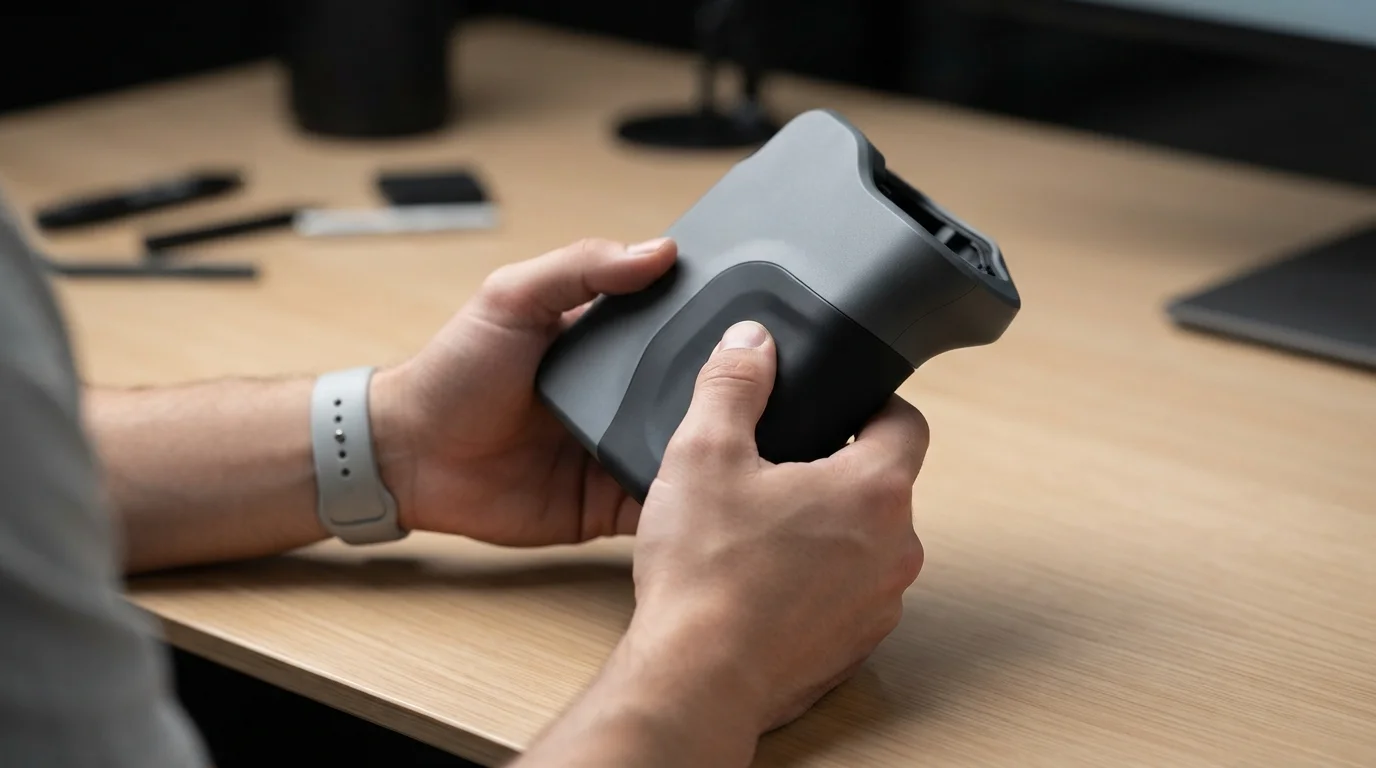
プラスチック評価者の間でのコミュニティディスカッションでは、多樹脂加工中の主要な故障モードとして、接合部の層間剥離とエッジフラッシュが頻繁に強調されています。ポリマー境界層に沿った熱管理は、オーバーモールドされたエラストマーが永久的に融合するか、動的取り扱い中に剥がれるかを決定します。この技術ガイドでは、産業上の利点、金型設計パラメータ、品質試験基準、およびプロセス最適化戦略をレビューします。.
ソフトオン・ハード樹脂組み合わせの主要な産業上の利点
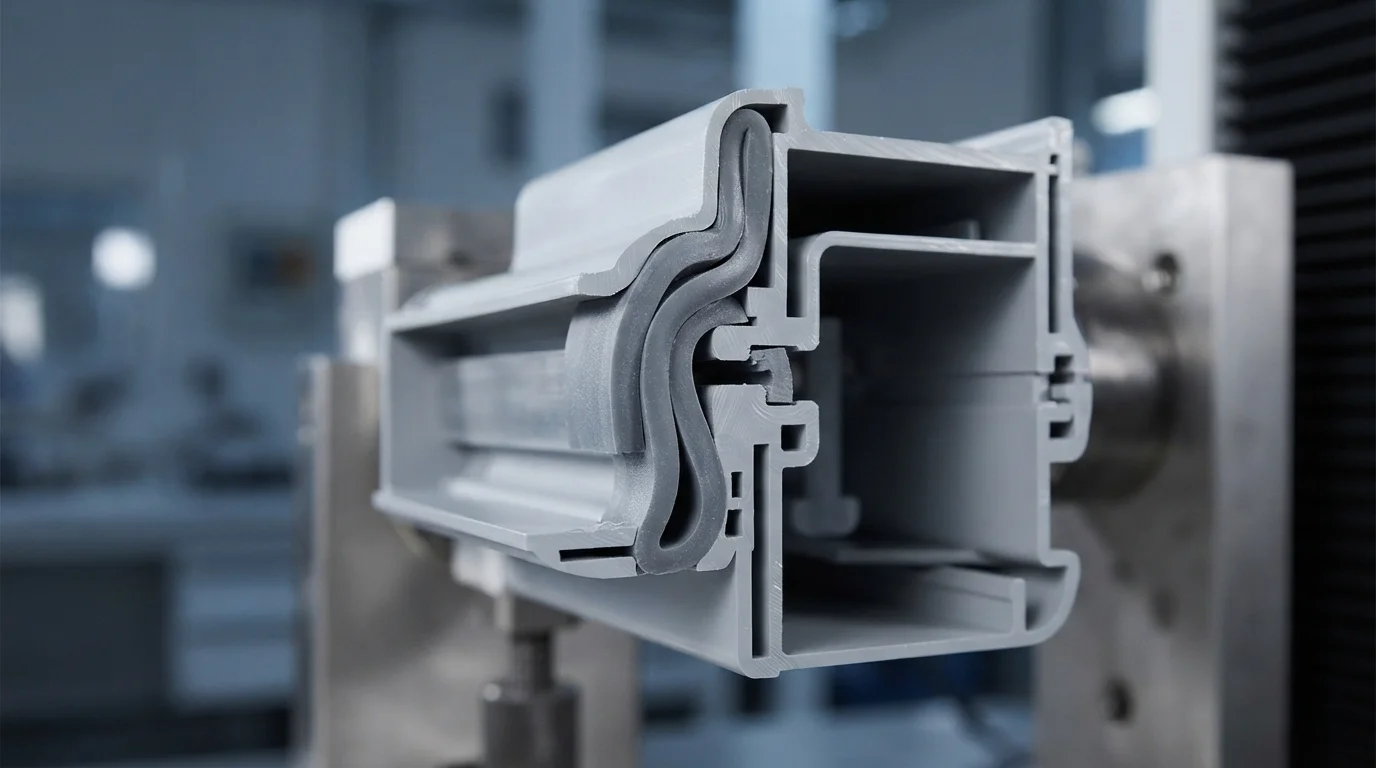
実行中 プラスチックオーバーモールディング により、製品設計者は対照的な物理的特性を単一の一体型コンポーネントに組み合わせることができます。 ABS, ポリカーボネート(PC), または PA66 から成形された硬質構造フレームと、 TPE または TPU のような軟質エラストマーを組み合わせることで、優れた ソフトタッチ人間工学. が生まれます。ソフトタッチグリップは、医療用外科手術器具や産業用パワーツールにおけるユーザーの快適性とオペレーターの安全性を向上させます。.
エラストマーオーバーモールド層は、優れた 振動減衰, を提供し、繊細な内部電子機器を機械的衝撃や動的な路面衝撃から保護します。筐体の分割線に連続的な化学シールを形成することで、手動によるガスケット取り付けなしでIP67の環境シーリングを実現します。さらに、マルチマテリアル加工により、小売製品の美観を高める統合されたマルチカラースタイリングが可能になります。.
主な機械的および人間工学的利点は以下のとおりです。
- 触覚的な人間工学的快適性—硬いハンドルに柔らかいTPEまたはTPUを重ねることで、グリップの摩擦が向上し、オペレーターの疲労が軽減されます。.
- 機械的衝撃吸収—エラストマーの外側境界が、敏感な内部プリント基板を落下衝撃から保護します。.
- 統合された流体シーリング—周囲の溝を直接封入することで、水、油、ほこりの侵入に対する漏れ防止バリアが作成されます。.
マルチレジン部品の主要な金型設計上の考慮事項
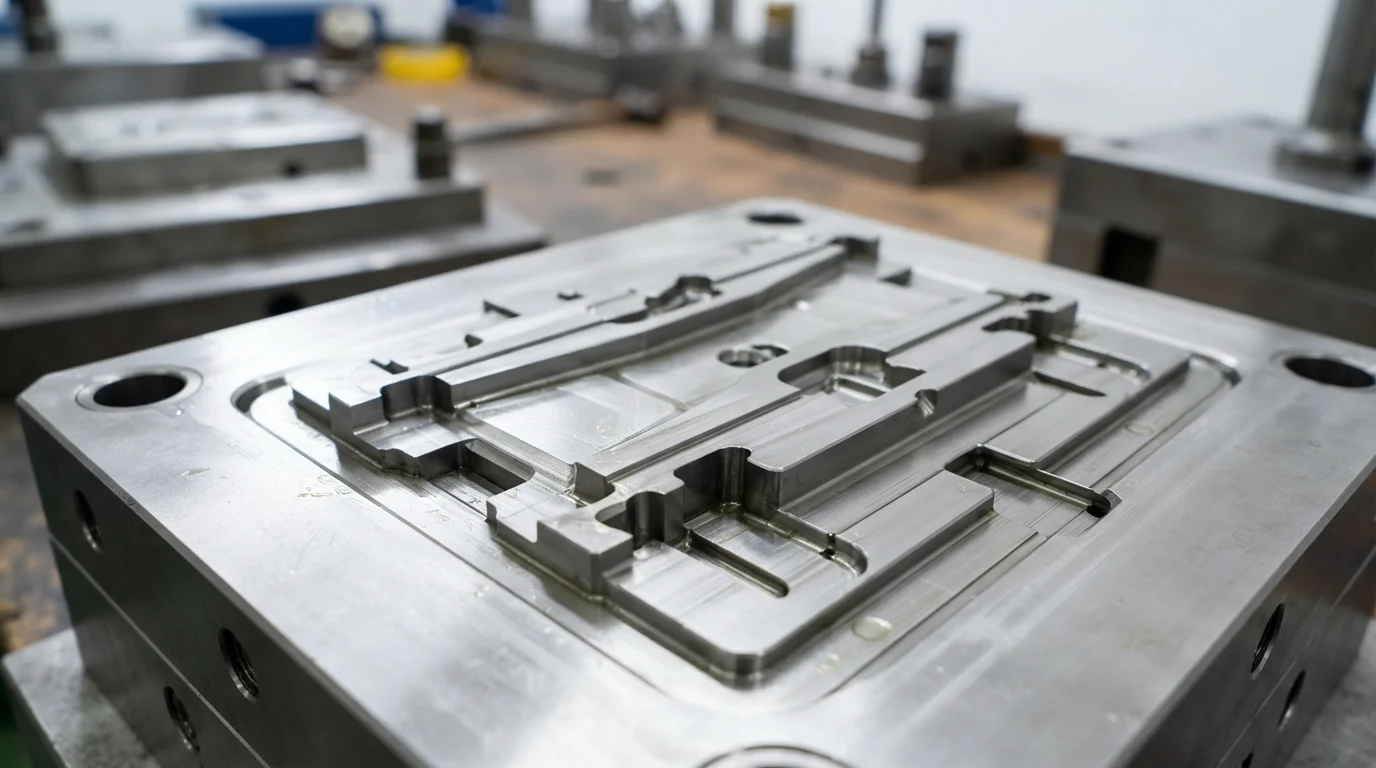
金型の形状は、オーバーモールドされたアセンブリのバリのない封入とエッジ剥離耐性を直接制御します。低粘度の軟質樹脂は射出圧力下で容易に流れ、金型の型締め部が適切に適合していないと外観上のバリが発生します。金型キャビティ鋼を±0.01 mm未満の適合公差で機械加工することで、 シャットオフランド が硬質基板にしっかりとクランプされ、ゴムの漏れが防止されます。.
エラストマー境界の境界に沿って機械的なロック機能を設計することで、二次的な物理的保持が提供されます。機械的なダブテール、アンダーカット、貫通穴により、2番目の材料が硬質基板フレーム内に物理的に固定されます。硬質基板キャビティを70°C〜90°Cに予熱することで、界面の分子拡散が促進され、二次射出中のエッジ剥離が防止されます。.
マルチレジン金型設計ガイドラインには以下が含まれます。
- Precision shut-off land fitting—Grinding tool steel sealing faces to sub-micron accuracy eliminates soft elastomer flash.
- Mechanical undercut placement—Incorporating 90-degree mechanical locking channels along edges prevents delamination under dynamic shear.
- Substrate temperature management—Maintaining warm tool cavities preserves boundary heat needed for molecular chain interdiffusion.
- Balanced gate location—Positioning fan or tab gates on thick substrate sections prevents local wall wash-out and thermal distortion.
Quality Control: Testing Bond Strength and Surface Uniformity
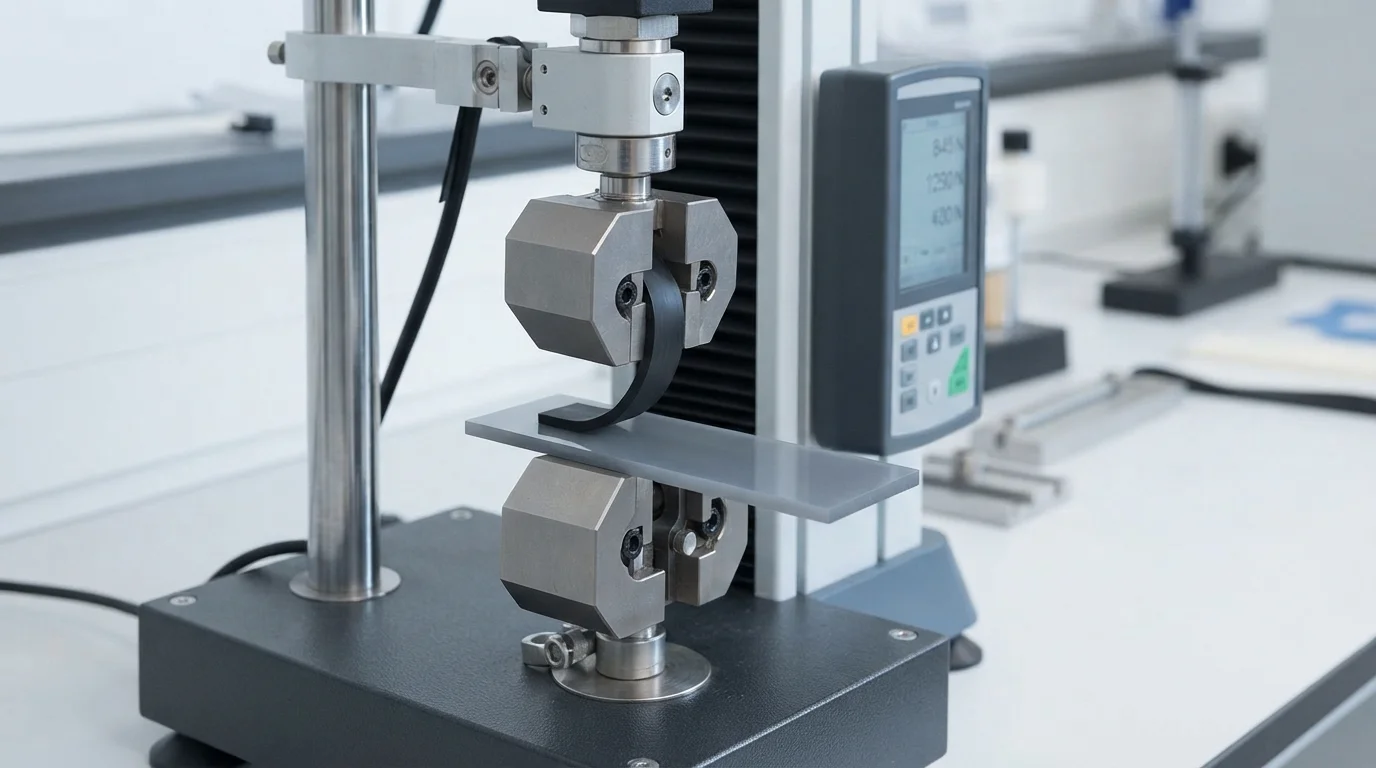
Validating multi-material component quality requires rigorous mechanical testing and non-contact metrology. Evaluating interfacial peel strength utilizes 90-degree pull testing fixtures to measure the force required to separate the elastomer from the rigid substrate. High-quality chemical adhesion causes the elastomer to tear internally before separating from the substrate interface.
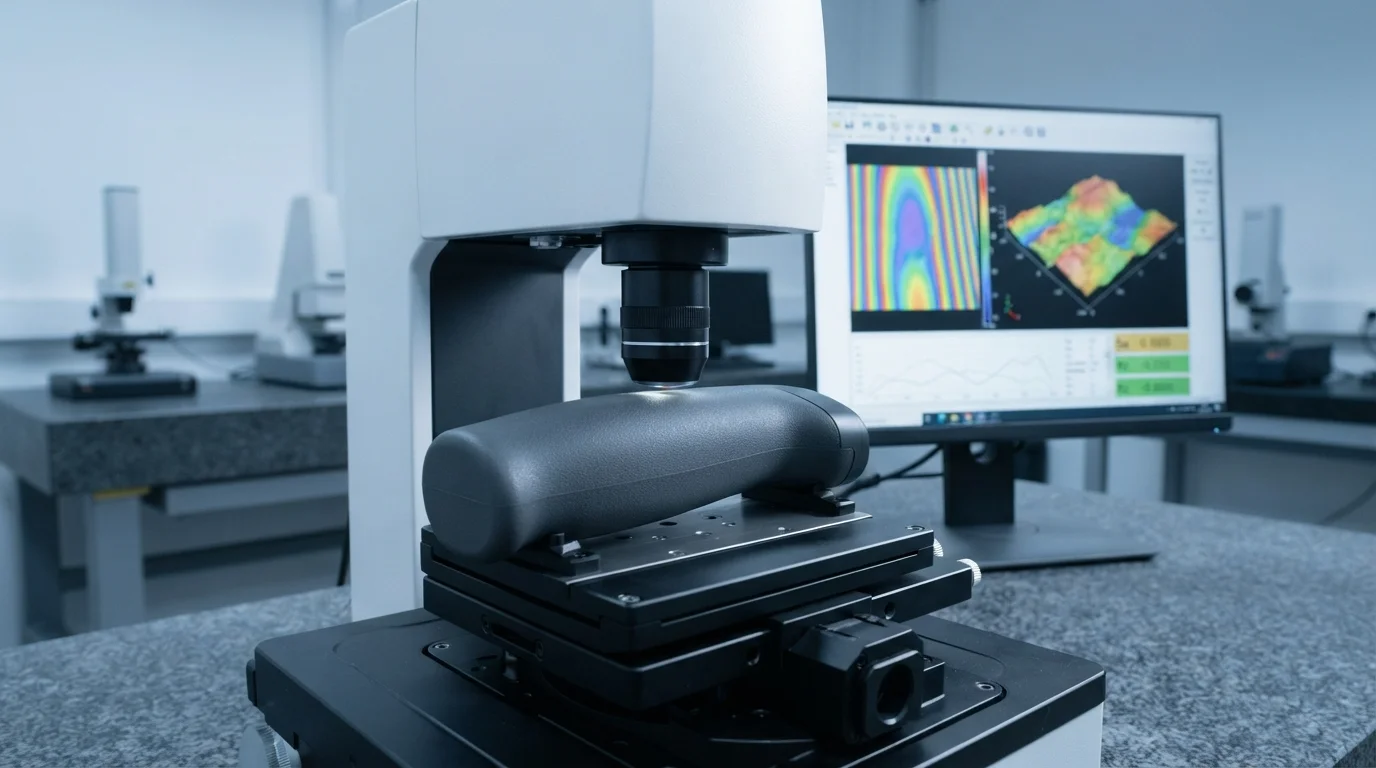
Metrology inspection laboratories utilize automated Zeiss CMM coordinate measuring machines and 3D optical profilers to verify wall thickness uniformity. Inspecting critical-to-quality dimensions under IATF 16949 and ISO 13485 standards ensures complete batch-to-batch repeatability. Automated vision systems detect microscopic surface splay marks, sink shadows, or parting line flash before components leave the press.
Why Choose JUCHENG for Precision Plastic Overmolding
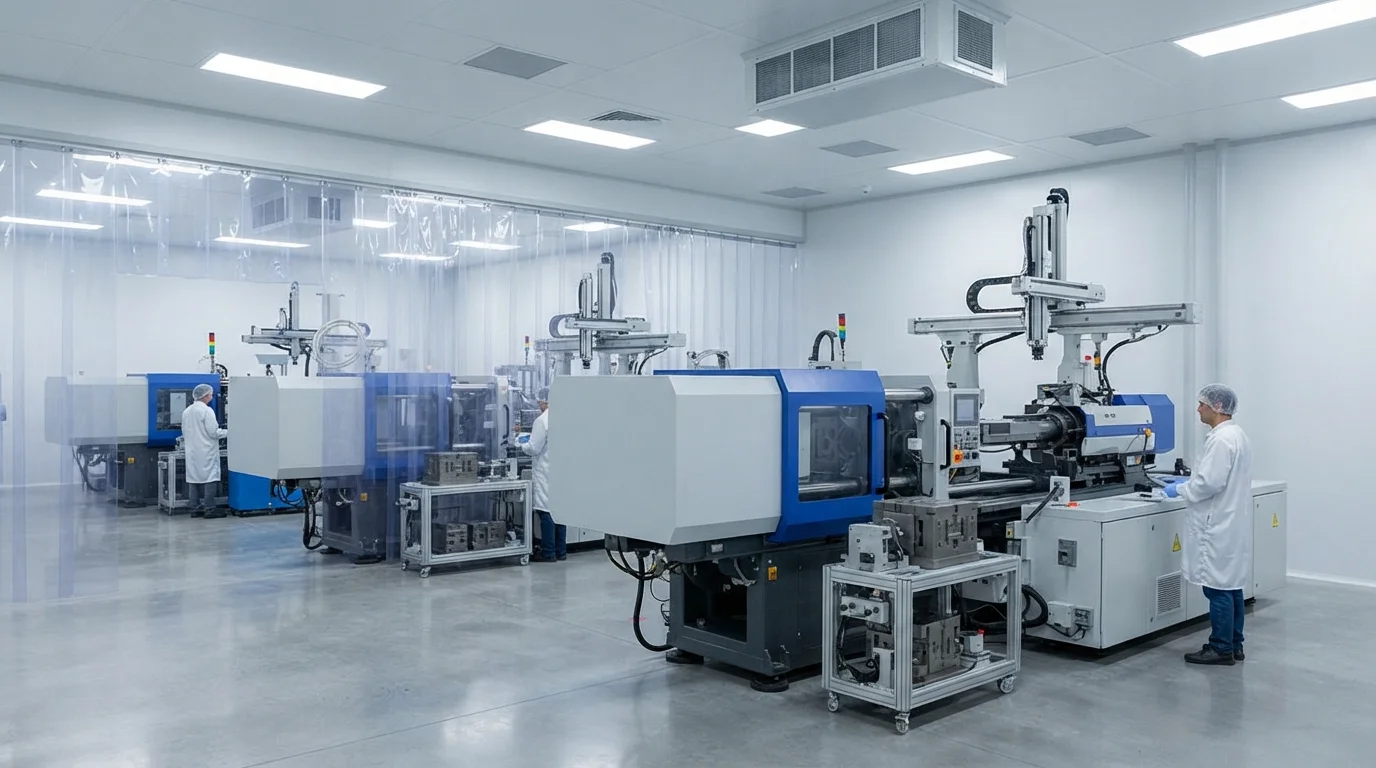
Partnering with JUCHENG for multi-material encapsulation projects provides access to an extensive production floor equipped with 35+ automated injection presses ranging from 15T to 3000T clamping force. Operating an in-house tool room with 25 sets of 5-axis CNC machines permits precise machining of shut-off steel lands, ensuring flash-free elastomeric boundaries. Our engineering team delivers a free 24-hour DfM review for every CAD submission, analyzing substrate wall thickness, draft angles, and shut-off feasibility before cutting steel.
Quality management systems certified to IATF 16949 and ISO 13485 back every multi-shot production run, offering full PPAP Level 3 documentation for automotive programs. Operating an ISO Class 8 cleanroom molding department protects medical components from particulate contamination during molding and drop-packaging. Executing custom オーバーモールディング射出成形 under strict quality controls delivers zero-defect parts across high-volume production runs.
| Manufacturing Metric | JUCHENG Overmolding Capabilities | Primary Customer Benefit |
|---|---|---|
| Press Clamping Range | 15T to 3000T (35+ Automated Presses) | Handles both micro medical parts and large automotive panels |
| Tooling Fabrication Precision | 25 Sets of 5-Axis CNCs (±0.01 mm Tooling) | In-house toolmakers guarantee flash-free elastomeric shut-offs |
| Regulated Cleanroom Environment | ISO Class 8 (10,000-class) Cleanroom | Particle-controlled production for sterile medical devices |
よくある質問 (FAQ)
What is the main benefit of plastic overmolding over traditional single-resin molding?
Plastic overmolding allows engineers to combine contrasting material properties—such as rigid structural strength and soft elastomeric grips—into a single integrated component. This multi-material fusion improves tactile ergonomics, absorbs mechanical vibration, and provides waterproof sealing without secondary manual assembly.
How do engineers prevent edge peeling on overmolded soft grips?
Preventing edge peeling requires preheating the rigid substrate cavity to 70°C-90°C during secondary injection and incorporating perimeter mechanical undercuts or 90-degree dovetail grooves. Mechanical locking anchors the elastomer edge firmly into the substrate, preventing peel-off under dynamic shear stress.
Which plastic resins provide the best chemical adhesion for TPE overmolding?
Rigid thermoplastics like ABS, PC, and PC/ABS alloys offer outstanding chemical affinity with SEBS-based TPE and TPU elastomers. Polar engineering polymers like PA66-GF require adhesion-modified TPE grades or mechanical locking features to achieve robust joint durability.
How does shut-off steel design prevent soft rubber flash during overmolding?
Tooling shut-off lands are precision-ground steel sealing faces that clamp firmly against the rigid substrate perimeter during the second shot. Maintaining shut-off steel fitment tolerances tighter than 0.01 mm prevents low-viscosity soft elastomer melt from bleeding over cosmetic substrate surfaces.
Why is ISO Class 8 cleanroom molding important for medical overmolded tools?
ISO Class 8 cleanroom molding controls airborne particulate contamination during multi-material processing. Sterile medical devices, surgical tool handles, and fluidic diagnostic cartridges require cleanroom encapsulation to satisfy ISO 13485 and USP Class VI medical compliance.
What metrology methods verify bond strength between overmolded plastic layers?
Interfacial bond strength is measured using 90-degree peel strength tensile testing according to ASTM standards. Non-contact 3D optical profilers and automated Zeiss CMM machines also verify wall thickness uniformity and shut-off boundary alignment without deforming soft elastomer surfaces.