
ツーショット射出成形と共射出成形の比較 これは、製品写真の色数ではなく、部品の作り方によって決まるプロセス選択です。ツーショット成形では、まず基材を成形し、その後、指定された領域に第2の材料を配置します。共射出成形では、共有キャビティのシーケンスを通じて2つの溶融材料の流れを制御することで、層状構造を作り出します。適切な選択は、界面性能、形状、年間生産量、金型投資、およびプログラムで利用可能な生産管理によって決まります。.
ツーショット成形と共射出成形の説明
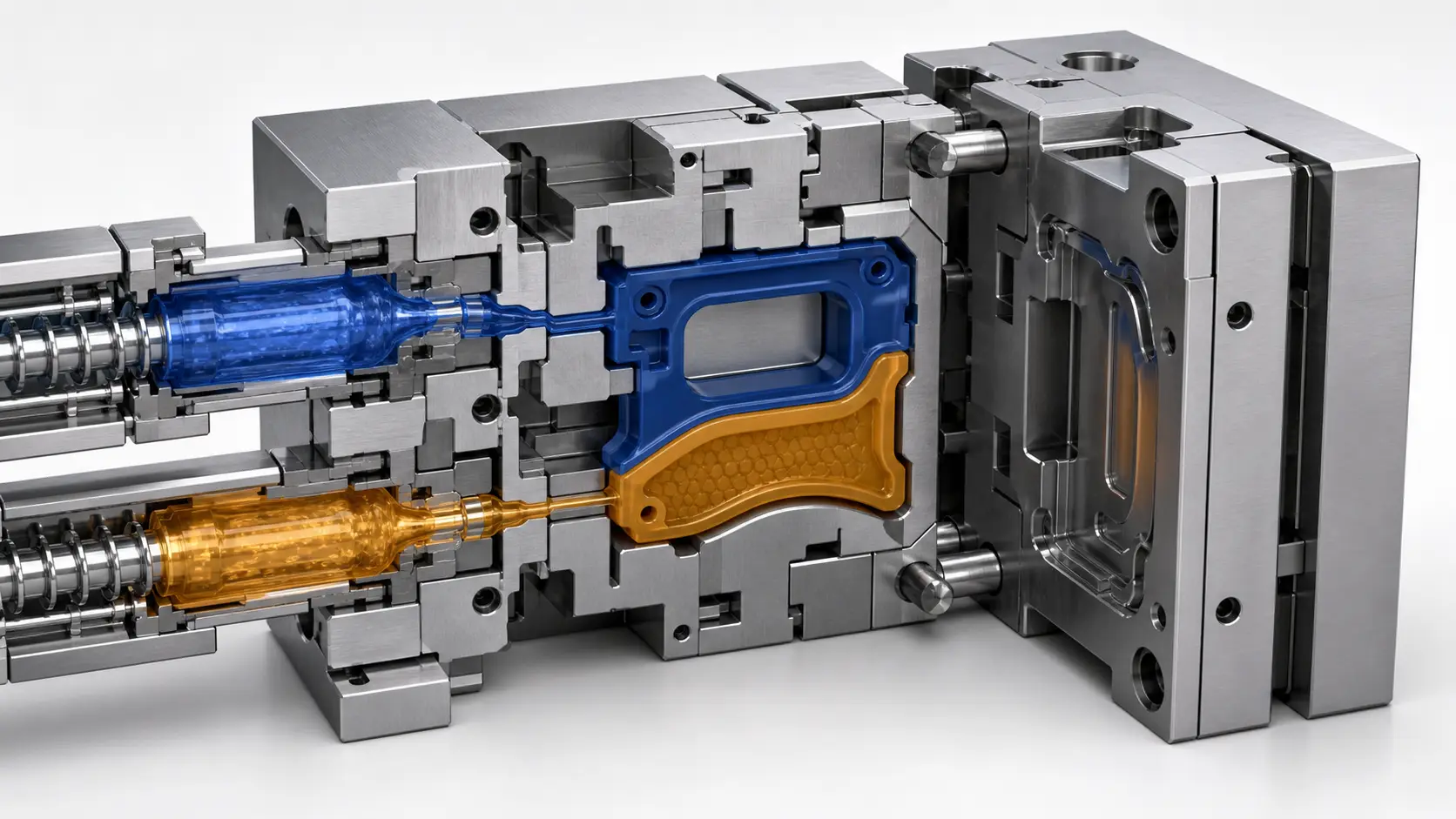
ツーショット成形(2K成形または多材料成形とも呼ばれる)は、通常、最初のショットで部品の一部を形成し、その後、選択された表面を2番目のショットにさらします。2番目の材料は、ソフトタッチグリップ、シール、対照的な色、または機能的な特徴を追加する場合があります。設計によっては、基材は回転プラテンまたは回転テーブルでインデックスされ、コアバックアクションで移動されるか、金型内で転送されます。重要な結果は、部品の特定の領域における制御された界面です。.
共射出成形は異なるアーキテクチャを使用します。2つの溶融材料がキャビティに導入され、一方の材料がスキンを形成し、もう一方がコアを占めるか、または必要な流れとバリア設計に応じて層が配置されます。層は自動的に目に見える2色の表面と同等ではありません。それらの厚さ、順序、および安定性は、溶融流動設計、ゲートとノズルの配置、材料挙動、およびプロセスウィンドウに依存します。.
能力の概要については、ジュチェンの 2ショット射出成形サービス. を参照してください。サプライヤーは、2ショットまたは共射出のルートが実用的かどうかを確認する前に、実際のCAD形状と樹脂グレードを確認する必要があります。.
プロセスアーキテクチャ:シーケンシャルショット vs. コアスキンフロー
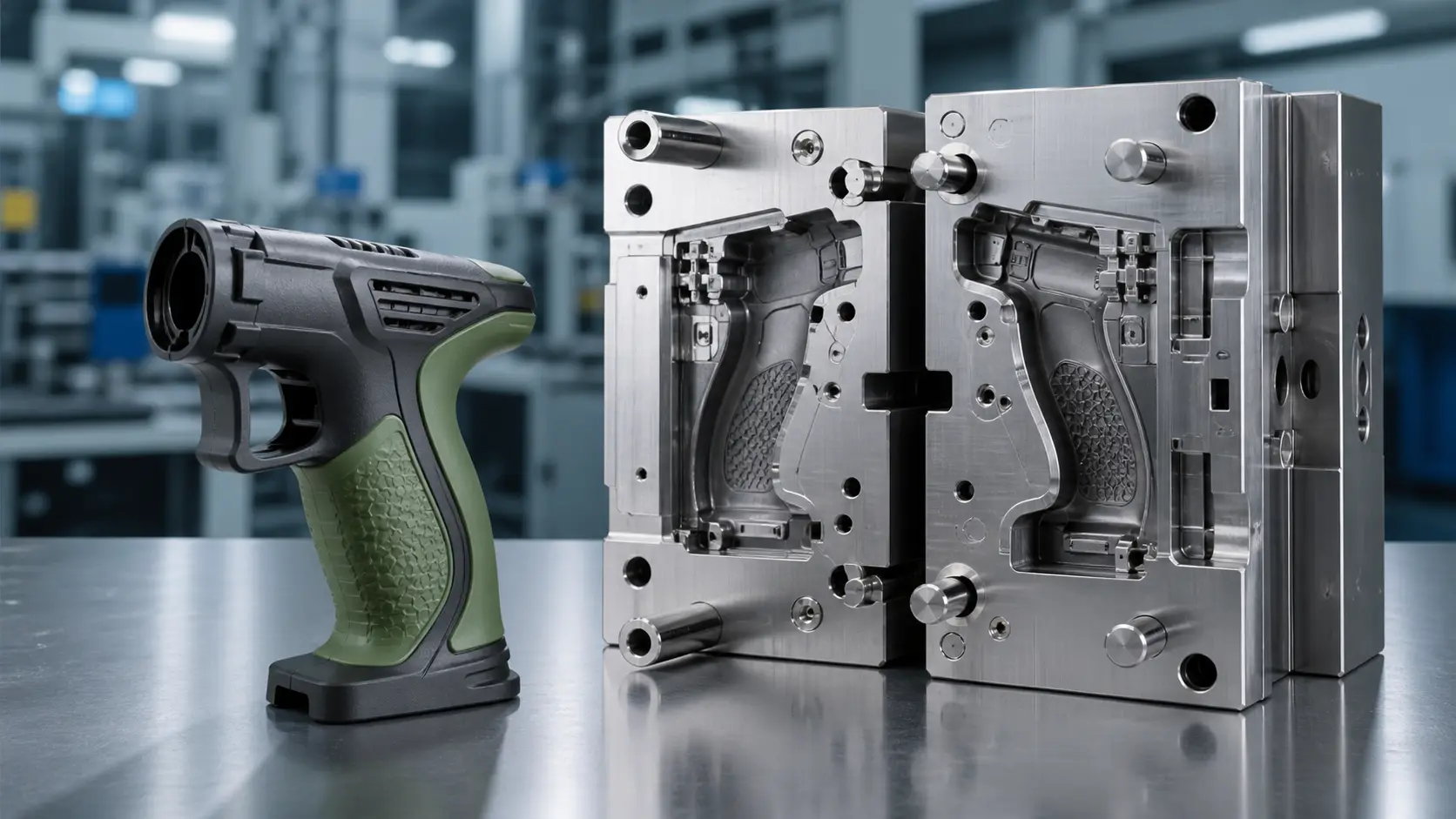
最も有用な区別は、材料境界の位置です。2ショット成形では、境界は通常、2番目のショットが到達して保持しなければならない表面、エッジ、またはフィーチャーの周りに設計されます。共射出では、境界は流路内に作成され、内部、外部、またはその両方になる場合があります。この違いにより、金型、機械、および検証作業が変わります。.
| 決定ポイント | 2ショット成形 | 共射出成形 |
|---|---|---|
| 材料シーケンス | 最初のショットに続いて2番目のショット | 共有キャビティシーケンスを通じて制御される2つの溶融物 |
| 金型の動き | ロータリープラテン、ロータリーテーブル、コアバック、または転送配置 | 特殊なマニホールド、ノズル、ランナー、および層制御配置 |
| 材料界面 | 定義された表面界面または機械的インターロック | 制御されたコアスキンまたは層状フロー界面 |
| 代表値 | 局所的な機能、色、グリップ、またはシールを統合する | 層構造を使用して、機能、材料使用、またはバリア性能のバランスを取る |
2ショットプロセスガイドは、シーケンスをより詳細に説明するのに役立ちますが、ツール固有のレビューの代わりとして使用すべきではありません。ゲート位置、ベント、冷却、排出、部品保持、および2次ショットへのアクセスはすべて一緒に考慮する必要があります。.
順次成形段階と検証ロジックについては、 ステップバイステップの2ショット成形プロセス の記事を参照してください。.
材料と界面の要件
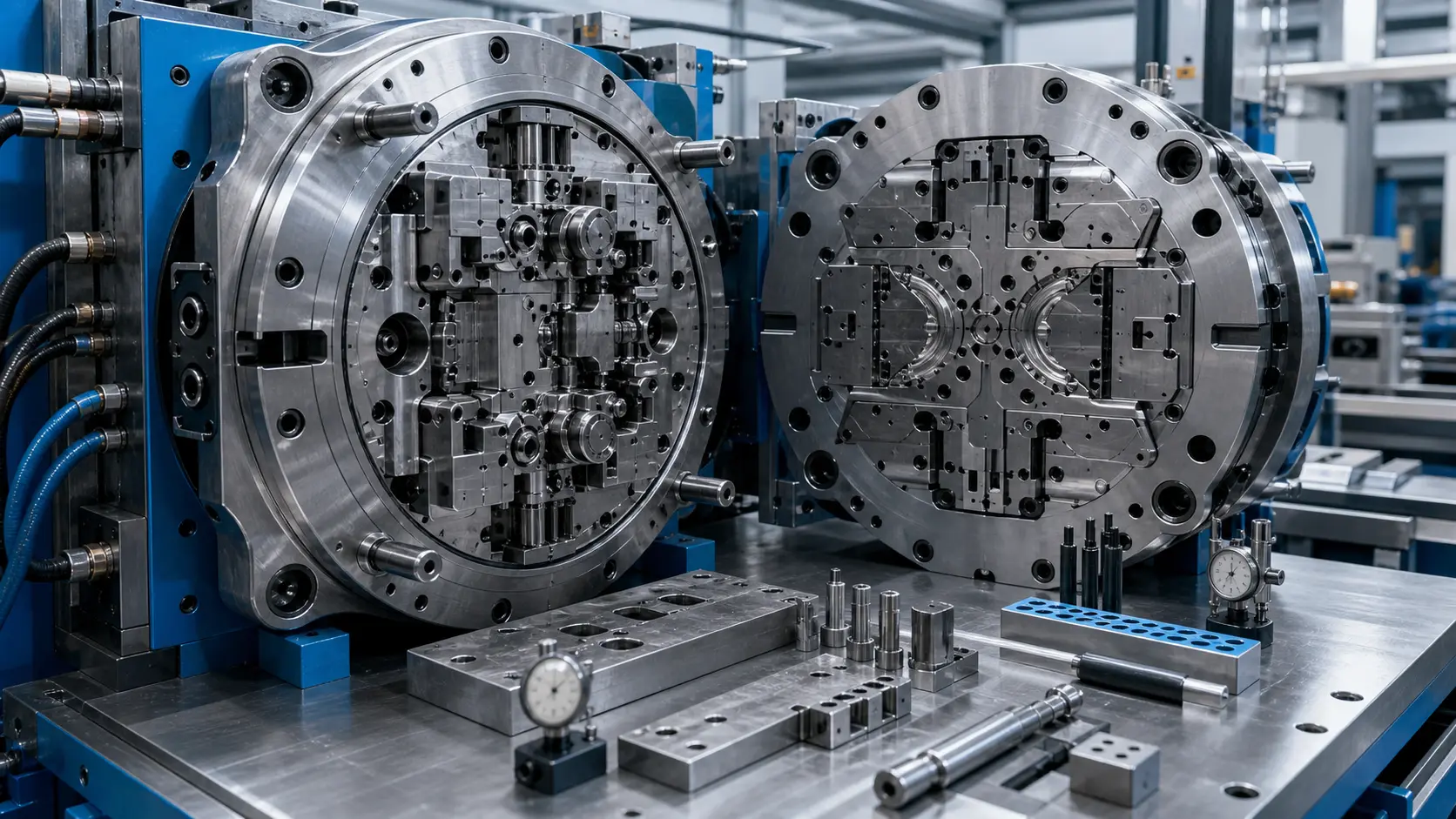
材料の選択は、樹脂ファミリーだけでなく、グレードとサービス要件によって行う必要があります。一般的な2ショット設計では、剛性のある基材とTPE、TPU、またはSEBSベースのエラストマーを組み合わせて、グリップやシールを実現します。別の方法では、2つの剛性材料を使用して、色ゾーンや機能面を実現します。これらは例であり、普遍的な組み合わせではありません。溶融温度への曝露、収縮、表面化学、硬度、水分、および動作環境によって、界面が化学的接着、機械的インターロック、または別の組立機能に依存するかどうかが決まります。.
共射出は、さらに別の制御層を追加します。2つの溶融物は、充填、保圧、および冷却中に安定した構造を形成する必要があります。粘度、溶融温度、収縮、および固化の違いにより、コアの位置と厚さが変化する可能性があります。データシートで有望に見える材料の組み合わせでも、金型リリースの前にフロー解析、テストプラーク、または成形サンプルが必要になる場合があります。.
- 各材料の機能を定義します。. 外観、グリップ、シール、構造、バリア、および摩耗の要件を分離します。.
- 界面メカニズムを確認します。. Specify adhesion, interlock geometry, weld-line limits, and the tests that will demonstrate performance.
- Validate the grade pair. Check drying, processing temperatures, colorant or additive effects, and exposure to the final service environment.
Before committing to a tool, compare the proposed grades with the two-shot material compatibility guide and request a sample-based validation plan.
Tooling, Equipment, and Production Economics
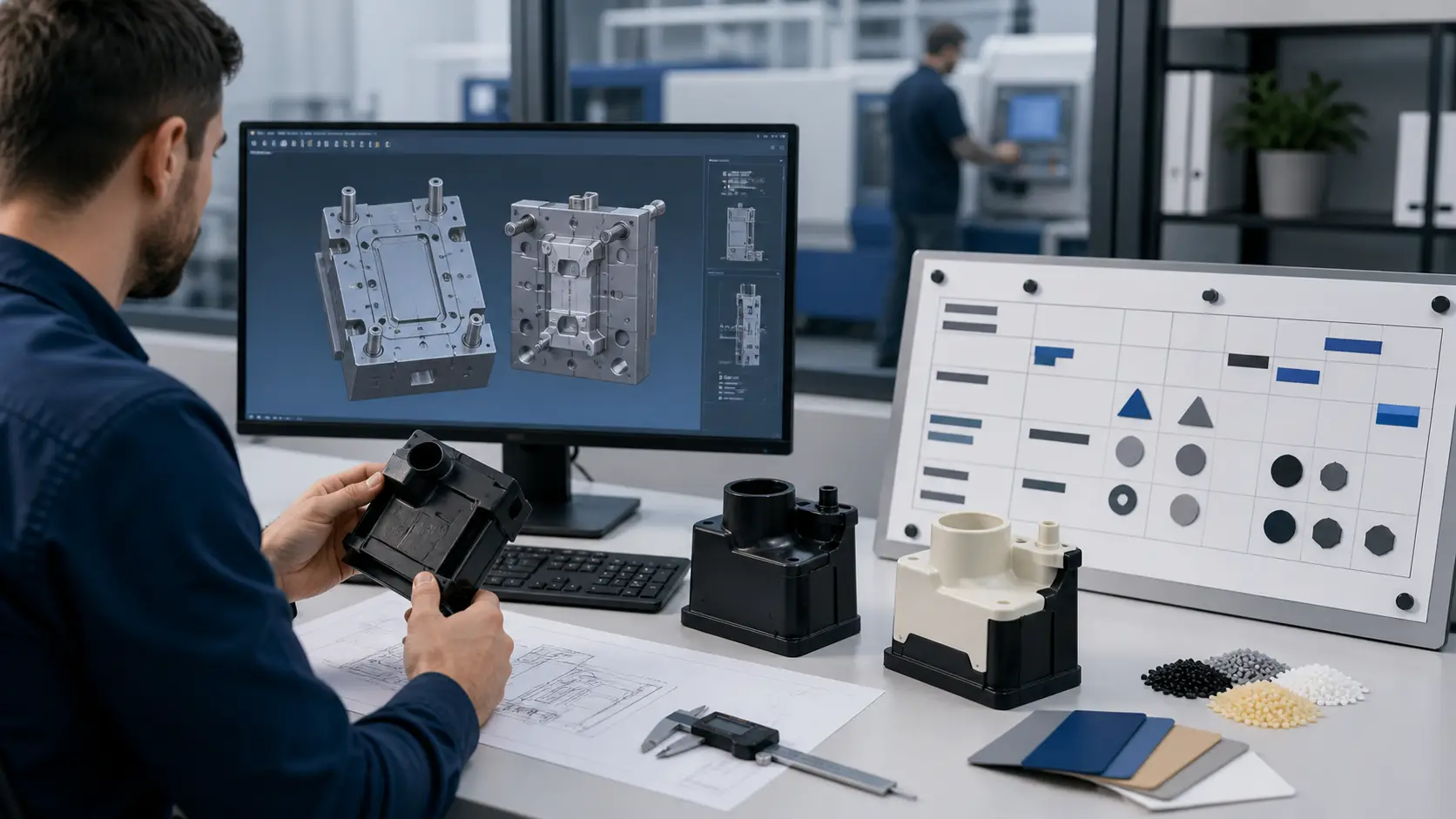
Two-shot tooling typically requires a mold that can retain, index, or transfer the first-shot substrate while maintaining registration for the second shot. It also needs two compatible injection units or an equivalent machine arrangement, plus cooling and ejection designed for both stages. Co-injection tooling instead concentrates more of the complexity in the melt-delivery system: the manifold, nozzle, runners, gates, and process controls must create a repeatable layer structure.
Neither process has a universal cost advantage. The commercial comparison should include mold construction, machine availability, cycle balance, material usage, inspection, scrap risk, assembly labor, and expected service life. A practical break-even estimate compares the additional process investment with the avoided assembly or secondary-operation cost over the planned volume. At low volume, a simpler mold plus assembly may be more flexible; at sustained production volume, an integrated process may justify its complexity.
The quotation should identify what is included in tool trials, sampling, color or material qualification, dimensional inspection, maintenance documentation, and production approval. Jucheng’s facility overview provides first-party context for its tooling and molding infrastructure, while the actual recommendation still depends on the customer’s part and grade requirements.
Application Fit and Decision Matrix
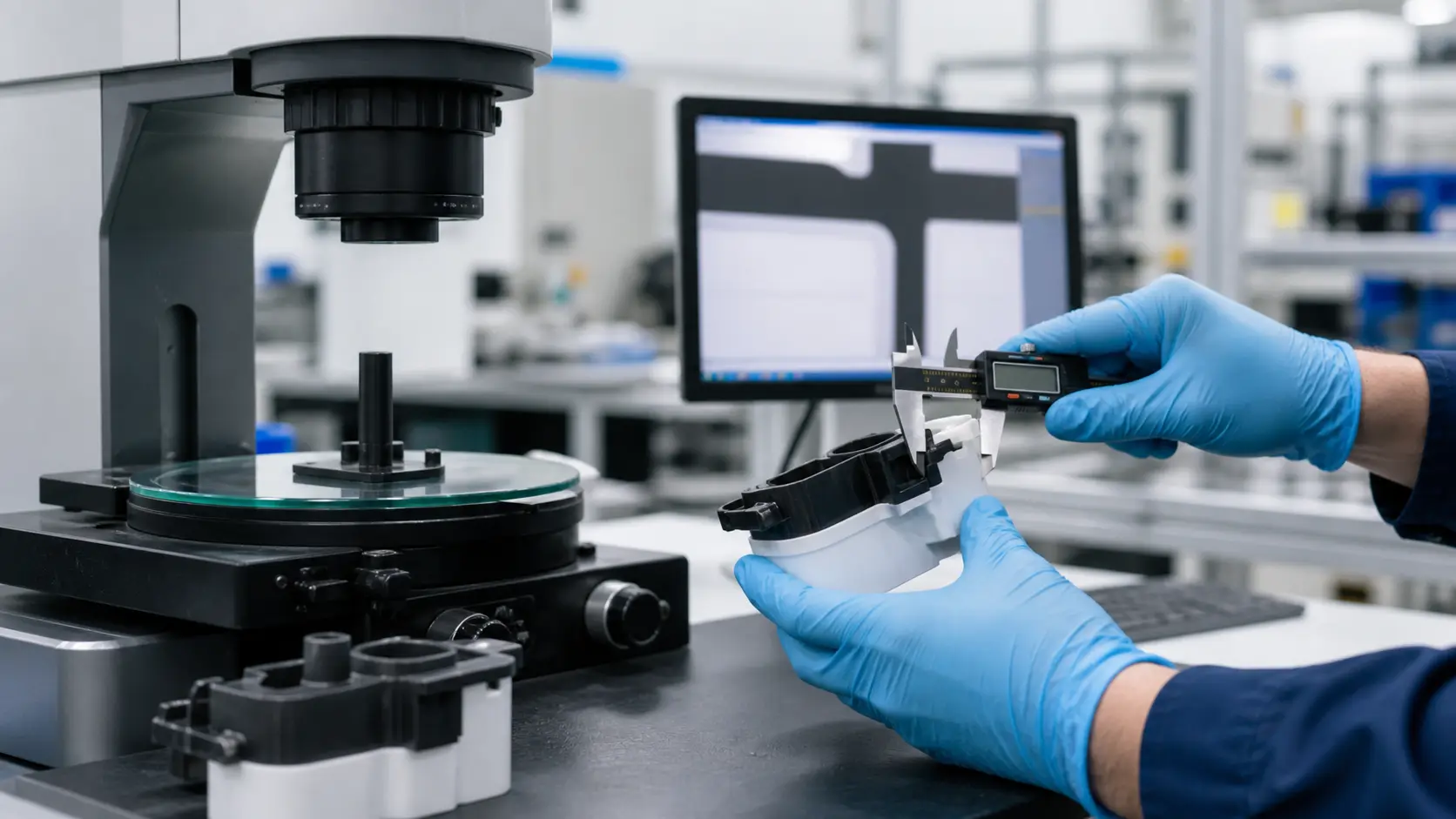
Start with the required product architecture. If the second material must occupy a defined visible area or create a precise soft-touch, seal, or color feature, two-shot molding is often the more direct concept to evaluate. If the value comes from a repeatable skin-core structure, internal material reduction, or a layered functional wall, co-injection may be worth investigating.
| Part requirement | First process to evaluate | Reason to investigate it |
|---|---|---|
| Defined soft grip or sealing zone | 2ショット成形 | The second material is located on selected surfaces |
| Two visible colors with registration | 2ショット成形 | The interface can be designed around a visible boundary |
| Layered skin and core structure | 共射出成形 | The function depends on internal or wall-thickness layering |
| Simple cosmetic contrast at modest volume | Compare molding with assembly or decoration | A dedicated multi-material tool may not recover its added cost |
The decision becomes stronger when the part’s annual volume, quality plan, and change-control expectations are included from the beginning. A technically possible process can still be a poor commercial choice if the tooling cannot support the expected revisions or if inspection cannot distinguish the required interface defects.
Buyer Checklist for a Reliable Quote
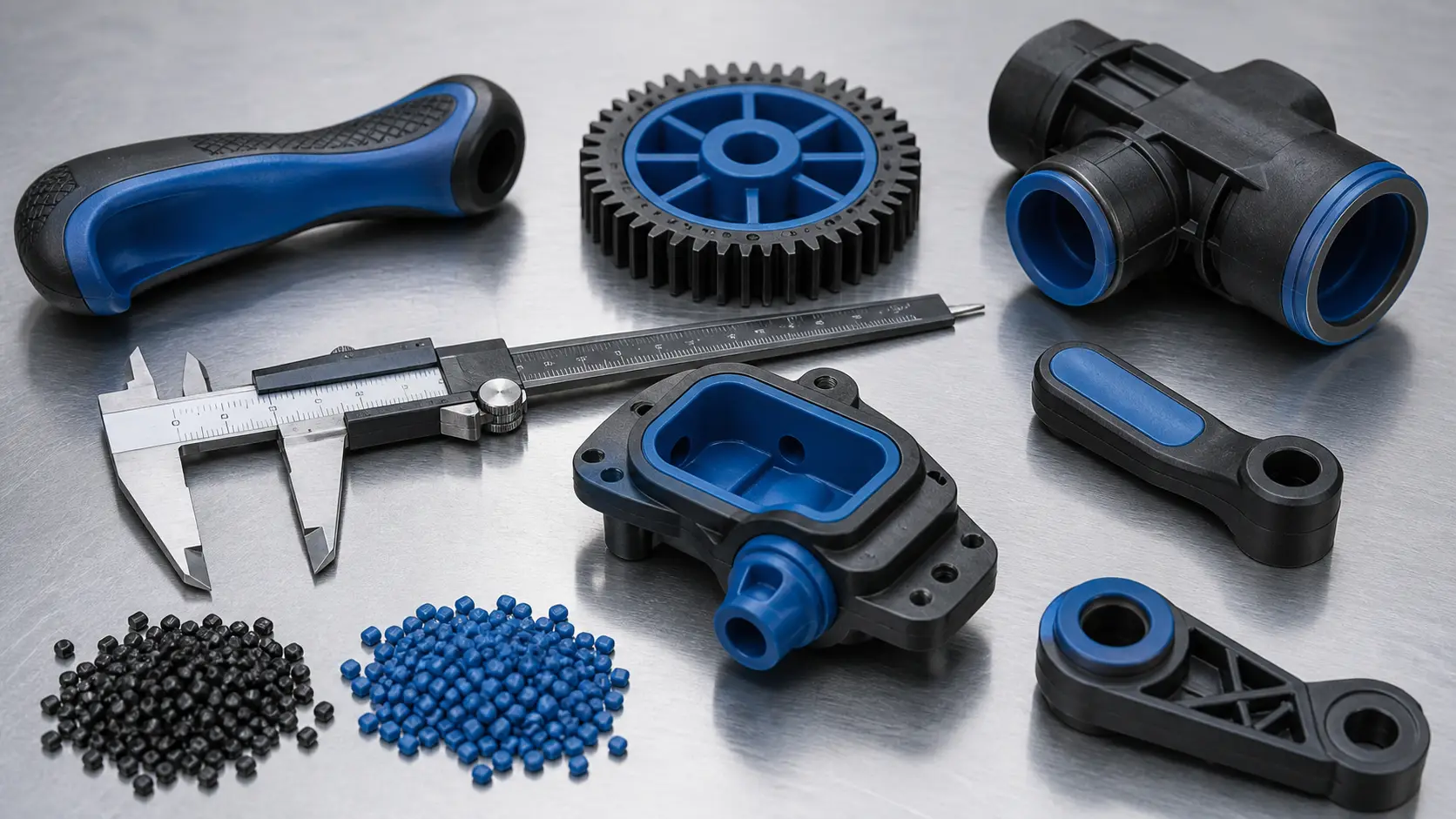
A useful request for quotation lets the supplier evaluate the process rather than guess from a product name. Include:
- 3D CAD, 2D drawings, critical dimensions, draft, wall thickness, and any cosmetic zones.
- Resin manufacturer and grade, color requirements, additives, hardness, and drying limits.
- Required interface performance, sealing or grip targets, environmental exposure, and test method.
- Annual volume, launch timing, forecast changes, packaging needs, and expected tool life.
- Preferred mold architecture, machine constraints, sample quantity, and approval milestones.
- Inspection records, traceability, first-article expectations, and handling of nonconforming parts.
Ask the supplier to state assumptions separately from confirmed capability. Jucheng’s 品質管理ワークフロー describes first-article, in-process, final, and outgoing checks; the project team can use that framework to align inspection records with the customer’s drawing and interface requirements.
結論: two-shot molding is usually evaluated when the part needs a defined second material or feature on selected surfaces. Co-injection is evaluated when the product benefits from a controlled layered structure. Compare both against the actual geometry, material grades, volume, tooling plan, and validation method before selecting the process.