
Two shot injection molding vs co injection molding is a process choice driven by how a part needs to be built, not by the number of colors in a product photo. Two-shot molding creates a first-shot substrate and then places a second material on defined areas. Co-injection molding creates a layered structure by controlling the flow of two melts through a shared cavity sequence. The right choice depends on interface performance, geometry, annual volume, tooling investment, and the production controls available for the program.
Two-Shot and Co-Injection Molding Explained
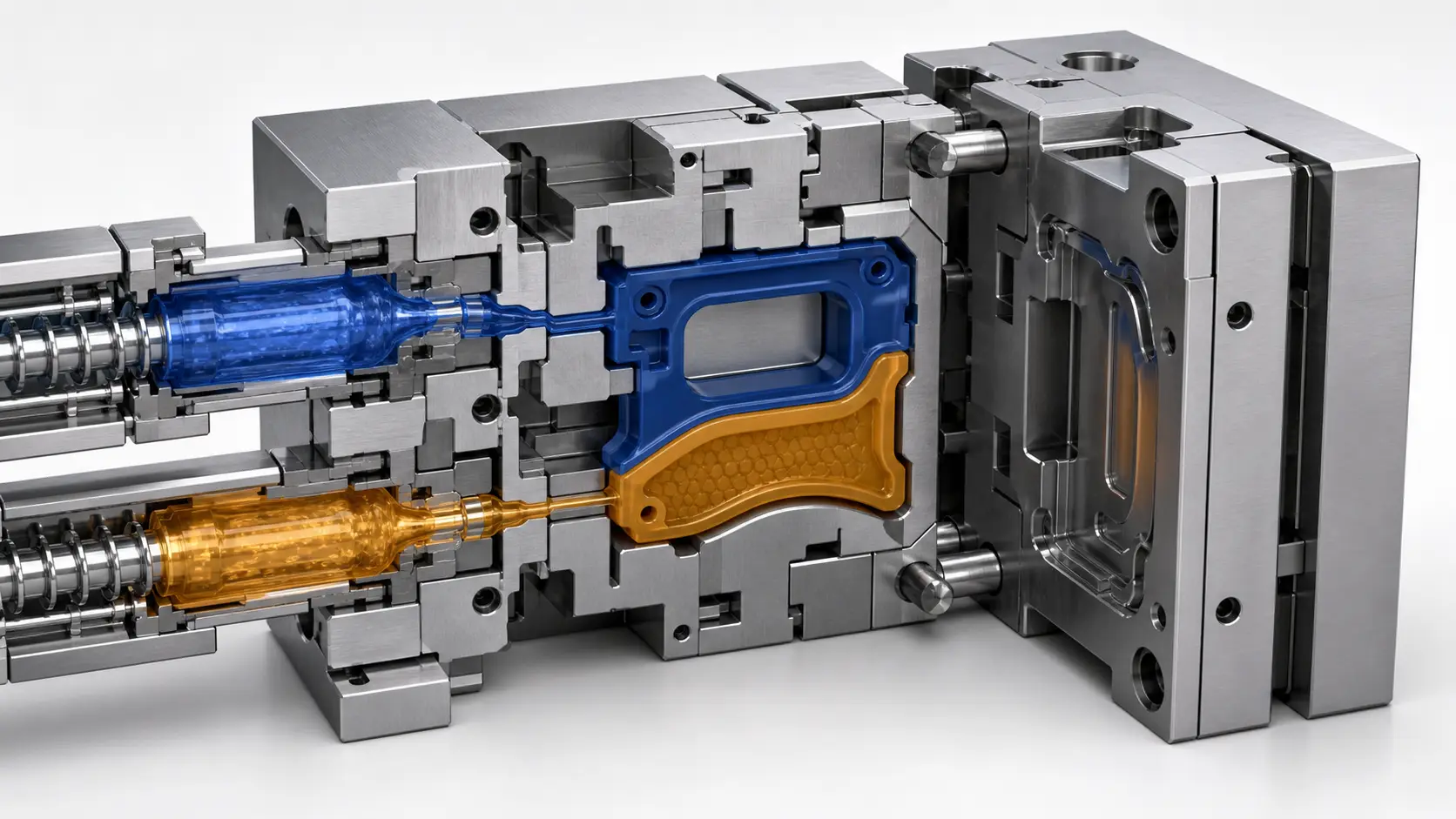
Two-shot molding, also called 2K or multi-material molding, normally forms one portion of the part in the first shot and then exposes selected surfaces to a second shot. The second material may add a soft-touch grip, a seal, a contrasting color, or a functional feature. Depending on the design, the substrate can be indexed on a rotary platen or rotary table, moved with a core-back action, or transferred inside the mold. The important result is a controlled interface in specific regions of the part.
Co-injection molding uses a different architecture. Two melts are introduced into the cavity so that one material can form a skin, another can occupy a core, or the layers can be arranged according to the required flow and barrier design. The layers are not automatically equivalent to a visible two-color surface. Their thickness, sequence, and stability depend on the melt-flow design, gate and nozzle arrangement, material behavior, and process window.
For a capability overview, see Jucheng’s two-shot injection molding service. A supplier should still review the actual CAD geometry and resin grades before confirming whether a two-shot or co-injection route is practical.
Arquitetura do Processo: Injeções Sequenciais vs. Fluxo Núcleo-Pele
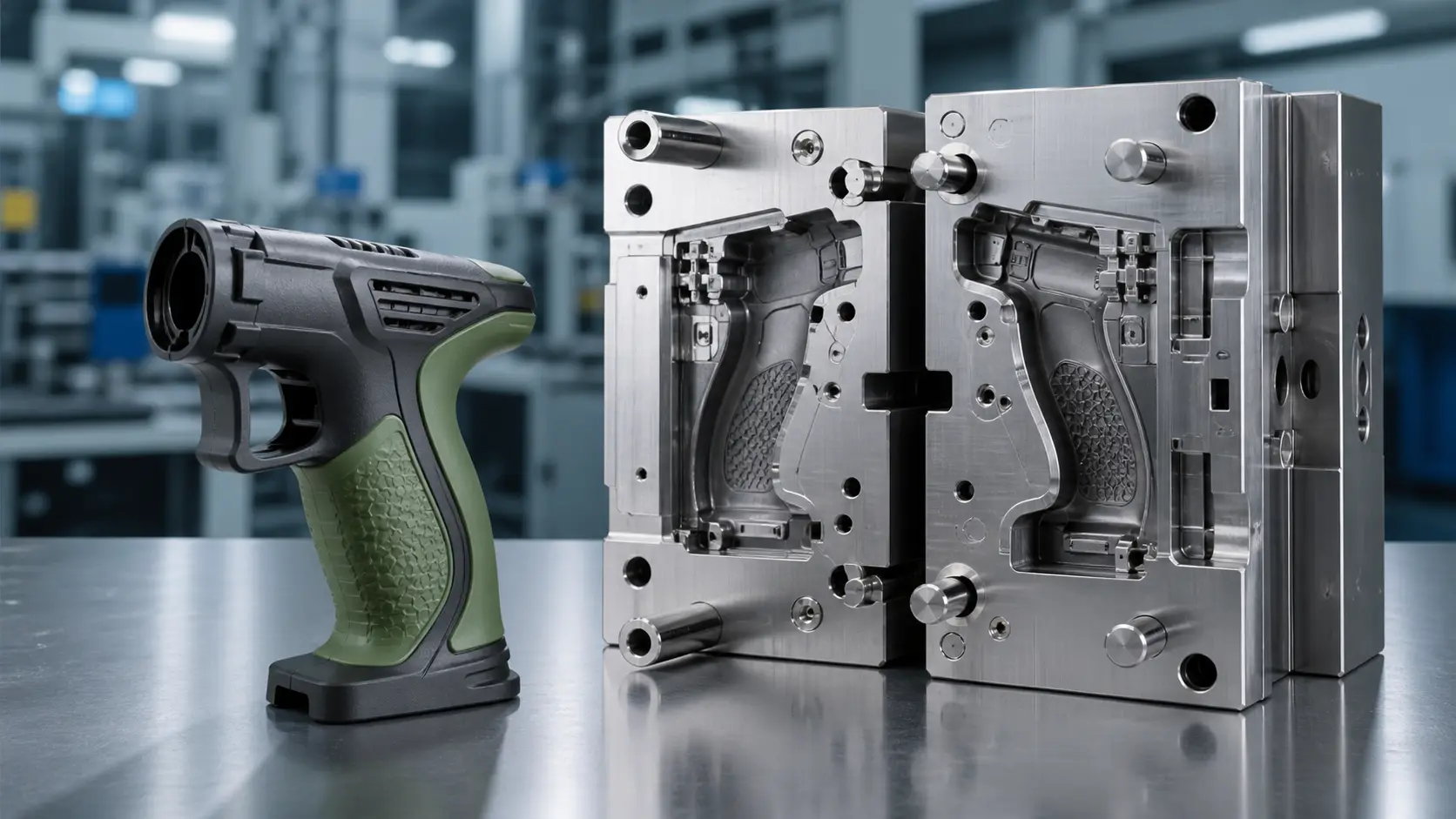
A distinção mais útil é a localização da fronteira do material. Na moldagem de duas injeções, a fronteira é geralmente projetada em torno de uma superfície, borda ou recurso que a segunda injeção deve alcançar e segurar. Na co-injeção, a fronteira é criada dentro do caminho de fluxo e pode ser interna, externa ou ambas. Essa diferença altera o molde, a máquina e o trabalho de validação.
| Ponto de decisão | Moldagem de dois disparos | Moldagem por co-injeção |
|---|---|---|
| Sequência de materiais | Primeira injeção seguida por uma segunda injeção | Dois fundidos controlados através de uma sequência de cavidade compartilhada |
| Movimento do molde | Platô rotativo, mesa rotativa, recuo de núcleo ou arranjo de transferência | Manifold especializado, bico, canal de injeção e arranjo de controle de camadas |
| Interface de materiais | Uma interface de superfície definida ou intertravamento mecânico | Uma interface de fluxo controlado núcleo-pele ou em camadas |
| Valor típico | Integra um recurso localizado, cor, aderência ou vedação | Usa estrutura em camadas para equilibrar função, uso de material ou desempenho de barreira |
Um guia de processo de duas injeções pode ajudar a explicar a sequência em mais detalhes, mas não deve ser usado como substituto para uma revisão específica da ferramenta. Localização do ponto de injeção, ventilação, refrigeração, ejeção, retenção da peça e acesso para a segunda injeção precisam ser considerados em conjunto.
Para os estágios de moldagem sequenciais e a lógica de validação, revise o artigo sobre processo de moldagem de duas injeções passo a passo .
Requisitos de Material e Interface
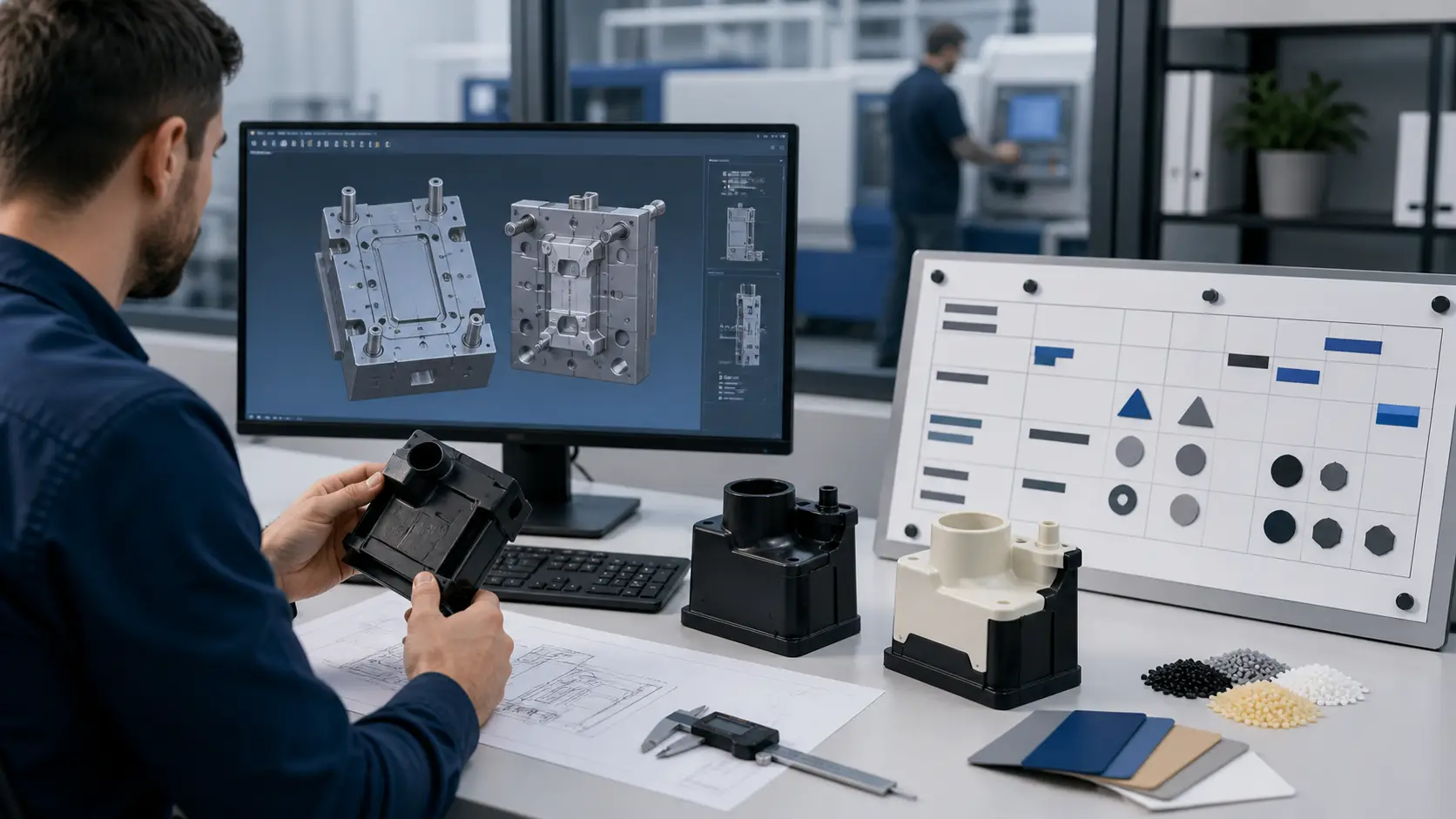
A seleção do material deve ser feita por grau e requisito de serviço, não apenas pela família de resina. Um design comum de duas injeções combina um substrato rígido com um elastômero à base de TPE, TPU ou SEBS para aderência ou vedação. Outro usa dois materiais rígidos para uma zona de cor ou superfície funcional. Estes são exemplos, não combinações universais. Exposição à temperatura de fusão, contração, química da superfície, dureza, umidade e o ambiente operacional determinam se a interface deve depender de adesão química, intertravamento mecânico ou um recurso de montagem separado.
A co-injeção adiciona outra camada de controle: os dois fundidos devem formar uma estrutura estável durante o preenchimento, empacotamento e resfriamento. Diferenças na viscosidade, temperatura de fusão, contração e solidificação podem alterar a localização e a espessura do núcleo. Um par de materiais que parece promissor em uma ficha técnica pode ainda exigir análise de fluxo, placas de teste ou amostras moldadas antes da liberação da ferramenta.
- Defina a função de cada material. Separe requisitos cosméticos, de aderência, vedação, estruturais, de barreira e de desgaste.
- Confirme o mecanismo de interface. Especifique adesão, geometria de intertravamento, limites de linha de solda e os testes que demonstrarão o desempenho.
- Valide o par de graus. Verifique a secagem, temperaturas de processamento, efeitos de corantes ou aditivos e exposição ao ambiente final de serviço.
Antes de se comprometer com uma ferramenta, compare os graus propostos com os guia de compatibilidade de materiais de dois disparos and request a sample-based validation plan.
Tooling, Equipment, and Production Economics
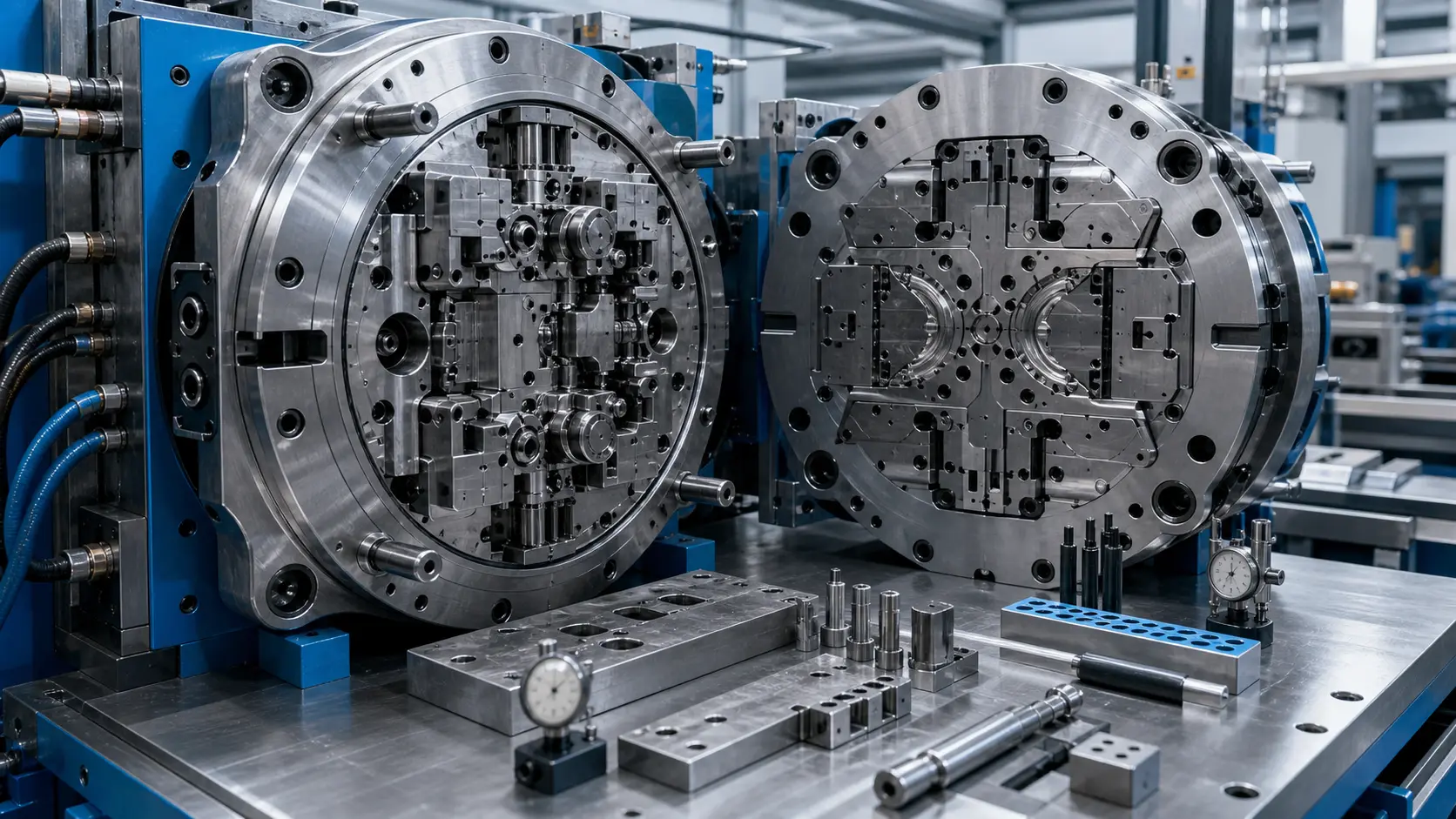
Two-shot tooling typically requires a mold that can retain, index, or transfer the first-shot substrate while maintaining registration for the second shot. It also needs two compatible injection units or an equivalent machine arrangement, plus cooling and ejection designed for both stages. Co-injection tooling instead concentrates more of the complexity in the melt-delivery system: the manifold, nozzle, runners, gates, and process controls must create a repeatable layer structure.
Neither process has a universal cost advantage. The commercial comparison should include mold construction, machine availability, cycle balance, material usage, inspection, scrap risk, assembly labor, and expected service life. A practical break-even estimate compares the additional process investment with the avoided assembly or secondary-operation cost over the planned volume. At low volume, a simpler mold plus assembly may be more flexible; at sustained production volume, an integrated process may justify its complexity.
The quotation should identify what is included in tool trials, sampling, color or material qualification, dimensional inspection, maintenance documentation, and production approval. Jucheng’s facility overview provides first-party context for its tooling and molding infrastructure, while the actual recommendation still depends on the customer’s part and grade requirements.
Application Fit and Decision Matrix
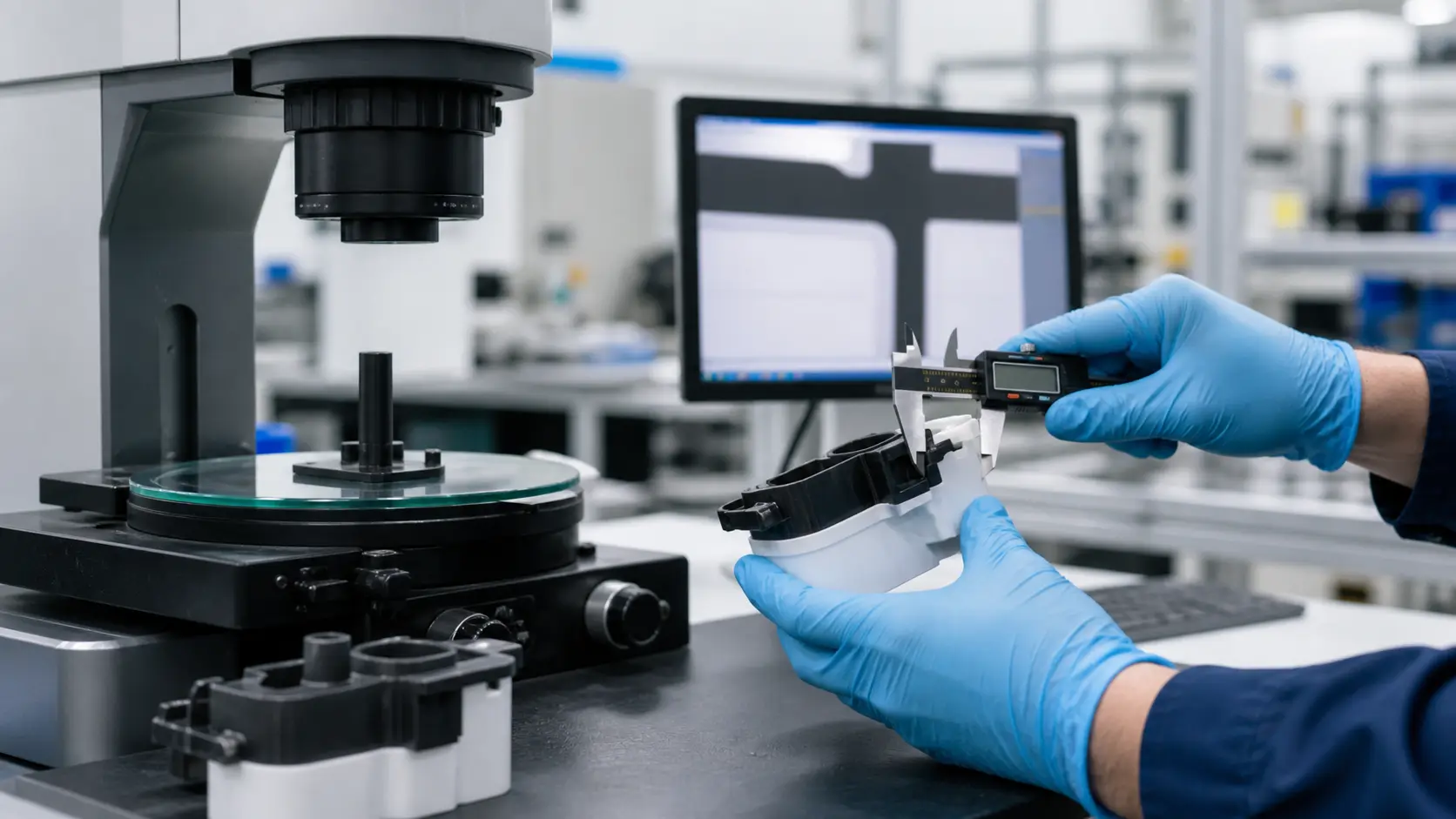
Start with the required product architecture. If the second material must occupy a defined visible area or create a precise soft-touch, seal, or color feature, two-shot molding is often the more direct concept to evaluate. If the value comes from a repeatable skin-core structure, internal material reduction, or a layered functional wall, co-injection may be worth investigating.
| Part requirement | First process to evaluate | Reason to investigate it |
|---|---|---|
| Defined soft grip or sealing zone | Moldagem de dois disparos | The second material is located on selected surfaces |
| Two visible colors with registration | Moldagem de dois disparos | The interface can be designed around a visible boundary |
| Layered skin and core structure | Moldagem por co-injeção | The function depends on internal or wall-thickness layering |
| Simple cosmetic contrast at modest volume | Compare molding with assembly or decoration | A dedicated multi-material tool may not recover its added cost |
The decision becomes stronger when the part’s annual volume, quality plan, and change-control expectations are included from the beginning. A technically possible process can still be a poor commercial choice if the tooling cannot support the expected revisions or if inspection cannot distinguish the required interface defects.
Buyer Checklist for a Reliable Quote
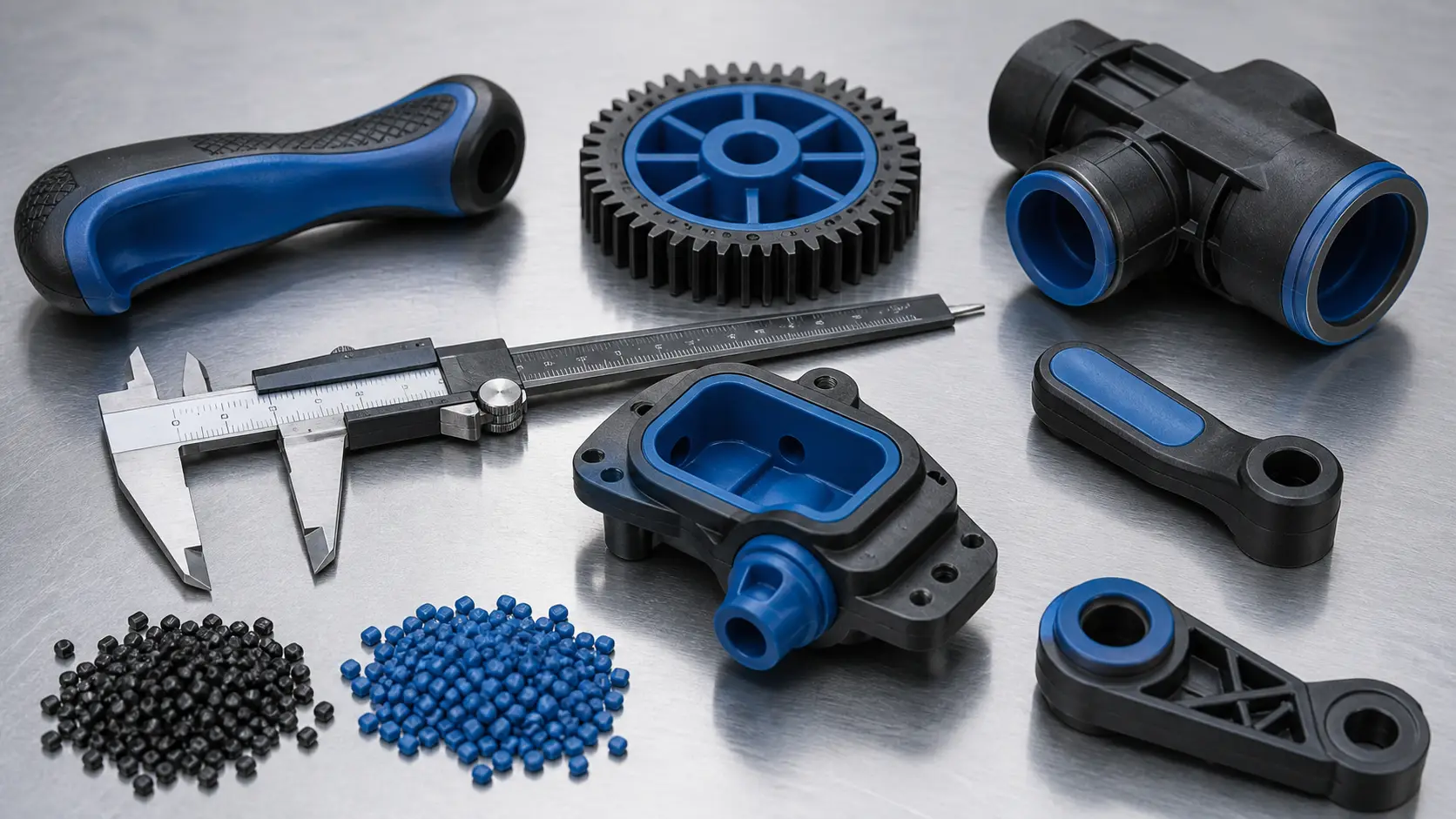
A useful request for quotation lets the supplier evaluate the process rather than guess from a product name. Include:
- 3D CAD, 2D drawings, critical dimensions, draft, wall thickness, and any cosmetic zones.
- Resin manufacturer and grade, color requirements, additives, hardness, and drying limits.
- Required interface performance, sealing or grip targets, environmental exposure, and test method.
- Annual volume, launch timing, forecast changes, packaging needs, and expected tool life.
- Preferred mold architecture, machine constraints, sample quantity, and approval milestones.
- Inspection records, traceability, first-article expectations, and handling of nonconforming parts.
Ask the supplier to state assumptions separately from confirmed capability. Jucheng’s quality control workflow describes first-article, in-process, final, and outgoing checks; the project team can use that framework to align inspection records with the customer’s drawing and interface requirements.
Bottom line: two-shot molding is usually evaluated when the part needs a defined second material or feature on selected surfaces. Co-injection is evaluated when the product benefits from a controlled layered structure. Compare both against the actual geometry, material grades, volume, tooling plan, and validation method before selecting the process.