
Selecting compatible thermoplastics and elastomeric formulations represents the foundational prerequisite for achieving high interfacial peel strength in dual-material hardware. Combining rigid structural engineering resins with flexible elastomers inside a single mold tool requires evaluating polarity alignment, thermal degradation thresholds, and molecular solubility parameters. Incompatible polymer pairings fail to achieve chemical bonding affinity, resulting in spontaneous delamination along the boundary interface under dynamic mechanical fatigue.
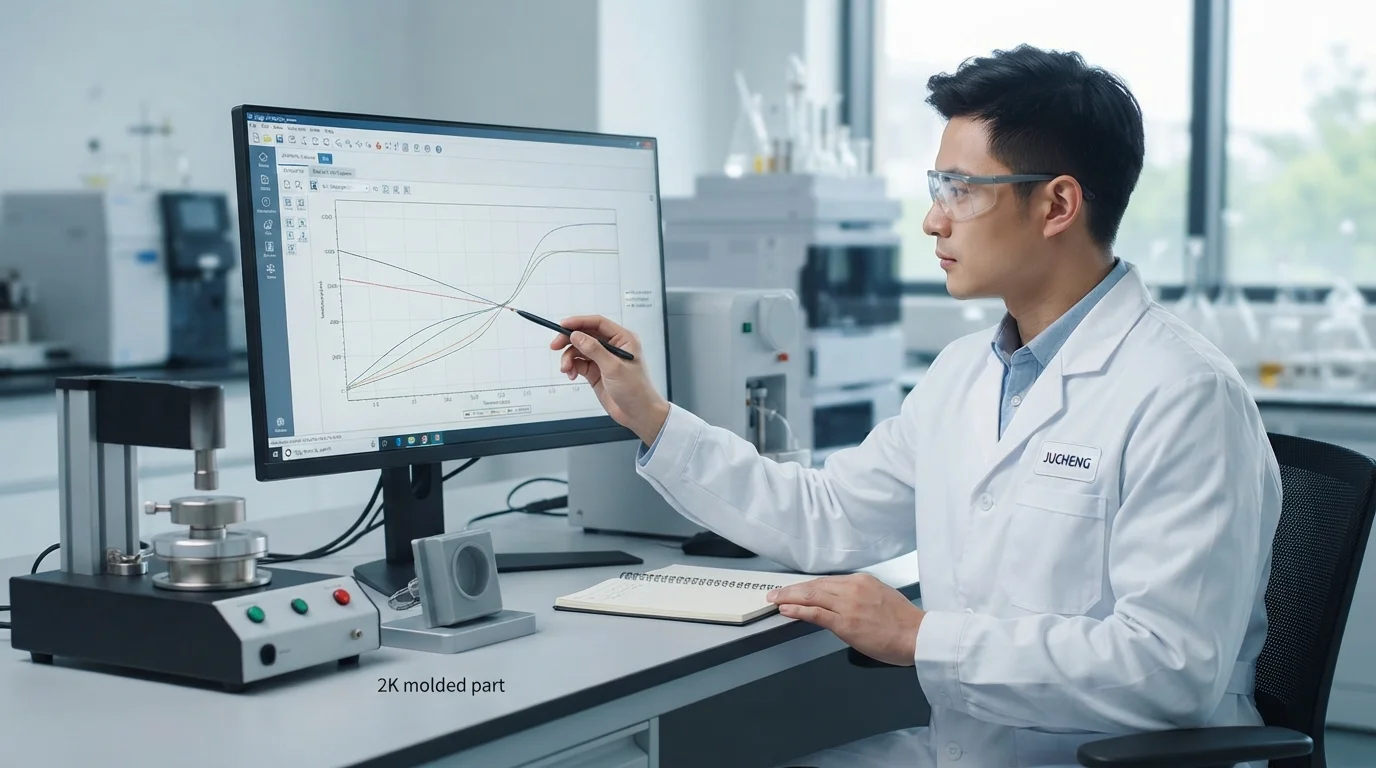
Understanding how processing melt temperatures and mold cooling channels interact allows product designers to select material combinations that fuse cohesively without substrate deformation. This technical materials guide reviews resin compatibility matrices, thermal window synchronization, and raw material certification standards.
2K Polymer Compatibility Matrix: Rigid Resins vs. Elastomers
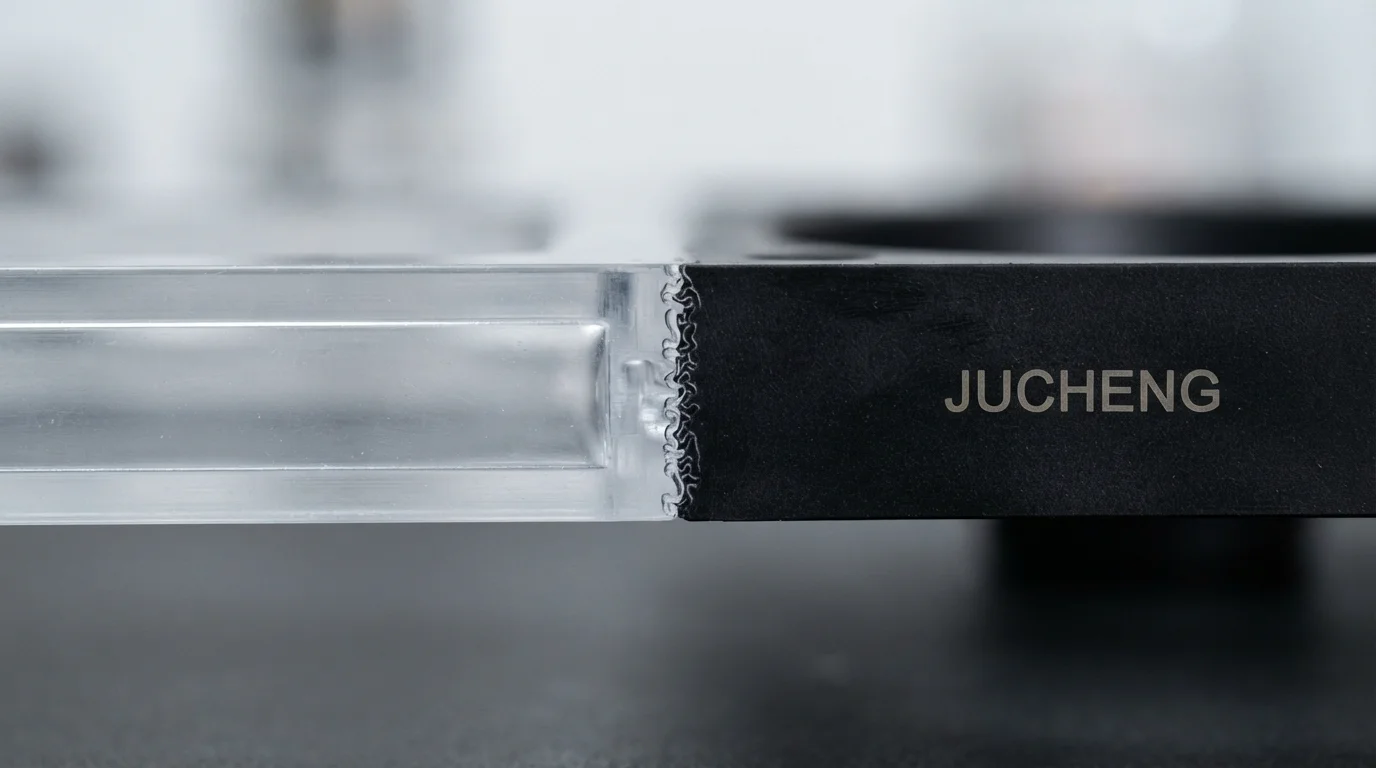
Evaluating candidate two shot injection molding materials requires analyzing whether polymer chains can undergo intermolecular chain entanglement across the boundary layer. Polar rigid thermoplastics like SABIC Lexan 141R polycarbonate bond exceptionally well with ester-based Desmopan TPU elastomers because both materials share compatible chemical backbones.
Conversely, semi-crystalline resins like DuPont Zytel 70G33L glass-filled polyamide require adhesion-modified elastomers such as Santoprene TPV or mechanical interlocking grooves to prevent edge peeling. Table 1 below outlines polymer compatibility ratings and bond mechanisms across common 2K resin combinations:
| Rigid Substrate Grade | Overmolded Elastomer Grade | Bonding Classification | Interfacial Adhesion Mechanism | Recommended Processing Window |
|---|---|---|---|---|
| Policarbonato (Lexan 141R) | Desmopan 385S TPU | Fusão Química Excelente | Molecular Chain Interdiffusion | Set 2nd shot melt temp to 215°C – 230°C |
| PC/ABS (Bayblend FR3010) | Thermolast K TC5GPZ TPE | Strong Molecular Bond | Polymer Matrix Entanglement | Maintain mold cavity temp at 70°C – 85°C |
| PA66-GF30 (Zytel 70G33L) | Santoprene 101-55 TPV | Moderate + Mechanical | Chemical Adhesion + Undercuts | Incorporate 90-degree mechanical dovetails |
| PP (Borealis RF365MO) | Thermolast M TM6MED TPE | Excellent Non-Polar Bond | Co-Crystallization Diffusion | Ensure clean parting lines without mold release |
Melt Temperature and Processing Window Synchronization
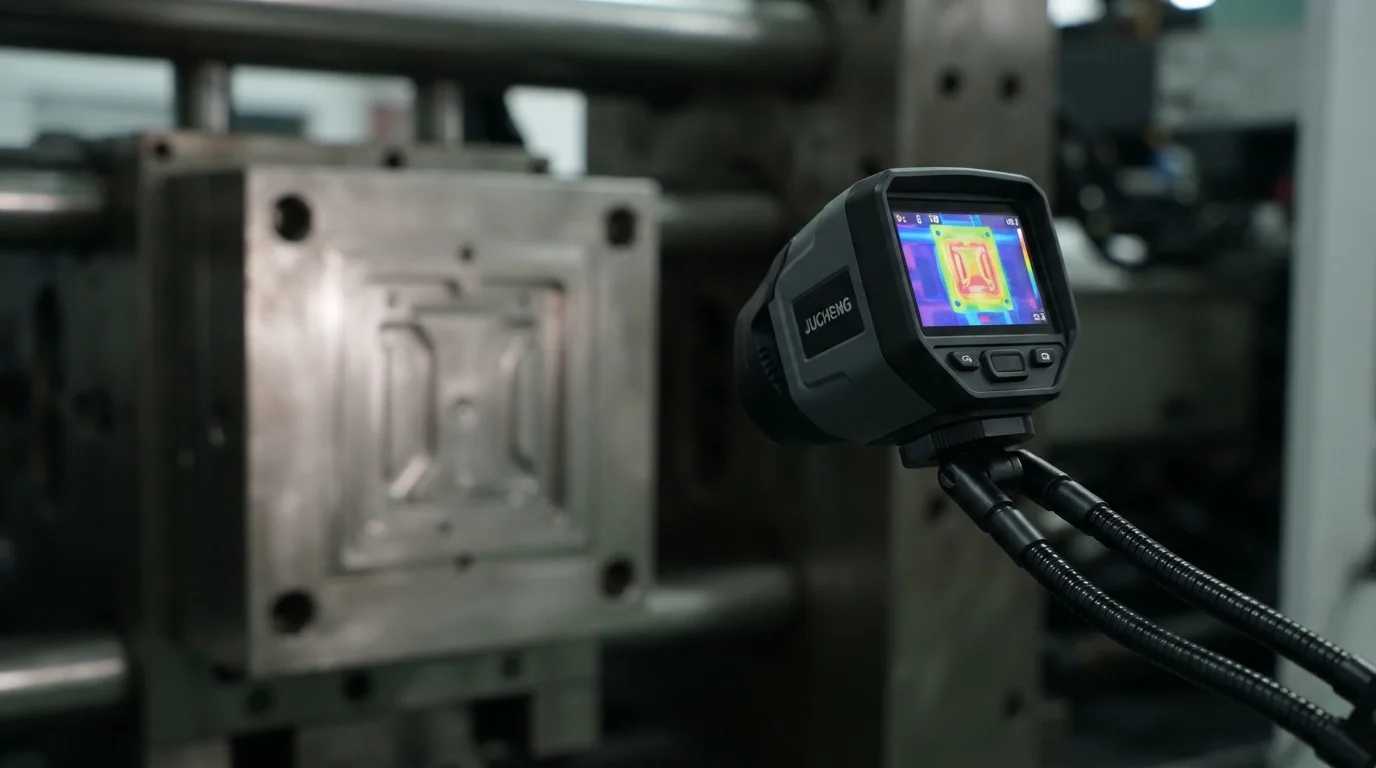
Synchronizing melt temperatures between the primary substrate and secondary overmold prevents localized thermal wash-out. Primary rigid substrate resins must possess a heat deflection temperature (HDT) high enough to resist melting when contacted by the incoming second-shot melt.
If the second-shot resin enters the cavity at excessive melt temperatures or high injection velocities, it washes away thin substrate walls, causing cosmetic bleeding. Establishing an optimized processing temperature window allows the second-shot resin to soften the substrate surface just enough to promote molecular diffusion without compromising structural dimensions across candidate two shot injection molding materials.
Biblioteca de resinas de produção com mais de 200 opções e verificação do Cartão Amarelo de materiais
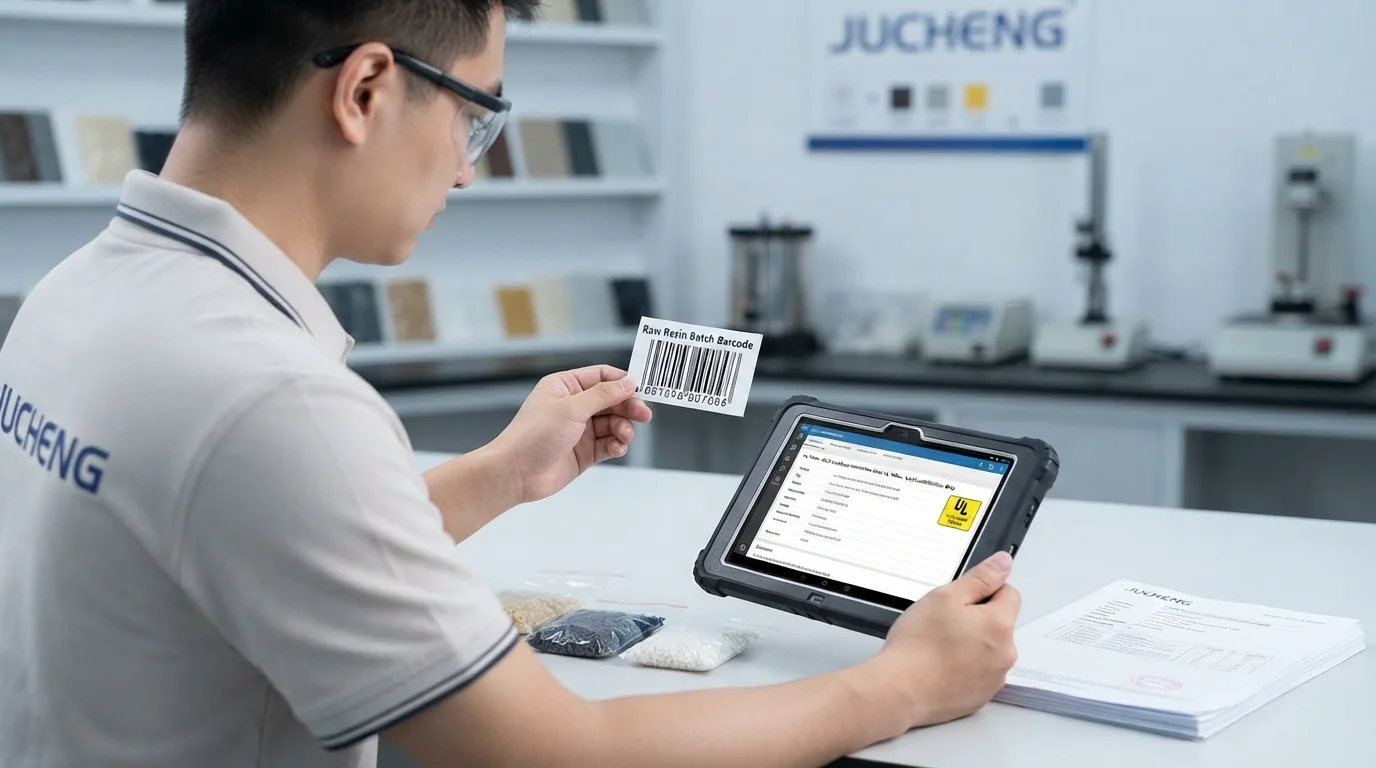
Sourcing certified engineering resins backed by official documentation guarantees consistent mechanical performance across volume production runs. Cross-referencing incoming material batches with the official UL Yellow Card database verifies that certified flammability ratings like UL94 V-0 remain intact after dual-shot processing.
Verifying two shot injection molding materials through raw material Certificate of Analysis (COA) testing prevents contaminated resins from entering production hoppers. Clinical diagnostic and healthcare devices process certified medical polymers meeting USP Classe VI and ISO 10993 biocompatibility criteria.
Why Choose JUCHENG for Multi-Polymer 2K Manufacturing
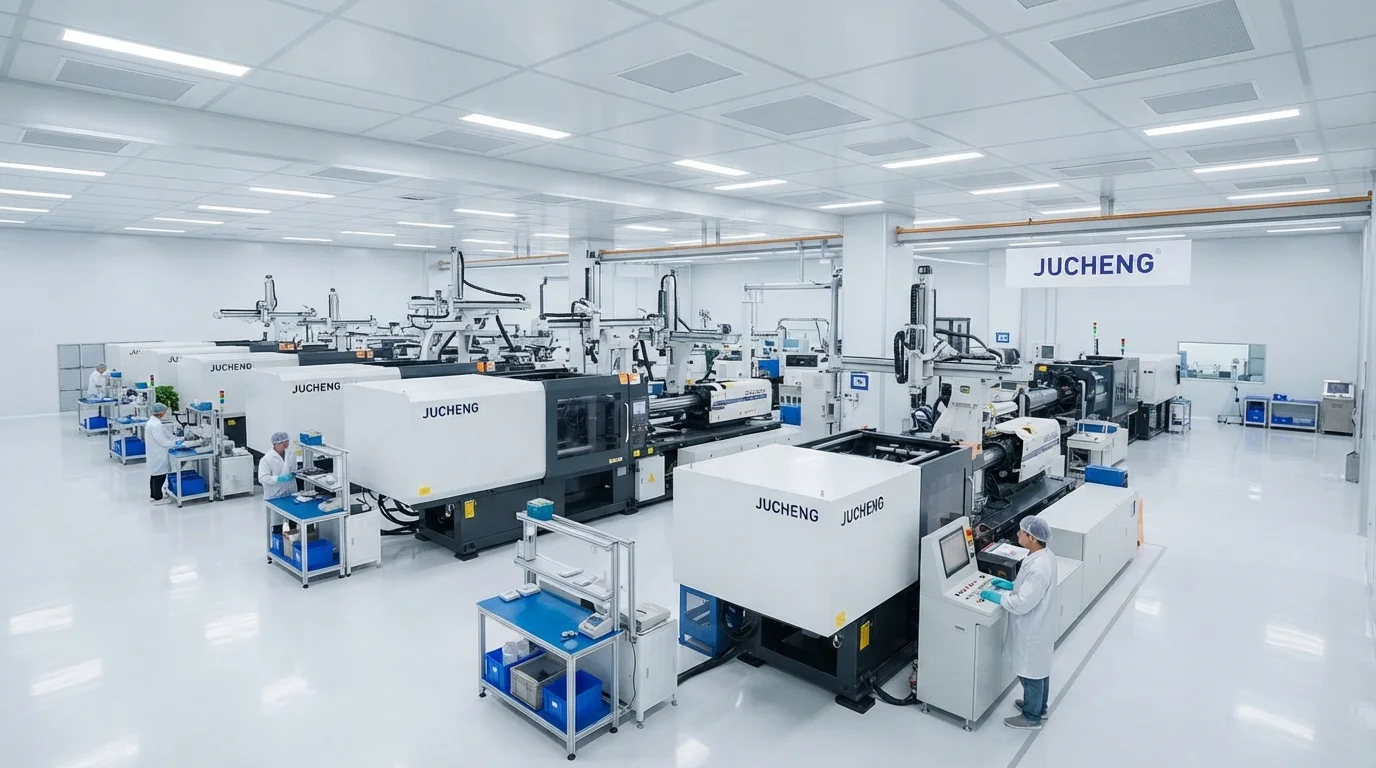
Partnering with JUCHENG provides access to an extensive production floor equipped with 35+ automated injection presses ranging from 15T to 3000T clamping force. Our facility operates dedicated multi-barrel presses fitted with high-precision hydraulic and servo-electric rotary platens. Toolmakers machine precision shut-off lands from hardened S136 stainless steel or H13 tool steel, guaranteeing flash-free sealing over 1,000,000 cycles.
Quality management systems certified to IATF 16949 and ISO 13485 back every multi-shot production run, offering full PPAP Level 3 documentation. Selecting chemically compatible two shot injection molding materials ensures zero delamination in two shot injection molding.
Perguntas Frequentes (FAQs)
Why do some TPE grades fail to bond with polycarbonate during two-shot molding?
Chemical incompatibility occurs when standard non-polar TPE formulations lack polar functional groups required to bond with polycarbonate. Specifying modified TPE grades formulated with polar graft polymers allows chemical interdiffusion, creating strong cohesive joint bonds.
How does substrate preheating temperature affect 2K material adhesion?
Substrate preheating maintains thermal energy at the boundary layer during mold rotation. Warm cavity surfaces (70°C-90°C) prevent the incoming second-shot melt from quenching prematurely, allowing polymer chains sufficient time to interdiffuse deeply before freezing.
Can glass-filled resins be used as the primary substrate in two-shot molding?
Glass-filled engineering resins like PA66-GF30 or PBT-GF30 serve as excellent primary structural substrates. Adding glass fibers lowers substrate thermal shrinkage, aligning its dimensions closely with the secondary overmold and preventing post-mold warpage.
What is thermal wash-out in two-shot injection molding?
Thermal wash-out occurs when hot second-shot resin melts and erodes thin substrate walls during high-velocity injection. Lowering second-shot melt temperatures, relocating gates away from thin ribs, and reducing fill velocity eliminates thermal wash-out.
Why is UL Yellow Card verification critical for multi-material parts?
UL Yellow Card verification confirms that both the primary substrate and secondary overmold meet certified flammability, electrical arc resistance, and thermal aging parameters. Verifying yellow card data ensures that the combined component complies with UL94 V-0 safety standards.
How do you achieve strong bonding between polypropylene and TPE?
Polypropylene and olefin-based TPEs share non-polar chemical backbones that bond naturally through co-crystallization at the melt boundary. Maintaining clean mold shut-offs and proper melt temperatures ensures high bond strength without requiring adhesive primers.