
Two shot injection molding vs co injection molding is a process choice driven by how a part needs to be built, not by the number of colors in a product photo. Two-shot molding creates a first-shot substrate and then places a second material on defined areas. Co-injection molding creates a layered structure by controlling the flow of two melts through a shared cavity sequence. The right choice depends on interface performance, geometry, annual volume, tooling investment, and the production controls available for the program.
Two-Shot and Co-Injection Molding Explained
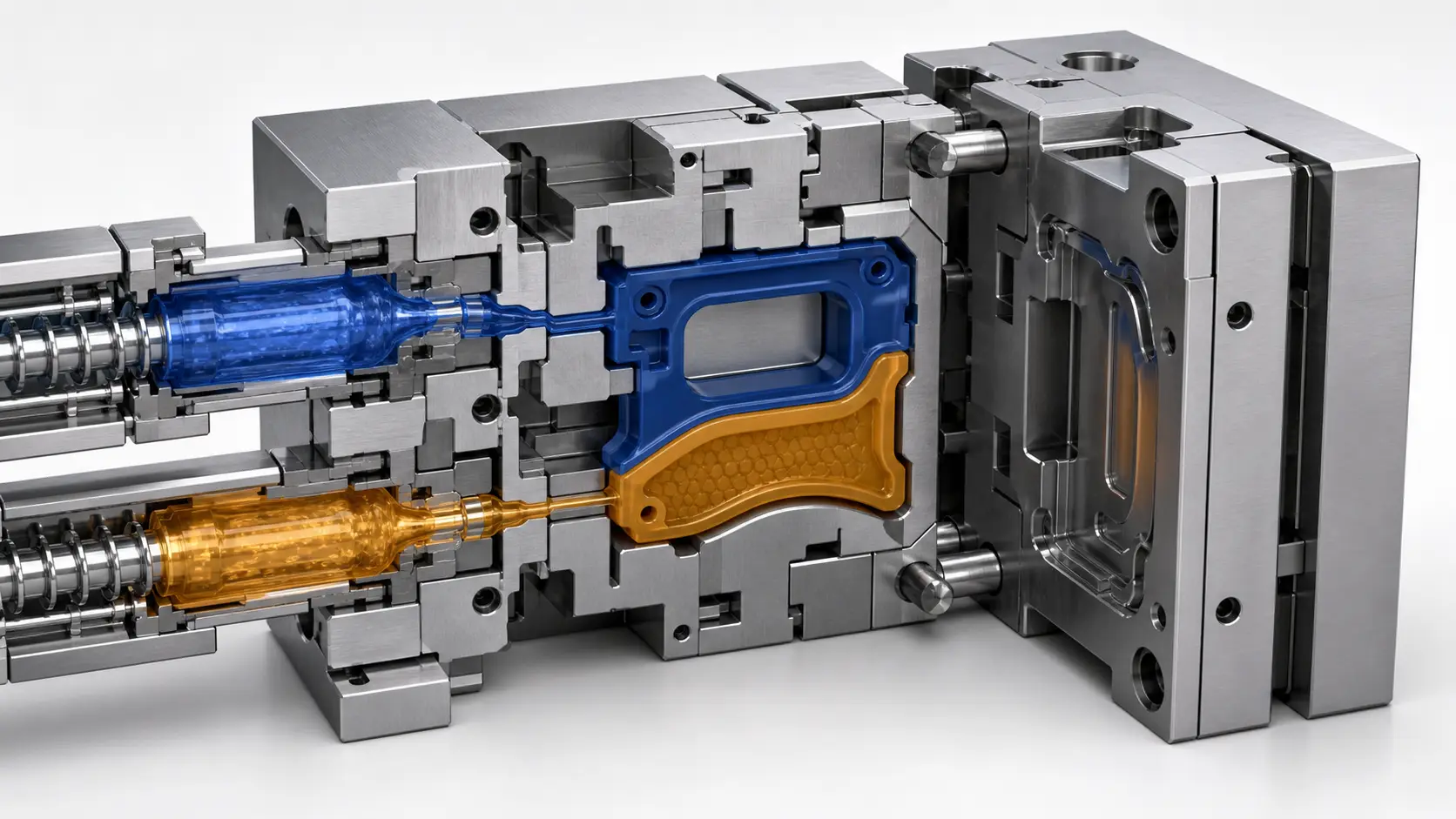
Two-shot molding, also called 2K or multi-material molding, normally forms one portion of the part in the first shot and then exposes selected surfaces to a second shot. The second material may add a soft-touch grip, a seal, a contrasting color, or a functional feature. Depending on the design, the substrate can be indexed on a rotary platen or rotary table, moved with a core-back action, or transferred inside the mold. The important result is a controlled interface in specific regions of the part.
Co-injection molding uses a different architecture. Two melts are introduced into the cavity so that one material can form a skin, another can occupy a core, or the layers can be arranged according to the required flow and barrier design. The layers are not automatically equivalent to a visible two-color surface. Their thickness, sequence, and stability depend on the melt-flow design, gate and nozzle arrangement, material behavior, and process window.
For a capability overview, see Jucheng’s two-shot injection molding service. Un proveedor debería revisar aún la geometría CAD real y los grados de resina antes de confirmar si una ruta de dos disparos o co-inyección es práctica.
Arquitectura del proceso: disparos secuenciales vs. flujo núcleo-piel
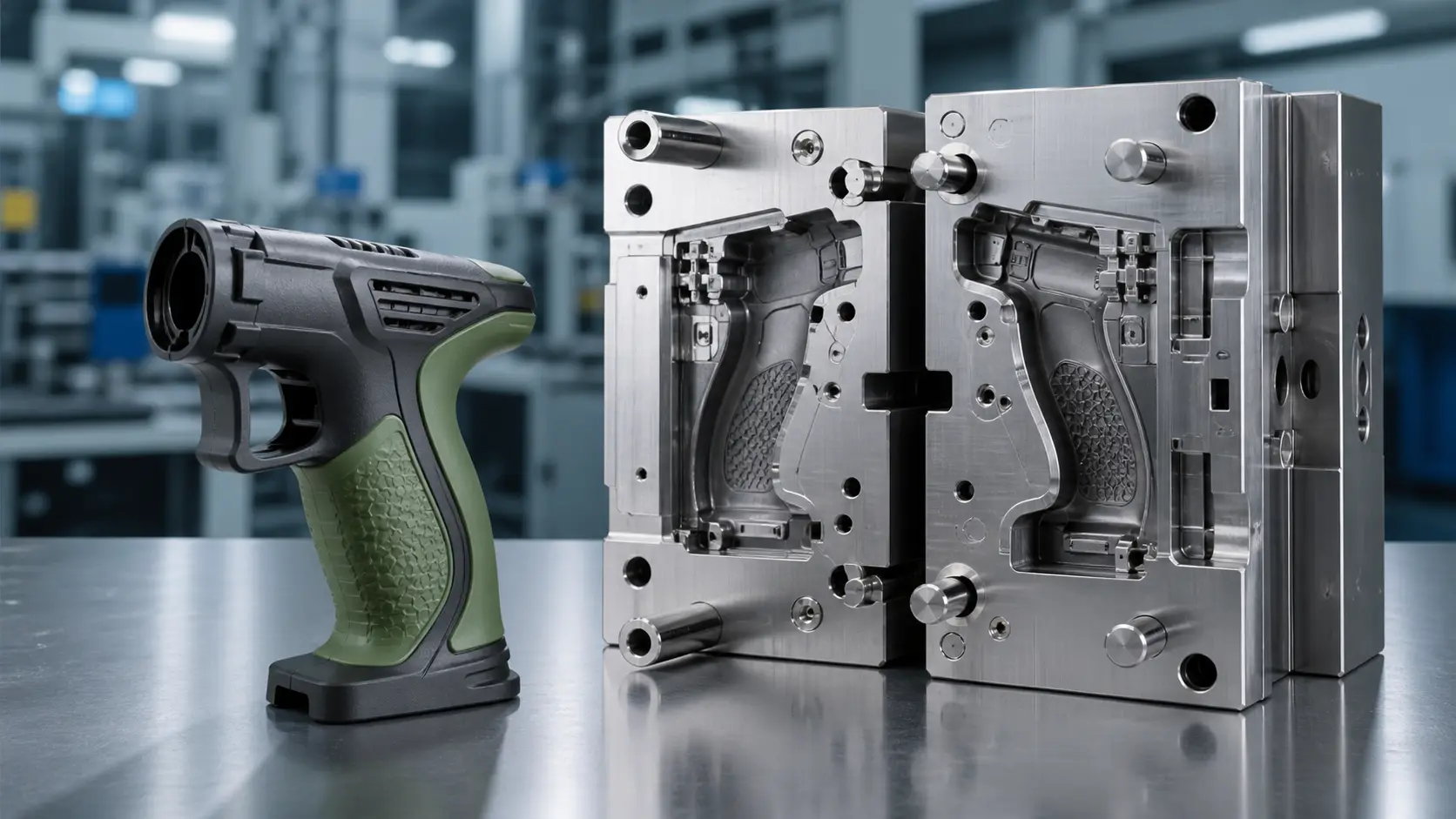
La distinción más útil es la ubicación del límite del material. En el moldeo de dos disparos, el límite generalmente se diseña alrededor de una superficie, borde o característica que el segundo disparo debe alcanzar y mantener. En la co-inyección, el límite se crea dentro de la ruta de flujo y puede ser interno, externo o ambos. Esa diferencia cambia el molde, la máquina y el trabajo de validación.
| Punto de decisión | Moldeo de dos disparos | Moldeo por co-inyección |
|---|---|---|
| Secuencia de materiales | Primer disparo seguido de un segundo disparo | Dos fundidos controlados a través de una secuencia de cavidad compartida |
| Movimiento del molde | Platina rotativa, mesa rotativa, retroceso de núcleo o disposición de transferencia | Disposición especializada de colector, boquilla, canal y control de capas |
| Interfaz de materiales | Una interfaz de superficie definida o enclavamiento mecánico | Una interfaz de flujo controlada núcleo-piel o en capas |
| Valor típico | Integrates a localized feature, color, grip, or seal | Uses layer structure to balance function, material use, or barrier performance |
A two-shot process guide can help explain the sequence in more detail, but it should not be used as a substitute for a tool-specific review. Gate location, venting, cooling, ejection, part retention, and access for the second shot all need to be considered together.
For the sequential molding stages and validation logic, review the step-by-step two-shot molding process article.
Material and Interface Requirements

Material selection should be made by grade and service requirement, not only by resin family. A common two-shot design combines a rigid substrate with a TPE, TPU, or SEBS-based elastomer for grip or sealing. Another uses two rigid materials for a color zone or functional surface. These are examples, not universal combinations. Melt-temperature exposure, shrinkage, surface chemistry, hardness, moisture, and the operating environment determine whether the interface should rely on chemical adhesion, mechanical interlocking, or a separate assembly feature.
Co-injection adds another layer of control: the two melts must form a stable structure during filling, packing, and cooling. Differences in viscosity, melt temperature, shrinkage, and solidification can change the location and thickness of the core. A material pair that looks promising in a datasheet may still require flow analysis, test plaques, or molded samples before tool release.
- Define the function of each material. Separate cosmetic, grip, sealing, structural, barrier, and wear requirements.
- Confirm the interface mechanism. Specify adhesion, interlock geometry, weld-line limits, and the tests that will demonstrate performance.
- Validate the grade pair. Check drying, processing temperatures, colorant or additive effects, and exposure to the final service environment.
Before committing to a tool, compare the proposed grades with the guía de compatibilidad de materiales de dos inyecciones and request a sample-based validation plan.
Tooling, Equipment, and Production Economics
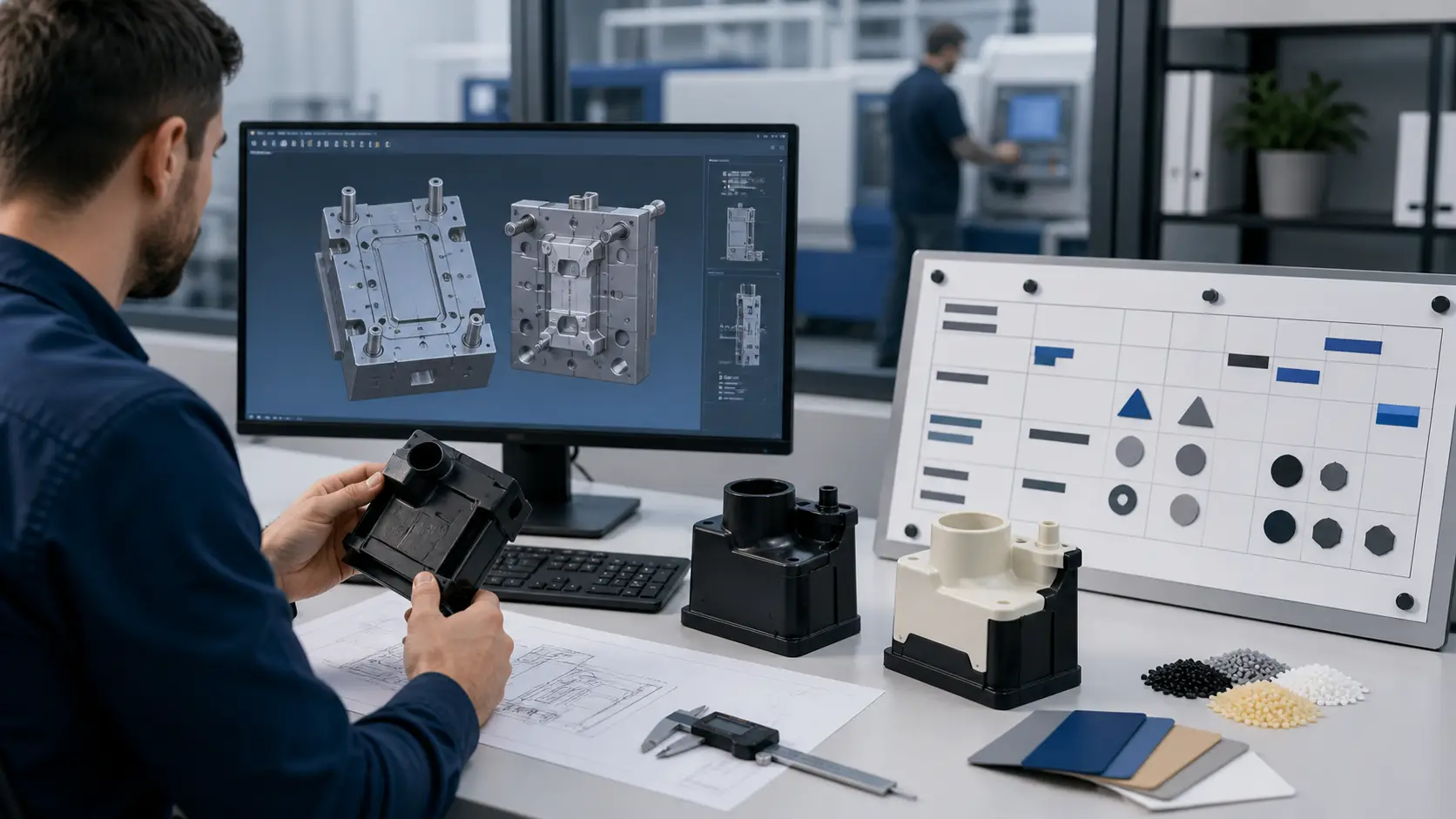
Two-shot tooling typically requires a mold that can retain, index, or transfer the first-shot substrate while maintaining registration for the second shot. It also needs two compatible injection units or an equivalent machine arrangement, plus cooling and ejection designed for both stages. Co-injection tooling instead concentrates more of the complexity in the melt-delivery system: the manifold, nozzle, runners, gates, and process controls must create a repeatable layer structure.
Neither process has a universal cost advantage. The commercial comparison should include mold construction, machine availability, cycle balance, material usage, inspection, scrap risk, assembly labor, and expected service life. A practical break-even estimate compares the additional process investment with the avoided assembly or secondary-operation cost over the planned volume. At low volume, a simpler mold plus assembly may be more flexible; at sustained production volume, an integrated process may justify its complexity.
The quotation should identify what is included in tool trials, sampling, color or material qualification, dimensional inspection, maintenance documentation, and production approval. Jucheng’s facility overview provides first-party context for its tooling and molding infrastructure, while the actual recommendation still depends on the customer’s part and grade requirements.
Application Fit and Decision Matrix
Start with the required product architecture. If the second material must occupy a defined visible area or create a precise soft-touch, seal, or color feature, two-shot molding is often the more direct concept to evaluate. If the value comes from a repeatable skin-core structure, internal material reduction, or a layered functional wall, co-injection may be worth investigating.
| Part requirement | First process to evaluate | Reason to investigate it |
|---|---|---|
| Defined soft grip or sealing zone | Moldeo de dos disparos | The second material is located on selected surfaces |
| Two visible colors with registration | Moldeo de dos disparos | The interface can be designed around a visible boundary |
| Layered skin and core structure | Moldeo por co-inyección | The function depends on internal or wall-thickness layering |
| Simple cosmetic contrast at modest volume | Compare molding with assembly or decoration | A dedicated multi-material tool may not recover its added cost |
The decision becomes stronger when the part’s annual volume, quality plan, and change-control expectations are included from the beginning. A technically possible process can still be a poor commercial choice if the tooling cannot support the expected revisions or if inspection cannot distinguish the required interface defects.
Buyer Checklist for a Reliable Quote
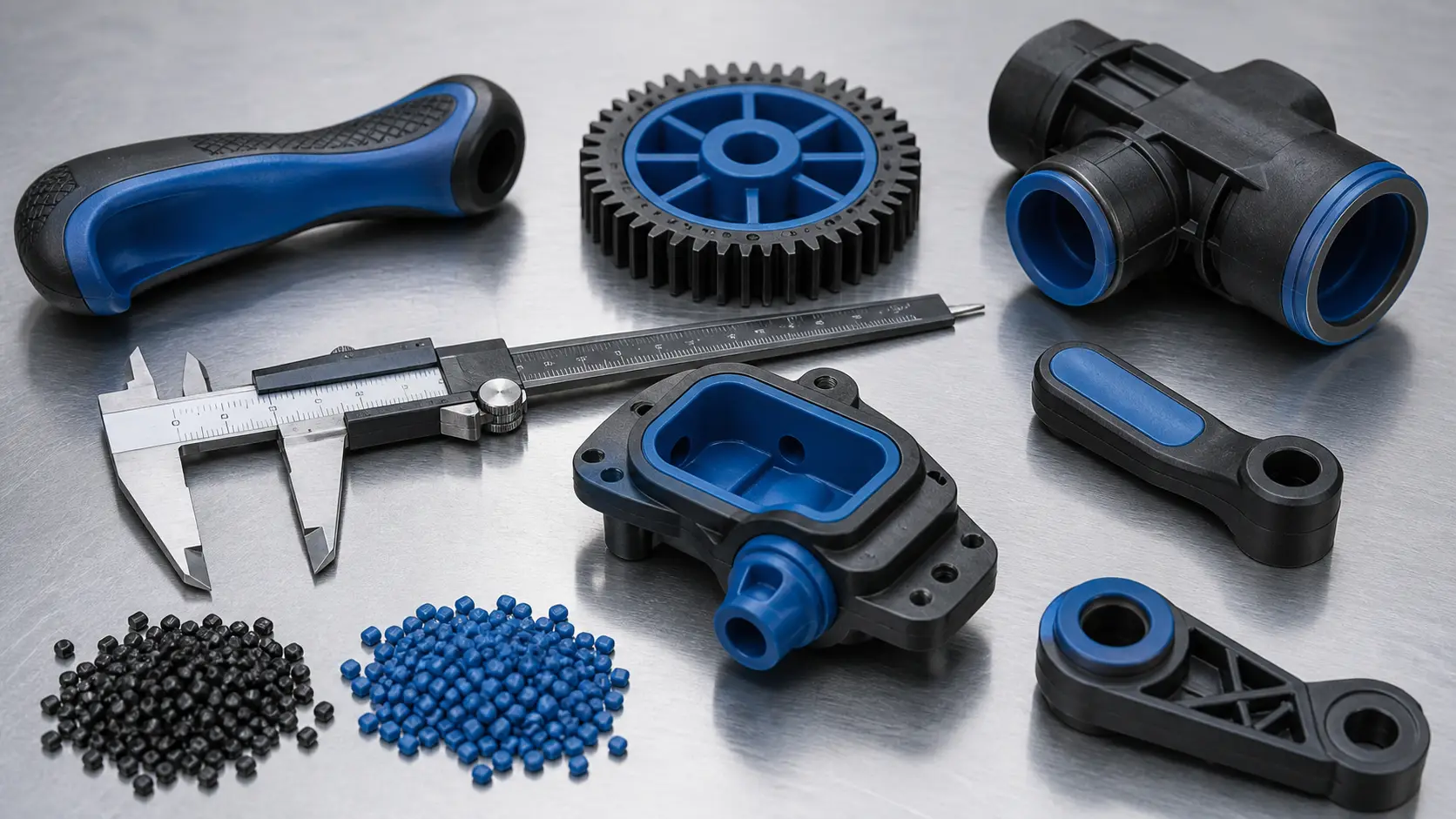
A useful request for quotation lets the supplier evaluate the process rather than guess from a product name. Include:
- 3D CAD, 2D drawings, critical dimensions, draft, wall thickness, and any cosmetic zones.
- Resin manufacturer and grade, color requirements, additives, hardness, and drying limits.
- Required interface performance, sealing or grip targets, environmental exposure, and test method.
- Annual volume, launch timing, forecast changes, packaging needs, and expected tool life.
- Preferred mold architecture, machine constraints, sample quantity, and approval milestones.
- Inspection records, traceability, first-article expectations, and handling of nonconforming parts.
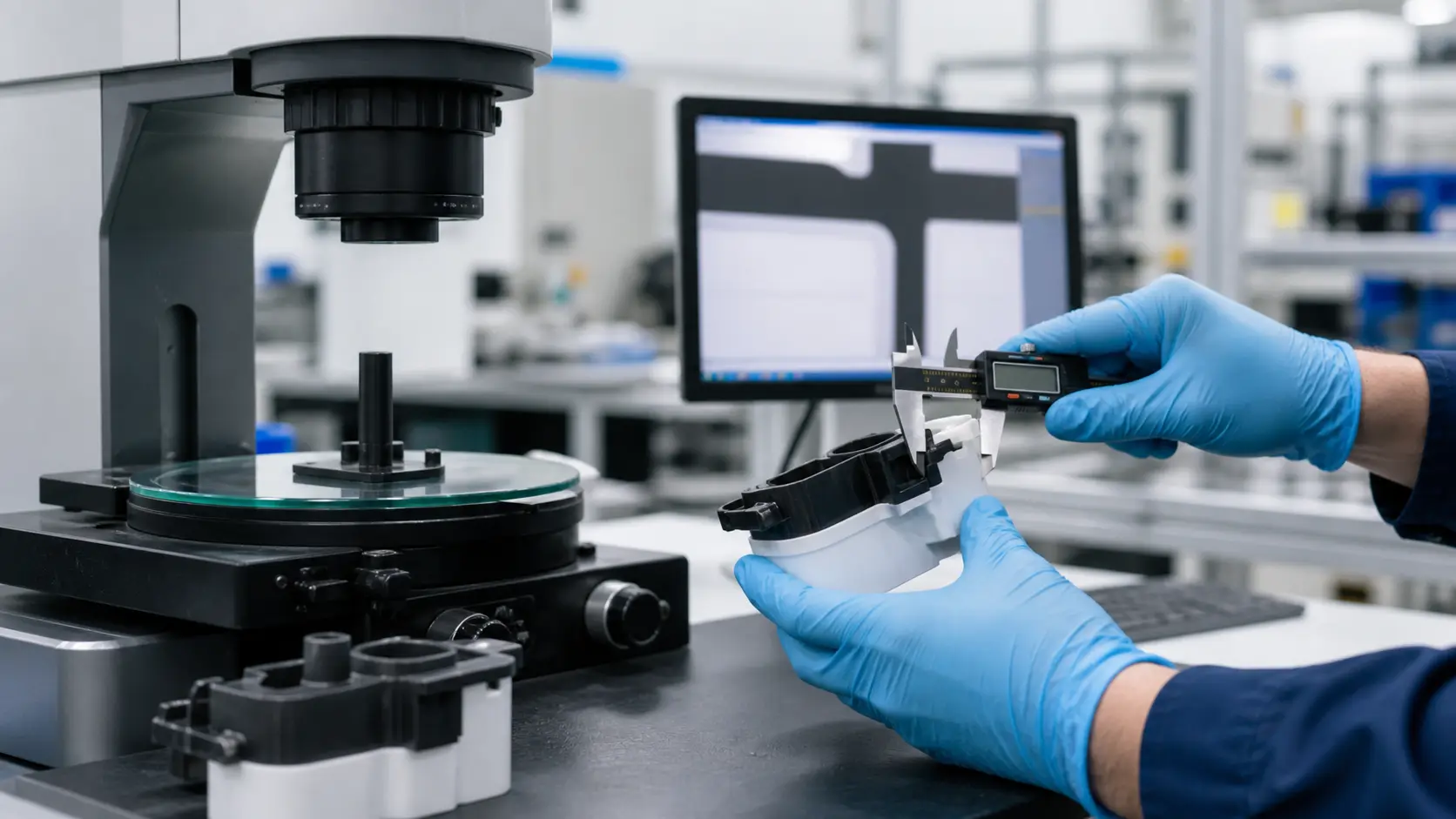
Ask the supplier to state assumptions separately from confirmed capability. Jucheng’s flujo de trabajo de control de calidad describes first-article, in-process, final, and outgoing checks; the project team can use that framework to align inspection records with the customer’s drawing and interface requirements.
Conclusión: two-shot molding is usually evaluated when the part needs a defined second material or feature on selected surfaces. Co-injection is evaluated when the product benefits from a controlled layered structure. Compare both against the actual geometry, material grades, volume, tooling plan, and validation method before selecting the process.