
Designing high-integrity mold structures for metal-plastic hybrid components requires specialized mechanical features that accommodate pre-formed metallic inserts. Metallic fasteners, stamped copper busbars, and electronic pins present physical obstructions inside the mold cavity, demanding precise shut-off lands and robust core retention mechanisms.
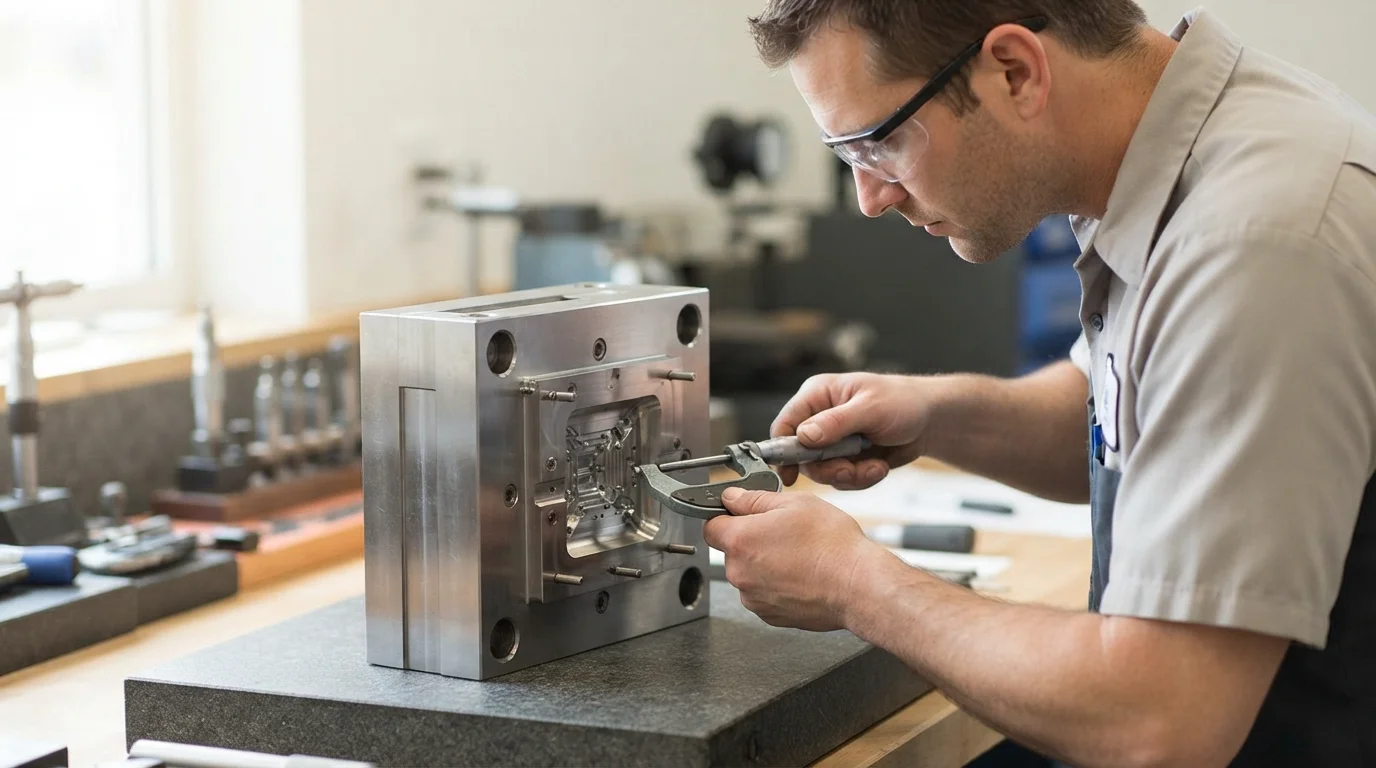
Improper tool steel selection or weak core pin design leads to insert tilt under high injection pressures, resulting in crushed shut-off lands and plastic flash. High-volume automotive and medical encapsulation programs rely on hardened steel cavities, guided ejector plates, and thermal cooling balance to maintain dimensional stability. This technical tooling guide examines core locating mechanisms, cavity steel selection, and SPI Class 101 mold construction standards.
目次
Core Locating Pins, Pneumatic Ejection & Wear-Resistant Shut-Offs
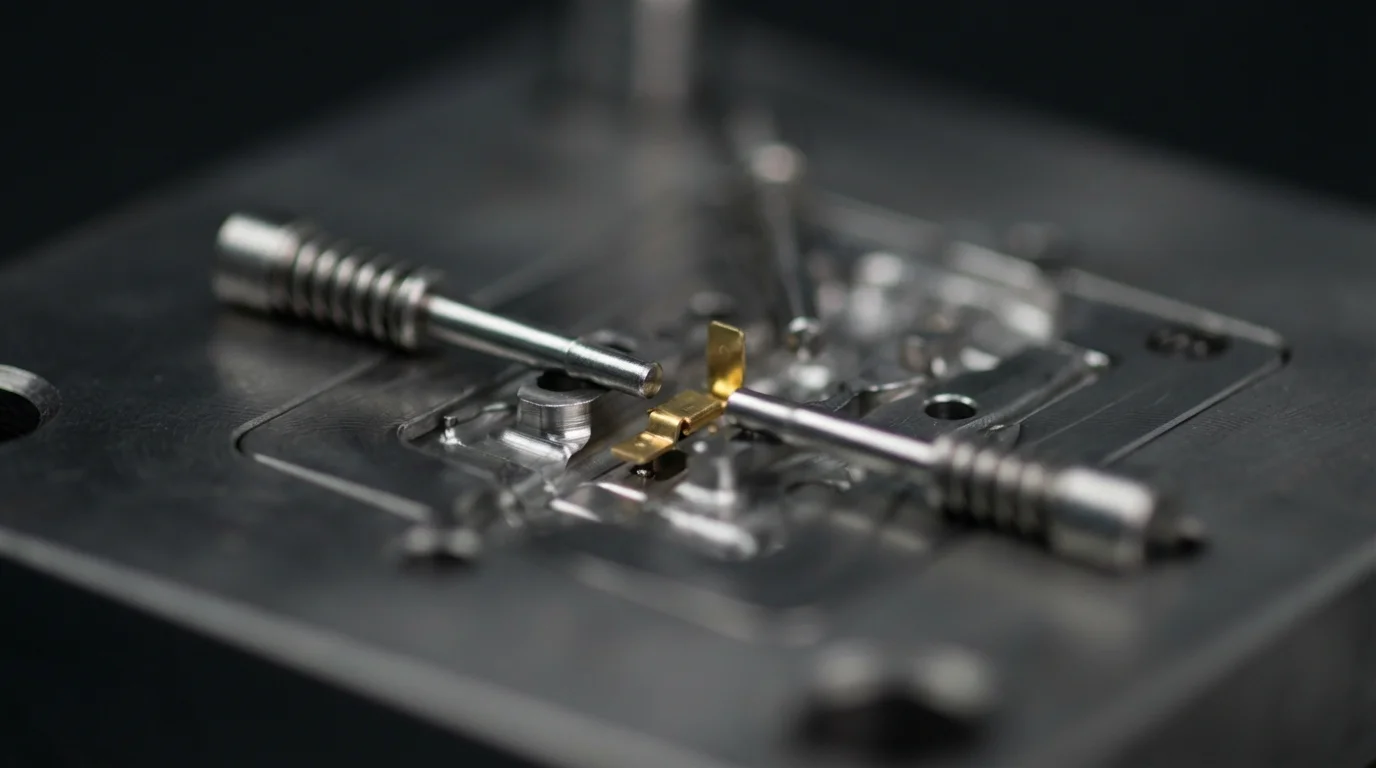
堅牢なエンジニアリング insert molding tooling depends on integrating mechanical features that anchor metallic inserts securely before mold closure. Precision 位置決めピン fit internal pilot holes or threaded bores tightly, holding 真鍮 または 銅 inserts true against core steel during high-velocity melt filling. Core magnets or spring-loaded retention pins prevent inserts from dropping during vertical or horizontal mold movement.
Ejection mechanisms must handle encapsulated components gently to prevent bending delicate metal pins or deforming soft plastic walls. Integrating pneumatic ejection sleeves or guided ejector plates applies balanced mechanical lift across the part, preventing terminal pin misalignment during mold opening. Precision shut-off steel lands ground to fitment tolerances under ±0.01 mm block molten resin from bleeding over active electrical contact pads.
コア工具設計の基本原則には以下が含まれます:
- 位置決めピンのアライメント—グランドパイロットピンは、クランプアップ段階全体を通じて金属ファスナーを正確な空間位置に保持します。.
- 空気圧式エジェクタスリーブ—空気補助式エジェクションを利用することで、脆弱な電気リード線上の機械的ピン曲げを防止します。.
- フローティングシャットオフランド—スプリング式スチールランドが金属インサートの厚さのばらつきを吸収し、金型鋼を破砕しません。.
- ガイド付きエジェクタアセンブリ—ガイド付きエジェクタプレートにより、部品エジェクションサイクル中に完全に平行な動きが保証されます。.
25台の5軸CNCマシニングセンタ(±0.01 mm工具公差)
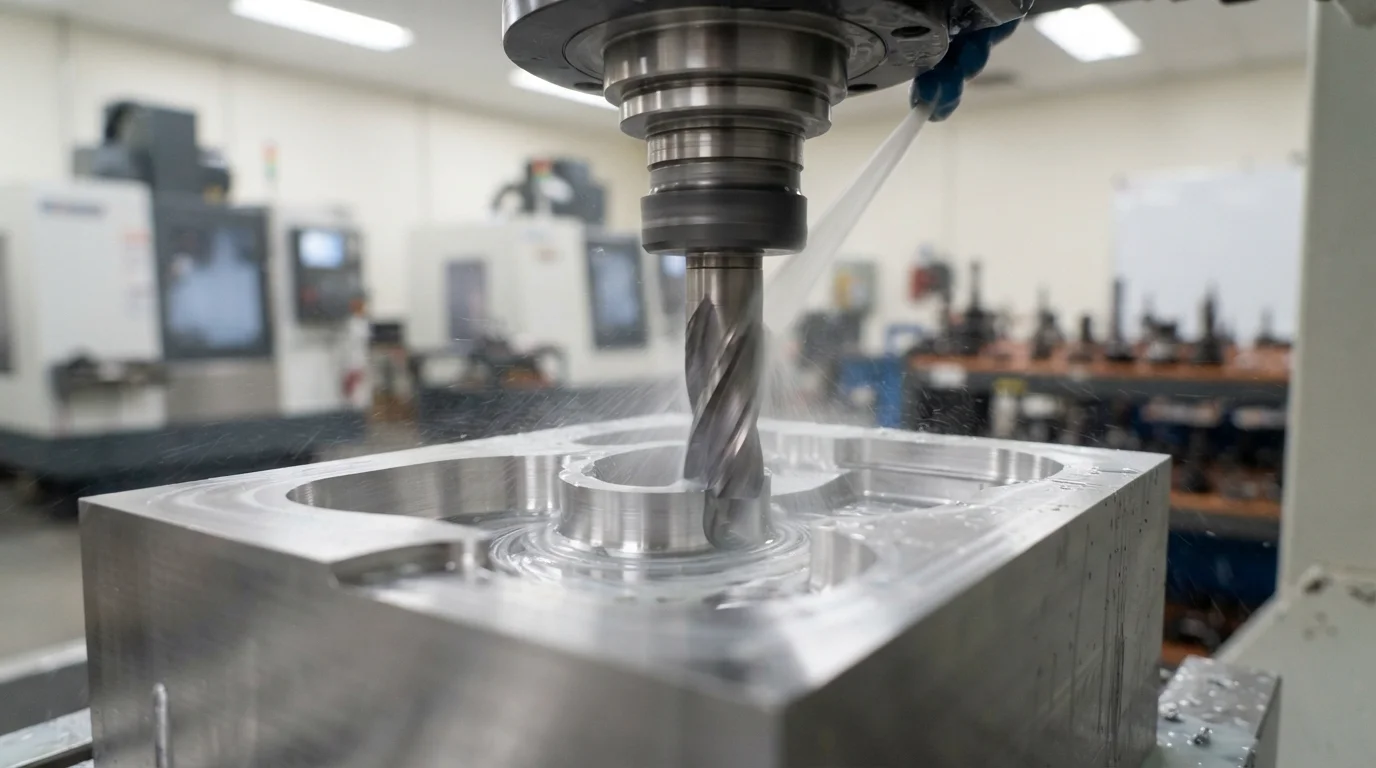
複雑なコアキャビティの製造には、高速CNCフライス加工と精密EDM電極切断が必要です。高度な多軸カッターを使用した工具鋼コアの機械加工により、深いコアポケット、狭いリブ、3Dパーティングラインを単一のセットアップで切断できます。複数のワーククランプを排除することで累積位置誤差を最小限に抑え、金型製造公差±0.01 mmを維持します。.
以下のような高級焼入れキャビティ鋼を選択すると、 S136ステンレス鋼 および H13工具鋼 キャビティの摩耗やアウトガスに対する高抗張力抵抗が得られます。工具鋼コアをHRC 48-52に熱処理することで、研磨性のあるガラス充填ポリアミドや難燃性熱可塑性プラスチックを加工する際の長期的な寸法安定性が保証されます。.
SPIクラス101金型認証およびメンテナンスプロトコル
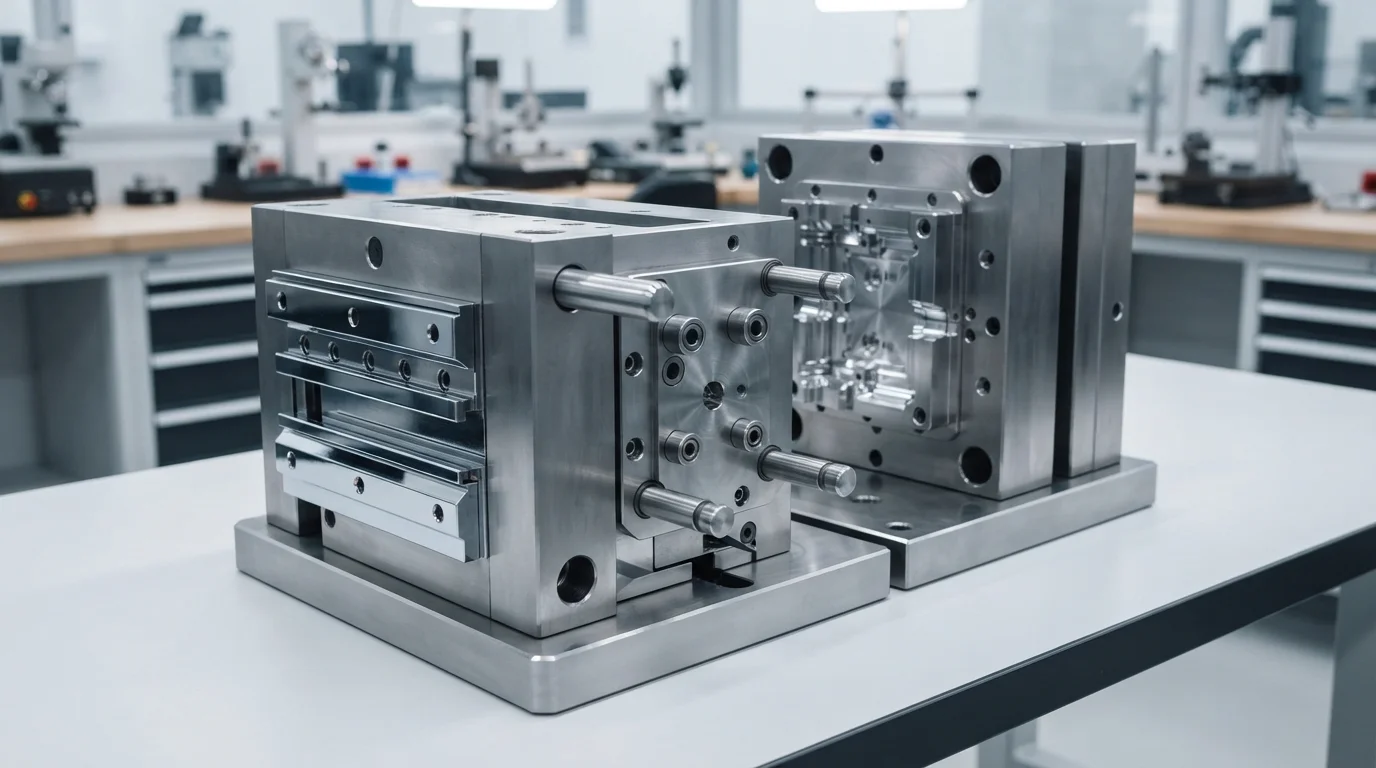
構築 SPIクラス101金型は guarantees a production tool lifespan exceeding 1,000,000 molding cycles under continuous series manufacturing. Class 101 tool construction mandates fully hardened stainless or tool steel cores, guided ejector plate assemblies, and wear-resistant slide plates. Precision shut-off steel surfaces are heat-treated to resist abrasive wear, ensuring flash-free encapsulation across long production runs.
カスタム インサート成形 with certified Class 101 tooling ensures complete part repeatability for high-volume automotive and medical programs. Structured mold maintenance protocols include ultrasonic cavity cleaning, parting line inspection, and core pin wear monitoring at regular production intervals.
| Tooling Specification Metric | SPI Class 101 Production Tool | SPI Class 102 Prototype/Bridge Tool | Primary Tooling Benefit |
|---|---|---|---|
| Cavity Steel Hardness | S136 / H13 Hardened (HRC 48-52) | P20 Pre-Hardened Steel (HRC 28-32) | Resists cavity wear from abrasive glass fibers |
| Ejector System Architecture | Guided Ejector Plates + Pneumatic Pins | Standard Ejector Pins | Prevents core pin binding & terminal pin tilt |
| Guaranteed Shot Lifetime | 1,000,000+ Cycles Guaranteed | 10,000 to 50,000 Cycles | Lowest long-term piece-part tooling amortization |
よくある質問 (FAQ)
Why are spring-loaded core shut-offs essential for insert molding tooling?
Spring-loaded core shut-offs compensate for dimensional variations in stamped or turned metal inserts. Metal insert thickness tolerances vary from piece to piece. Floating spring-loaded shut-offs maintain a firm sealing clamp against the metal shoulder without crushing the tool steel or leaving gaps that cause plastic flash.
What is the advantage of S136 stainless steel for insert molding cavities?
S136 is a high-chrome stainless steel offering superior corrosion resistance against acidic gases released by flame-retardant polymers like PEEK, PEI, and PC/ABS. Hardening S136 to HRC 48-52 preserves mirror-polished cavity surfaces and sharp shut-off lands over 1,000,000 molding cycles.
How does guided ejection prevent pin bending during mold opening?
Guided ejection systems utilize hardened guide bushings and pillar posts to keep the ejector plate perfectly parallel to the mold base during movement. Parallel plate movement applies uniform lifting force across all ejector pins, preventing delicate overmolded contact pins from bending or binding during part ejection.