
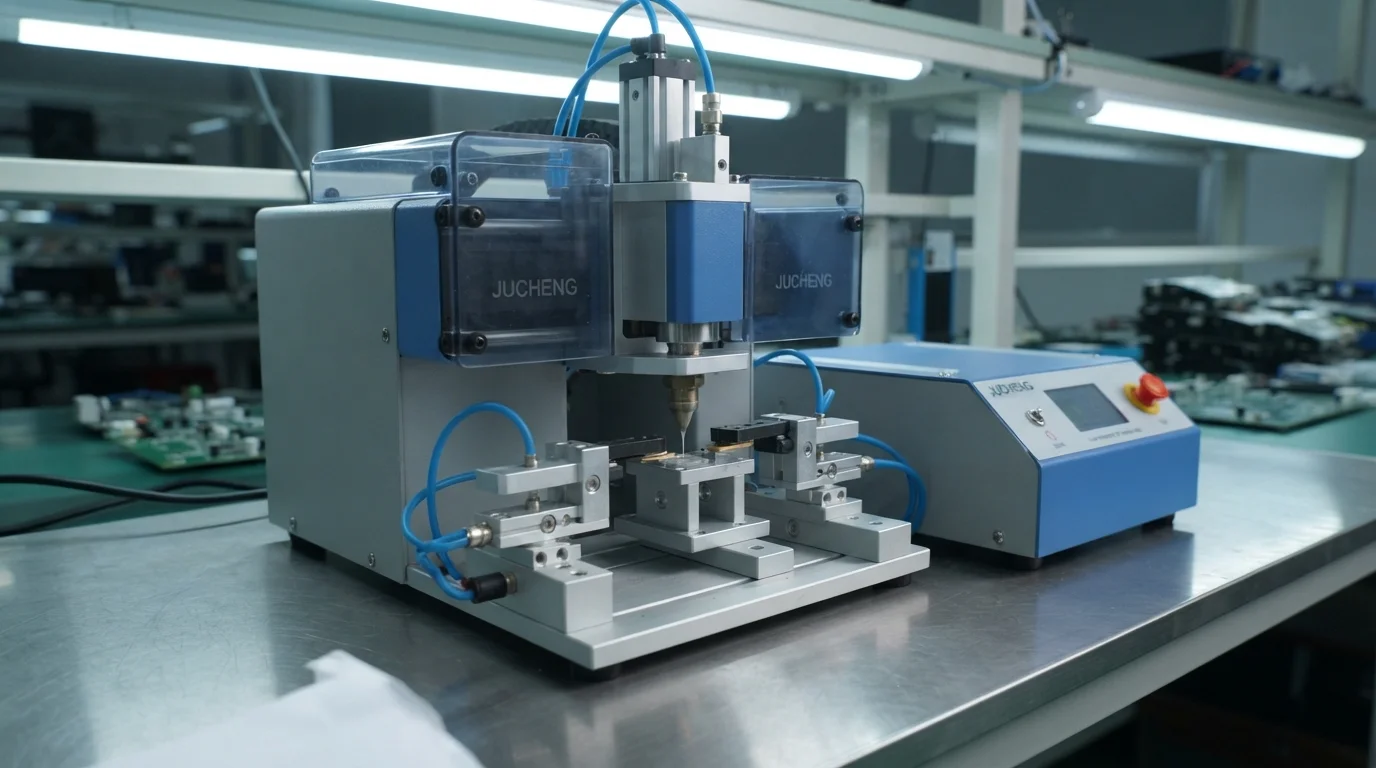
Encapsulating fragile electronic assemblies, printed circuit boards (PCBs), and delicate micro-sensors requires specialized packaging techniques that prevent mechanical crush damage. Traditional high-pressure thermoplastic molding exerts extreme hydraulic force that snaps gold wire bonds and crushes delicate surface-mount components. Liquid epoxy two-part potting provides gentle encapsulation, but long curing times extending across hours severely restrict daily manufacturing throughput. This technical guide reviews solvent-free hot melt processing, low-stress clamping mechanics, and environmental sealing standards.
目次
Polyamide Hot Melt Encapsulation for PCB Boards, Sensors & Harnesses
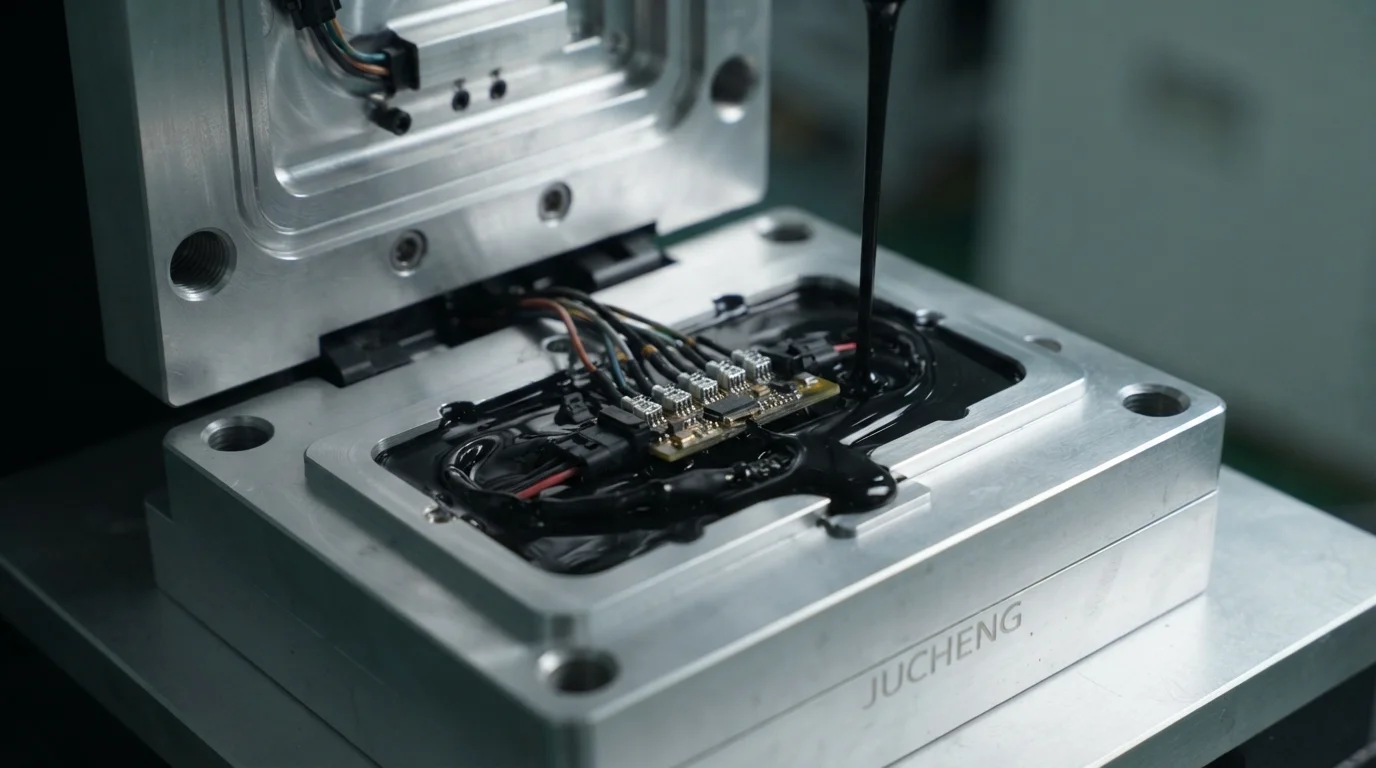
Executing gentle low pressure molding utilizes low-viscosity hot melt polyamide (PA) resins to encapsulate sensitive electronics safely. Operating injection pressures from 1.5 to 3.0 MPa—roughly 10% of standard injection molding pressure—prevents physical damage to fragile solder joints. Processing temperatures between 190°C and 230°C quickly melt the dimer-acid based polyamide pellets without transferring damaging heat to underlying circuit boards. Single-component dimer polyamides flow freely into complex housing geometries, forming a seamless dielectric jacket. Solidifying within 15 to 45 seconds accelerates assembly speeds compared to liquid potting techniques.
Low pressure encapsulation processing steps include:
- Low-pressure melt delivery—Pumping low-viscosity hot melt resin at 1.5 to 3.0 MPa prevents mechanical crushing of surface-mount components.
- Aluminum mold thermal dissipation—軽量アルミニウム工具を使用することでポリアミド溶融物が急速に冷却され、熱暴露時間が最小限に抑えられます。.
- ハウジング直接封止—露出した回路基板に直接樹脂を射出することで、別途外側のプラスチックシェルが不要になります。.
- 高速物理的固化—溶融ポリアミドを30秒以内に冷却することで、即座に後工程の処理や電気試験が可能になります。.
脆弱な電子機器を圧力、湿気、振動から保護
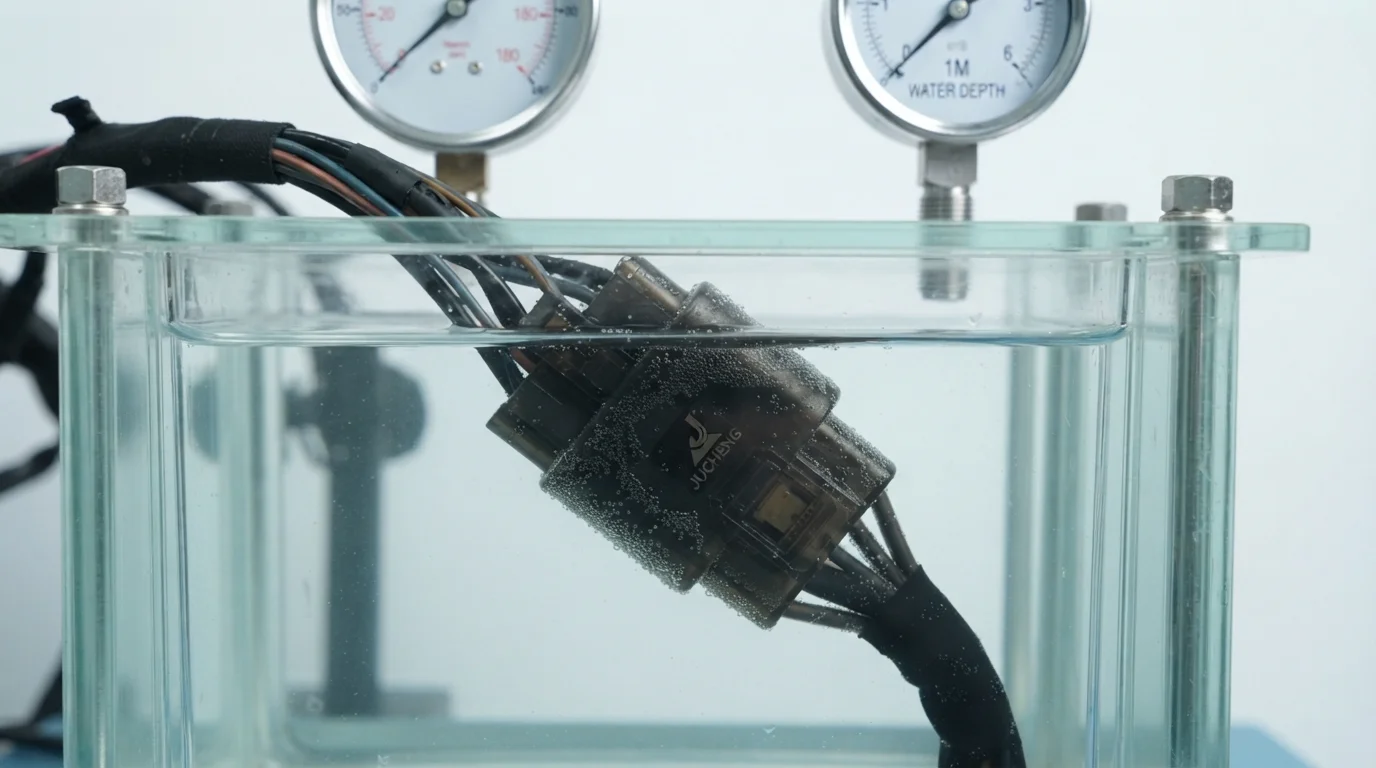
環境シール性能は、過酷な自動車のアンダーフードや産業環境において、厳格なIP67およびIP68防水等級を達成します。ダイマー系ポリアミドは、電子基板、フレキシブルケーブルジャケット、およびコネクタピンに自然に接着します。 ポリカーボネート(PC) またはPVC。連続的な化学結合を形成することで、湿気、塩水噴霧、自動車用流体が敏感な電子回路に浸透するのを防ぎます。ホットメルト材料に固有の弾性特性は、機械的な道路振動を吸収し、ケーブルの応力緩和ゾーンに沿ったフレックス疲労を防ぎます。電子センサーに低圧成形を採用することで、敏感な内部コンポーネントを熱衝撃や機械的衝撃から保護します。.
低熱応力のIP67防水オーバーモールディング
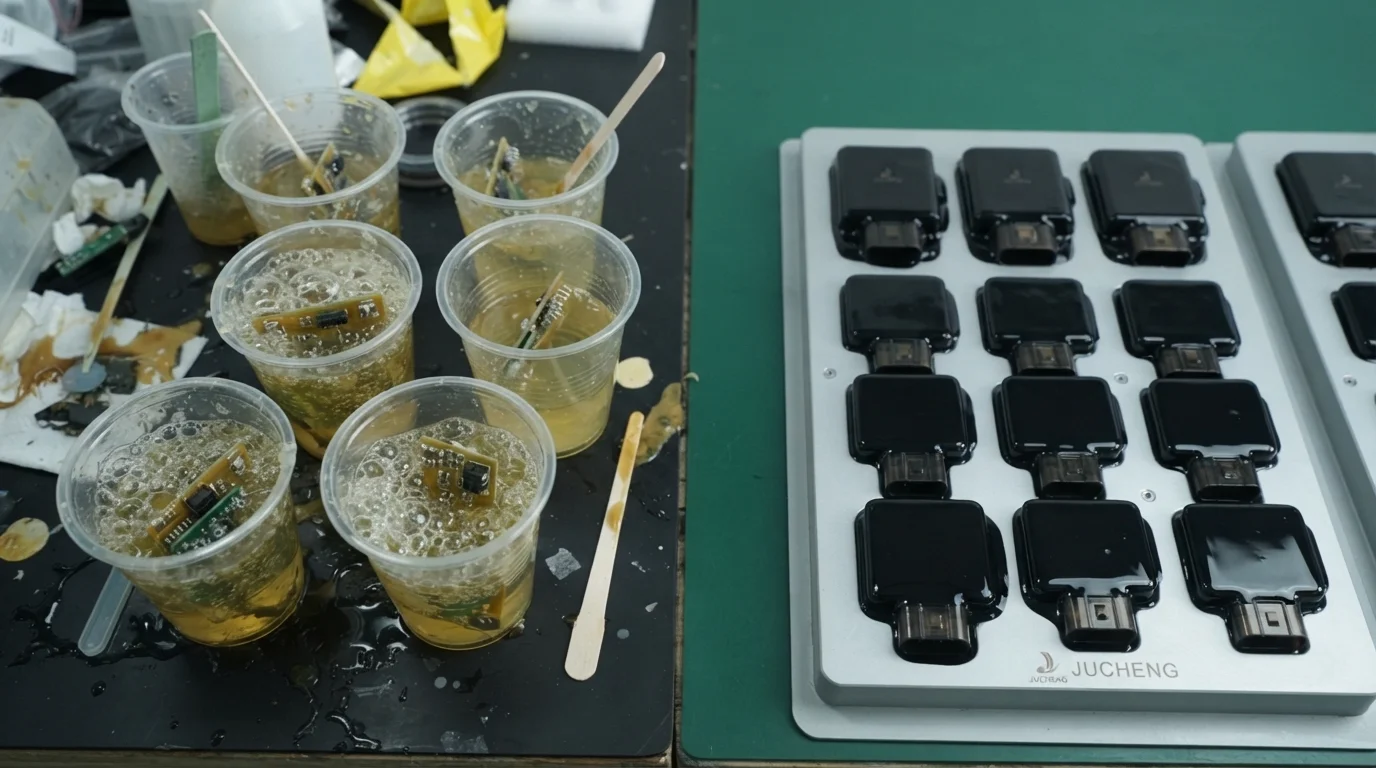
比較 IP67防水オーバーモールディング 低圧ホットメルトを使用した場合と2液性エポキシ注型を比較すると、大きな生産上の利点が明らかになります。液状ポッティングでは、多ステーションの硬化ラック、高価な混合ノズル、有毒な化学薬品の取り扱い手順が必要であり、クリーンルーム作業が複雑になります。ホットメルトポリアミドは非毒性で溶剤を含まない熱可塑性プラスチックであり、純粋に物理的な状態変化によって溶融および冷却されます。硬化時間がゼロであるため、在庫のボトルネックが解消され、低クランプ力の機械が工具設備コストを大幅に削減します。センサー封止に低圧成形を指定するエンジニアは、最小限の熱応力で防水保護を達成します。.
| パッケージング技術 | 射出圧力(MPa) | 処理サイクルタイム | Environmental Sealing Rating | Wire Bond Damage Risk |
|---|---|---|---|---|
| Low Pressure Molding (PA Hot Melt) | 1.5 – 3.0 MPa | 15 – 45 Seconds | IP67 / IP68 Waterproof | Zero Risk (Gentle melt delivery) |
| Traditional Liquid Epoxy Potting | 0.1 – 0.5 MPa (Gravity/Low) | 2 – 24 Hours (Chemical cure) | IP67 Water Resistant | Low Risk (Long chemical exposure) |
| Standard High-Pressure Injection | 50 – 150 MPa | 30 – 60 Seconds | IP65 – IP67 | High Risk (Hydraulic wire shearing) |
よくある質問 (FAQ)
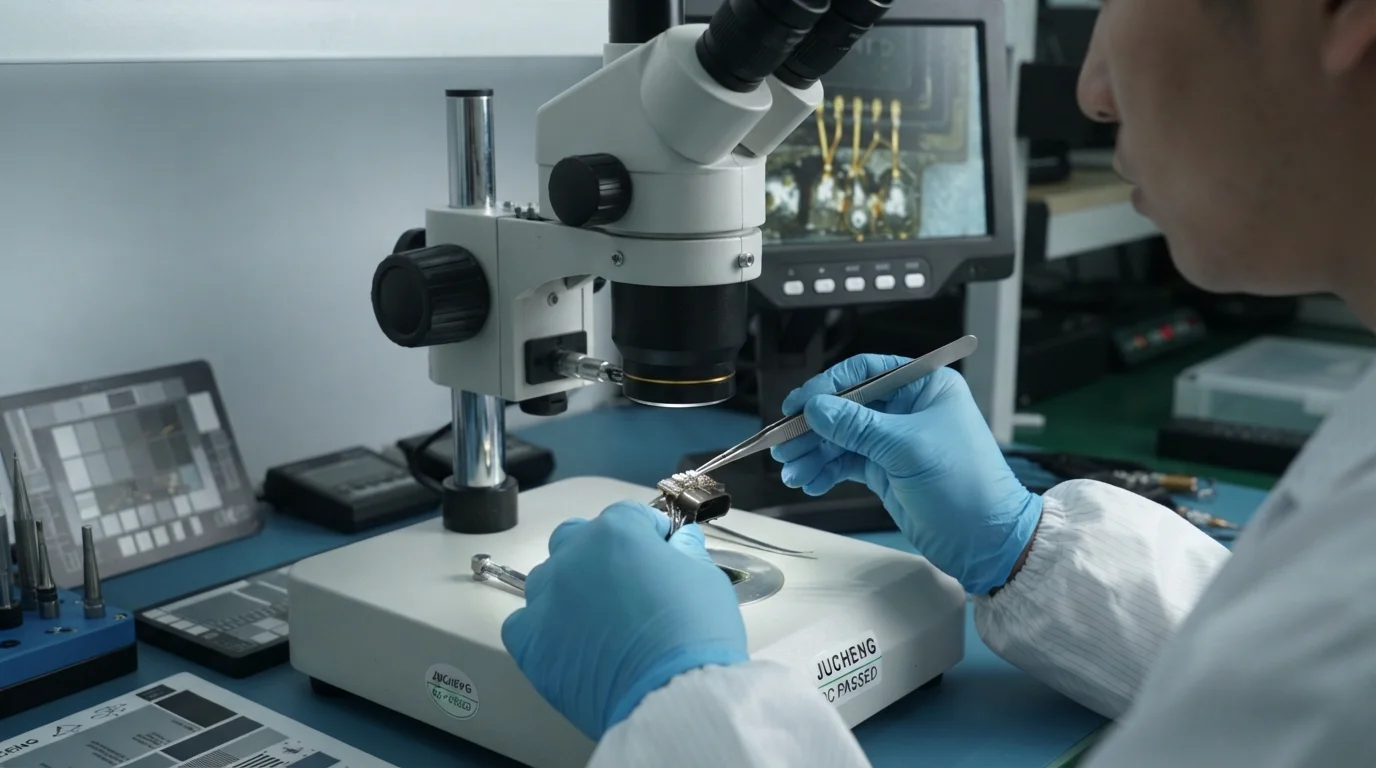
Why does low pressure molding not damage delicate gold wire bonds on PCBs?
Low pressure molding operates at injection pressures between 1.5 and 3.0 MPa, which is vastly lower than standard injection pressures exceeding 80 MPa. Gentle fluid pressure allows molten polyamide to flow smoothly over exposed solder joints and gold wire bonds without applying mechanical shear force. Low thermal mass of the thin plastic skin also cools rapidly, preventing thermal degradation of underlying electronic components.
What is the difference between polyamide hot melt encapsulation and traditional potting?
Traditional potting pours liquid two-part epoxy or polyurethane into a pre-molded outer plastic housing, requiring several hours to cure chemically. Low pressure molding injects solvent-free hot melt polyamide directly over the electronics, serving as both the housing and seal. Physical cooling completes within 30 seconds, eliminating outer shell costs and accelerating manufacturing throughput.
Can low-pressure molded sensors pass IP67 water immersion testing?
Polyamide hot melt resins form strong adhesive bonds with wire PVC insulation, PCB substrates, and plastic connector housings. Creating a continuous molecular seal along cable entry points prevents moisture and dust ingress under 1-meter water immersion. Material adhesion withstands severe thermal shock cycling between -40°C and 125°C without delaminating.