
Encapsulating fragile electronic assemblies, printed circuit boards (PCBs), and delicate micro-sensors requires packaging that limits mechanical loads. Higher-pressure thermoplastic molding can damage exposed gold wire bonds and delicate surface-mount components, depending on the assembly and process. Liquid epoxy two-part potting provides gentle encapsulation, but long curing times extending across hours severely restrict daily manufacturing throughput. This technical guide reviews solvent-free hot melt processing, low-stress clamping mechanics, and environmental sealing standards.
Inhaltsverzeichnis
Polyamid-Heißschmelzverkapselung für Leiterplatten, Sensoren & Kabelbäume
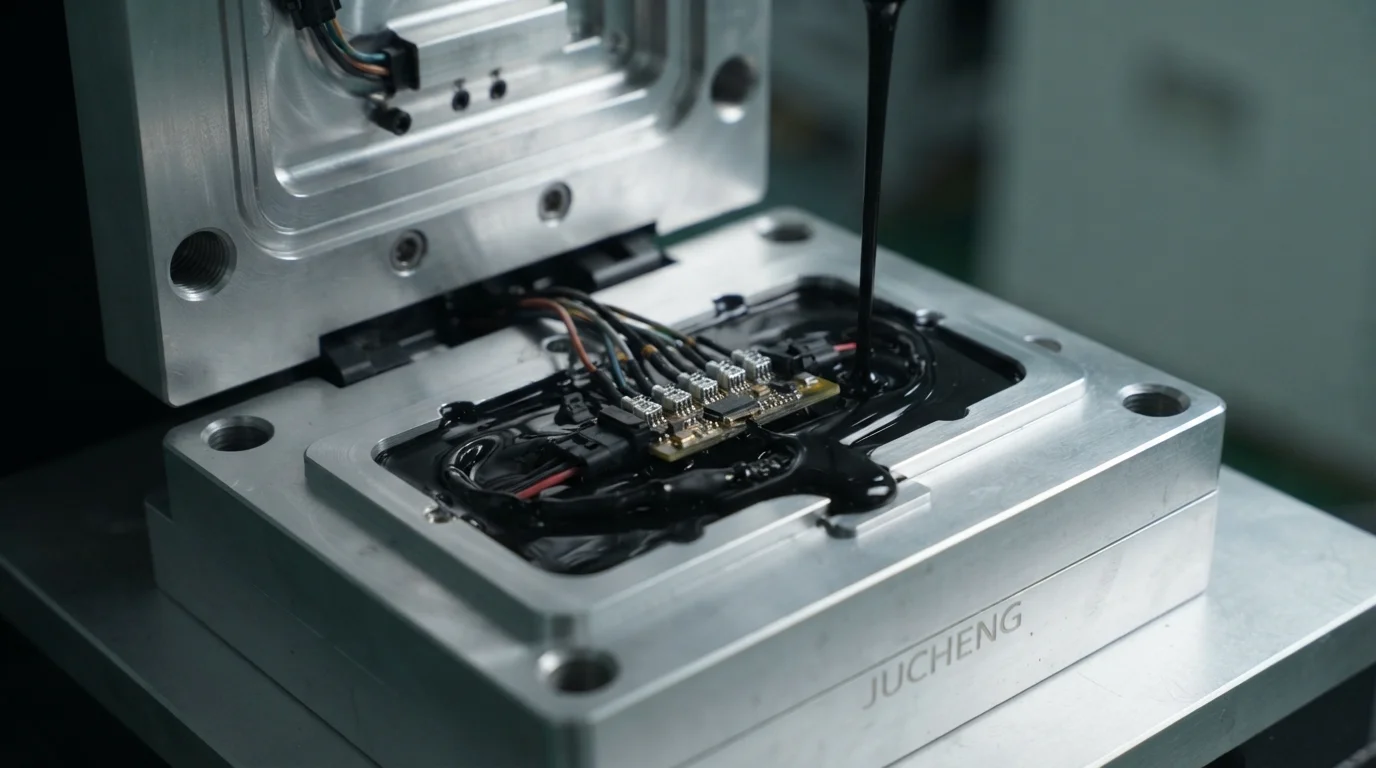
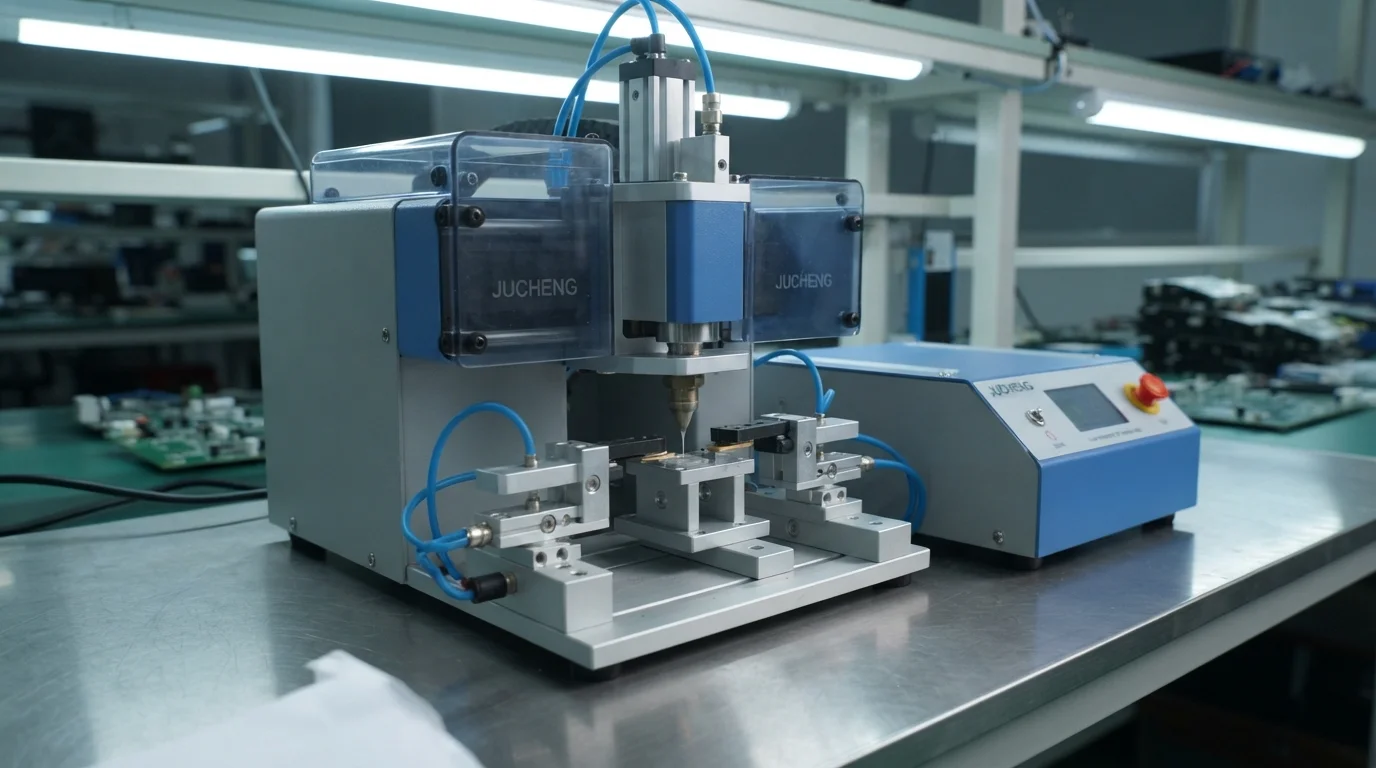
Die Durchführung eines schonenden Niederdruckvergusses nutzt niedrigviskose Heißschmelz-Polyamid (PA) resins to encapsulate sensitive electronics safely. Injection pressures from 1.5 to 3.0 MPa can reduce mechanical loads on fragile solder joints. Processing temperatures between 190°C and 230°C may be used for some dimer-acid-based polyamides; check the selected grade and verify thermal exposure on the actual circuit board. Single-component dimer polyamides flow freely into complex housing geometries, forming a seamless dielectric jacket. Solidifying within 15 to 45 seconds accelerates assembly speeds compared to liquid potting techniques.
Die Verarbeitungsschritte der Niederdruckverkapselung umfassen:
- Niederdruck-Schmelzzufuhr—Pumping low-viscosity hot melt resin at 1.5 to 3.0 MPa can reduce mechanical loads on surface-mount components; check the actual assembly.
- Wärmeableitung von Aluminiumformen—Die Verwendung von leichten Aluminiumwerkzeugen kühlt die Polyamidschmelze schnell ab und minimiert die thermische Belastungsdauer.
- Direkte Gehäusekapselung—Das direkte Einspritzen von Harz über freiliegende Leiterplatten macht separate äußere Kunststoffgehäuse überflüssig.
- Schnelle physikalische Erstarrung—Das Abkühlen von geschmolzenem Polyamid innerhalb von 30 Sekunden ermöglicht die sofortige Weiterverarbeitung und elektrische Prüfung.
Schutz empfindlicher Elektronik vor Druck, Feuchtigkeit und Vibration
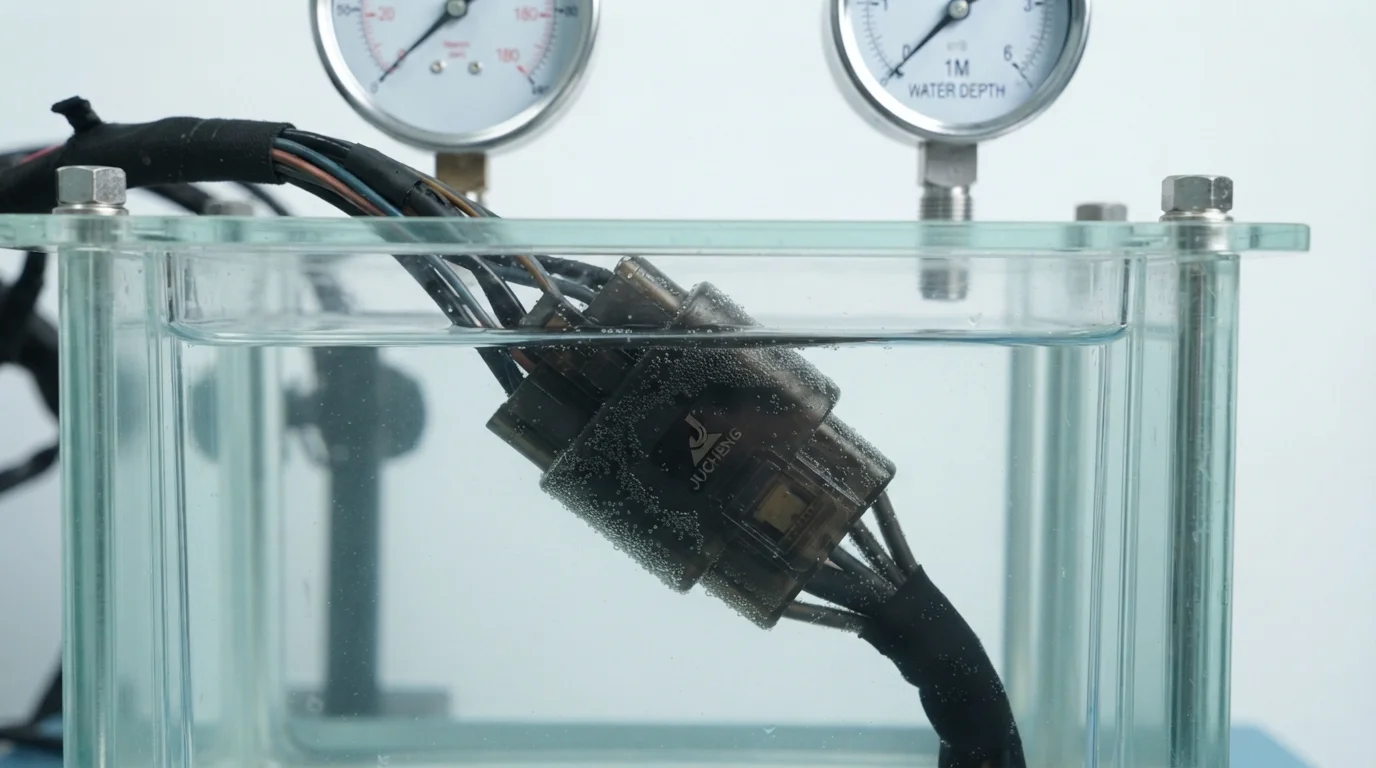
IP67 and IP68 describe the ingress protection of a tested finished enclosure, not a property of low pressure molding. Hot melt adhesion depends on the grade and the actual PCB, cable jacket and connector materials, such as Polycarbonat (PC) or PVC. Check sealing at interfaces on the finished assembly, and evaluate salt spray and automotive-fluid exposure separately where relevant. Elastic properties inherent in hot melt materials absorb mechanical road vibration and prevent flex fatigue along cable strain relief zones. Deploying low pressure molding for electronic sensors safeguards sensitive internal components against thermal shock and mechanical impact.
IP67-wasserdichte Umspritzung mit geringer thermischer Belastung
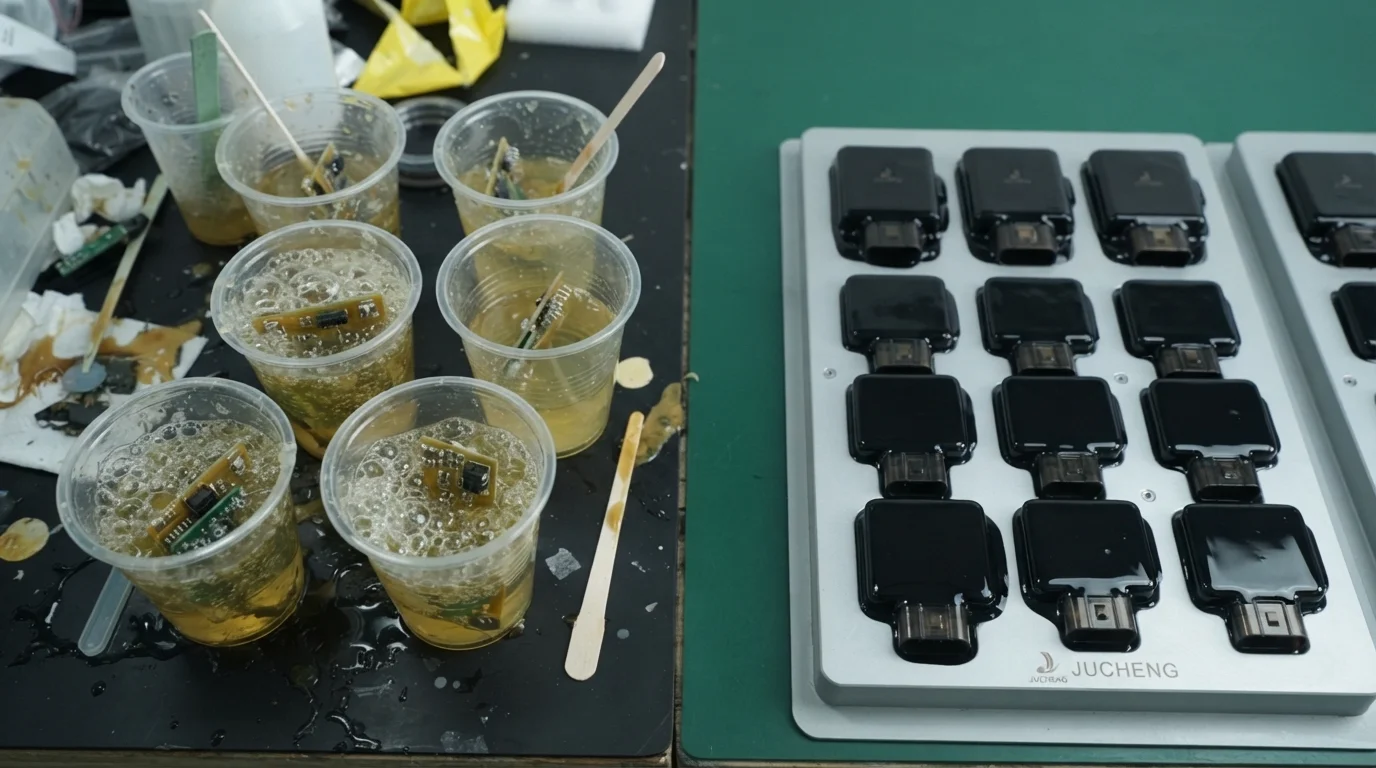
For an IP67 overmolding target, compare low-pressure hot melt and two-part epoxy potting on processing needs and test results for finished assemblies. Liquid potting requires multi-station curing racks, expensive mixing nozzles, and toxic chemical handling procedures that complicate cleanroom operations. Hot melt polyamides are non-toxic, solvent-free thermoplastics that melt and cool through purely physical state changes. Zero curing time eliminates inventory bottlenecks, while low clamp-force machines dramatically cut tooling equipment costs. Low pressure molding can limit mechanical loads during sensor encapsulation, but ingress protection and acceptable thermal exposure must be demonstrated on the finished assembly.
| Verpackungstechnologie | Einspritzdruck (MPa) | Verarbeitungszykluszeit | Umweltabdichtungsbewertung | Risiko von Drahtbondschäden |
|---|---|---|---|---|
| Niederdruckverguss (PA-Heißschmelze) | 1,5 – 3,0 MPa | 15 – 45 Sekunden | Test finished enclosure | Lower molding loads possible; verify bonds |
| Traditioneller Flüssig-Epoxid-Verguss | 0,1 – 0,5 MPa (Schwerkraft/niedrig) | 2 – 24 Stunden (chemische Aushärtung) | Test finished enclosure | Depends on fill and cure; verify bonds |
| Standard-Hochdruckinjektion | 50 – 150 MPa | 30 – 60 Sekunden | Test finished enclosure | Higher molding loads possible; verify bonds |
Häufig gestellte Fragen (FAQs)
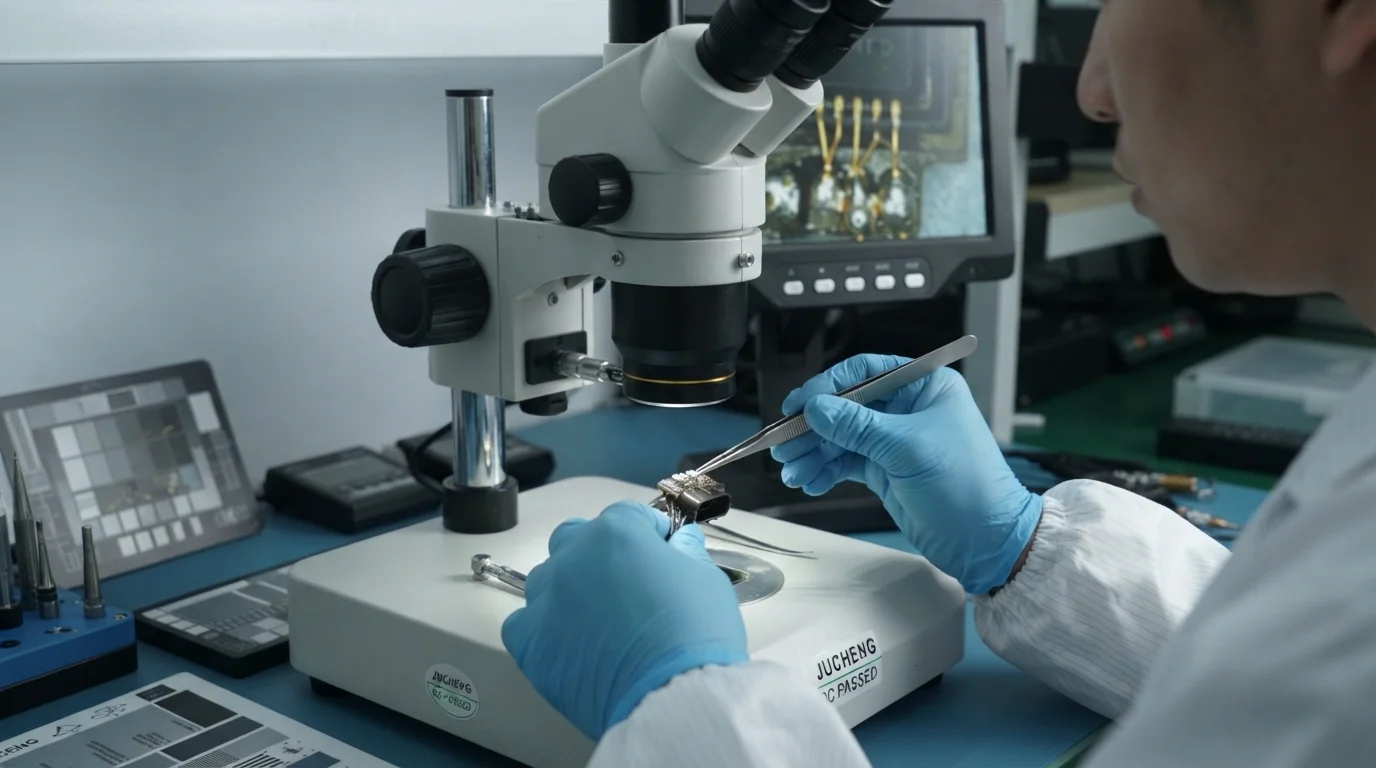
Warum beschädigt das Niederdruckvergussverfahren empfindliche Golddrahtbondverbindungen auf Leiterplatten nicht?
Low pressure molding operates at injection pressures between 1.5 and 3.0 MPa, which is vastly lower than standard injection pressures exceeding 80 MPa. Lower pressure and a low-viscosity melt can reduce loads on exposed joints and wires, but do not eliminate the risk of damage. Verify bond integrity and electrical function on representative assemblies after molding, and check the thermal exposure of sensitive components.
Was ist der Unterschied zwischen Polyamid-Heißschmelzkapselung und traditionellem Vergießen?
Beim traditionellen Vergießen wird flüssiges Zweikomponenten-Epoxidharz oder Polyurethan in ein vorgeformtes äußeres Kunststoffgehäuse gegossen, wobei die chemische Aushärtung mehrere Stunden dauert. Beim Niederdruckvergussverfahren wird lösungsmittelfreies Polyamid-Heißschmelzklebstoff direkt über die Elektronik gespritzt und dient sowohl als Gehäuse als auch als Dichtung. Die physikalische Abkühlung ist innerhalb von 30 Sekunden abgeschlossen, wodurch Kosten für die Außenhülle entfallen und der Fertigungsdurchsatz beschleunigt wird.
Können im Niederdruckvergussverfahren hergestellte Sensoren den IP67-Wasseruntertauchtest bestehen?
They can pass if the finished assembly meets the applicable IEC 60529 tests, including its cable exits and connectors as installed. Adhesion after thermal cycling depends on the resin grade, substrates and service profile. If service calls for cycling between -40°C and 125°C, validate that requirement on representative assemblies rather than assuming the bond will hold.