
Manufacturing heavy-walled fluid transport pipes, automotive coolant lines, and structural handles requires internal core evacuation to reduce material usage and shorten cycle times. Gas-assisted molding effectively creates hollow channels, but nitrogen gas possesses low heat capacity, resulting in long cooling delays for thick polymer walls. Specifying high-pressure water assist injection molding overcomes these thermal limitations by utilizing pressurized water to coring out molten resin cores. JUCHENG operates specialized water-assisted manufacturing cells, producing hollow plastic fluid channels strictly according to customer technical CAD files.
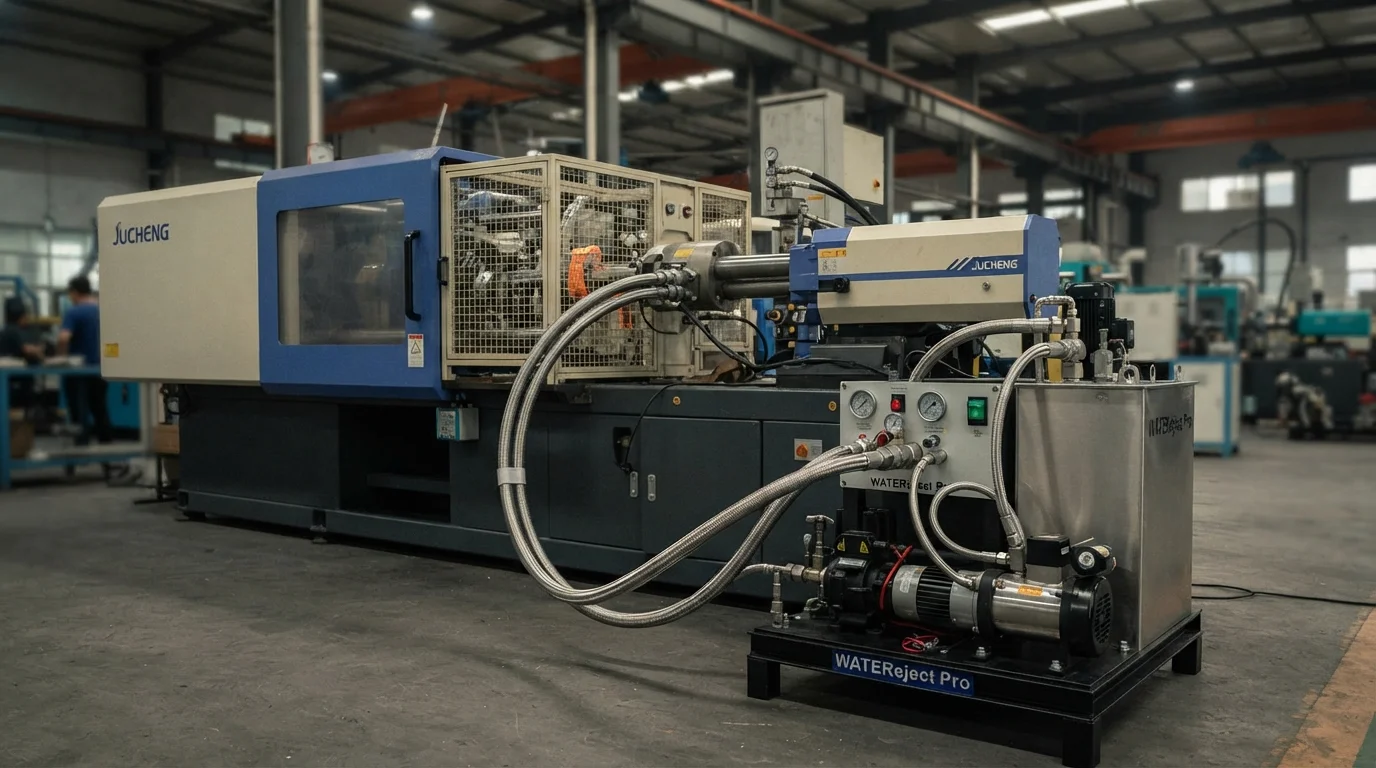
Table of Contents
Water Injection Technology for Hollow Fluid Channels & Automotive Pipes
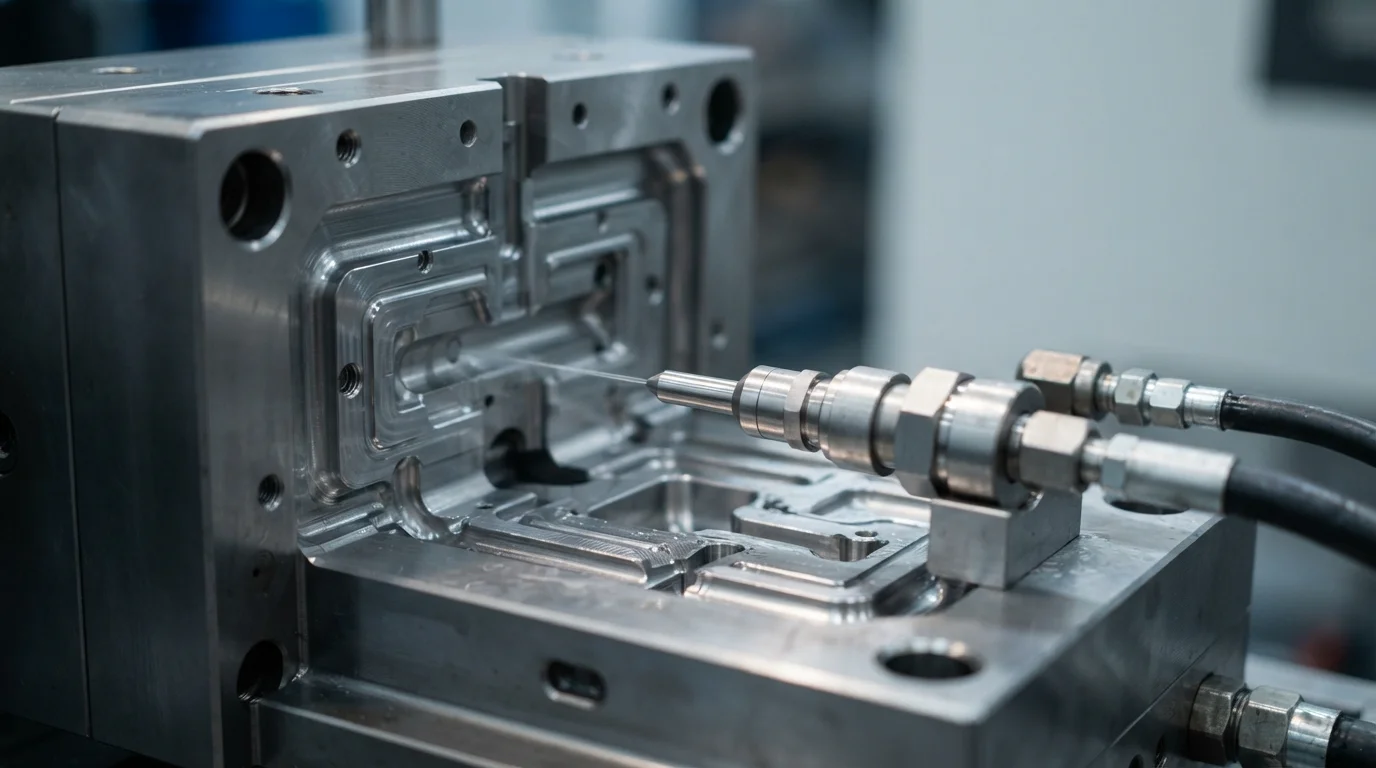
Utilizing water injection technology involves injecting pressurized water into the center of a partially filled mold cavity. High-pressure water displaces the molten polymer core, forcing the liquid plastic forward into overflow wells or unfilled sections of the cavity. A water core does not guarantee uniform wall thickness, especially through bends. Check wall thickness distribution, bore dimensions and flow-path continuity on representative molded pipes.
Water assist injection process sequence includes:
- Resin partial dosing—Injecting a precise volume of molten polymer prepares the cavity for fluid core displacement.
- High-pressure water entry—Pumping pressurized water through specialized injector pins cores out the molten polymer center.
- Internal water circulation—Circulating cold water through the hollow core extracts thermal energy directly from the inside wall.
- Water purging and air purge—Drain the channel using the mold’s designed path, then purge if required. Verify residual water at bends and low points during tool trials.
Accelerated In-Cavity Cooling Rates & Smooth Internal Surface Finishes
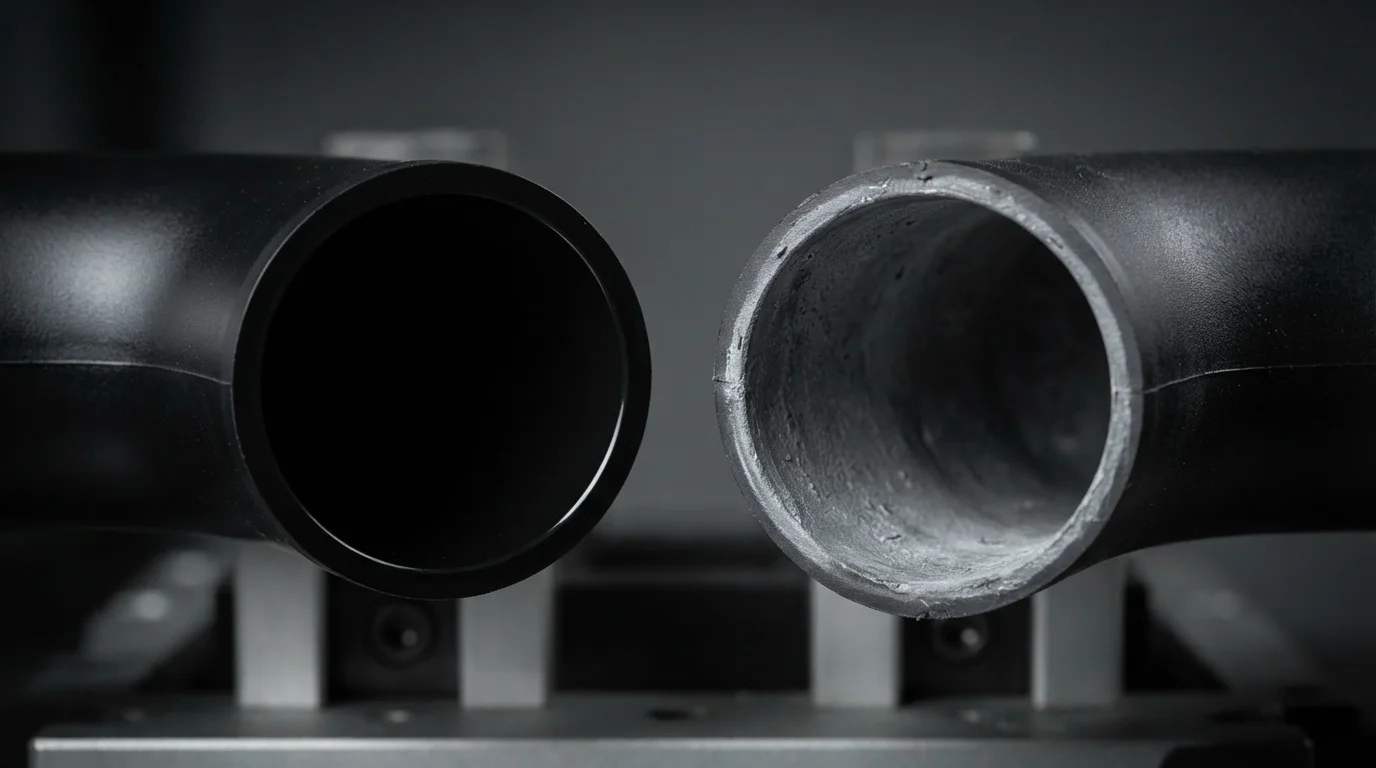
Water-assisted processing can provide accelerated in-cavity cooling compared with gas assistance for suitable hollow shapes. Water can extract heat from the inner wall while the mold cools the outer wall. A shorter cooling stage does not imply the same reduction in total cycle time; include water injection, drainage and any purge in a measured cycle. Achieving smooth internal surface finishes depends on the resin, part geometry and process. Inspect the molded bore against the project’s finish and flow requirements.
Material Compatibility: PA66, PBT & Polypropylene Fluid Lines
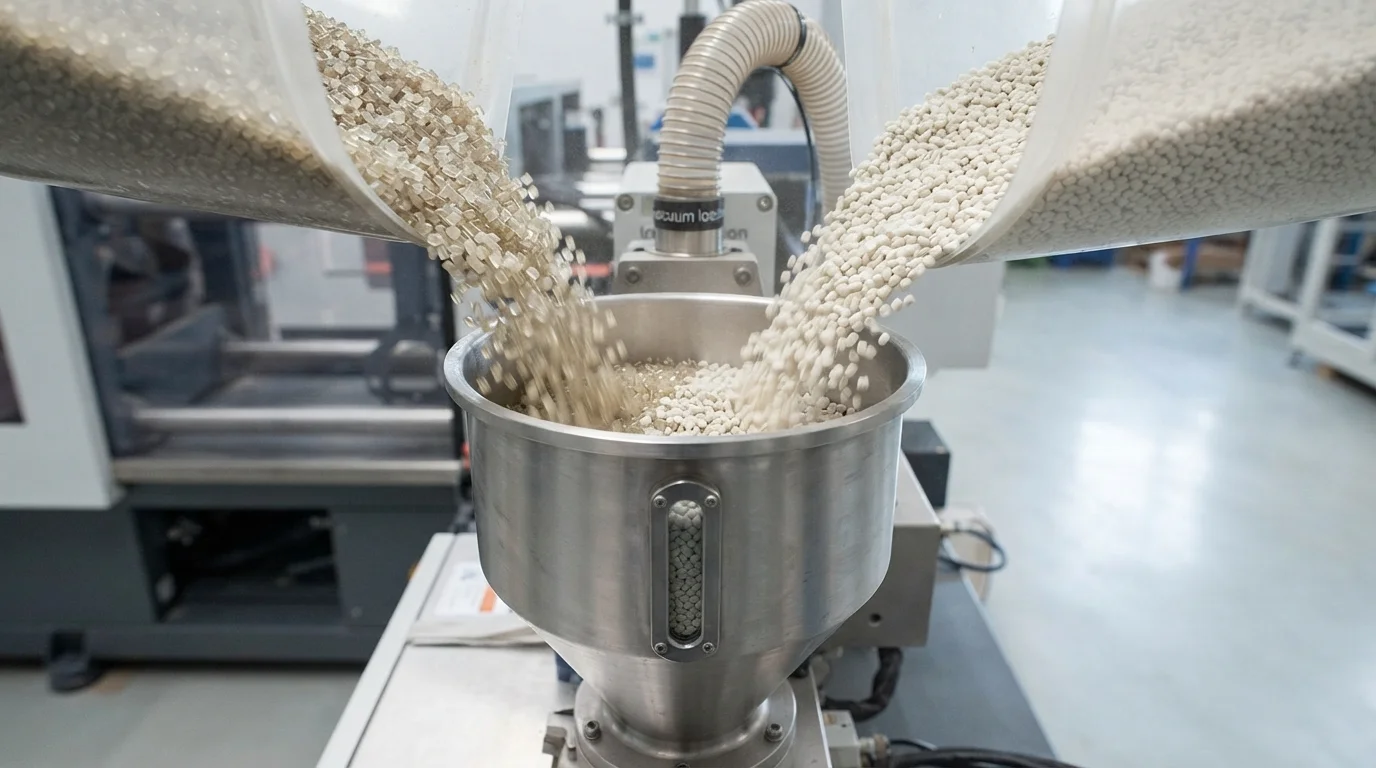
Material selection determines the chemical resistance and hydrolytic stability of hollow fluid conduits. Polymers suitable for water-assisted processing include glass-filled PA66 grades, PBT, and high-flow polypropylene (PP). Resin grades must resist temporary hydrolytic degradation during short-duration contact with high-temperature water. Formulating polyamides with specialized hydrolysis stabilizers prevents polymer chain scission during the injection phase. Engineers select glass-reinforced grades to ensure high burst pressure resistance in automotive under-hood coolant lines.
| Target WIT Polymer Grade | Water Pressure (bar) | Inner Wall Surface Roughness | Cooling Time Reduction (%) | Primary WIT Conduit Part |
|---|---|---|---|---|
| PA66-GF33 (Zytel 70G33L) | 150 – 250 bar | Verify against the part requirement | Measure in a tool trial | Automotive radiator pipes & oil tubes |
| PBT-GF30 (Valox 420) | 180 – 280 bar | Verify against the part requirement | Measure in a tool trial | Engine coolant thermostat housings |
| Polypropylene (PP-HP500N) | 100 – 200 bar | Verify against the part requirement | Measure in a tool trial | Appliance fluid lines & door handles |
Frequently Asked Questions (FAQs)
Why is water assist injection molding faster than gas assist molding?
Water can extract heat from the inner wall faster than nitrogen in suitable geometries. Time the cooling stage and the full cycle separately against a defined baseline, including filling, drainage and any purge in the cycle total.
How does water assist molding produce smoother inner pipe walls?
Water-assisted molding can improve inner surface finish in some resin and process combinations, but a smooth bore and even wall thickness are not automatic. Verify roughness, wall distribution and bore quality on representative parts.
What happens to the water inside the part before mold opening?
The mold’s drain path removes water before opening; some systems use an air purge. Validate drainage and any purge on representative parts, especially where bends or low points can trap water. Set an acceptable residual-water limit for handling or service.