
Manufacturing large-format polymer enclosures, automotive body panels, and heavy structural pallets presents severe processing and tooling challenges. Injecting heavy plastic melt volumes across long cavity flow paths often causes visible weld lines, localized sink marks, and severe structural warpage. Specifying heavy-tonnage large part injection molding overcomes these manufacturing limits by utilizing high clamping forces and specialized melt flow control systems. JUCHENG operates heavy-duty automated production cells capable of molding large-scale components up to 15 kg in weight or 2.5 meters in length.
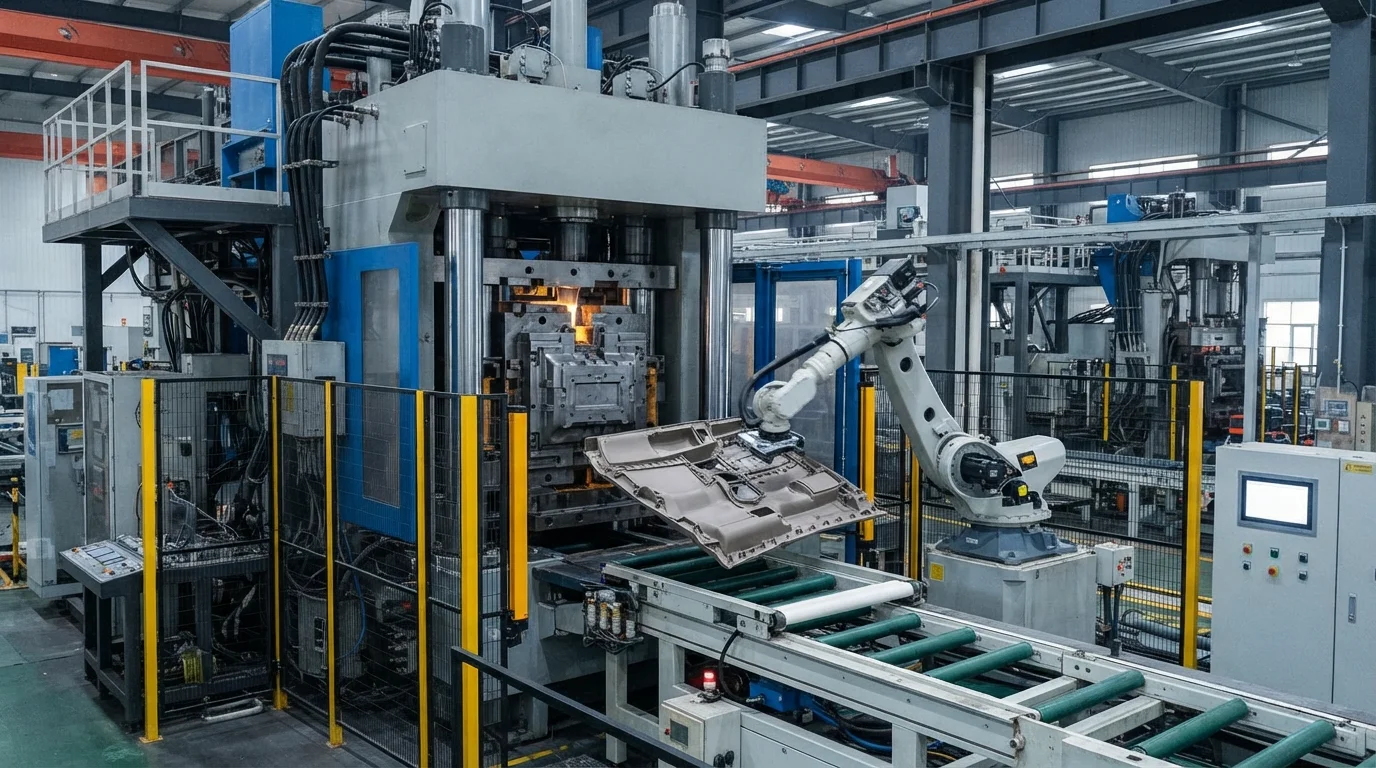
Table of Contents
3000T Clamping Force & Sequential Valve Gating (SVG)
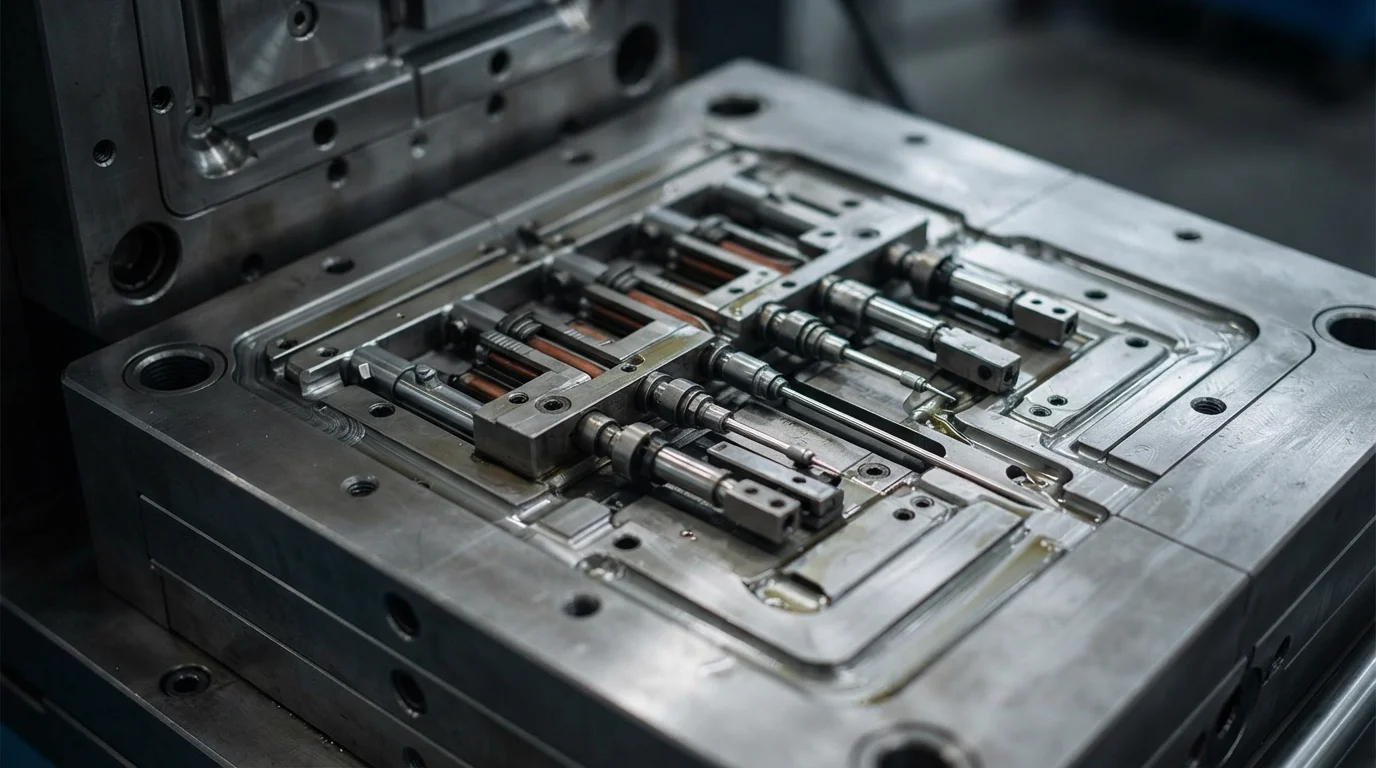
Operating a 3000-ton hydraulic press delivers the massive clamping force required to hold large mold cavities shut under high injection pressures. Controlling melt front convergence across expansive cavity surfaces relies on Sequential Valve Gating (SVG) technology. Equipping hot runner manifolds with pneumatic or hydraulic hot runner needle valves allows processing engineers to open gates sequentially. A controlled gate sequence can steer flow fronts and move some weld lines away from appearance surfaces. Geometry can still split and reunite the flow, and timing changes the pressure history. Estimate clamp demand from the filling and packing pressures over the projected area, and check weld lines, appearance and part shape on molded trials.
Sequential valve gating operating sequence standards include:
- Cascaded valve timing—Time the gate openings to control where flow fronts meet; confirm the resulting weld lines in trials.
- High hydraulic clamping force—Holding heavy mold plates shut under high cavity pressure prevents parting line flash.
- Pressure drop reduction—The gate layout and timing can change pressure drop; check the actual pressure history.
- Cavity transducer monitoring—Tracking pressure profiles across large cavity walls ensures uniform packing density.
Large Automotive Exteriors, Bumpers & Structural Panels (up to 15kg / 2.5m)
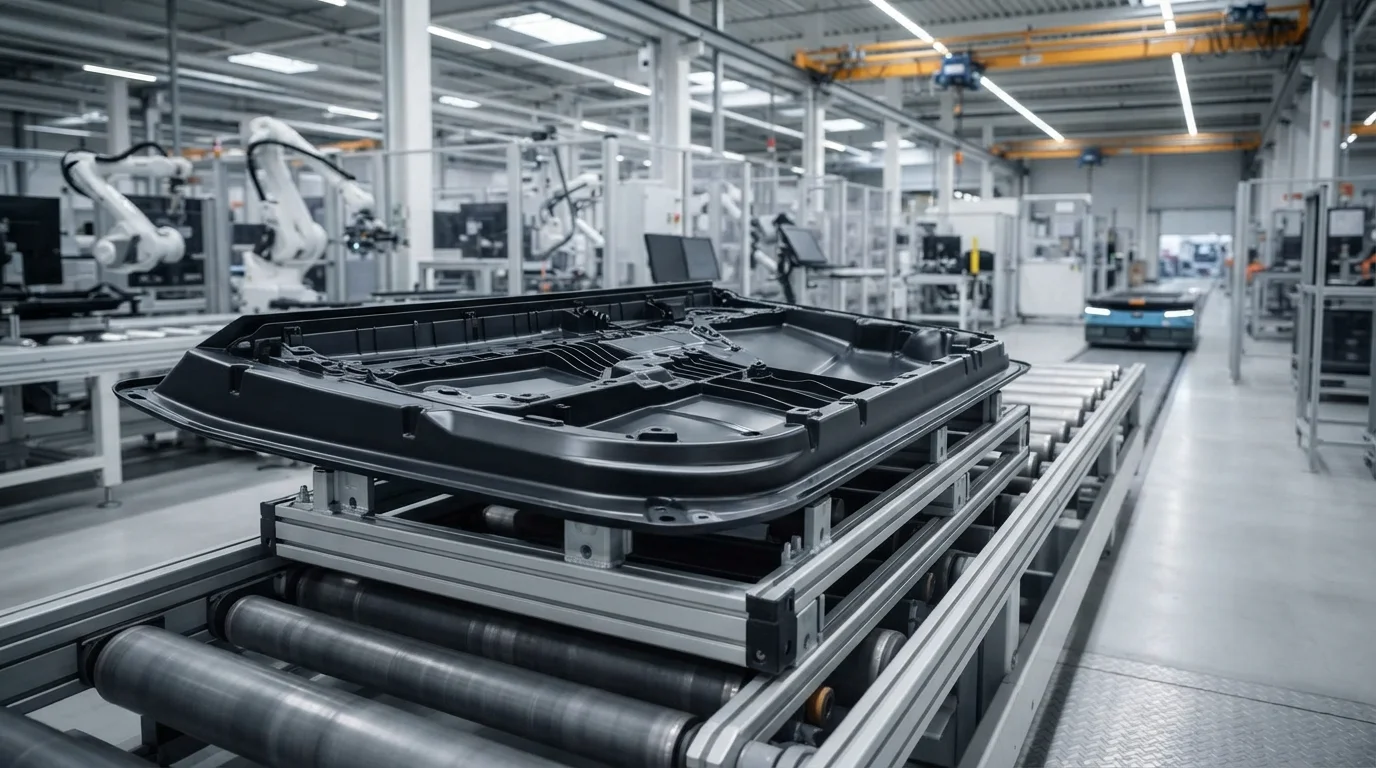
Automotive exteriors and industrial logistics platforms demand large-scale polymer parts that combine low weight with impact resilience. Molding heavy components such as automotive bumpers, door panels, dashboard frames, and heavy-duty pallets requires processing tough thermoplastics. Common polymers used in large-format molding include polypropylene (PP), ABS, PC/ABS, and thermoplastic olefins (TPO). Compounding base resins with glass fibers enhances structural stiffness, enabling molded plastic panels to replace heavy metal stampings. Single-piece large molding eliminates secondary joining steps, improving structural integrity while shaving critical vehicle weight. Select the press for the actual part and tool, not the resin grade alone. Check the shot for all cavities and runners, the mold envelope, and the projected area and pressure history during filling and packing.
| Large Part Polymer Grade | Shot Capacity Check | Mold Fit Check | Clamp Force Check | Primary Large Part Application |
|---|---|---|---|---|
| PP homopolymer (SABIC PP 570P) | Check total shot mass | Check mold and press dimensions | Assess for the actual mold | Household items (supplier example) |
| PC/ABS (Bayblend FR3010) | Check total shot mass | Check mold and press dimensions | Assess for the actual mold | EV battery housing covers & door trims |
| HDPE (Dow DMDA-8007) | Check total shot mass | Check mold and press dimensions | Assess for the actual mold | Heavy-duty industrial pallets & crates |
Structural Rib Engineering & Minimizing Warpage in Heavy Components
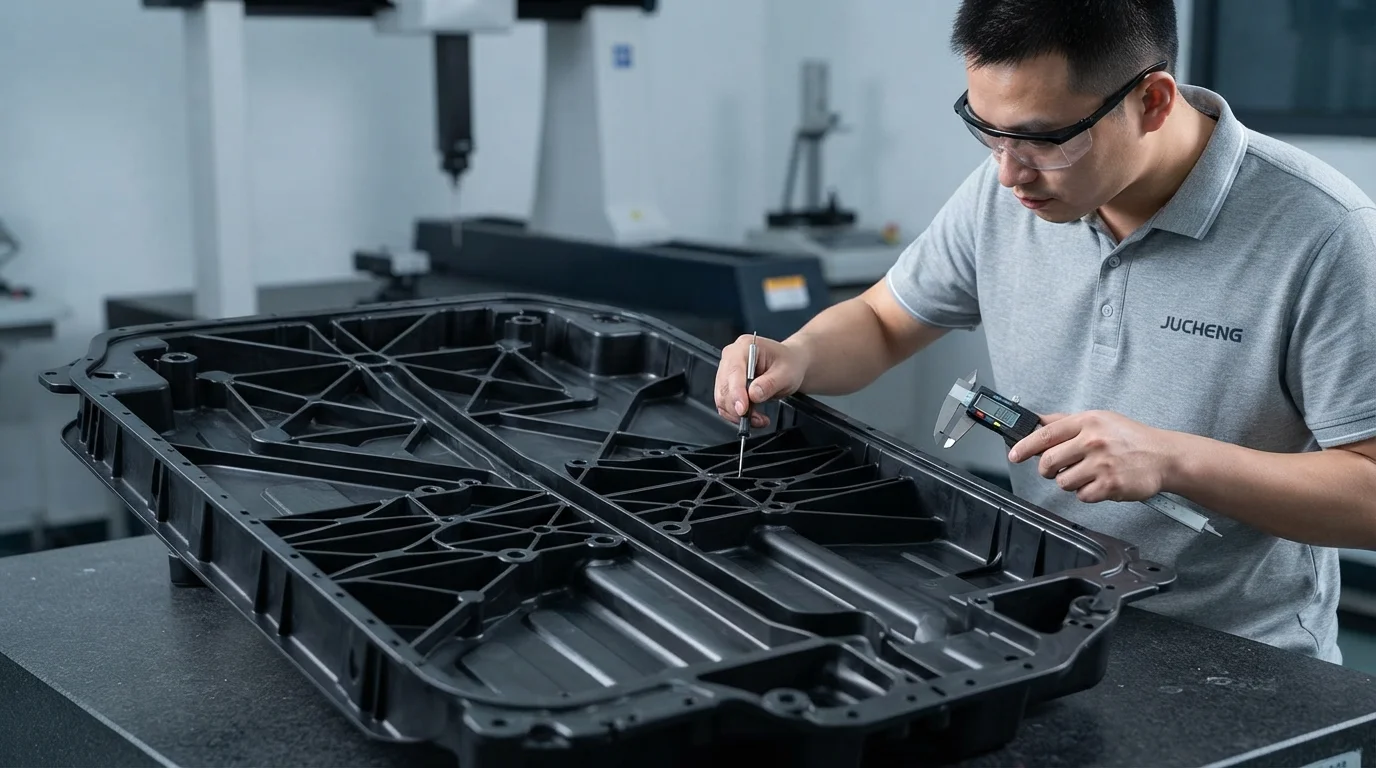
Preventing post-mold warpage and cosmetic sink marks in heavy plastic components requires careful wall thickness engineering. Thick solid walls cool slowly and contract unevenly, causing deep sink shadows on appearance surfaces. Designing structural reinforcing ribs with a base thickness of 50% to 60% of the nominal wall increases bending stiffness without adding mass. Configuring balanced cooling water networks close to core and cavity surfaces extracts heat evenly across large surface areas. Gas-assisted molding can form hollow channels and reduce visible sink marks in suitable thick sections. Verify the appearance and remaining wall thickness on molded samples.
Frequently Asked Questions (FAQs)
What is Sequential Valve Gating (SVG) and why is it used for large parts?
Sequential Valve Gating uses electronically controlled needle valves inside hot runner nozzles to open and close gate ports in a specific sequence. This sequence can steer flow fronts and change where weld lines appear. It does not guarantee a weld-free surface or lower clamp force. Check filling and packing pressure for the actual mold, and verify cosmetics and part shape on molded samples.
How do you prevent warpage in large plastic automotive panels?
Preventing warpage requires designing uniform nominal wall thicknesses and maintaining balanced mold cooling across large tool surfaces. Incorporating reinforcing ribs designed to 50%-60% of wall thickness adds stiffness without causing sink marks or differential shrinkage.
What materials are best for molding large-format structural parts?
Polypropylene (PP), TPO blends, ABS, and PC/ABS alloys are the most common polymers for large structural parts. Adding glass fiber reinforcement improves tensile modulus and heat resistance, making plastic panels suitable for replacing heavy metal stampings.