
For high-speed injection molding, resin selection should begin with the part’s flow path and acceptance criteria—not a generic claim that one polymer is “fast.” A grade must fill the geometry at the intended rate while meeting mechanical, thermal, appearance, and regulatory requirements. Compare supplier data, processing guidance, and trial evidence for the specific grade; resin family names alone do not establish behavior in a thin or complex part.
Write the part requirements first
List the part’s required function, environment, load, appearance, critical dimensions, color, and applicable customer or regulatory constraints. Then identify the features that challenge filling: thin walls, long flow length, ribs, bosses, inserts, or a flow path that divides and rejoins. This turns “high-speed” from a machine label into a part-specific requirement.
Also separate required properties from preferences. A resin selected for impact, chemical resistance, stiffness, transparency, or electrical behavior may bring different processing considerations. The team should rank the performance requirements before comparing grades so a convenient molding characteristic does not displace a critical end-use need.
Connect flow behavior to geometry
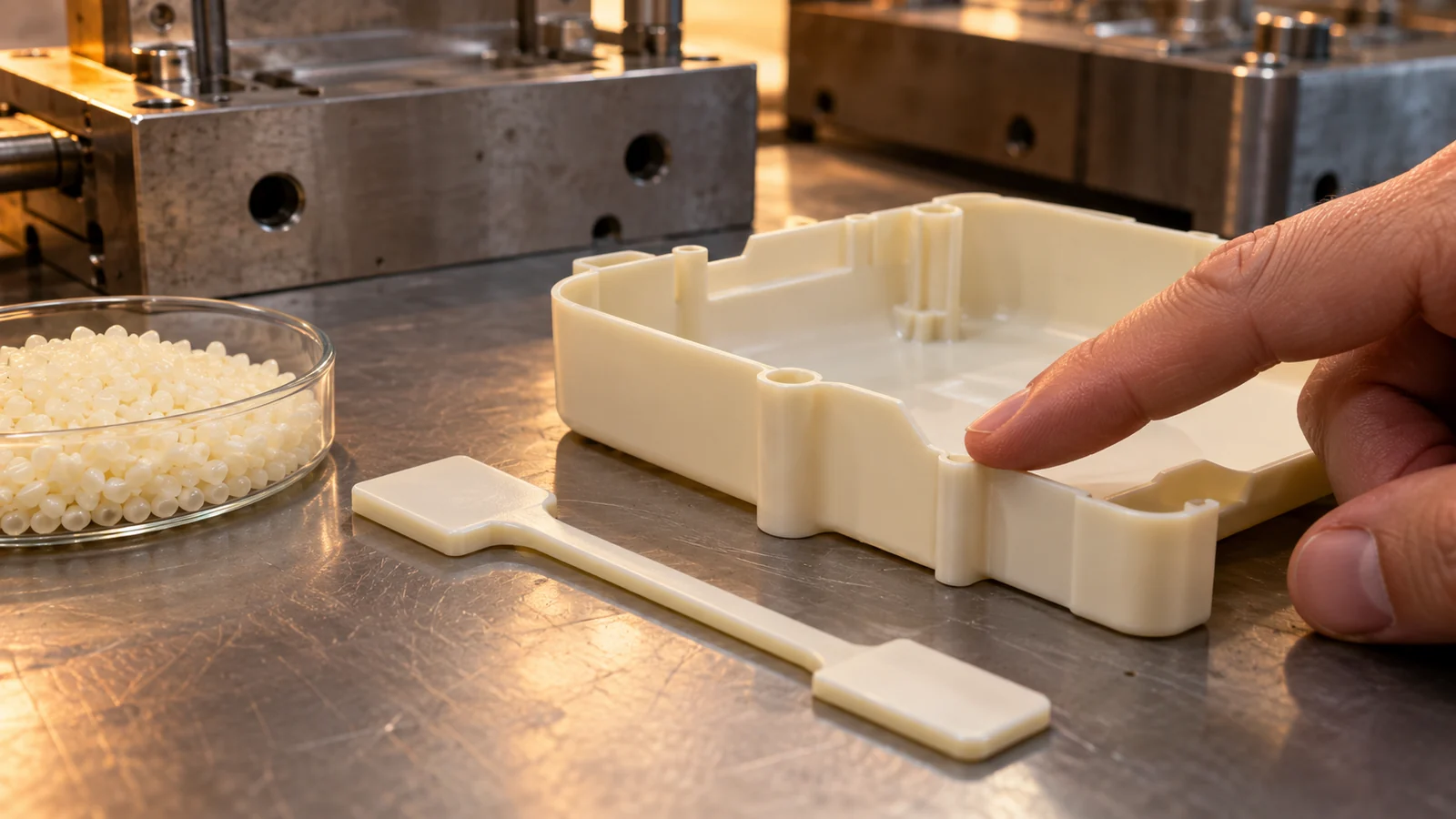
Review grade-specific viscosity information and supplier processing guidance, then relate them to wall thickness, gate design, flow length, and expected shear conditions. Reinforcement and additives can change flow and appearance. Moisture sensitivity, thermal history, and colorants can also affect how a grade must be handled. These interactions should be evaluated for the exact material formulation, not inferred from a broad resin category.
For thin or long-flow parts, a grade that appears easier to fill in a datasheet may still fail at a restrictive gate or create an unacceptable surface. The gate and part geometry can be as important as resin choice. Use mold-flow analysis when useful to compare candidate designs, and treat the result as a planning tool that must be checked against the actual grade and molding trial.
Balance processability with end-use performance
| Selection dimension | Question to answer | Evidence to request |
|---|---|---|
| Flow and fill | Can the grade fill the actual geometry at the required appearance and dimension? | Grade-specific data, processing guide, and trial result |
| Mechanical performance | Will the molded part meet load, impact, fatigue, or retention needs? | Supplier data plus part-level test criteria |
| Thermal and chemical environment | Will the component tolerate its actual operating and cleaning conditions? | Grade documentation and application-specific validation |
| Surface and color | Are gloss, texture, color, weld lines, or visible flow marks controlled? | Approved appearance standard and molded samples |
| Material handling | Are drying, storage, and changeover requirements feasible? | Supplier instructions and documented handling plan |
A grade should not be chosen only to make a mold fill faster if its molded properties or appearance do not meet the product need. Conversely, a high-performance resin may require a different gate, wall, or process strategy than the original design assumed. Record the tradeoff and agree on what test will resolve it.
A resin-screening sequence
- Freeze the part requirements and identify the geometry most likely to restrict flow.
- Shortlist grades with documented properties that meet essential end-use requirements.
- Compare grade-specific processing and drying guidance with the proposed machine and tool plan.
- Review candidate gate and wall options before treating resin as the only variable.
- Agree on appearance, dimensional, and performance checks for the first trial.
What to verify in a molding trial

Use the identified grade and record material lot, handling, process conditions, and cavity identity where relevant. Inspect the actual features that drove the selection: fill completion, weld lines, surface, critical dimensions, and any required mechanical or environmental test. A good-looking first shot does not prove long-term performance, and supplier data does not substitute for part-level validation.
When a material change is considered after a defect, update the comparison so process changes and geometry changes are not confused with resin effects. For the broader production context, see high-volume injection molding; the grade still needs to be selected against the individual part’s specifications.
FAQ
Is a low-viscosity resin always best for high-speed molding?
No. Flow behavior is only one requirement. The grade must also meet mechanical, thermal, chemical, appearance, and customer requirements in the molded part.
Can I choose a resin using only the family name?
No. Grades within a family can differ in additives, reinforcement, flow, color, and processing guidance. Compare the exact manufacturer and grade documentation.
Does a faster-filling resin eliminate the need for mold changes?
Not necessarily. Gate, wall thickness, venting, cooling, and flow transitions may still limit the process. Evaluate material and tool design together.