
Transforming complex 3D plastic component CAD files into volume production requires robust mold engineering and precise thermal management. Improper cavity layout, inadequate draft angles, or poorly balanced flow gates lead to cosmetic sink marks, excessive part warpage, and premature tool failure. Meticulous 3D tool modeling predicts polymer flow dynamics and cooling behavior prior to cutting steel, ensuring high-yield series manufacturing. This technical engineering guide examines DfM review protocols, hot runner gate placement strategies, and tool steel selection criteria.
目錄
In-House 3D Mold Engineering & Free DfM Review within 24 Hours
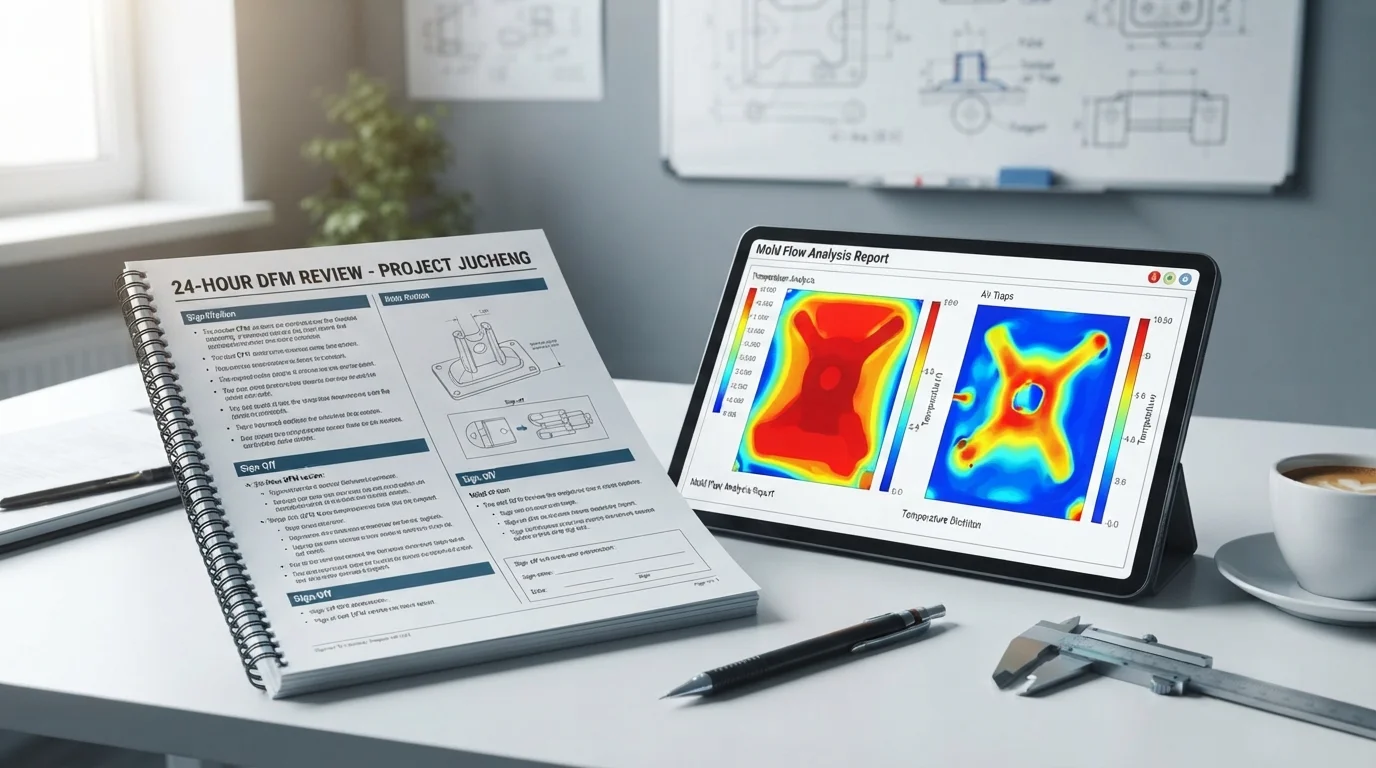
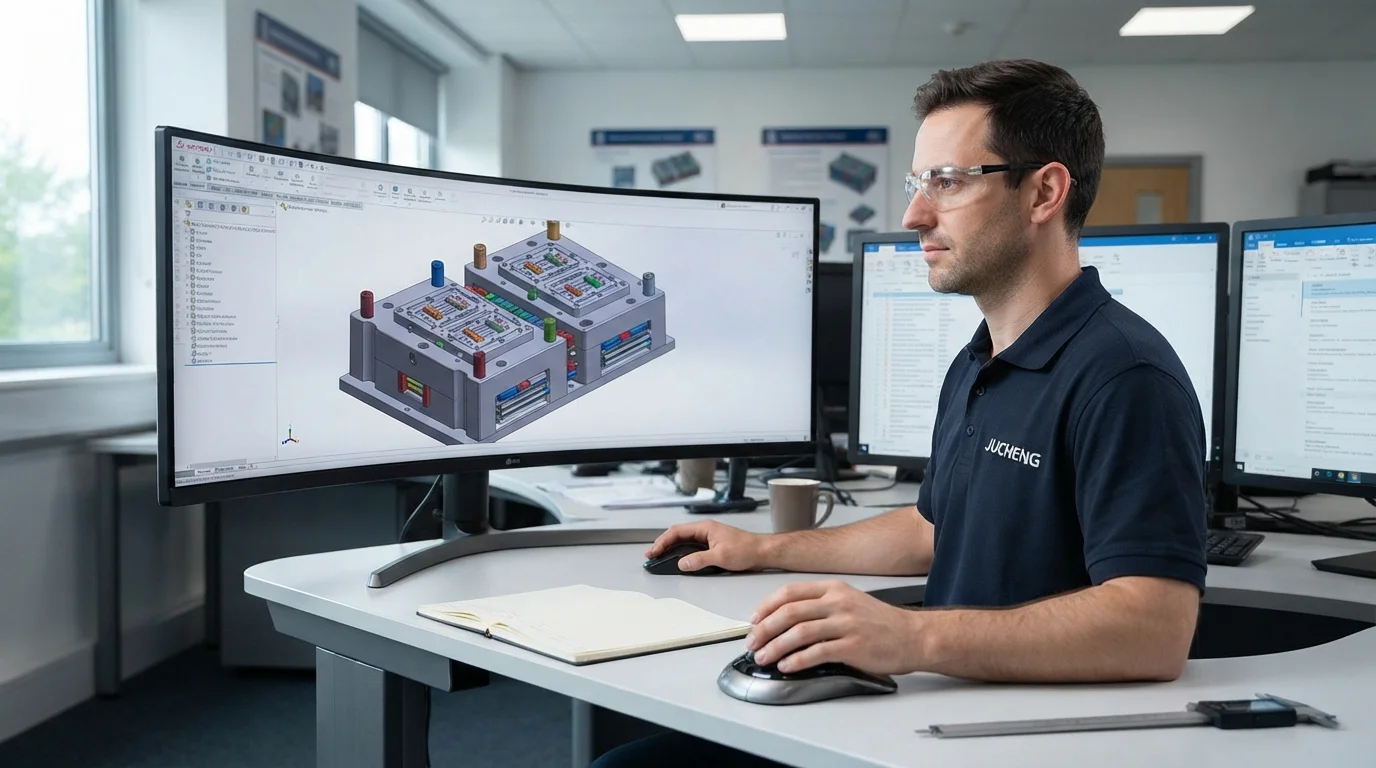
Executing professional injection mold design begins with a comprehensive Design for Manufacturability (DfM) report generated within 24 hours of 3D file submission. Engineering reviews evaluate nominal wall thickness uniformity, draft angle adequacy, and core side-action mechanisms. Identifying potential air traps and localized mass concentrations early prevents costly steel modifications after mold fabrication starts. 3D solid modeling software builds detailed core and cavity assemblies, guided ejector plates, and custom slide mechanisms. Proactive DfM collaboration ensures seamless part ejection and optimizes cycle times during production.
Critical DfM engineering evaluation parameters include:
- Nominal wall thickness review—Evaluating cross-sections ensures uniform polymer cooling rates and prevents sink mark formation.
- Draft angle analysis—Verifying vertical surface tapers guarantees smooth part ejection without creating drag marks.
- Parting line definition—Positioning parting lines along natural part boundaries prevents cosmetic flash on appearance faces.
- Ejection layout planning—Placing ejector pins and sleeve mechanisms on interior non-cosmetic surfaces preserves external aesthetics.
Hot Runner Manifold, Gate Placement & Parting Line Engineering
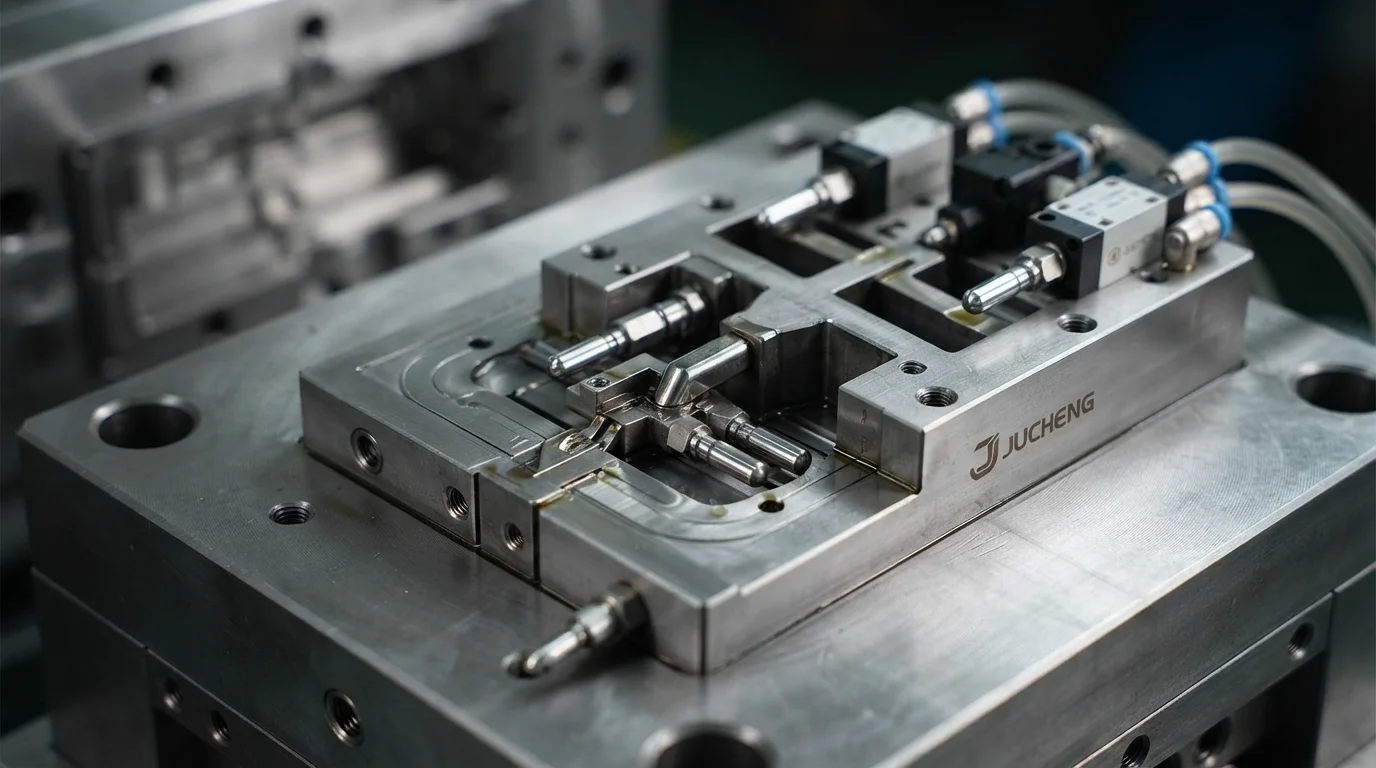
Optimizing hot runner manifold systems and gate locations determines cavity filling symmetry and structural weld line placement. Valve-gated hot runners control melt flow fronts precisely, eliminating sprue waste and preventing gate vestige on appearance faces. Conventional cold runner layouts utilize submarine gates or edge gates to distribute melt into smaller structural components. Gate placement at the thickest cross-section allows molten resin to flow into thin sections smoothly, preventing short shots. Parting line engineering incorporates tight shut-off steel lands to maintain flash-free sealing during high-pressure packing.
Hardened Tool Steel Selection (S136, H13) for SPI Class 101 Molds
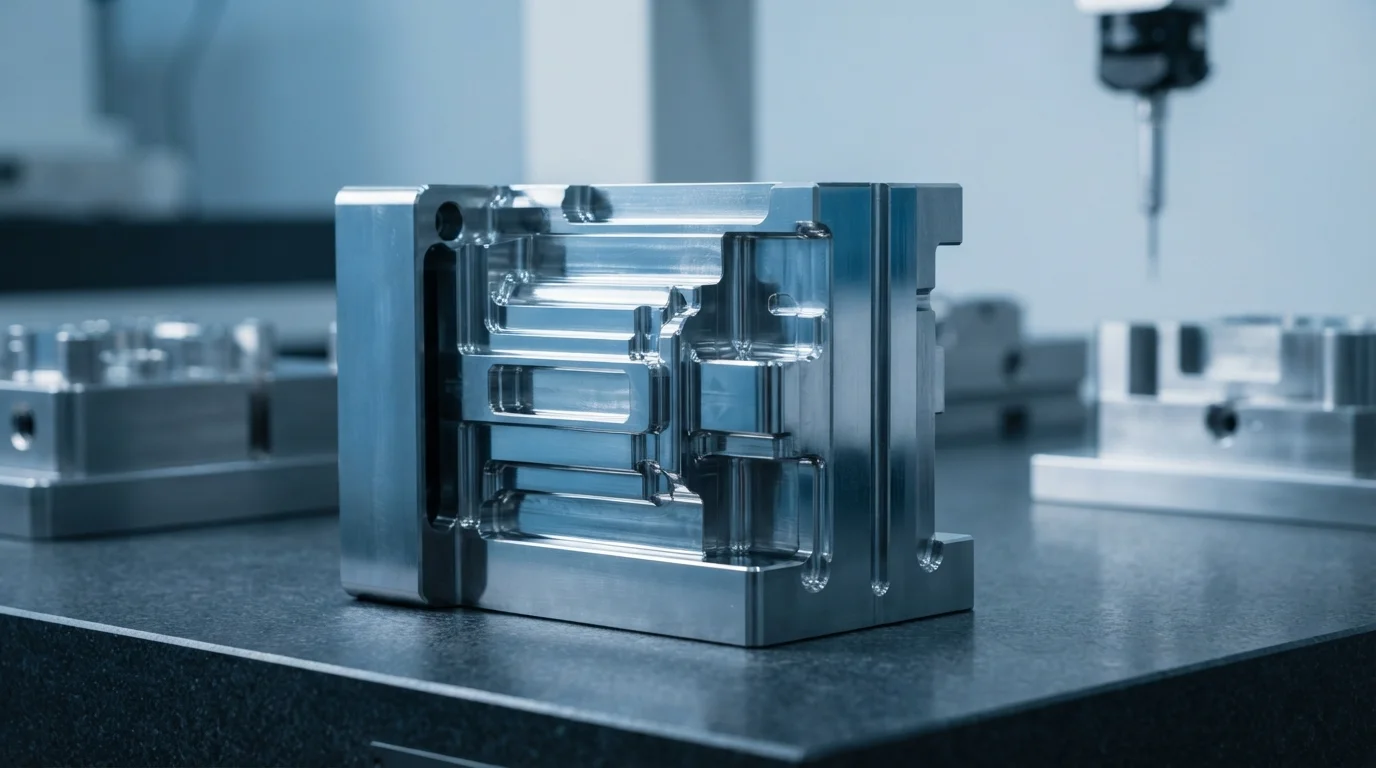
Tool steel selection dictates mold longevity, thermal conductivity, and chemical resistance against polymer outgassing. Building SPI Class 101 molds requires premium hardened steels like S136不鏽鋼 和 H13 tool steel, heat-treated to HRC 48-52. High-chrome S136 steel provides superior corrosion resistance against flame-retardant gases released by engineering polymers like PA66-GF30 或 PC/ABS. Hardened H13 steel delivers high impact toughness for heavy structural tools operating under continuous high clamping forces. Advanced injection mold design pairs correct cavity steels with conformal cooling circuits, achieving production lifespans exceeding 1,000,000 cycles.
| Tool Steel Grade | Hardness (HRC) | Corrosion Resistance | Polishability Level | Primary Tooling Application |
|---|---|---|---|---|
| S136 Stainless Steel | HRC 48 – 52 | Exceptional (High Chrome) | SPI A-1 Mirror Finish | Medical clear parts & corrosive FR resins |
| H13 Tool Steel | HRC 46 – 50 | Moderate | SPI B-1 High Polish | Heavy structural enclosures & glass-filled nylons |
| P20 Pre-Hardened Steel | HRC 28 – 32 | Standard | SPI C-1 Commercial Finish | Bridge tooling & low-volume production molds |
Frequently Asked Questions (FAQs)
Why is a 24-hour DfM review essential before starting mold fabrication?
A 24-hour DfM review identifies part geometry risks like inadequate draft angles, thick wall sections, and sharp internal corners before tool steel is cut. Detecting these issues early allows engineers to modify CAD files, preventing expensive mold rework and long tooling delays. Proactive DfM reviews guarantee optimal mold filling and clean part ejection from day one.
When should valve-gated hot runner manifolds be used instead of cold runners?
Valve-gated hot runner manifolds are ideal for multi-cavity tools, large structural parts, and cosmetic appearance components where gate vestige is prohibited. Hot runners eliminate sprue and runner scrap material, lowering unit resin costs. Cold runners are more economical for prototype tooling or low-volume production where lower upfront NRE costs are prioritized.
What is the difference between S136 and H13 tool steel for injection molds?
S136 is a high-chrome stainless steel offering exceptional corrosion resistance and SPI A-1 mirror polishability, making it ideal for medical and optical clear parts. H13 is an ultra-tough hot-work tool steel providing high fatigue strength and impact resistance for heavy structural components. Both steels are hardened to HRC 48-52 for SPI Class 101 mold guarantees exceeding 1,000,000 shots.