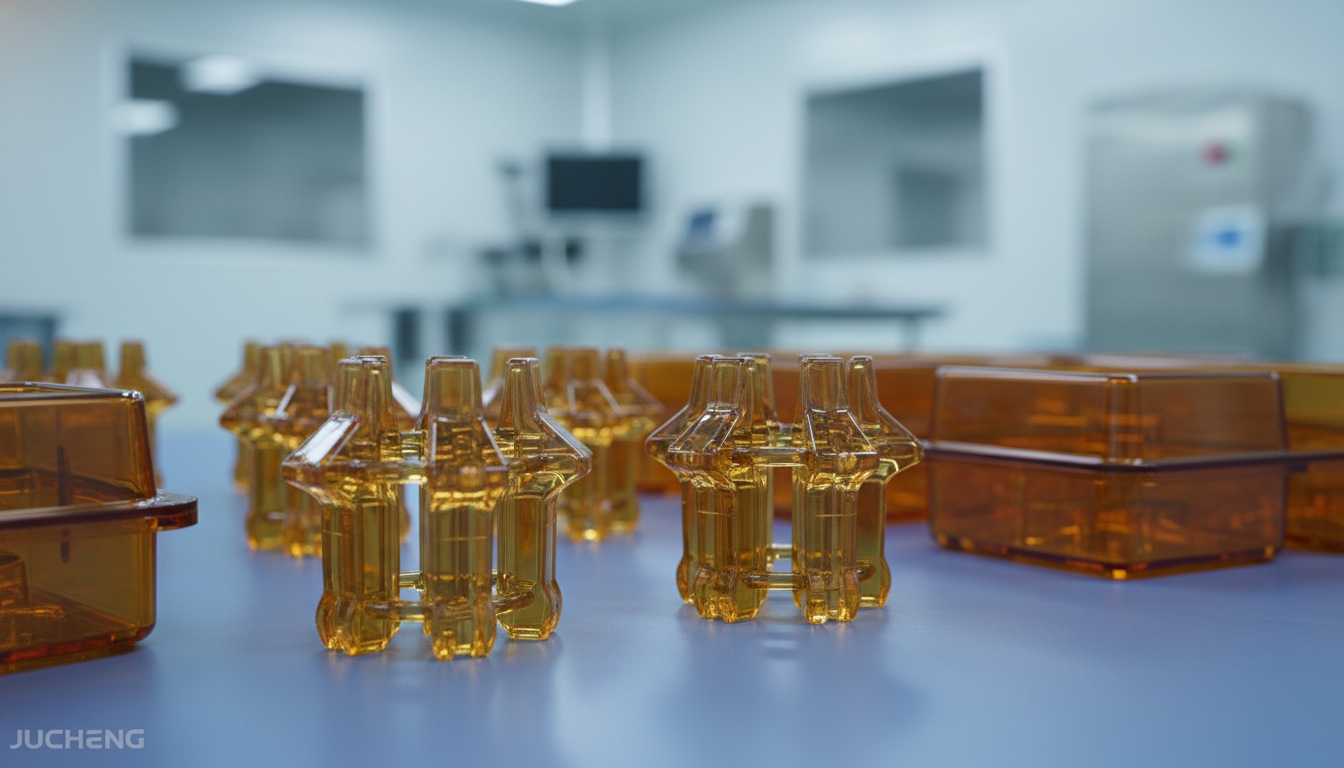
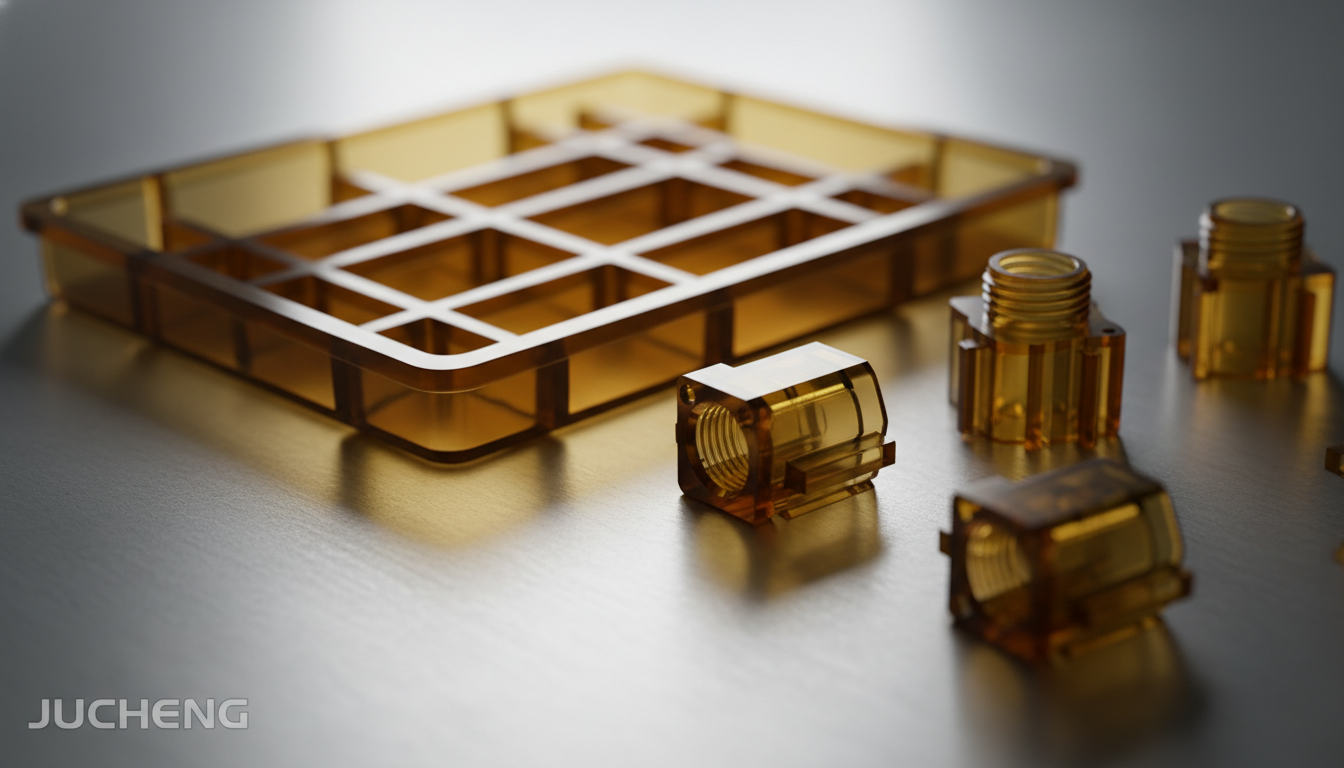
Polyetherimide (PEI/Ultem)

Polyetherimide (PEI), best known as SABIC Ultem, is an amorphous high-performance polymer offering metal-like mechanical strength, exceptional dielectric properties, inherent flame retardancy (UL 94 V-0), and amber-colored optical transparency. At Jucheng Precision, an ISO 9001, ISO 13485, and IATF 16949 certified facility, we specialize in high-temperature PEI injection molding (unreinforced, glass-filled, and aviation-compliant grades). With 35+ advanced molding presses (50-650T) and 25+ in-house 5-axis CNC machines, we control PEI’s high melt temperatures (340°C-400°C) and shear sensitivity. We offer free DFM analysis within 24 hours to prevent cosmetic weld lines, ensuring micron-level precision verified by Zeiss CMM inspection.

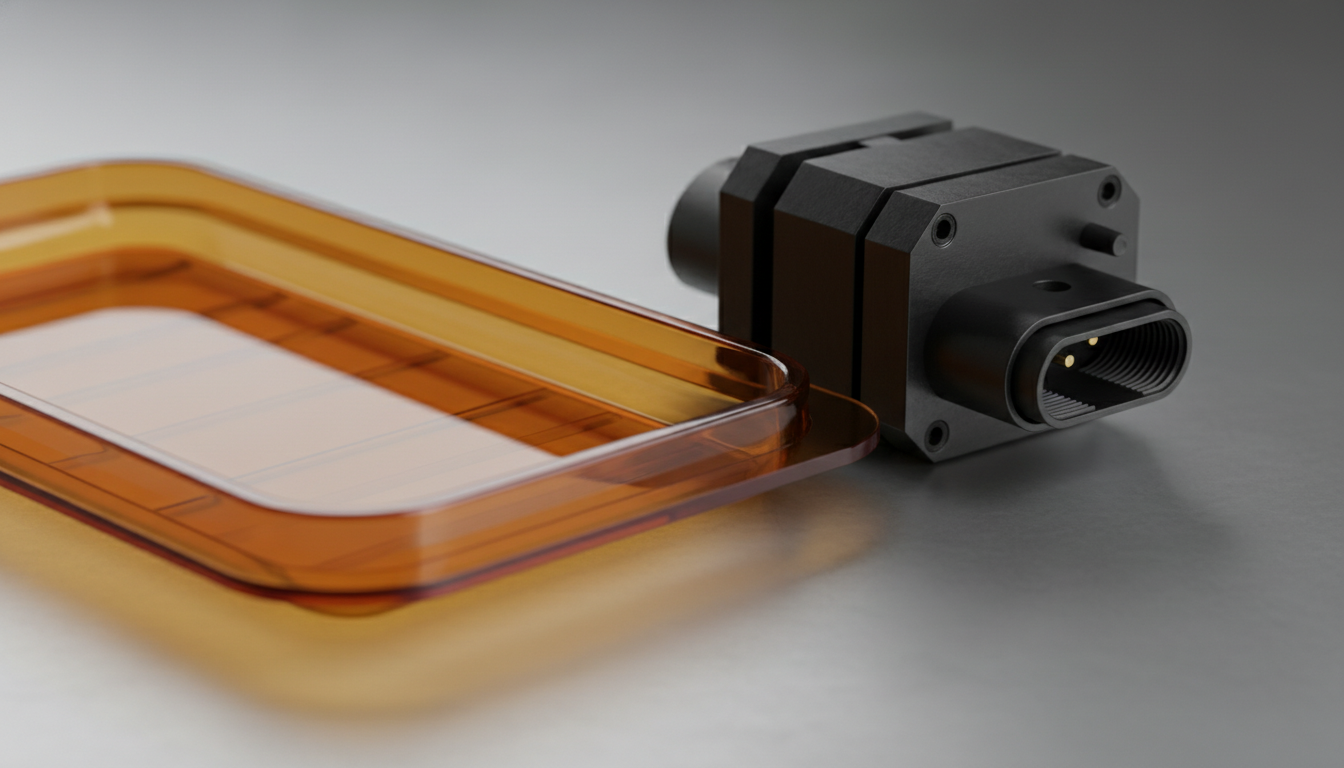
Precision-injection-molded-semi-transparent-amber-PEI-medical-trays-and-glass-filled-black-PEI-aerospace-connectors-1

Our available materials

PEI-SABIC Ultem 1000

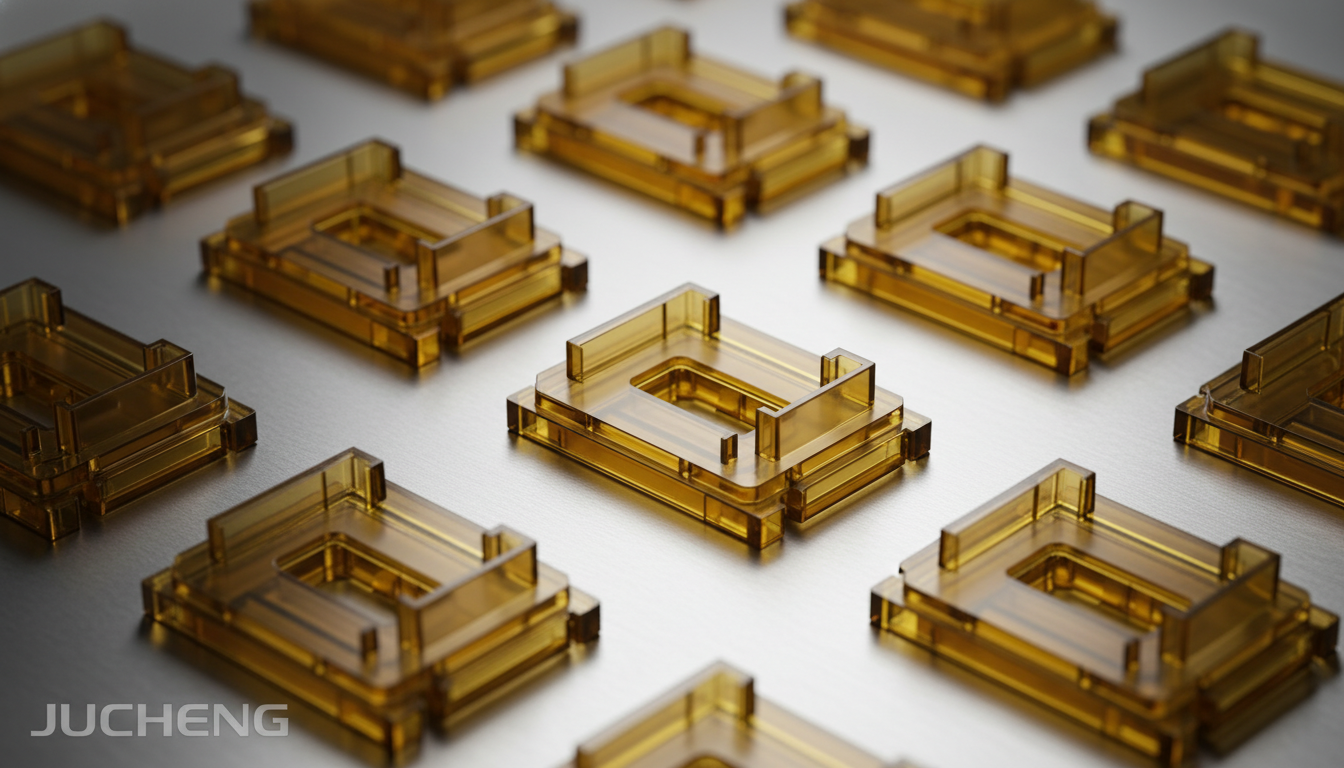
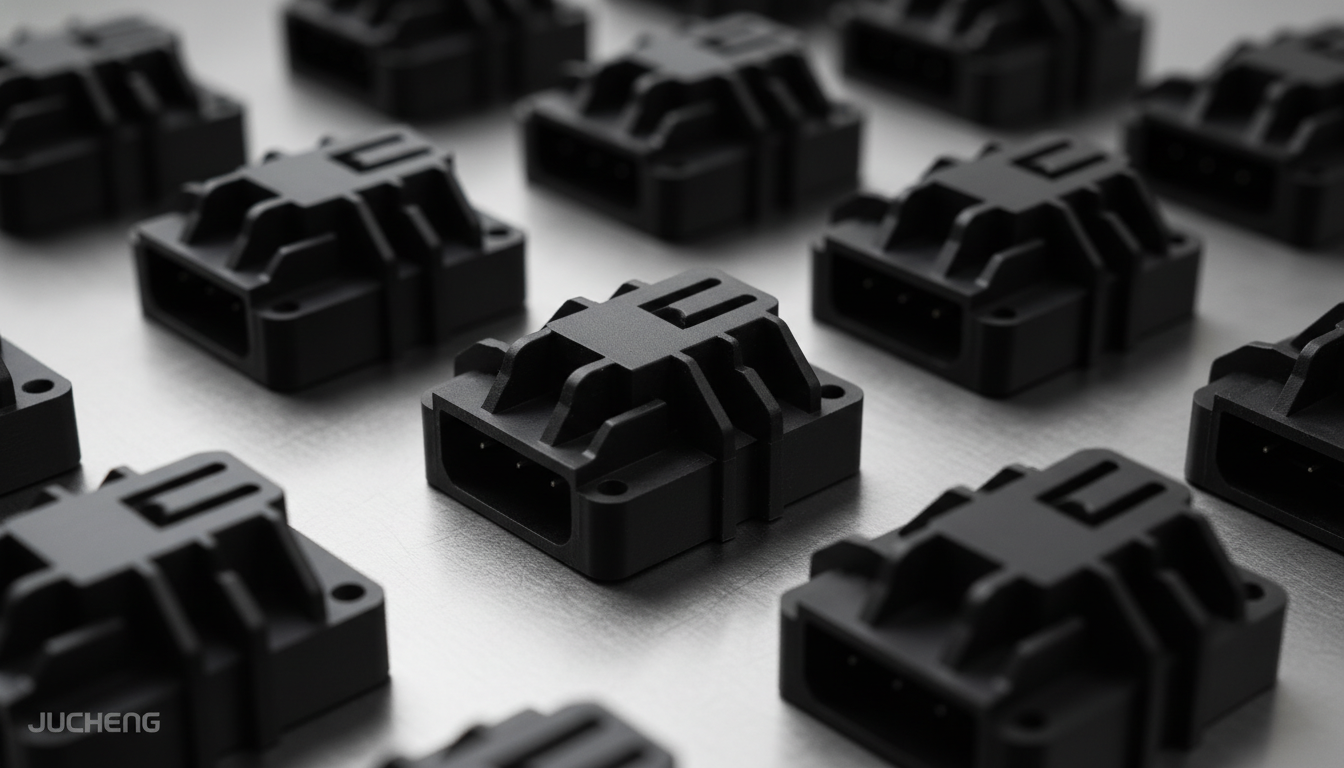
Achieving outstanding dielectric integrity and high-heat dimensional stability in microelectronics without using corrosive halogens requires a specialized amorphous polymer, which SABIC’s Ultem 1000 delivers through its unreinforced, high-viscosity polyetherimide (PEI) matrix. Boasting a density of 1.27 g/cm³ and an inherent UL 94 V-0 flammability rating down to 0.4mm, this transparent amber resin is the global standard for high-temperature test sockets, telecom enclosures, and medical manifolds. Jucheng Precision, under ISO 9001 and IATF 16949 frameworks, specializes in molding Ultem 1000. Operating 35+ advanced presses equipped with ceramic heater bands and oil temperature controllers, we eliminate internal thermal stresses, delivering flawless optical components verified by Zeiss CMM.
READ MORE

PEI-SABIC Ultem 1010

Filling ultra-thin, highly complex flow paths in high-voltage avionics and medical cassettes while maintaining 110 MPa yield strength requires an optimized high-flow super-polymer, which SABIC’s Ultem 1010 delivers through its unreinforced, high-viscosity amorphous polyetherimide matrix with improved melt rheology. Featuring an elevated glass transition temperature (Tg) of 217°C and a density of 1.27 g/cm³, this aerospace FAR 25.853 compliant grade achieves a V-0 flammability rating at 0.4mm. Jucheng Precision, under ISO 9001 and IATF 16949 frameworks, specializes in molding Ultem 1010. Utilizing 5-axis CNC-machined conformal cooling toolings, we manage its isotropic shrinkage (0.5%-0.7%) to deliver zero-defect parts verified by Zeiss CMM.

READ MORE

PEI-SABIC Ultem 2300

To satisfy extreme mechanical loading, dimensional stability, and continuous fire safety in advanced aerospace and electrical infrastructures, SABIC’s Ultem 2300 leverages a 30% glass fiber reinforced, amorphous polyetherimide (PEI) matrix. Featuring an elevated density of 1.51 g/cm³ and a glass transition temperature (Tg) of 217°C, this high-stiffness grade provides an exceptional tensile modulus of 9,500 MPa and inherent UL 94 V-0 flammability rating at 0.25mm. Jucheng Precision, operating under ISO 9001 and IATF 16949 frameworks, specializes in molding Ultem 2300. Utilizing 5-axis CNC-machined H13 toolings, we control its low, isotropic shrink variables (0.2%-0.4%) to eliminate warpage, verified by Zeiss CMM.

READ MORE

PEI-SABIC Ultem 9085

Meeting the uncompromising FAA FAR 25.853 aircraft cabin interior standards for low smoke density, low toxicity, and strict OSU 65/65 heat release limits requires an elite material, which SABIC’s Ultem 9085 delivers through its unreinforced, high-impact modified amorphous polyetherimide (PEI) blend matrix. Featuring a density of 1.34 g/cm³ and a glass transition temperature (Tg) of 186°C, this aerospace-certified polymer provides outstanding impact ductility alongside inherent self-extinguishing safety. Jucheng Precision, under IATF 16949 and ISO 9001 frameworks, specializes in custom injection molding of Ultem 9085. Supported by our 5-axis CNC-machined S136 stainless steel tooling and pressurized oil mold heating controllers, we control thermal stress and ensure uniform physical properties, delivering critical cabin components verified by Zeiss CMM.

READ MORE

PEI-SABIC Ultem HU1000

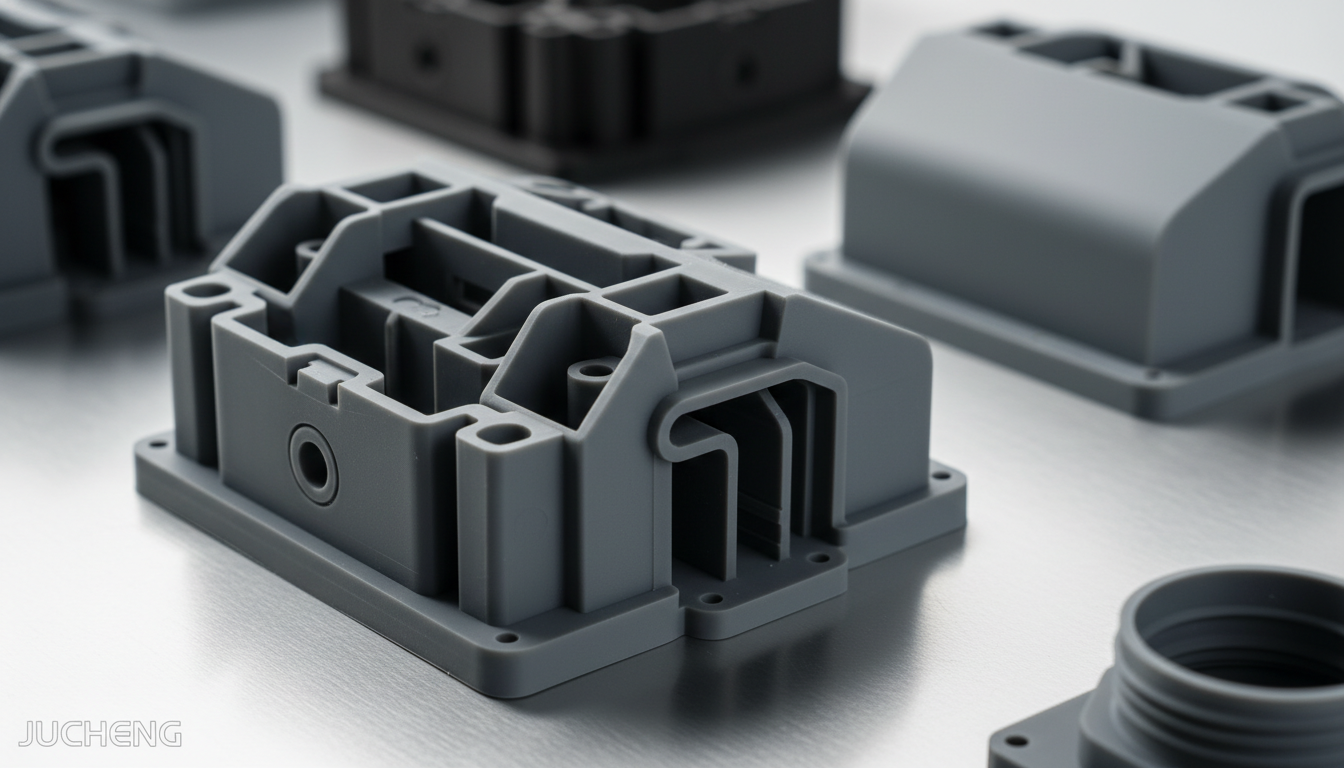
Maintaining absolute biological safety under aggressive clinical lipid exposure and enduring over 1,000 steam autoclaving sterilization cycles without physical degradation requires a highly pure, high-temperature polymer, which SABIC’s Ultem HU1000 delivers through its unreinforced, healthcare-grade amorphous polyetherimide (PEI) matrix. Compliant with USP Class VI and ISO 10993, this transparent amber resin boasts an outstanding glass transition temperature (Tg) of 217°C and a density of 1.27 g/cm³. At Jucheng Precision, an ISO 13485 and ISO 9001 certified medical device contract manufacturer, we specialized in high-temperature cleanroom molding of Ultem HU1000. Supported by certified ISO Class 7 and Class 8 cleanrooms and 5-axis CNC-machined S136 stainless steel tooling, we ensure zero particulate contamination, delivering flawless medical components verified by Zeiss CMM.
READ MORE

Comprehensive PEI (Ultem) Grades We Mold

We process high-strength, flame-retardant Polyetherimide resins primarily from the world-class SABIC Ultem portfolio, covering high-clarity, structural, and biocompatible requirements:

PEI Material Class Typical Brand & Grade Key Characteristics & Advantages
Unreinforced PEI • SABIC Ultem 1000 / 1010
• SABIC Ultem 1000F (Food Contact)
Amorphous, semi-transparent amber color. Inherent flame retardancy (UL 94 V-0) and excellent chemical/hydrolytic resistance. Ideal for microwave components, autoclavable food service parts, and electrical connectors.
Glass-Fiber Reinforced • SABIC Ultem 2100 (10% GF)
• SABIC Ultem 2200 (20% GF)
• SABIC Ultem 2300 (30% GF)
Reinforced with glass fibers to dramatically elevate tensile strength, flexural modulus, and dimensional stability. Heat Deflection Temperature (HDT) up to 210°C. Perfect for aerospace structural connectors and circuit boards.
Aviation & Low-Smoke • SABIC Ultem 9075 / 9085
• SABIC Ultem 9076
Specifically formulated to comply with strict aviation FAA regulations for low smoke toxicity and low OSU heat release. Applied in commercial aircraft interior panelings, ducting, and service trays.
Medical & Healthcare • SABIC Ultem HU1000 / HU1010
• SABIC Ultem HU2200 (20% GF) / HU2300 (30% GF)
USP Class VI and ISO 10993 biocompatible certified. Highly resistant to repeated steam autoclaving, ethylene oxide, and gamma sterilization. Ideal for surgical instruments, dental devices, and diagnostics manifold blocks.

Applicable Molding Processes for Polyetherimide (PEI)

PEI’s high thermal resistance and shear sensitivity require specialized molding setups and precision parameters:

Molding Process Process Suitability & Application
Standard Injection Molding Excellent. Configured with specialized wear-resistant barrels to mold medical sterilizing trays, aircraft ducting, and microwave components.
Thin-Wall Molding Good. Highly suitable for structural electrical terminal housings and circuit board connectors with complex pathways.
Insert Molding Excellent. PEI’s low and stable shrinkage makes it the perfect substrate to encapsulate metal threads and brass connectors without cracking around the insert.

Polyetherimide (PEI/Ultem) Tooling & Manufacturing Guide

PEI is amorphous but possesses extremely high melt viscosity and is highly sensitive to shear degradation. Rigorous process control is mandatory:

  • Pre-Drying: PEI is highly hygroscopic. Extruding wet resin will cause severe hydrolytic degradation, turning parts brittle and causing aesthetic splay. We dry raw resin in desiccant hopper dryers at 150°C (302°F) for 4 hours to keep moisture below 0.02%.
  • High Melt Temperature: Melting requires specialized machines with high-temperature capabilities. Melting points are strictly controlled between 340°C and 400°C (644°F to 752°F).
  • High Mold Temperature: Pressurized oil heaters are utilized to maintain mold temperatures at 140°C–180°C (284°F to 356°F). Proper mold temperature is vital to minimize molded-in stress, optimize surface gloss, and prevent stress cracking.
  • Gate and Runner Design: To prevent high shear heating and aesthetic “blush” defects, we design oversized gates and rounded runners. Tool paths are calculated precisely during our DFM stage.
  • Predictable Low Shrinkage: As an amorphous material, PEI exhibits extremely low and uniform shrinkage (0.2% to 0.7%), supporting high-precision tolerances on multi-cavity tools.

Key Application Industries for Molded PEI Components

  • Medical & Diagnostics (ISO 13485 Certified): Autoclavable surgical sterilization trays, medical ventilator manifolds, pharmaceutical filtration devices, dental trial guides, and endoscopic tools.
  • Aerospace & Defense: Environmental control system (ECS) ducting, cabin interior paneling, service trays, structural electrical connectors, and protective wire brackets.
  • Electrical & Electronics: High-temperature burn-in test sockets, terminal blocks, printed circuit boards (PCBs), electrical switches, and heavy-duty coil bobbins.
  • Automotive Engineering (IATF 16949 Certified): Under-the-hood sensor housings, exhaust gas recirculating (EGR) valves, headlight bezels, and cooling system fittings.

Material Properties

Density (Unreinforced) 1.27 - 1.29 g/cm³
Density (30% GF) 1.51 - 1.53 g/cm³
Tensile Strength at Yield (Unreinforced) 100 - 110 MPa
Tensile Strength at Yield (30% GF) 160 - 175 MPa
Tensile Elongation at Break 10 - 60 %
Flexural Modulus (Unreinforced) 3,200 - 3,500 MPa
Flexural Modulus (30% GF) 9,000 - 10,000 MPa
Izod Impact Strength (Notched, 23°C) 50 - 90 J/m
Melting Temperature (Glass Transition Temp, Tg) 215 - 217 °C
Heat Deflection Temperature (HDT @ 1.8 MPa) 200 - 210 °C%
Linear Mold Shrinkage 0.2 - 0.7 %
Dielectric Strength 25 - 32 kV/mm
Volume Resistivity 1.0E+17 Ohm·cm
Maximum Part Size 800 x 600 mm
Minimum Part Size 1 x 1 mm