
Choosing between gas assist and water assist starts with the hollow section the part must actually deliver. Both methods use a pressurized medium to displace molten resin from a thick region, but the choice changes how the channel is cooled, drained, inspected and controlled. A process that seems faster on a cycle-time chart may be the wrong route if the channel cannot be cleaned, the remaining wall is unpredictable or the tooling cannot support the required path.
This comparison is intended for buyers and product engineers evaluating a hollow plastic component, not for assuming that either process is automatically available for every design. Our 가스 어시스트 사출 성형 page explains the gas route in more detail. Here the question is which trial route best fits the part’s geometry, material and acceptance criteria.
Decision route
- Define the hollow geometry
- Separate cooling benefit from total cycle
- Check end-of-path risks
- Plan a fair trial
- Specify what the buyer needs
- Resolve the remaining questions
Start With the Required Hollow Geometry
\n
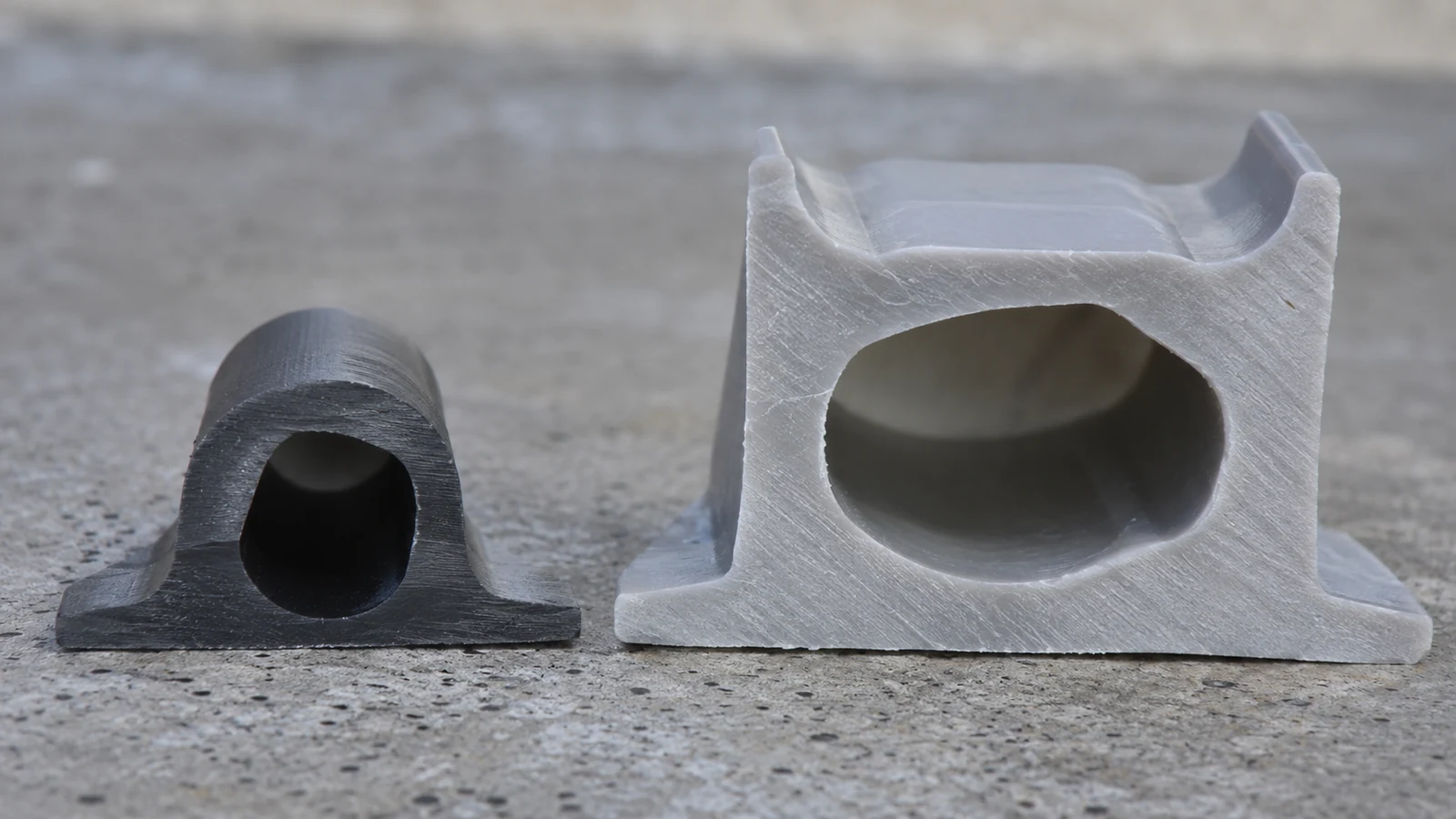
A long, thick handle, tube-like feature or structural channel gives either fluid a plausible route. A broad thin panel without a defined core does not become a good assist candidate merely because the finished part should be lighter. Mark the desired start and end of the hollow space, the load-bearing walls that must remain, and any hole or attachment that the channel cannot invade.
Gas assist usually relies on gas penetrating the hotter, lower-resistance core while displaced melt moves into an unfilled region or overflow. Water assist also forms a hollow section by displacing melt, but brings active cooling into the channel. That can be useful for a substantial wall around an extended passage. Neither medium guarantees a constant residual wall: gate position, material, channel transitions, delay and pressure still determine the result.
Before asking which medium is “better,” decide what the hollow feature does. If it carries fluid in service, surface condition and channel cleanliness matter. If it is a hidden stiffness feature, remaining wall and load response may dominate. Those are different engineering briefs even when the outer CAD shape looks similar.
Cooling Speed Is Only One Part of the Decision
\n
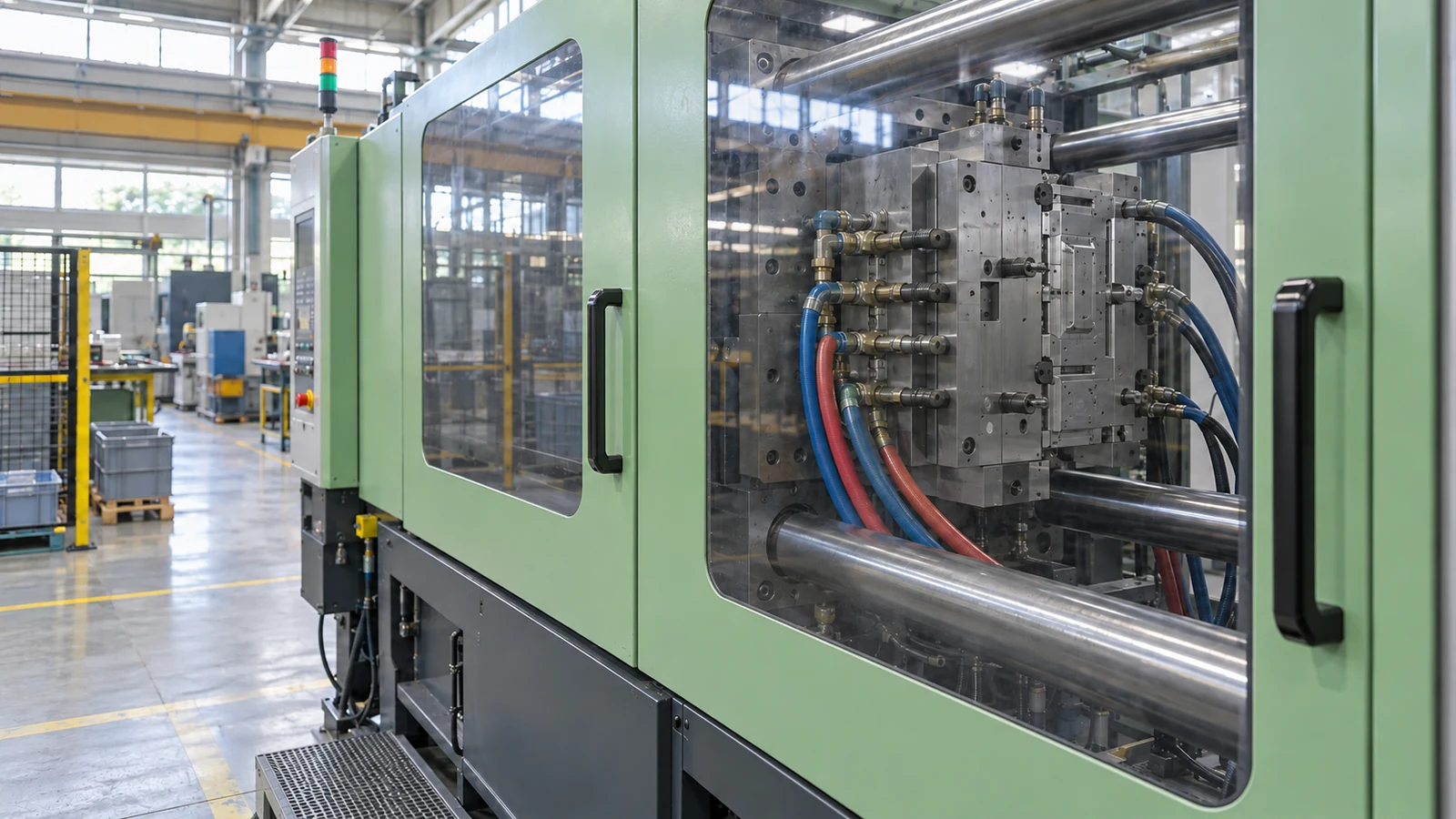
Water removes heat from the inside of a hollow section more effectively than gas in many suitable geometries. That is a reason to test it when cooling a thick passage dominates cycle time. It is not a promise of a fixed percentage reduction: water temperature, flow, resin, channel length and the cooling already provided by the mold all change the outcome. The complete cycle also includes introducing and removing the medium, handling the part and checking quality.
Gas may be simpler to consider when the geometry can be hollowed without an internal water-cooling requirement, or when introducing water creates an additional drying or contamination-control concern. For either route, a buyer should compare accepted parts per hour rather than the shortest observed molding cycle. A fast sample that fails section checks or needs extensive downstream handling does not represent a productive process.
| 결정 요인 | Gas-assist question | Water-assist question |
|---|---|---|
| Thick channel | Will penetration and packing reach the far end? | Will internal cooling remain effective along the route? |
| Residual wall | Where might gas finger into a thin wall? | Where might water leave an uneven wall or stop early? |
| After molding | How is the gas channel vented and checked? | How is water drained, dried and verified? |
Compare Risks at the End of the Flow Path
\n
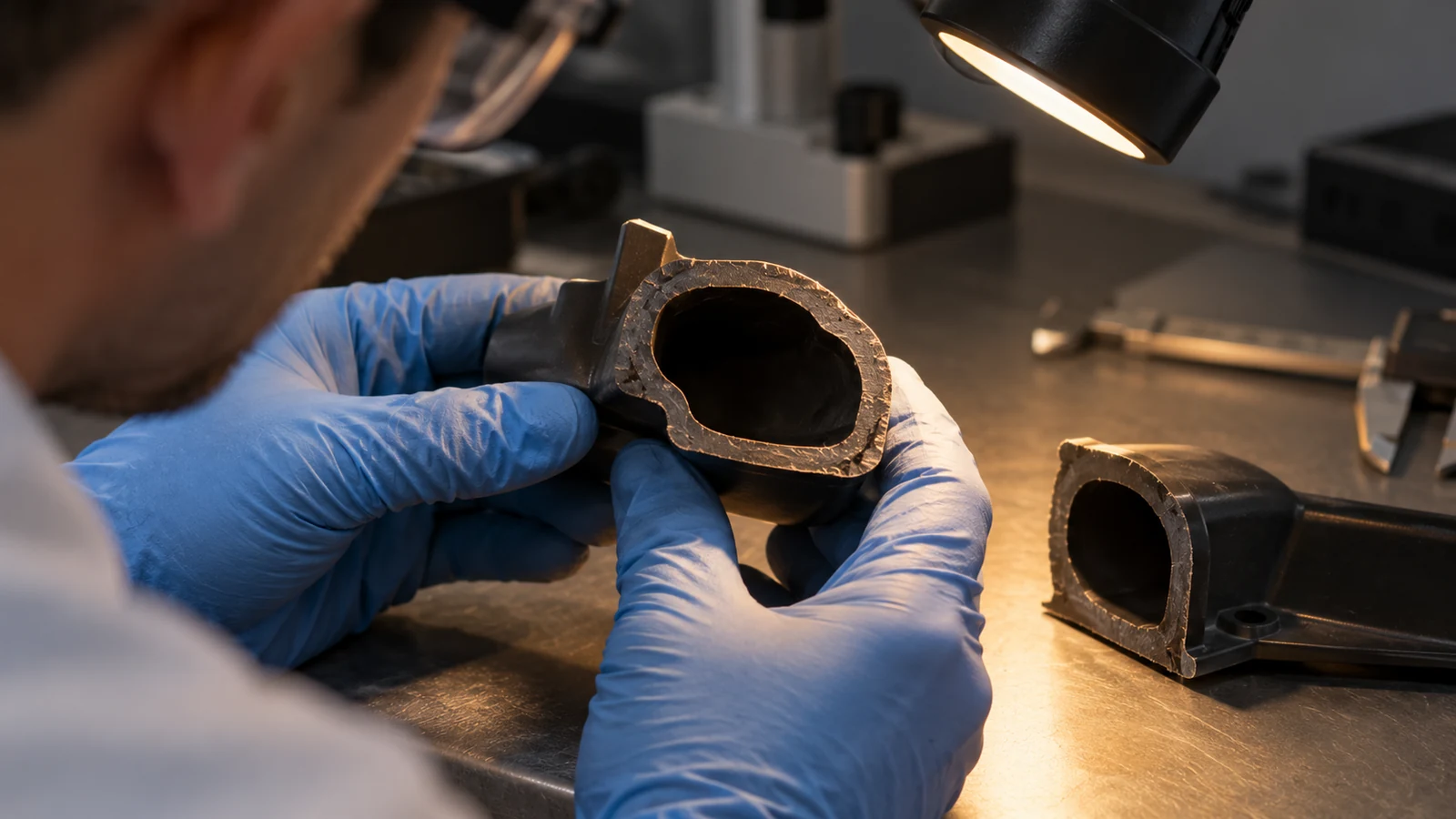
The far end of a channel is often more informative than its entrance. A clean opening can conceal a solid plug, an unexpectedly thin wall or an incomplete hollow section farther downstream. Section the first-off part near the entry, at a bend or branch, and close to the intended termination. Record which cavity and shot produced each section; otherwise a promising photograph cannot establish repeatability.
For water assist, the trial should also show how water leaves the part and whether the interior can meet any cleanliness or moisture requirement. Research on water-assisted molding has documented sensitivity to water delay, pressure and melt temperature, including uneven residual walls under some conditions. For gas assist, penetration direction, fingering and effective packing require the same kind of physical check. Neither method should be selected from a generic wall-thickness diagram alone.
The site already discusses the cooling argument in water-assist pipe cooling. That article is useful context, but a new part still needs its own channel, draining and acceptance plan. A pipe-like example cannot settle the decision for a complex handle or branched housing.
Use the Drawing to Choose a Trial Route
Begin with one drawing that identifies the resin gate, proposed medium entry, desired hollow path, cosmetic faces, minimum acceptable wall and section locations. Then list which variables the trial will change: melt condition, short-shot amount or fill level, assist delay, medium pressure and cooling time. Change them in a recorded sequence rather than moving every setting after each rejected part.
If the mold concept is not settled, 몰드 플로우 해석 can help test whether the proposed flow route is plausible. It should guide where to sample and what to challenge, not replace cutting and measuring physical parts. For a genuine gas-versus-water comparison, use the same functional acceptance criteria, not merely each process’s most attractive isolated result.
Compare the outcomes by the whole part: wall distribution at critical sections, appearance, stiffness or pressure performance as applicable, dimensional stability, downstream cleaning or drying, and repeatability across shots. If one route meets the drawing only after a narrow adjustment that is hard to hold, the apparent cycle advantage deserves skepticism.
What the Buyer Should Specify Before Quoting
A request for a “hollow molded part” leaves too many choices open. Supply the 3D model, drawing, annual volume estimate, resin grade if already selected, the purpose of the channel, service environment and any critical dimensions. Mark surfaces where a gas or water entry mark is unacceptable, and state whether the internal passage must be open, dry, clean or pressure-tight.
Define acceptance with a section drawing or functional test rather than a vague instruction to “minimize sink.” If the assembly is load-bearing, include the relevant load and failure mode. If the passage carries fluid, include the fluid, exposure and leak requirement. These details let an engineer decide whether an assist process is appropriate at all, or whether a different part design should be evaluated first.
Questions That Change the Recommendation
Is water assist always faster than gas assist?
No. Water can cool the inside of a thick hollow section effectively, but the total production cycle depends on the geometry, resin, mold cooling, medium handling and reject rate. Compare repeatable accepted parts under the same criteria.
Can both processes use the same tooling?
Do not assume so. Entry hardware, pressure control, drainage, venting and channel design can differ. Ask for a tooling review before treating a process switch as a settings change.
How do we know the internal channel is acceptable?
Specify cross sections at the entry, transition and far end, then add the functional test that matters to the part. Appearance alone cannot verify a hidden wall or complete penetration.