
외부 커버, 구조용 브래킷 또는 인쇄 회로 기판을 플라스틱 하우징에 고정하려면 내구성이 높은 나사산 연결 지점이 필요합니다. 원형 플라스틱 보스에 직접 탭을 내는 것은 약한 조인트를 만들어 반복적인 유지보수 주기에서 나사산이 벗겨지거나 응력 균열 또는 나사산 피로가 발생하기 쉽습니다. 플라스틱 보스에 금속 나사산 인서트를 통합하면 표준 기계 나사를 수용할 수 있는 견고한 내부 나사산을 제공할 수 있습니다.
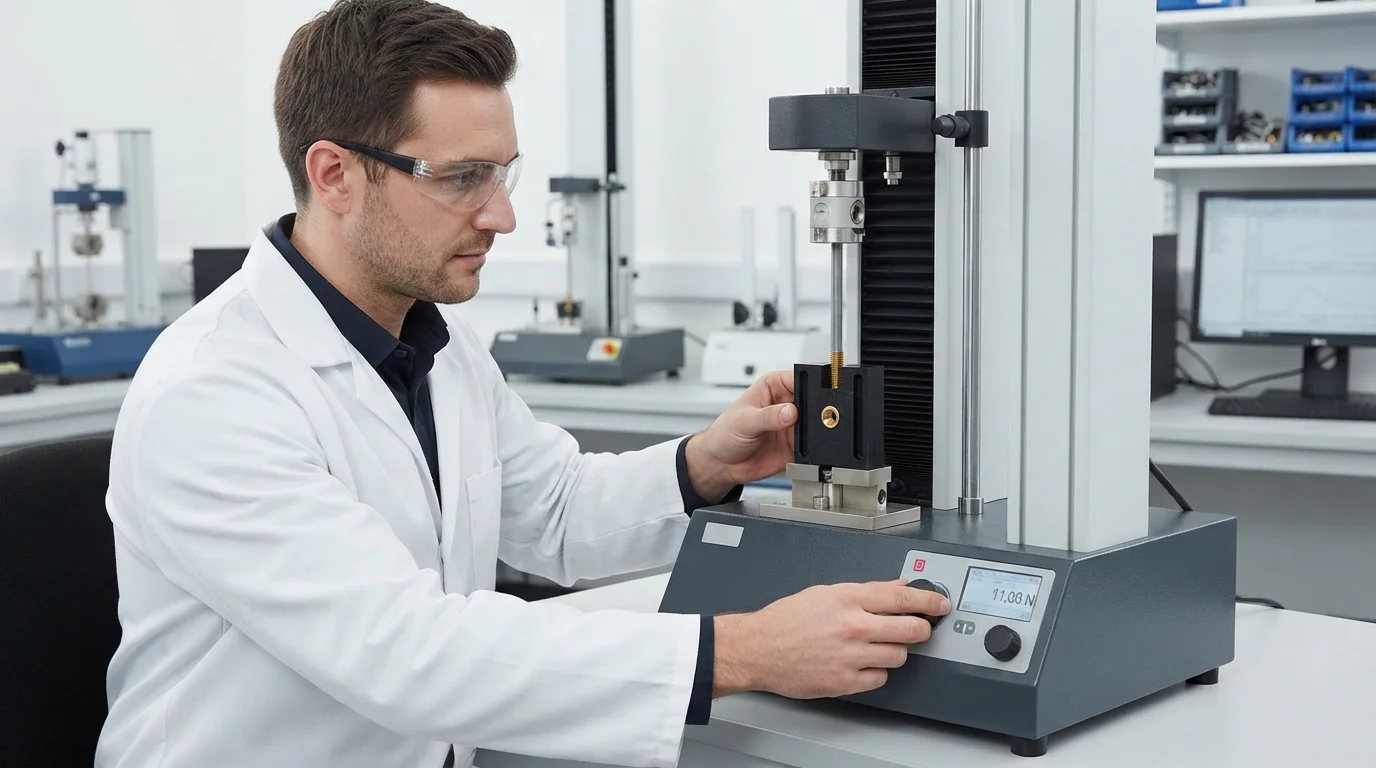
엔지니어는 사출 전에 금형 코어에 금속 패스너를 미리 배치할지, 아니면 성형 후 초음파 또는 열 히트 스테이킹 장비를 사용하여 인서트를 설치할지 선택해야 합니다. 1차 인몰드 캡슐화와 2차 열 삽입 중에서 선택하는 것은 초기 금형 예산, 단위 노무 비용 및 조인트 기계적 하중 한계에 영향을 미칩니다. 이 기술 비교는 구조적 차이, 토크 저항 물리학 및 생산 경제성을 분석합니다.
목차
인몰드 인서트 vs 성형 후 히트 스테이킹 패스너
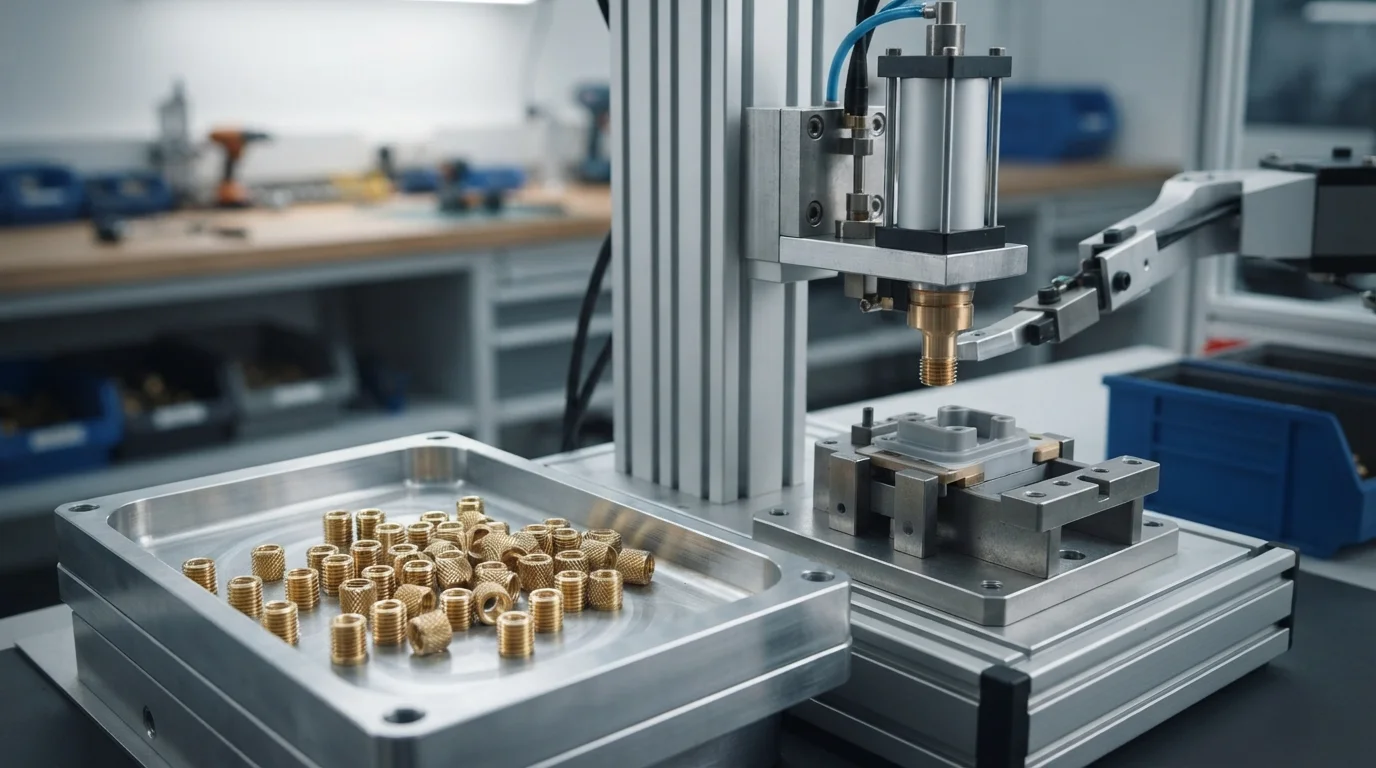
비교 인서트 몰딩 vs 히트 스테이킹 각 공정의 물리적 설치 메커니즘을 평가해야 합니다. 나사산이 있는 황동 또는 스테인리스 스틸 패스너를 수지 사출 전에 금형 캐비티 내부에 미리 배치하는 것이 1차 인몰드 캡슐화의 특징입니다. 용융된 열가소성 수지가 녹이 있는 금속 외부 주위로 직접 흘러 고체의 틈 없는 기계적 조인트로 응고됩니다.
성형 후 열 히트 스테이킹 은 먼저 일반 플라스틱 보스를 성형한 다음, 가열된 열 팁 또는 초음파 혼이 금속 인서트를 사전 성형된 구멍에 압입합니다. 열 팁의 열이 플라스틱 보스 벽을 녹여 인서트가 폴리머가 재응고되기 전에 제자리에 가라앉을 수 있게 합니다. 성형 후 삽입은 초기 금형을 단순화하지만 보스 벽 내부에 국부적인 열 응력과 미세한 틈을 남깁니다.
토크 저항 및 인발력 테스트 비교
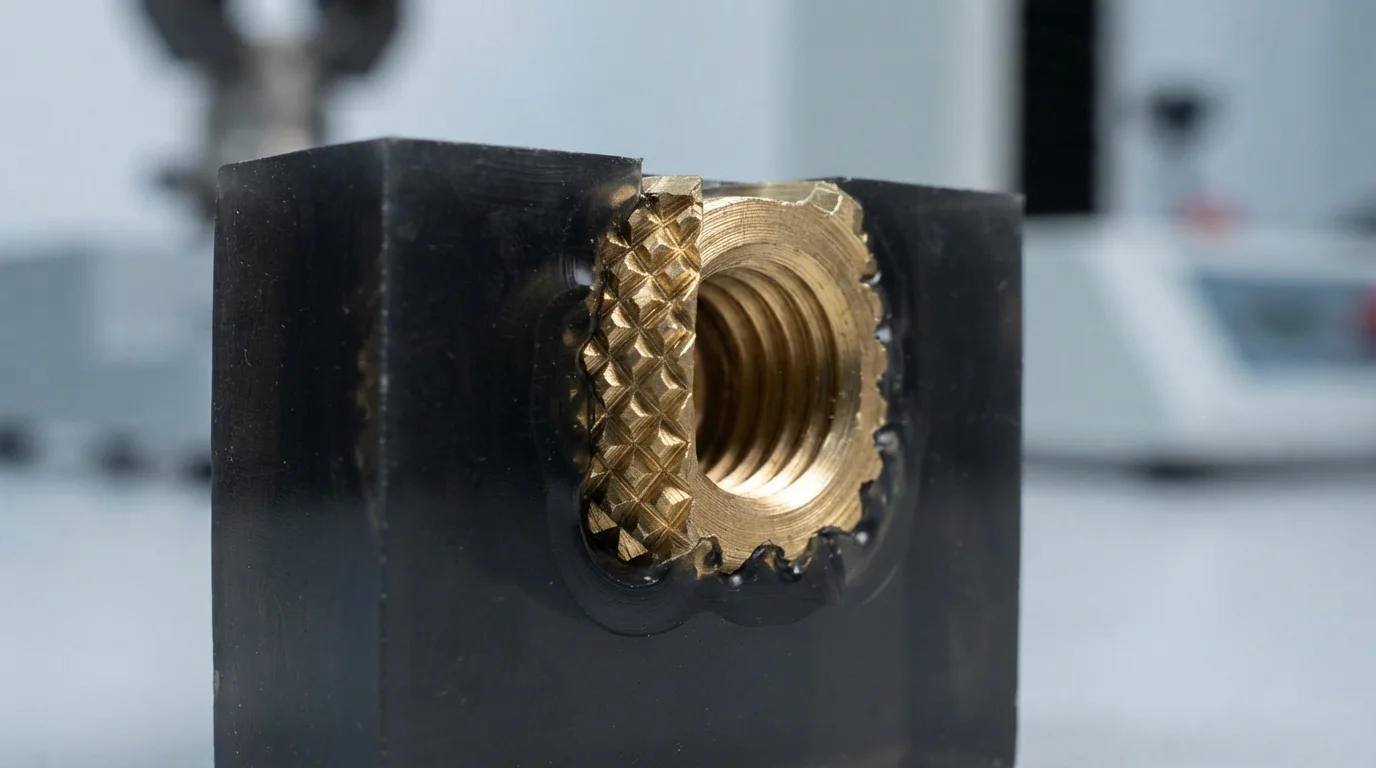
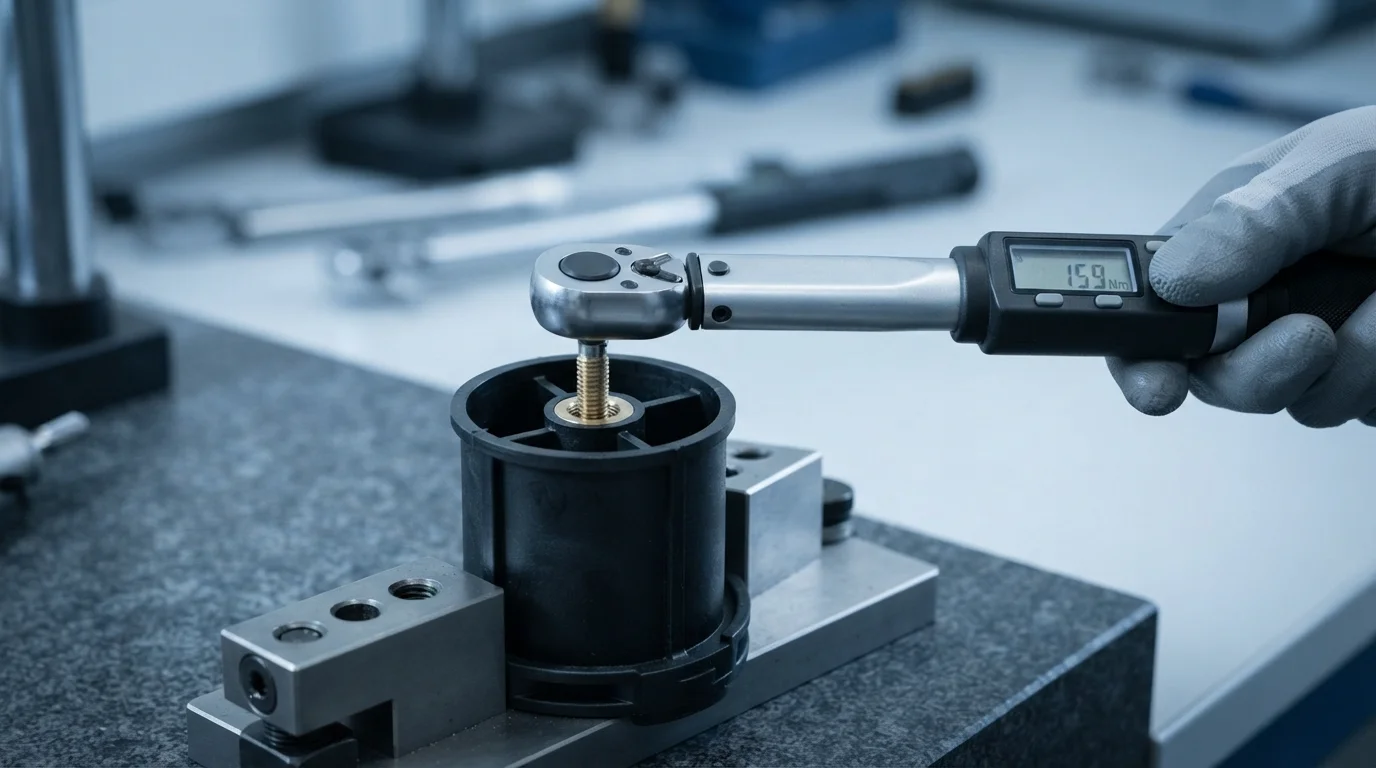
Mechanical performance parameters demonstrate why in-mold pre-placement delivers superior structural integrity. In-mold encapsulation forces molten ABS, 폴리카보네이트(PC), 또는 PA66 deep into the diamond knurling and undercuts of the metal insert under high injection pressure. Cooling polymer shrinks tightly around the metal anchor, maximizing both 인발력 및 회전 토크 resistance.
Thermal heat-staking merely melts the interior skin of the plastic boss, creating a shallow bond layer along the outer knurls. Heat-staked inserts frequently suffer from lower rotational torque limits because molten plastic does not pack into deep undercuts as densely as primary injection pressure. Comparing insert molding vs heat staking demonstrates why in-mold pre-placement during 인서트 몰딩 delivers higher pull-out strength.
| Mechanical & Process Parameter | Primary In-Mold Insert Encapsulation | Post-Molding Heat / Ultrasonic Staking | Engineering Recommendation |
|---|---|---|---|
| 축 방향 인발 저항 | Maximum (Plastic contracts onto knurls) | Moderate (Superficial wall melting) | In-mold inserts required for heavy structural loads |
| Rotational Torque-Out Resistance | High (Deep diamond knurl interlocking) | Lower (Risk of boss wall splitting) | In-mold encapsulation prevents thread spin-out |
| Secondary Assembly Labor Cost | Zero (Automated in-press process) | High (Manual press operator labor) | In-mold process slashes unit labor for volume > 10,000 |
Low-Volume Prototyping vs. High-Volume Production Economics
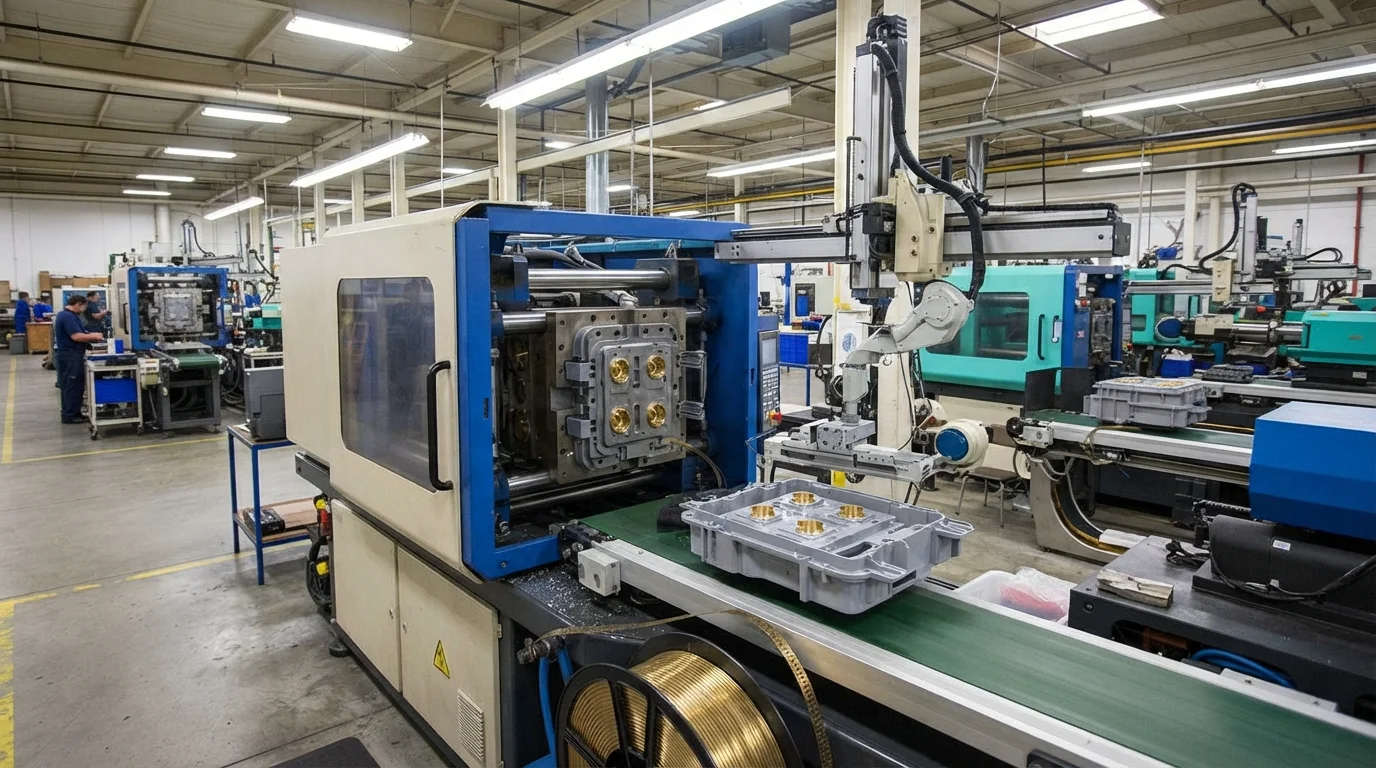
Evaluating project economics requires balancing upfront non-recurring engineering tooling budgets against unit assembly labor costs. Post-molding thermal staking offers lower initial mold tool costs because the injection mold uses plain core pins without floating shut-offs or locating features. However, thermal staking introduces secondary manual labor, requiring operators or multi-tip thermal presses to process every single part.
In-mold pre-placement increases initial mold engineering precision requirements to prevent plastic flash on active threads. High-volume automotive and medical programs easily offset higher initial tool costs by eliminating secondary assembly machines and reducing cycle labor. Automated 6-axis robots load metal inserts within seconds, driving unit production expenses down significantly over large production runs.
자주 묻는 질문 (FAQ)
Why does insert molding achieve higher pull-out force than heat staking?
In-mold encapsulation forces molten resin into complex knurled undercuts under high injection pressure. Shrinking plastic wraps around the metal insert tightly during primary cooling, creating a seamless mechanical bond that resists extreme axial pull-out loads.
When is heat staking preferred over insert molding for plastic fasteners?
Heat staking is advantageous for low-volume prototype builds or complex parts containing dozens of threaded locations where manual in-mold insert placement would excessively prolong machine cycle times. Utilizing post-mold insertion also simplifies initial mold core tooling and reduces NRE budgets.
How do you prevent plastic from leaking into internal threads during in-mold insertion?
Preventing plastic ingress into threaded blind or through-holes relies on precision mold core locating pins and tight shut-off land steps. Locating pins seal the internal thread opening firmly against tool steel, blocking molten polymer from entering during high-pressure packing.