
Fixar tampas externas, suportes estruturais ou placas de circuito impresso em invólucros plásticos exige pontos de conexão roscados de alta durabilidade. Abrir roscas diretamente em saliências termoplásticas brutas cria juntas fracas, propensas a arrancamento de rosca, fissuração por tensão e fadiga da rosca sob ciclos repetidos de manutenção. Incorporar fixadores roscados metálicos em saliências plásticas fornece roscas internas robustas, capazes de aceitar parafusos de máquina padrão.
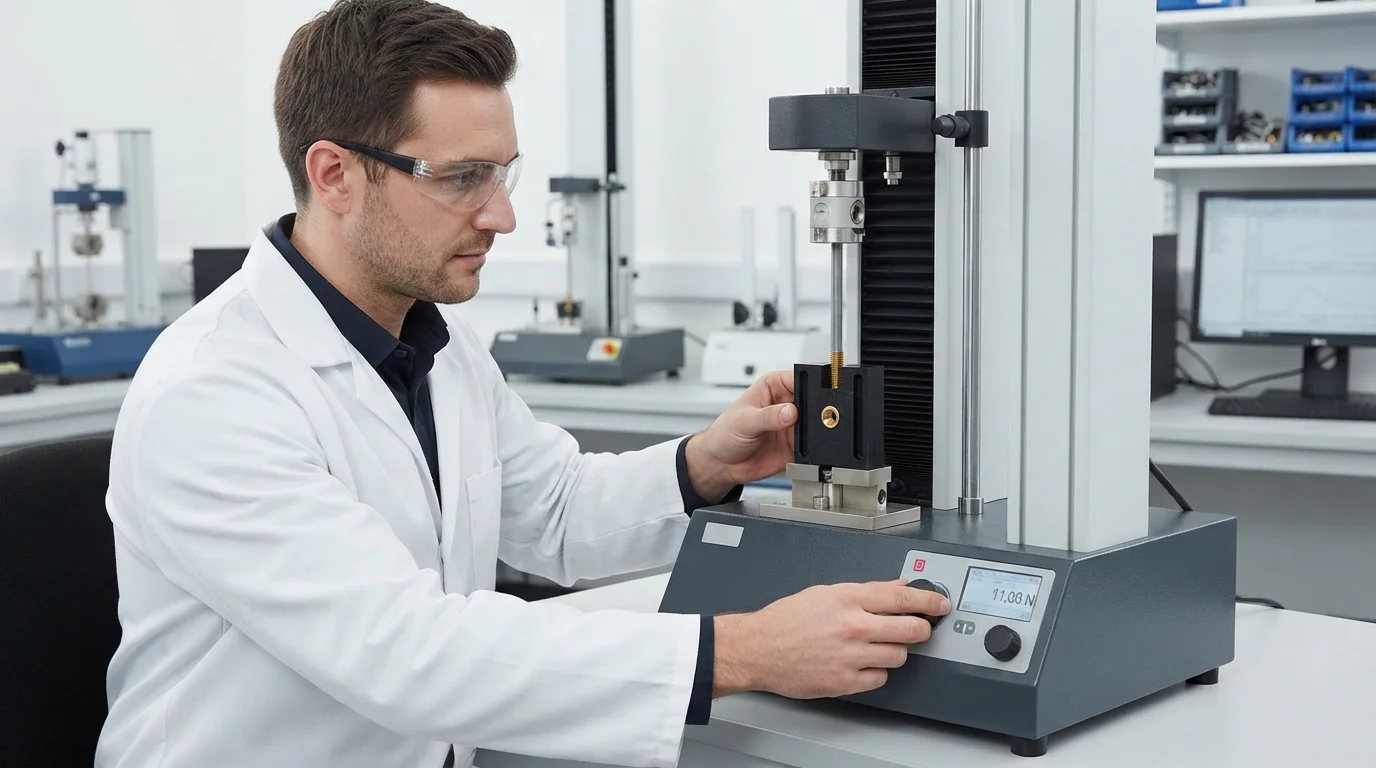
Os engenheiros devem escolher entre pré-colocar fixadores metálicos no núcleo do molde antes da injeção ou instalar inserções após a moldagem, usando equipamento ultrassônico ou de cravação térmica. A seleção entre encapsulamento primário no molde e inserção térmica secundária impacta os orçamentos iniciais de ferramentas, os custos unitários de mão de obra e os limites de carga mecânica das juntas. Esta comparação técnica analisa diferenças estruturais, física de resistência ao torque e economia de produção.
Índice
Inserções no molde vs. fixadores cravados a quente após a moldagem
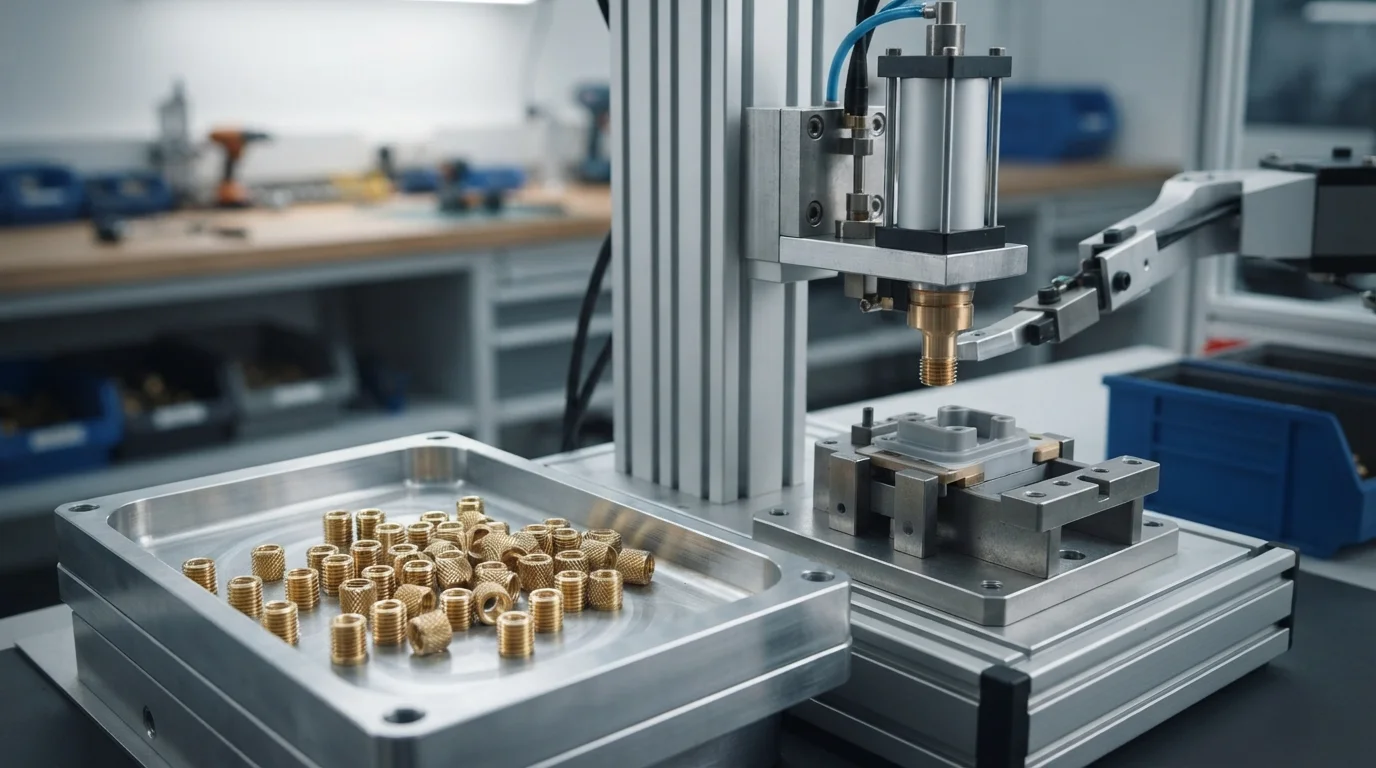
Comparando moldagem de inserção vs. cravação a quente requires evaluating the physical installation mechanics of each process. Pre-placing threaded latão or stainless steel fasteners inside the mold cavity before resin injection characterizes primary in-mold encapsulation. Molten thermoplastic flows directly around the knurled metal exterior, solidifying into a solid, gap-free mechanical joint.
Post-molding thermal cravação térmica molds a plain plastic boss first, after which a heated thermal tip or ultrasonic horn presses the metal insert into the pre-molded hole. Thermal tip heat melts the plastic boss wall, permitting the insert to sink into place before the polymer re-solidifies. While post-mold insertion simplifies initial tooling, it leaves localized thermal stresses and micro-gaps inside the boss wall.
Torque Resistance & Pull-Out Force Testing Comparison
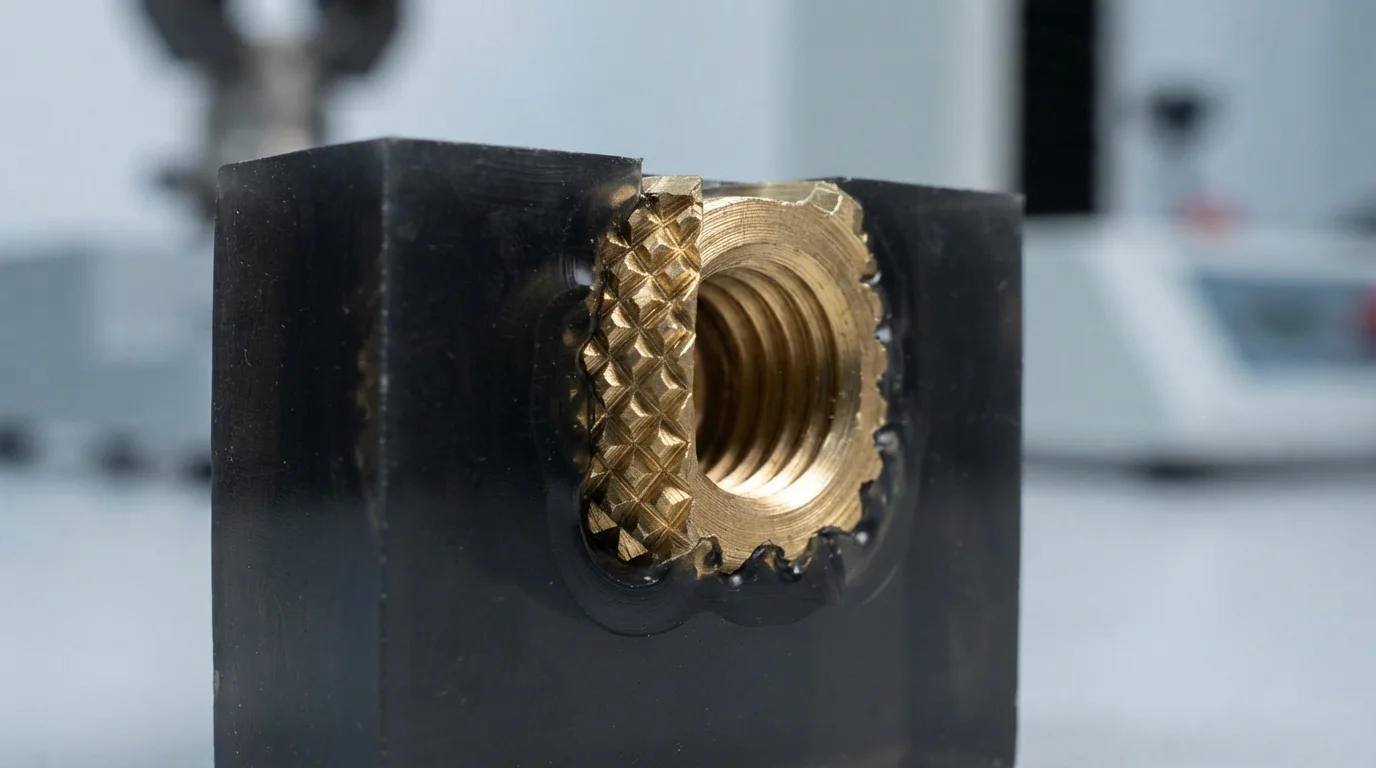
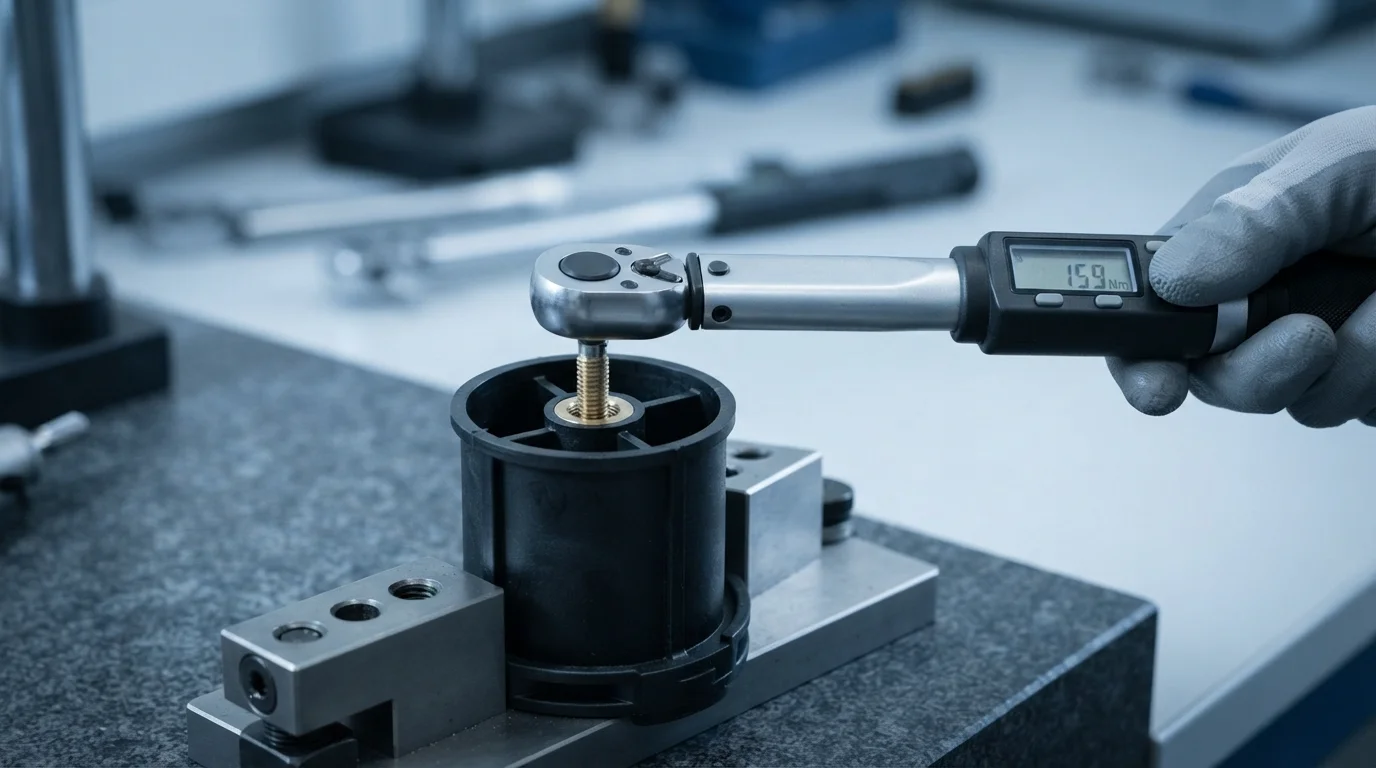
Mechanical performance parameters demonstrate why in-mold pre-placement delivers superior structural integrity. In-mold encapsulation forces molten ABS, policarbonato (PC), ou PA66 deep into the diamond knurling and undercuts of the metal insert under high injection pressure. Cooling polymer shrinks tightly around the metal anchor, maximizing both força de extração e torque rotacional resistência.
A estampagem térmica simplesmente derrete a pele interna do boss de plástico, criando uma camada de ligação rasa ao longo das serrilhas externas. Os insertos estampados a quente frequentemente sofrem com limites de torque rotacional mais baixos porque o plástico fundido não se compacta em rebaixos profundos tão densamente quanto a pressão primária de injeção. Comparar a moldagem por inserção com a estampagem a quente demonstra por que a pré-colocação no molde durante a moldagem por inserção oferece maior resistência à tração.
| Parâmetro Mecânico e de Processo | Encapsulamento Primário do Insert no Molde | Estampagem Térmica / Ultrassônica Pós-Moldagem | Recomendação de Engenharia |
|---|---|---|---|
| Resistência à Tração Axial | Máxima (O plástico contrai sobre as serrilhas) | Moderada (Derretimento superficial da parede) | Insertos moldados no molde necessários para cargas estruturais pesadas |
| Resistência ao Torque Rotacional | Alta (Intertravamento profundo de serrilha diamantada) | Lower (Risk of boss wall splitting) | In-mold encapsulation prevents thread spin-out |
| Secondary Assembly Labor Cost | Zero (Automated in-press process) | High (Manual press operator labor) | In-mold process slashes unit labor for volume > 10,000 |
Low-Volume Prototyping vs. High-Volume Production Economics
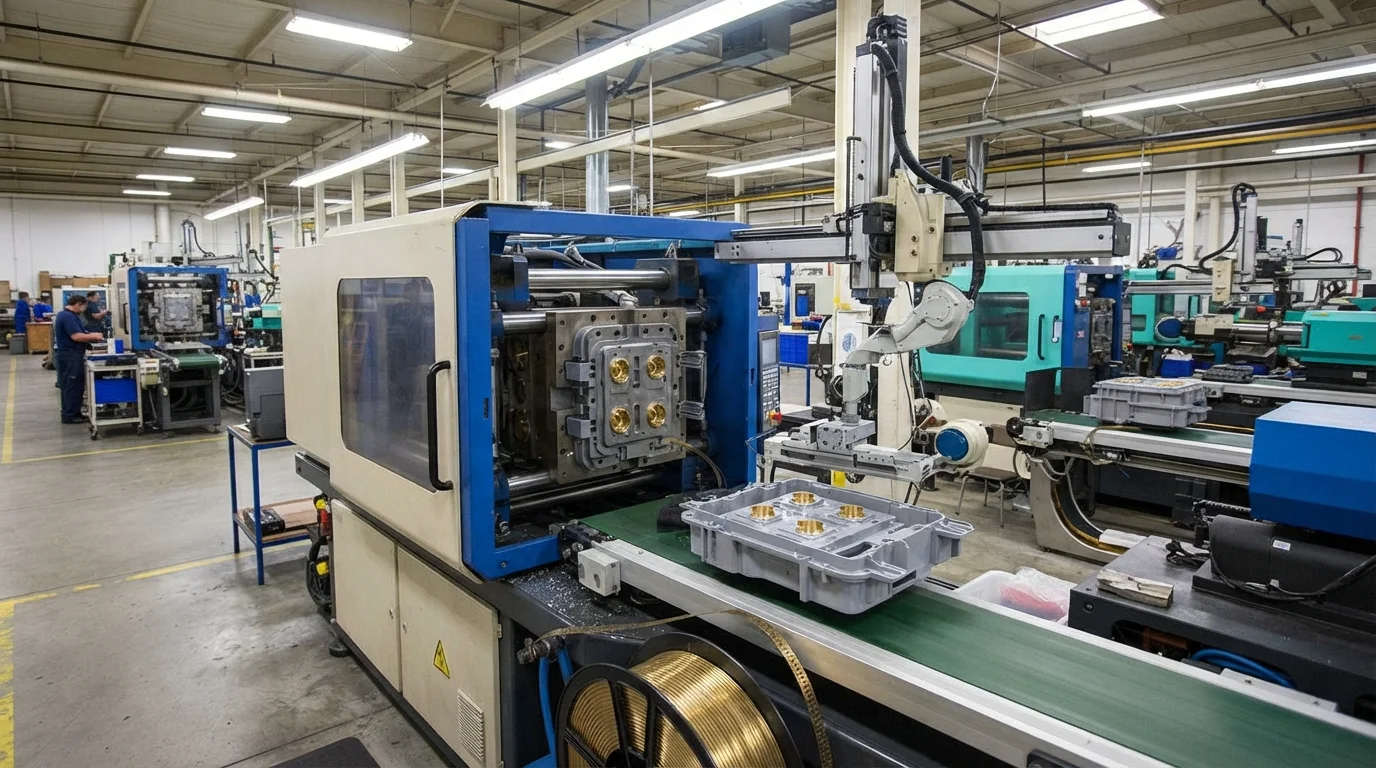
Evaluating project economics requires balancing upfront non-recurring engineering tooling budgets against unit assembly labor costs. Post-molding thermal staking offers lower initial mold tool costs because the injection mold uses plain core pins without floating shut-offs or locating features. However, thermal staking introduces secondary manual labor, requiring operators or multi-tip thermal presses to process every single part.
In-mold pre-placement increases initial mold engineering precision requirements to prevent plastic flash on active threads. High-volume automotive and medical programs easily offset higher initial tool costs by eliminating secondary assembly machines and reducing cycle labor. Automated 6-axis robots load metal inserts within seconds, driving unit production expenses down significantly over large production runs.
Perguntas Frequentes (FAQs)
Why does insert molding achieve higher pull-out force than heat staking?
In-mold encapsulation forces molten resin into complex knurled undercuts under high injection pressure. Shrinking plastic wraps around the metal insert tightly during primary cooling, creating a seamless mechanical bond that resists extreme axial pull-out loads.
When is heat staking preferred over insert molding for plastic fasteners?
Heat staking is advantageous for low-volume prototype builds or complex parts containing dozens of threaded locations where manual in-mold insert placement would excessively prolong machine cycle times. Utilizing post-mold insertion also simplifies initial mold core tooling and reduces NRE budgets.
How do you prevent plastic from leaking into internal threads during in-mold insertion?
Preventing plastic ingress into threaded blind or through-holes relies on precision mold core locating pins and tight shut-off land steps. Locating pins seal the internal thread opening firmly against tool steel, blocking molten polymer from entering during high-pressure packing.