
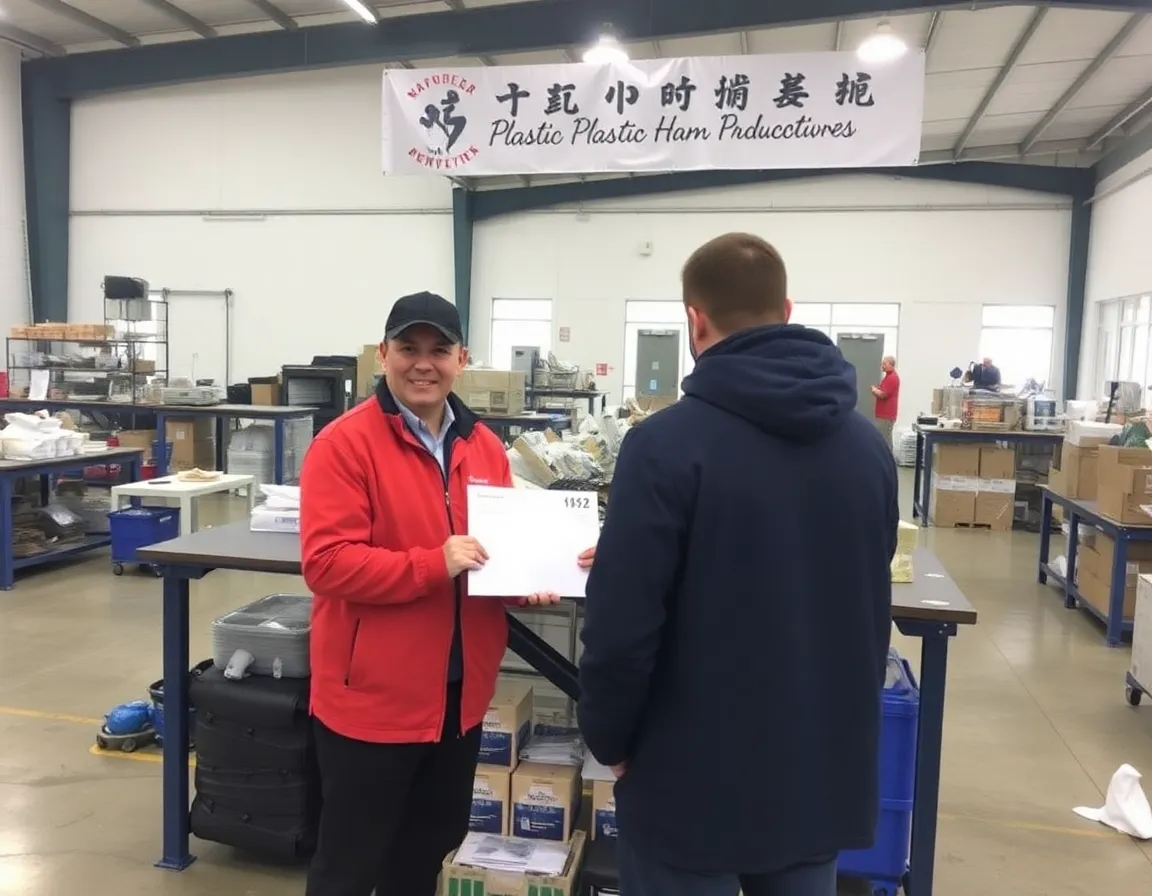
Introduction: The Strategic Shift in Modern Manufacturing
In today’s hyper-competitive industrial landscape, the decision of whether to manufacture plastic components in-house or to seek external expertise has become a pivotal point of strategic planning. For decades, the default assumption was that vertical integration—controlling every step of production—was the hallmark of a robust company. However, the economics of manufacturing have shifted dramatically. The rise of specialized machinery, advanced polymer science, and global supply chain networks has made industrial plastic part outsourcing not just a viable alternative, but often a superior one.
Outsourcing in this context is not merely about buying parts from a supplier; it is about forming a partnership with a contract manufacturer who possesses deep knowledge in injection molding, CNC machining, or thermoforming. These partners invest millions in state-of-the-art equipment and skilled labor, allowing your company to leverage those assets without the capital expenditure. Yet, many business leaders still hesitate, unsure if their current production model has reached its breaking point. Recognizing the precise moment to transition is critical; outsourcing too early can disrupt quality, while outsourcing too late can erode your profit margins and market responsiveness.
This article dissects the five most definitive signs that your organization is ready to make the leap. By understanding these indicators, you can transform a potential operational bottleneck into a competitive advantage, allowing your internal teams to focus on core competencies like design, assembly, and customer relationships.
Sign #1: Escalating Capital Expenditure and Maintenance Costs
The most glaring and quantifiable indicator that you need industrial plastic part outsourcing is the relentless drain of capital on machinery. Operating an injection molding machine is not a one-time purchase. It involves a continuous cycle of maintenance, calibration, and eventual replacement. Consider the math: a high-quality, 200-ton injection molding machine can cost anywhere from $150,000 to over $500,000. Add to that the cost of auxiliary equipment—chillers, dryers, granulators, and robotic arms—and your initial investment easily surpasses seven figures.
Beyond the purchase price, there is the hidden cost of downtime. When your in-house machine breaks down, you are not just paying for the repair technician. You are paying for idle labor, missed delivery deadlines, and the rush shipping of alternative parts. Furthermore, the expertise required to troubleshoot complex hydraulic or electric systems is scarce. Hiring a full-time maintenance engineer solely for plastic processing is often financially prohibitive for mid-sized firms.
The "Hidden Cost" Trap of Vertical Integration
Many companies fall into the trap of viewing their existing machinery as "already paid for." However, this is a sunk cost fallacy. The true cost lies in the opportunity cost of capital. The $300,000 you are considering for a new mold could instead be allocated to R&D for a new product line or marketing to expand into new territories. An outsourcing partner spreads these fixed costs across multiple clients, meaning you pay only for the machine time you actually use. If your annual maintenance budget exceeds 15% of the total machine value, or if you are delaying new product launches because tooling costs are too high, it is a clear financial signal that outsourcing is the more rational economic choice.
Sign #2: Capacity Constraints and the "Peak Demand" Dilemma
Every manufacturer faces the challenge of fluctuating order volumes. You may have a steady baseline of production, but what happens when a major client signs a new contract or a seasonal spike hits? If your internal production floor is already running at 85% capacity, you have a serious problem. Pushing beyond this threshold leads to compromised quality, excessive overtime wages, and employee burnout.
When you attempt to meet peak demand in-house, you have two poor options: turn down the business or invest in additional capacity that will sit idle during slow periods. Industrial plastic part outsourcing offers an elegant solution to this elasticity problem. A contract manufacturer operates as an extension of your production line, capable of scaling up or down within days, not months.
Flexibility Without the Headache
Consider the scenario of a tier-one automotive supplier. They might receive a sudden surge in orders for a specific connector housing. Their internal machines are dedicated to a long-running, high-volume part. Forcing them to switch over would require a costly changeover and risk the quality of the primary product. By outsourcing the secondary component to a specialist with available machine hours, the supplier maintains their delivery schedule without sacrificing their core production efficiency.
If you find yourself constantly quoting longer lead times to customers not because of raw material shortages, but because of "machine availability," you have outgrown your internal capabilities. The inability to guarantee rapid turnaround is a silent killer of customer loyalty. Outsourcing allows you to promise speed and reliability, knowing that your partner has the redundant capacity to absorb your overflow. If your sales team is turning down small-batch orders because they "mess up the production flow," you are leaving money on the table that an outsourcing partner could easily capture for you.
Sign #3: A Lack of Specialized Polymer and Process Expertise
Plastic is not a singular material; it is a universe of polymers, each with specific melting points, flow rates, shrinkage characteristics, and chemical resistances. Processing a high-performance engineering resin like PEEK (Polyether ether ketone) is fundamentally different from processing commodity polypropylene. If your in-house team is proficient only with standard materials, you are severely limiting your product design possibilities.
Modern industrial plastic part outsourcing is driven by material science expertise. Top-tier outsourcing partners employ process engineers who understand the nuances of gas-assisted injection molding, insert molding, and two-shot molding. They know how to design the mold gate to prevent weld lines, and they understand the cooling rate required to prevent warpage in glass-filled nylon. If your current products are experiencing high rejection rates due to cosmetic defects or dimensional inconsistencies that your team cannot solve, it is a sign of a knowledge deficit, not just a machinery issue.
Accessing Advanced Technologies Without Training Costs
Keeping your staff certified and trained on the latest automation and quality inspection systems—such as in-mold sensors or vision inspection systems—is a continuous expense. Outsourcing partners make these technologies their core competency. They are often ISO 13485 (medical) or IATF 16949 (automotive) certified, which requires rigorous documentation and process control that is difficult for a generalist manufacturer to maintain.
If you are being asked by your clients to produce parts with tighter tolerances (e.g., ±0.005 mm) or using materials that require specialized drying ovens to prevent hydrolysis, and you are unsure if your current setup can handle it, this is the third definitive sign. Rather than risking a costly trial-and-error phase internally, leveraging the expertise of a partner who has already solved these problems for other clients is the prudent path. This expertise also extends to design for manufacturability (DFM)—a good outsourcing partner will often redesign your part to be thinner, lighter, and stronger, reducing your overall material costs.
Sign #4: Inconsistent Quality and Rising Scrap Rates
Quality is not just about the final inspection; it is about process stability. If you notice an increasing trend in scrap rates, rework, or customer returns, your internal process may be degrading. This can stem from aging molds, operator fatigue, or inconsistent environmental conditions (humidity and temperature) on the plant floor. When quality suffers, your brand reputation suffers with it.
Industrial plastic part outsourcing provides a solution through Statistical Process Control (SPC) and validated processes. Reputable outsourcers run their machines continuously, monitoring parameters in real-time. They have robust preventive maintenance schedules for their molds and presses. In contrast, an in-house operation often runs a mold until it breaks, then patches it up, leading to a "sawtooth" quality pattern—excellent right after repair, deteriorating until the next failure.
The Cost of Rework vs. The Cost of Partnership
Calculate your true cost of quality. If you are spending more than 10% of your manufacturing cost on scrap disposal, rework labor, and warranty claims, you are operating an inefficient facility. In many cases, a specialized outsourcer can achieve defect rates of less than 100 parts per million (PPM), while a general in-house shop might struggle to stay below 5,000 PPM. The disparity is not due to a lack of effort from your team, but rather a lack of dedicated focus.
Moreover, consider the risk of liability. In industries like medical devices or aerospace, a faulty plastic part can lead to catastrophic consequences and lawsuits. Outsourcing to a partner with validated processes and full traceability (from raw material lot to final packaging) transfers that compliance burden to them. If your internal quality audits are becoming increasingly complex, or if you are failing customer audits due to inadequate documentation, this is a critical sign that your operational maturity is not aligned with your market requirements. Outsourcing allows you to tap into a quality management system that is already battle-tested.
Sign #5: Strategic Focus Dilution and Internal Resource Strain
The final sign is often the most overlooked because it is intangible: your management bandwidth. Manufacturing plastic parts is a complex logistical dance involving raw material procurement, scheduling, inventory management, and shipping. If your key managers are spending 60% of their time firefighting production issues—chasing down material shortages, hiring temporary machine operators, or expediting maintenance—they are not focusing on what truly drives growth: product innovation, customer acquisition, and strategic partnerships.
Industrial plastic part outsourcing is fundamentally a management strategy. By transferring the operational burden of plastic production to a partner, you free up your internal team to focus on the "higher value" activities of your business. For example, if you are a manufacturer of medical devices, your value lies in the electronics, the software, and the clinical validation—not necessarily in molding the plastic housing. By outsourcing the housing, your engineers can spend more time on the software algorithms that differentiate your product in the marketplace.
Reducing Overhead and Increasing Agility
Furthermore, maintaining an in-house molding department requires significant administrative overhead. You need to manage labor relations, shift schedules, and safety compliance (OSHA) for that specific department. When you outsource, you convert a fixed cost structure into a variable cost structure. You no longer have to pay for idle labor during slow months. This financial flexibility is crucial for surviving economic downturns.
If you are constantly postponing new product development projects because "we don't have the engineering time to design the mold" or "we are too busy putting out fires on the production line," you are sacrificing your future for the present. A partner can handle the entire mold design and fabrication process, providing you with a turnkey solution. This allows you to launch new products faster than your competitors who are bogged down by internal resource constraints. If your company's growth is being throttled by the limitations of your own production floor, it is time to accept that outsourcing is not a failure of internal capability, but rather a strategic leveraging of external excellence.
Conclusion: Making the Transition Seamlessly
Recognizing these five signs is the first step towards a more profitable and agile operation. The transition to industrial plastic part outsourcing does not happen overnight. It requires a deliberate evaluation of potential partners, including site visits, quality audits, and pilot runs. However, the benefits are profound: reduced capital risk, access to cutting-edge technology, guaranteed quality, and the strategic freedom to grow your core business.
In an era where speed-to-market and cost efficiency dictate survival, clinging to outdated internal manufacturing methods out of habit is a dangerous luxury. Whether you are facing exorbitant maintenance costs, capacity bottlenecks, knowledge gaps, quality inconsistencies, or management overload, the solution is clear. The most successful companies of the next decade will not be those that do everything themselves, but those that orchestrate a network of world-class specialists. Industrial plastic part outsourcing is not a sign of weakness; it is a badge of strategic intelligence. Evaluate your operations against these five signs today, and take the bold step toward a leaner, more focused, and more competitive future.