
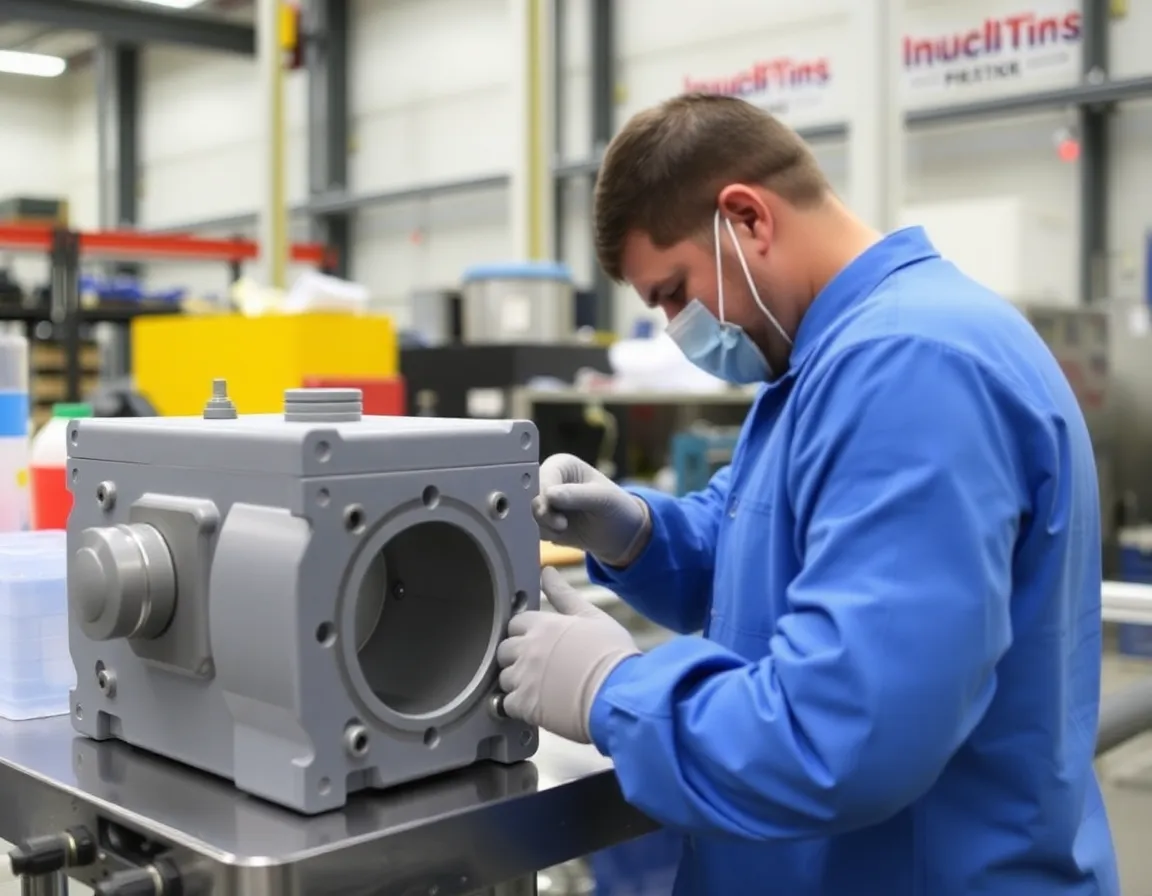
The Hidden Cost of Choosing Wrong: Why Your Plastic Molding Partner Defines Your Product’s Fate
In the world of manufacturing, the phrase “custom plastic molding subcontracting” often gets tossed around as a simple procurement decision. You send a CAD file, they send back a quote, and you hope for the best. But any seasoned product engineer or supply chain manager will tell you that selecting a plastic molding partner is far more akin to choosing a co-founder for your product line than picking a vendor off a list. The wrong choice can lead to delayed launches, ballooning tooling costs, catastrophic material defects, and even intellectual property leaks. The right choice, however, becomes an invisible extension of your engineering team, optimizing designs for manufacturability, shaving cents off unit costs, and proactively solving tolerance issues before they become recalls.
Yet, despite this high stakes, most companies still base their selection on a single variable: the lowest quoted price per part. This is a recipe for disaster. The true cost of a molding partner is buried in cycle times, scrap rates, tool steel quality, and their willingness to collaborate during the design phase. To help you navigate this complex landscape, we have distilled years of industry insight into five non-negotiable secrets. These are not generic tips; they are the specific, often-overlooked criteria that separate world-class custom plastic molding subcontractors from mere order-takers.
Secret #1: Engineering Collaboration Before the Quote (DFM is Not a Buzzword)
The first secret is deceptively simple: your future partner should be challenging your design before you ever sign a purchase order. A mediocre molder will take your 3D model, run a quick mold flow analysis (or skip it entirely), and send back a quote. A great custom plastic molding subcontractor will treat your initial inquiry as a design review session. They will assign a dedicated applications engineer to scrutinize your part for draft angles, wall thickness uniformity, gate placement, and sink marks.
This process, known as Design for Manufacturability (DFM), is where the true value of subcontracting lies. For example, you might have designed a boss for a screw that requires a 3mm wall thickness, but your partner knows that a 2.5mm wall with a collapsible core will reduce cycle time by 15% without sacrificing strength. They should provide you with a formal DFM report, complete with suggested modifications, before they commit to tooling costs. If a molder tells you “we can make anything exactly as you drew it,” run away. That is a red flag indicating they have no interest in optimizing your product—they only want to bill you for a mold that will likely fail in production.
Moreover, this collaboration extends to 材料選定. Your partner should not just ask “what resin do you want?” but rather “what are the environmental, chemical, and load-bearing requirements?” They should be able to recommend alternative polymers—perhaps a glass-filled nylon instead of a standard ABS—that offer better dimensional stability at a similar price point. This pre-production partnership is the single most effective way to reduce total cost, as changes made in the digital phase cost $100, whereas changes made after steel is cut cost $10,000.
The Litmus Test for DFM Capability
Ask any candidate partner to show you a sample DFM report from a past project. Look for specifics: gate location analysis, predicted weld line positions, and warpage simulations. If they cannot produce a document that demonstrates iterative engineering thinking, they are likely a “build-to-print” shop, not a true partner.
Secret #2: Tooling Ownership and Steel Quality (The Invisible Asset)
The mold—the tool—is the heart of your entire project. It is also the most misunderstood line item in your budget. The second secret to choosing a custom plastic molding subcontractor is to understand that you are not just buying a mold; you are buying a production asset that will depreciate, fatigue, and require maintenance. The price of a mold from a low-cost overseas supplier might be 40% cheaper than a domestic one, but if the mold is made from P20 steel instead of H13, or if it lacks proper cooling channels, your cycle times will be longer, and you will face premature wear.
When evaluating a partner, ask about their toolroom capabilities. Do they build molds in-house, or do they outsource to a third-party toolmaker? In-house tooling is a massive advantage because it allows for rapid iteration and on-the-spot repairs. If a mold breaks at 2 AM during a production run, a partner with an in-house toolroom can fix it by morning. A partner who has to ship the mold back to a separate tooling vendor will cost you days of downtime.
Furthermore, scrutinize the cooling circuit design. Conformal cooling channels, which follow the contour of the part, can reduce cycle times by up to 30% compared to straight-drilled channels. This is where the real cost reduction happens. A partner who invests in high-end CNC machining and EDM (Electrical Discharge Machining) to create complex cooling paths is a partner who understands that the mold is a heat exchanger first and a cavity second. Ask for the mold’s expected lifespan in shots (cycles). A good production mold for commodity plastics should last 500,000 to 1,000,000+ cycles with proper maintenance. If a supplier quotes a mold that only lasts 100,000 cycles, your per-part cost will spike due to re-tooling amortization.
What to Ask About Tooling
- What steel grade is used for the cavity and core? (S136 or H13 for corrosive or abrasive plastics)
- Is there a mold warranty? What does it cover (breakage, wear, dimensional drift)?
- Who owns the design of the mold? (You should have rights to the 3D mold design, even if they own the physical steel.)
- Can they provide mold flow analysis results for the specific gate location?
Secret #3: Total Cost Analysis (Beyond the Unit Price)
The third secret is about financial blindness. Most purchasing managers compare apples to oranges by looking solely at the “price per part” column on a quote. However, the true economic equation for custom plastic molding subcontracting includes several hidden variables: logistics, inventory holding, quality rejection rates, and minimum order quantities (MOQs).
Consider this scenario: Supplier A quotes $0.50 per part with a MOQ of 10,000 pieces. Supplier B quotes $0.65 per part but with a MOQ of 2,000 pieces. If you only need 5,000 parts for a pilot launch, Supplier A forces you to buy and store 5,000 unused pieces, tying up capital and warehouse space. Supplier B, despite a higher unit cost, allows you to purchase closer to your actual demand, reducing cash flow strain. Furthermore, Supplier A might be located overseas, adding 4–6 weeks of ocean freight time and potential customs delays. Supplier B might be domestic, allowing for just-in-time delivery that keeps your assembly line running without a massive buffer stock.
You must also factor in quality costs. A cheaper part that arrives with flash (excess plastic) or sink marks will require secondary finishing operations, or worse, cause jams in your automated assembly equipment. The cost of a defective part is not just the part itself; it is the cost of the labor to detect it, the cost of the downtime it causes, and the reputational damage if it reaches the end customer. A reliable partner who charges $0.10 more per part but has a 99.8% first-pass yield is dramatically cheaper than a partner with a 95% yield, even if the latter is cheaper per piece.
Building a True Cost Model
When comparing quotes, create a spreadsheet with columns for: Tooling cost, Unit price, MOQ, Lead time, Freight cost per unit, Estimated scrap rate (based on their historical PPM), and Inventory holding cost. Only then will you see the real financial picture. Do not let a low unit price seduce you into ignoring the total landed cost.
Secret #4: Process Control and Quality Systems (ISO is the Floor, Not the Ceiling)
Every molder claims they are “ISO 9001 certified.” That is the baseline, akin to having a driver’s license. The fourth secret lies in the sophistication of their process monitoring and statistical process control (SPC). A top-tier custom plastic molding subcontractor does not just inspect parts at the end of the line; they control the parameters that make the parts consistent in the first place.
Ask about their use of キャビティ圧力センサー および real-time process monitoring. Modern injection molding machines can record every shot’s peak pressure, melt temperature, and injection speed. If a machine starts to drift out of the optimal window—say, due to a change in ambient humidity or a slight variation in resin lot—the machine should automatically flag the part or pause production. This is called “closed-loop control.” If your partner relies on manual operator checks and adjusts the machine “by feel,” you are at the mercy of human error.
Furthermore, consider their approach to validation and documentation. For medical or automotive parts, you will need a full PPAP (Production Part Approval Process) or IQ/OQ/PQ (Installation, Operational, Performance Qualification) documentation package. Does your partner have dedicated quality engineers who can generate these reports without you having to chase them? Ask for their typical response time on a corrective action request (CAR). A partner who can issue a 5-Why analysis and a containment action within 48 hours of a defect being reported is a partner who treats quality as a system, not a department.
Red Flags in Quality
- They do not have an in-house metrology lab with a CMM (Coordinate Measuring Machine).
- They cannot provide a control plan that lists specific inspection frequencies and methods.
- They resist using automated vision systems for high-volume parts, claiming “human inspection is better.”
Secret #5: Capacity Flexibility and the “Hidden” Scalability Test
The final secret is about the future. Your product will evolve. Sales will ramp up, or they might dip seasonally. The fifth secret is ensuring your custom plastic molding subcontractor has the capacity flexibility to grow (or shrink) with you without penalizing you with massive cost increases or lead time extensions.
Many subcontractors operate at 95% capacity. They are excellent at what they do, but they have no room for your urgent order. When you need to double your volume for a holiday season, they will tell you “we can’t get you machine time for 6 weeks.” You need a partner who has what we call “swing capacity”—either through secondary shifts, sister plants, or a bank of less-utilized older machines that can be brought online for overflow work.
Conversely, you need to understand their minimum run efficiency. Some high-tech molders are optimized for long, uninterrupted runs of 100,000+ parts. If you need a 5,000-part short run to test a new market, they will either refuse the job or quote you a punitive price because changeover time kills their efficiency. A flexible partner will have a mix of high-speed, fully automated cells for volume and smaller, manual machines for prototyping and low-volume production. This allows you to start with low volumes and scale up without having to find a second supplier mid-lifecycle.
Finally, test their communication responsiveness during the sales process. If it takes them three days to answer a simple RFQ question, imagine how they will handle a critical production crisis. A true partner provides a dedicated account manager and a 24/7 hotline for urgent issues. The best way to test this is to ask a hypothetical question: “If we discover a critical defect tonight at 8 PM, what is your protocol?” Listen to whether they have a clear escalation path or if they fumble for an answer.
Conclusion: The Partnership Paradigm
Choosing a custom plastic molding subcontractor is not a procurement transaction; it is a strategic alliance. The five secrets outlined above—engineering collaboration, tooling integrity, total cost analysis, process control, and capacity flexibility—are the pillars upon which a successful manufacturing relationship is built. By applying these filters, you will avoid the common pitfalls of low-cost bidding wars and instead secure a partner who contributes to your product’s innovation, reliability, and market success.
Remember, the cheapest quote is often the most expensive mistake you will ever make. The best partner is the one who asks you difficult questions early, shows you their quality data transparently, and has the operational depth to support you not just for the first 100 parts, but for the 10 millionth. When you find a molder who checks all these boxes, you have not found a vendor—you have found a competitive advantage. Take your time, perform your due diligence, and visit their facility. The hours you spend evaluating them will pay back exponentially in the years of trouble-free production that follow.