
自動車用バッテリーパックには、水、ほこり、グリコールクーラントの侵入を防ぐための堅牢な環境シールが必要です。高電圧電子機器を短絡から保護するためには、IP67およびIP69Kの侵入保護等級が必須です。一定の圧縮荷重下で物理的弾性を維持するエラストマー材料の選択は、依然として主要な設計課題です。この技術ブログでは、熱可塑性エラストマーと熱硬化性ゴムを比較し、オーバーモールディングプロセスとシール性能について詳しく説明します。.
目次
TPV vs. EPDM:EVシールにSantopreneが理想的な選択肢である理由
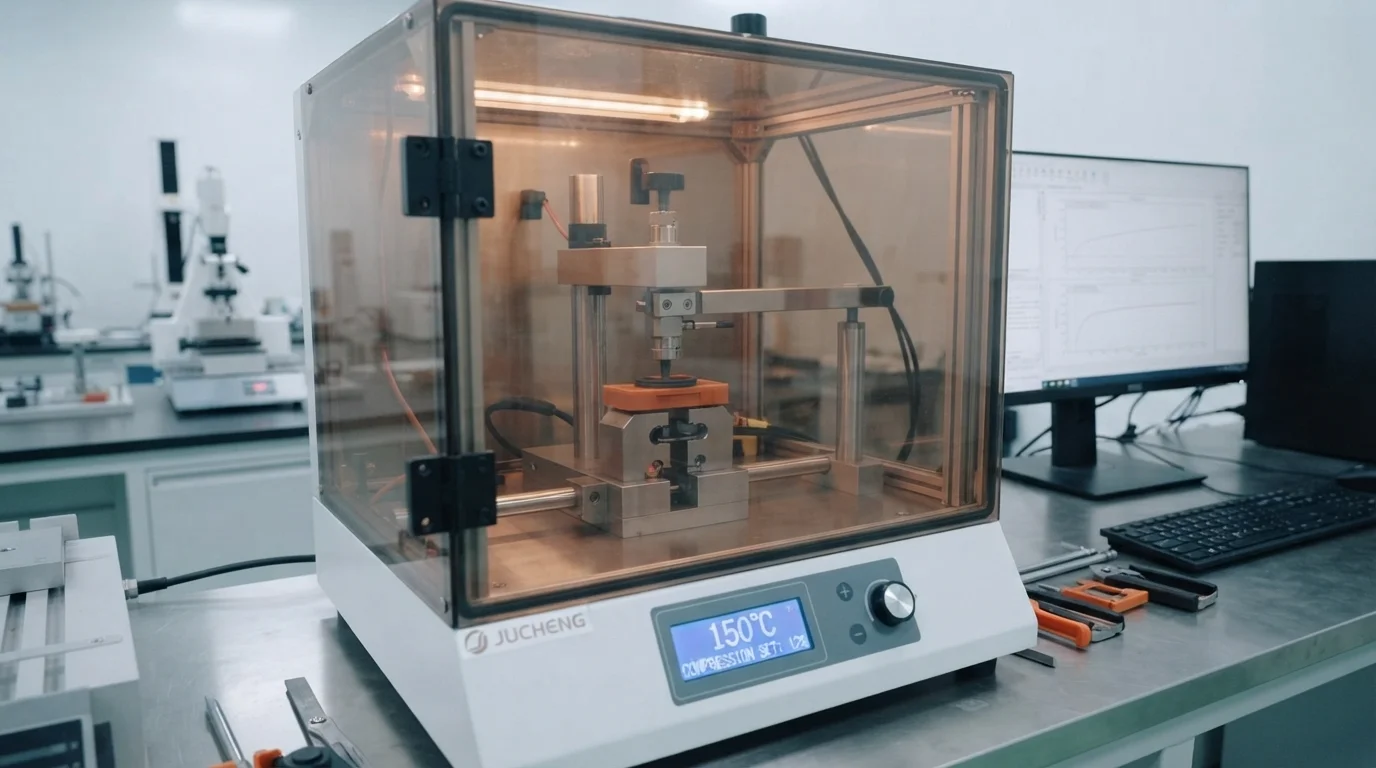
電気自動車(EV)バッテリーパックで気密シールの信頼性を達成することは、従来の熱硬化性ゴムを使用するのではなく、 カスタム成形熱可塑性加硫ゴムTPVバッテリーガスケット に大きく依存しています。EPDMは数十年にわたり工業用シールの業界標準でした。しかし、EPDMの加工には金型内での長い硬化サイクルが必要であり、生産スループットが制限されます。長期的な性能指標を比較すると、現代の自動化されたパック設計において、 カスタム成形熱可塑性加硫ゴムTPVバッテリーガスケット が従来のEPDMシールよりも優れている理由が証明されます。.
TPVは、熱可塑性プラスチックの加工の容易さと、加硫ゴムの弾性回復を兼ね備えています。EPDMに対するSantoprene TPVの主な性能上の利点は次のとおりです。
- 圧縮永久歪み—TPVは継続的な構造荷重下でも弾性回復を維持し、長期間の車両寿命にわたってシールギャップの形成を防ぎます。.
- 加工速度—熱可塑性プラスチックのサイクルタイムは、硬化に依存する熱硬化性EPDMよりも最大10倍速く、1日あたりの生産量を最大化します。.
- Chemical compatibility—Santoprene grades resist swelling when exposed to glycol-water coolants used in high-voltage thermal systems.
- Recyclability—Scrap material can be re-ground and processed, reducing environmental footprint and manufacturing waste.
Eliminating cure times allows processing engineers to optimize cycle times down to 30 to 45 seconds. Thermoset rubbers can require several minutes per shot, inflating tooling and machinery costs. Consequently, choosing high-performance elastomers reduces non-recurring engineering expenses.
Two-Shot molding & Overmolding of Custom TPV Gaskets
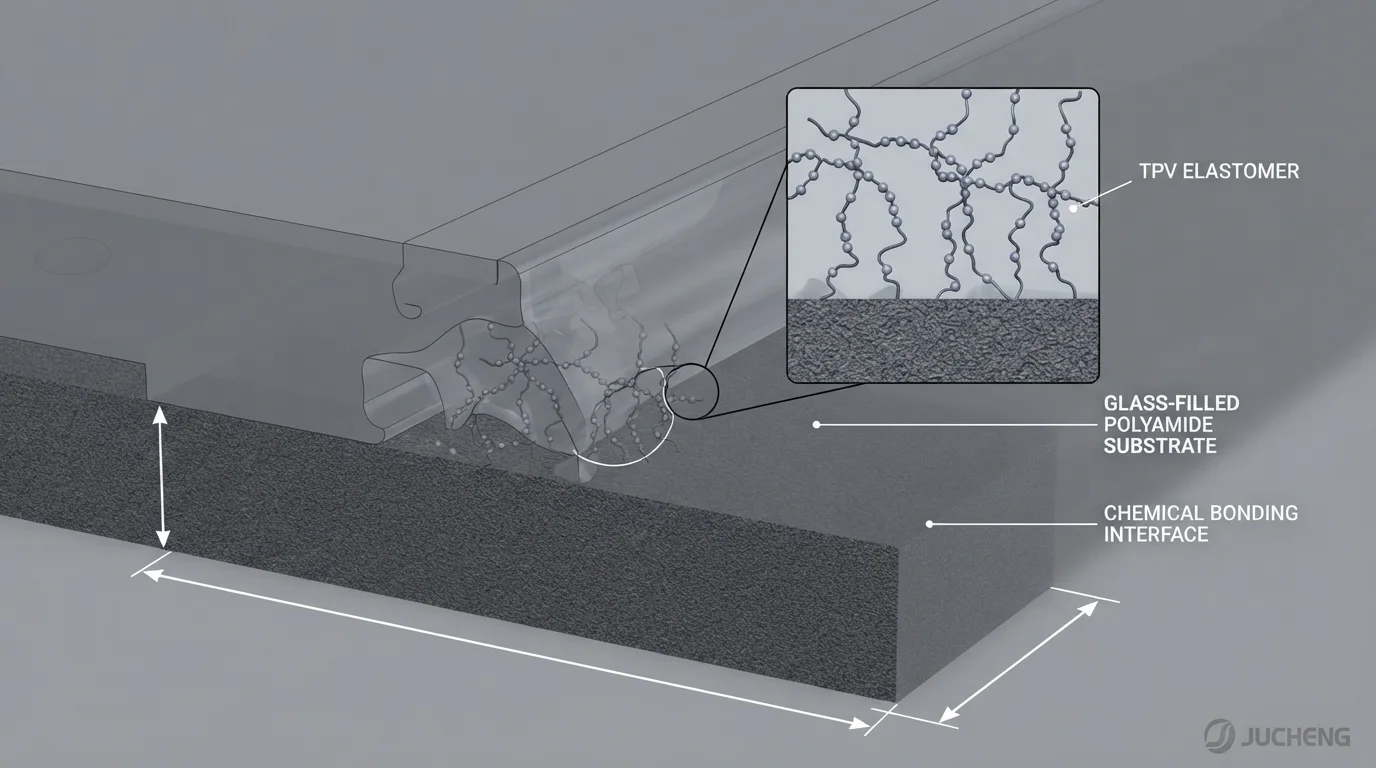
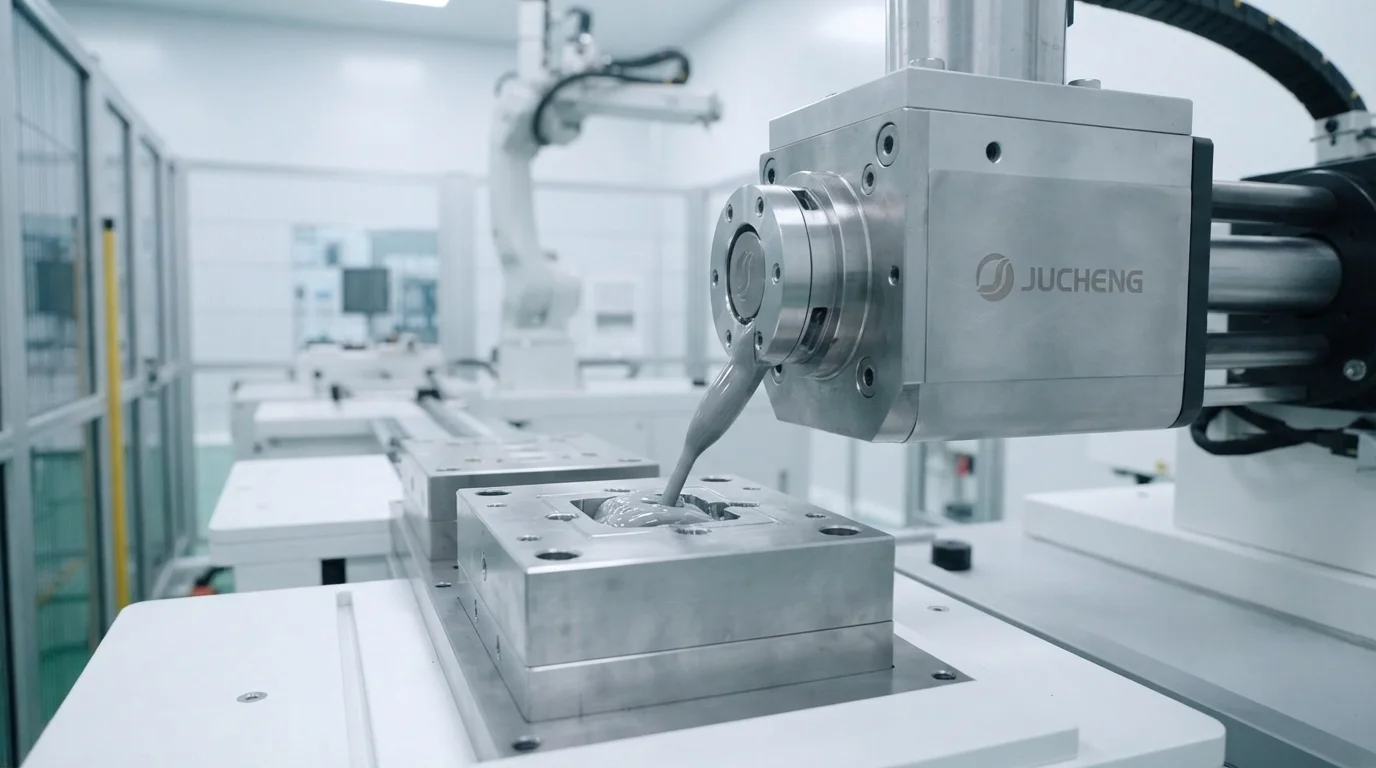
Implementing カスタム成形熱可塑性加硫ゴムTPVバッテリーガスケット via two-shot injection molding eliminates manual gasket insertion. Manual assembly often introduces alignment errors, localized seal twisting, or adhesive failures. Multi-shot injection molding (2K molding) injects the rigid housing substrate and the elastomeric seal concurrently inside a single mold tool. During the first injection shot, the machine molds the rigid frame from glass-filled polyamide or PC/ABS. Once the substrate solidifies, the mold platen rotates, and the second shot injects TPV directly into the sealing groove.
Because both materials are molded in rapid succession, a molecular bond forms at the interface. This chemical adhesion prevents the gasket from peeling or shifting during high-pressure pack assembly. Achieving a robust bond requires precise control over processing parameters:
- Substrate temperature control—Maintaining the rigid housing substrate above its glass transition temperature ensures that TPV chains can interdiffuse at the interface.
- Rotary platen alignment—Rotating the mold core with sub-millimeter precision prevents mold shut-off mismatch, eliminating flashing.
- Interfacial bonding speed—Injecting TPV immediately after the substrate solidifies creates a cohesive interface weld.
- Shut-off seal pressure—Clamping the elastomer mold faces with sufficient pressure prevents the low-viscosity TPV melt from spilling.
Applying high-precision カスタム成形熱可塑性加硫ゴムTPVバッテリーガスケット ensures that our カスタムEV用プラスチックバッテリーハウジング achieve IP67 environmental sealing to pass testing. By combining precision tooling with IATF 16949-certified quality systems, JUCHENG delivers a reliable manufacturing path. Our engineering group provides comprehensive DfM reviews within 24 hours to optimize your structural component designs.
よくある質問(FAQ)
What is the typical compression set recovery of TPV at elevated temperatures?
TPV grades like Santoprene exhibit excellent compression set resistance, typically retaining over 75% of their elastic recovery after continuous exposure to 100°C. Thermoset EPDM behaves similarly, but TPV achieves this physical recovery without requiring chemical vulcanization cycles inside the injection tool. This permanent elasticity prevents the seal from relaxing over years of vehicular operation, maintaining robust ingress protection.
How do you achieve strong chemical adhesion between TPV and polyamide substrates?
Selecting the correct adhesion-modified TPV grade is critical to ensure compatibility with polar substrates like glass-filled nylon. Regular TPV does not bond chemically with polyamide without a primer or adhesive. Using specialized overmolding TPV grades allows polymer chains to interdiffuse at the melt interface during the second shot, creating a covalent bond that prevents peeling. Mold temperature control also plays a key role, as warm tool faces facilitate chain mobility.
Can overmolded TPV gaskets survive high-pressure water jet washes (IP69K)?
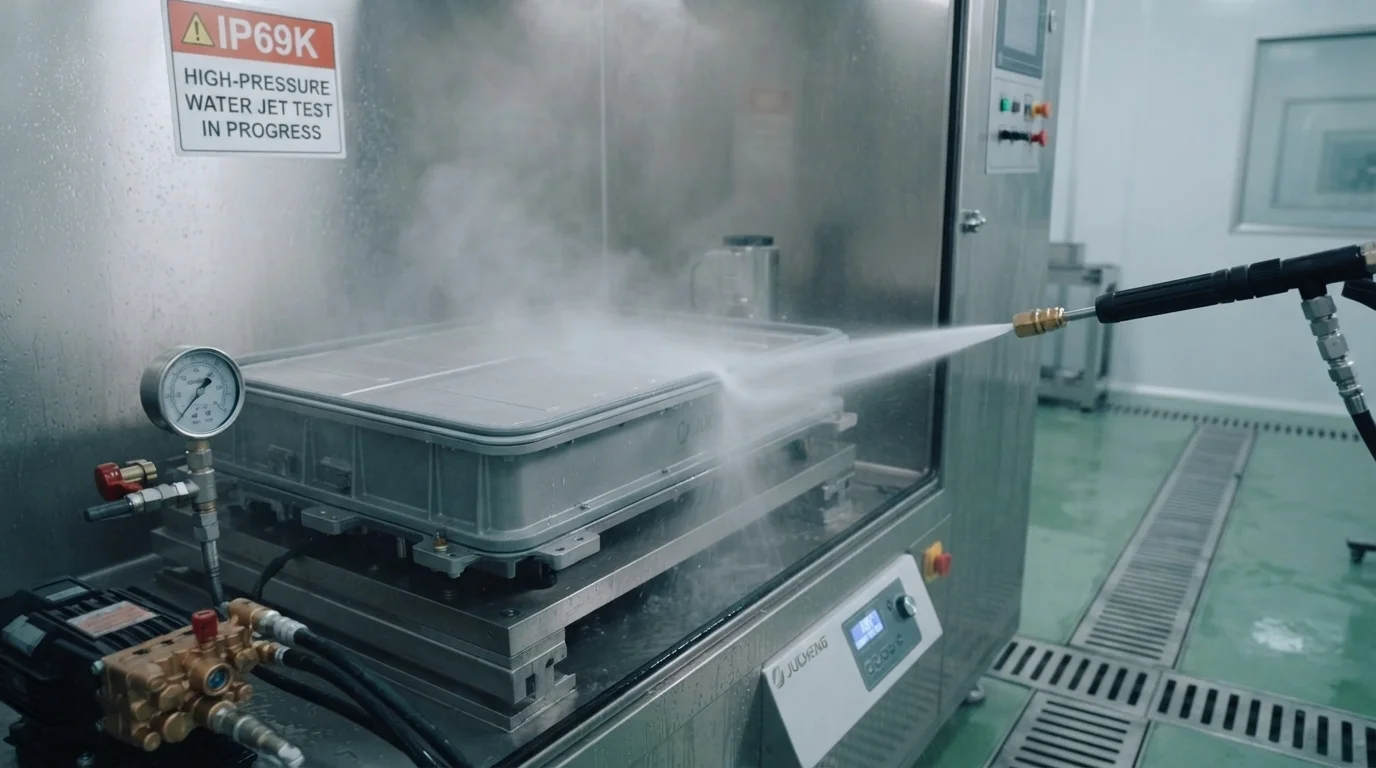
Overmolded gaskets resist high-pressure water jets because they are physically locked inside precision-molded tongue-and-groove channels. Hand-applied foam or adhesive seals can peel off under dynamic water pressures, but overmolded elastomeric boundaries remain securely bonded. Designing deep mechanical interlocking features inside the rigid carrier further enhances the physical retention of the gasket, ensuring survival under IP69K test protocols.