
Electric vehicle (EV) manufacturers face continuous pressure to reduce chassis weight to extend driving ranges.
Replacing heavy aluminum structural parts with glass-fiber reinforced engineering polymers represents a major lightweighting milestone.
This technical blog reviews fiber orientation physics, high-tonnage tooling configurations, and polymer shrinkage controls necessary to mold reliable structural trays.
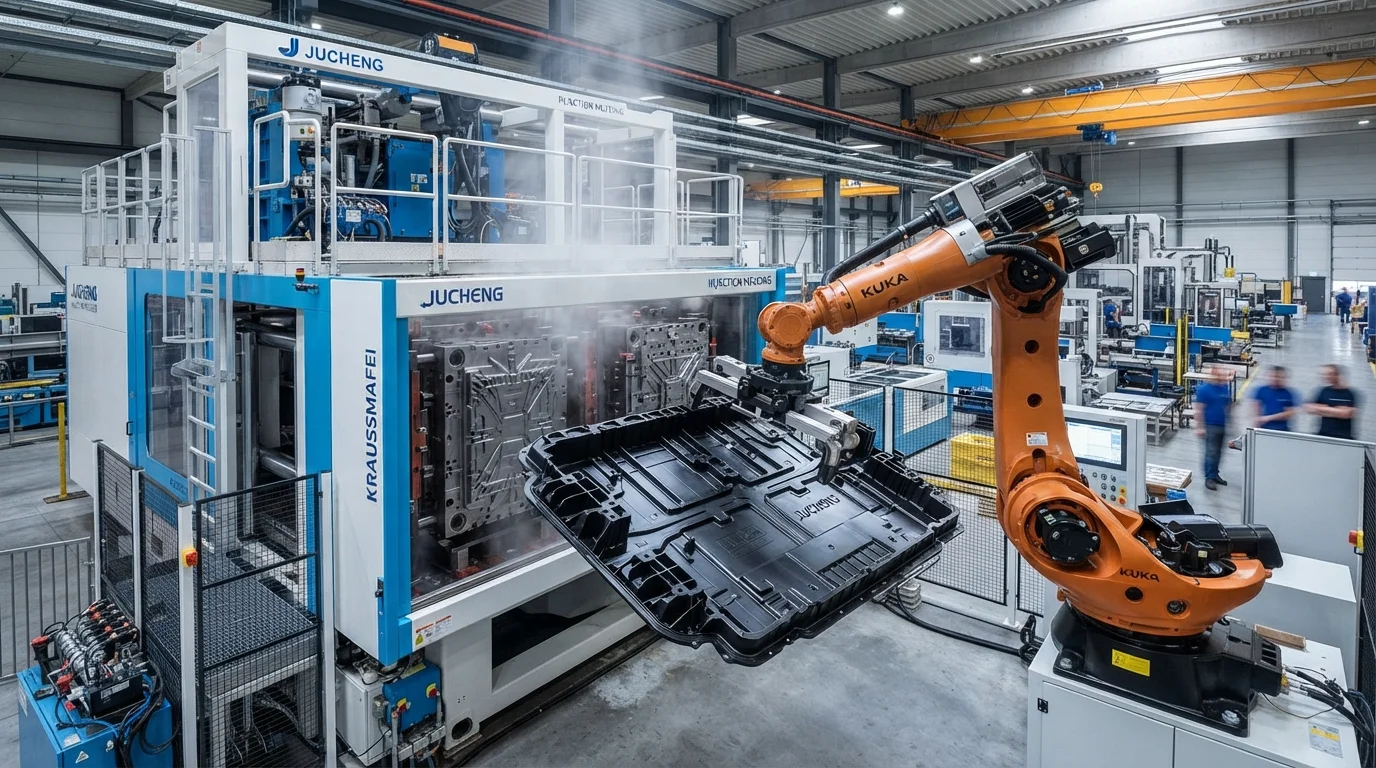
Table of Contents
- 1. Metal-Replacement Physics: Why PA6-GF50 Cuts 10kg from EV Battery Trays
- 2. Solving Anisotropic Shrinkage and Flow-Induced Warpage
- 3. Preventing Fiber Shearing and Screw Wear During High-Pressure Molding
- 4. Mastering Large-Format Tooling on 500T to 650T High-Tonnage Presses
- 5. Managing Moisture Absorption and Dimensional Growth in Polyamides
Metal-Replacement Physics: Why PA6-GF50 Cuts 10kg from EV Battery Trays
Transitioning to high-performance polymers allows automotive structures to undergo metal-replacement design.
Specifically, utilizing glass fiber reinforced polyamide battery trays manufacturing provides a lightweight foundation that saves up to 10 kilograms per vehicle.
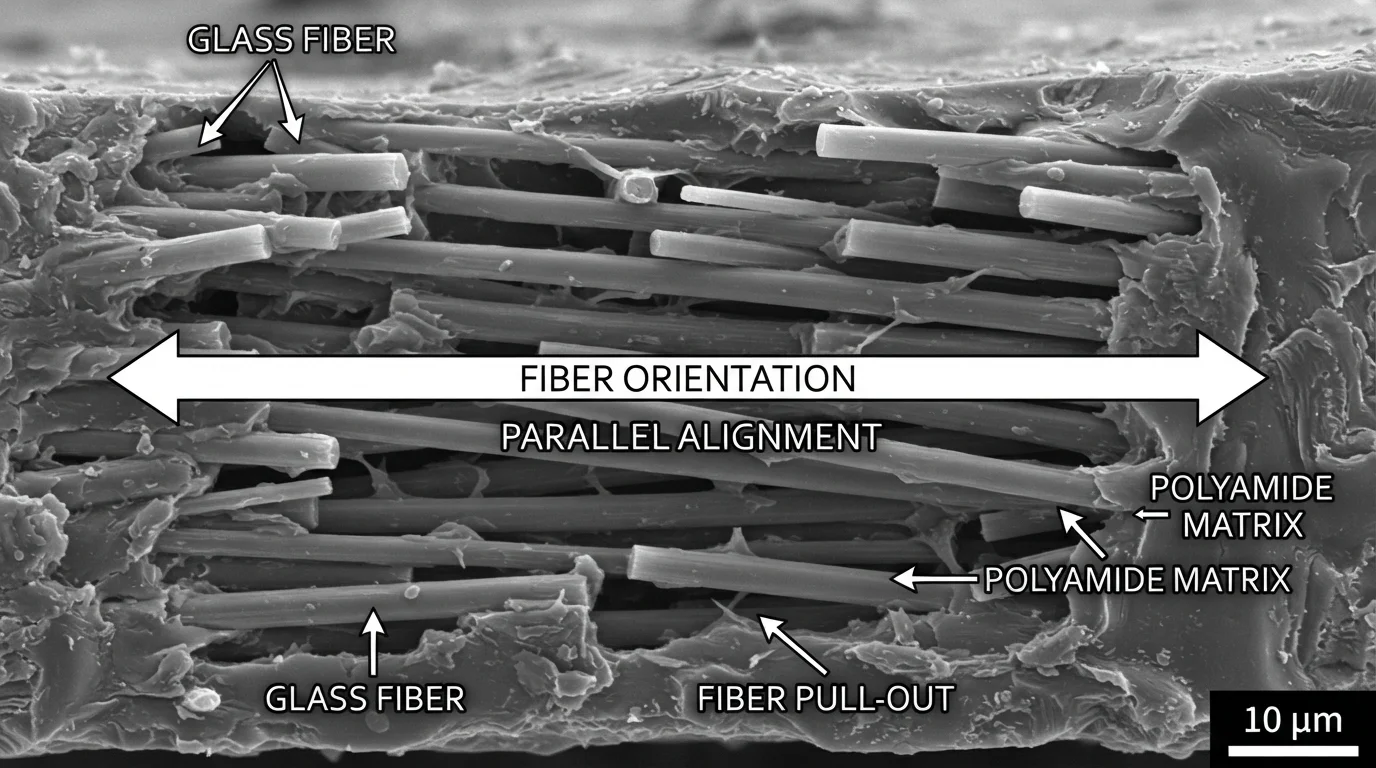
Using polyamides (PA6 or PA66) filled with 50% glass fibers achieves mechanical properties comparable to die-cast aluminum.
These highly reinforced engineering polymers provide exceptional tensile strength and modulus, which are crucial for holding heavy cell stacks safely.
Consequently, components molded from these compounds resist dynamic vehicular loads without buckling.
Key performance metrics for glass-filled polyamide formulations include:
- Tensile modulus—Highly reinforced 50% glass-filled grades achieve a modulus of over 15,000 MPa, mimicking die-cast aluminum.
- Impact energy absorption—Polyamide composites absorb significant impact energy during dynamic side collisions, protecting cell integrity.
- Chemical resistance—Polyamide resists automotive coolants and electrolyte fluids under elevated operating temperatures.
Solving Anisotropic Shrinkage and Flow-Induced Warpage
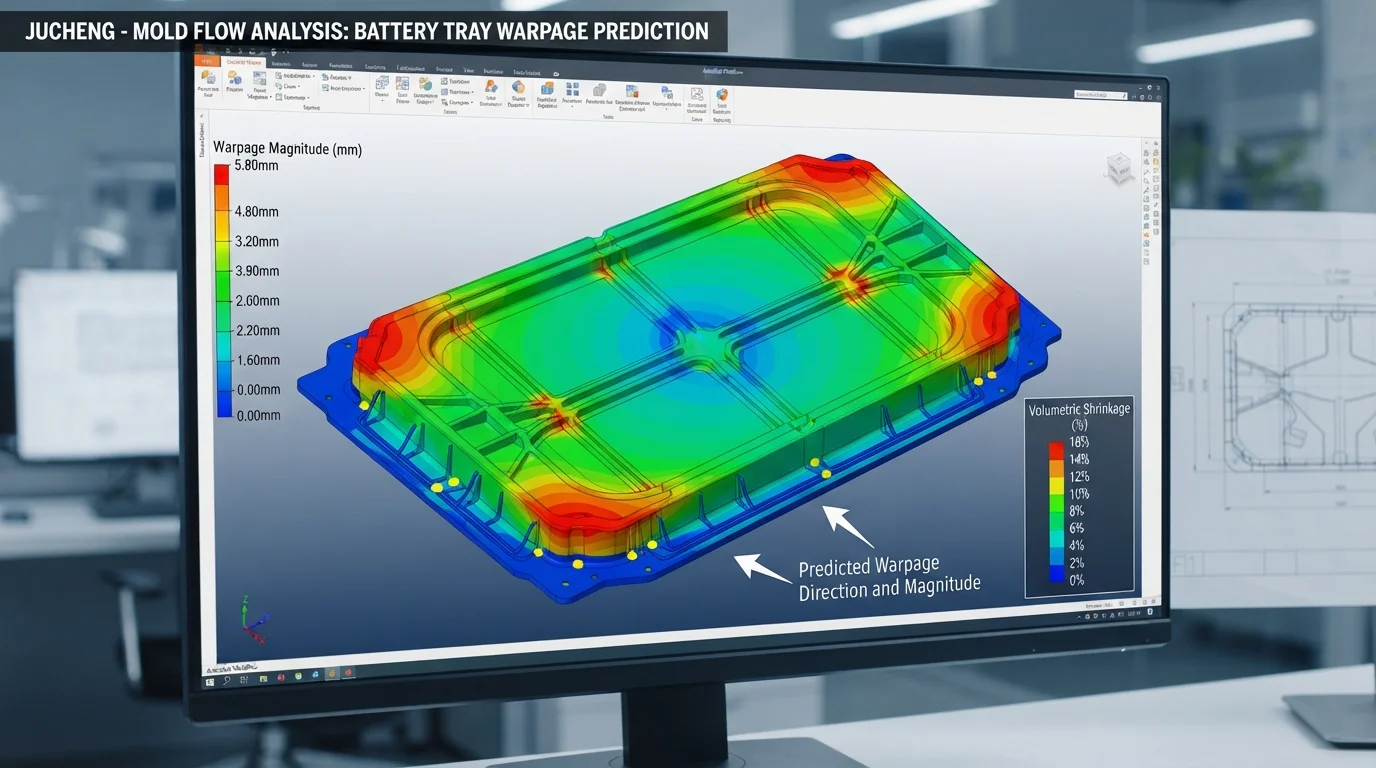
Controlling warpage in glass fiber reinforced polyamide battery trays manufacturing requires detailed flow analysis.
Glass fibers align parallel to the melt flow path as the plastic enters the mold cavity.
This directional alignment causes anisotropic shrinkage, where the part shrinks far less along the flow direction than across it.
Tooling engineers utilize balanced multi-point hot runner gates to distribute the melt front symmetrically.
Symmetric filling balances fiber orientation, neutralizing internal stresses that cause post-mold twisting.
Designing structural ribs with uniform thickness ratios also limits differential cooling across the tray floor.
Preventing Fiber Shearing and Screw Wear During High-Pressure Molding
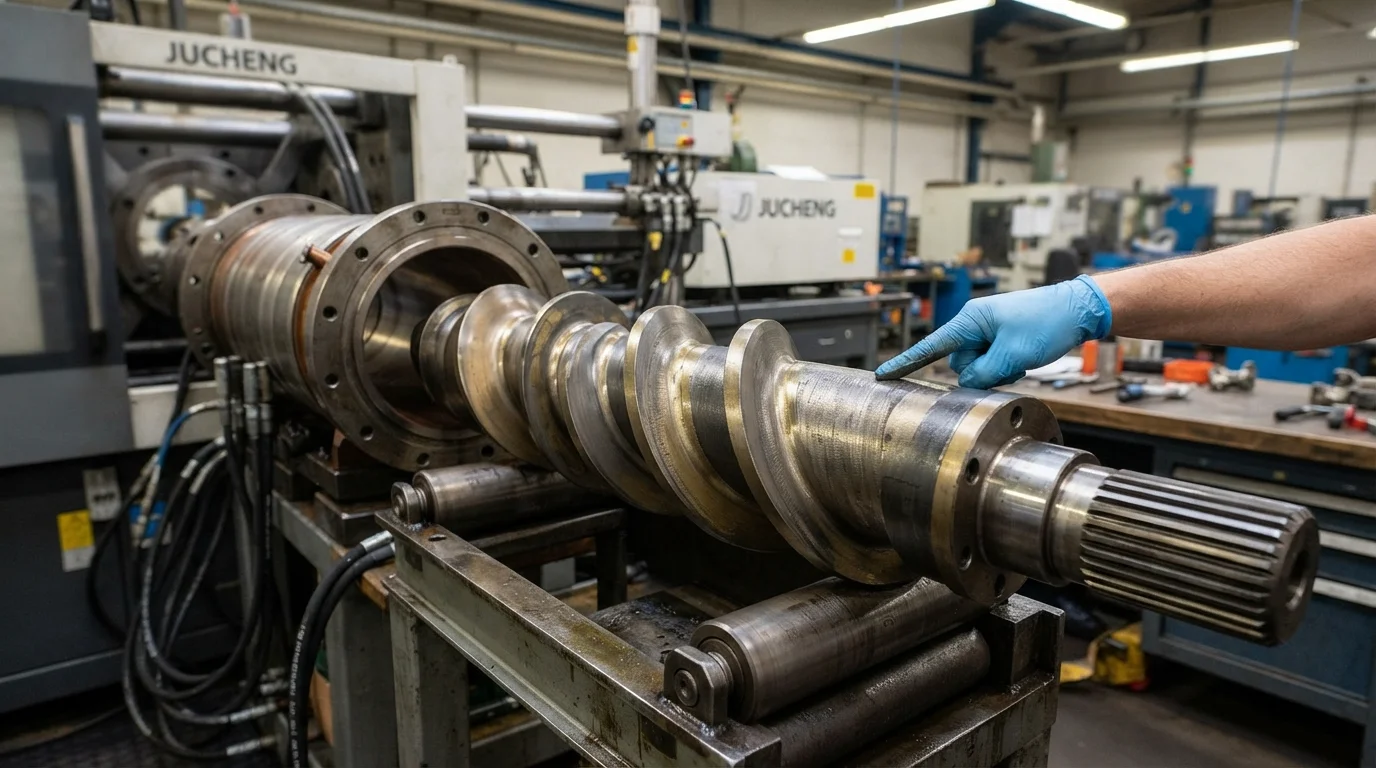
Preventing fiber breakage during glass fiber reinforced polyamide battery trays manufacturing is vital to retain mechanical strength.
High screw rotational speeds and aggressive pack pressures physically chop the short glass fibers, reducing their aspect ratio.
Shorter fibers fail to distribute mechanical loads efficiently, reducing the tensile limit of the molded tray.
To protect fiber length, our processing engineers maintain low backpressure and limit screw speed during plasticization.
Furthermore, processing highly abrasive glass-filled materials requires using bimetallic barrels and hardened screws to prevent rapid machine wear.
This machinery safeguard maintains precise clearances between screw flights, preserving shot-weight repeatability over long production runs.
Mastering Large-Format Tooling on 500T to 650T High-Tonnage Presses
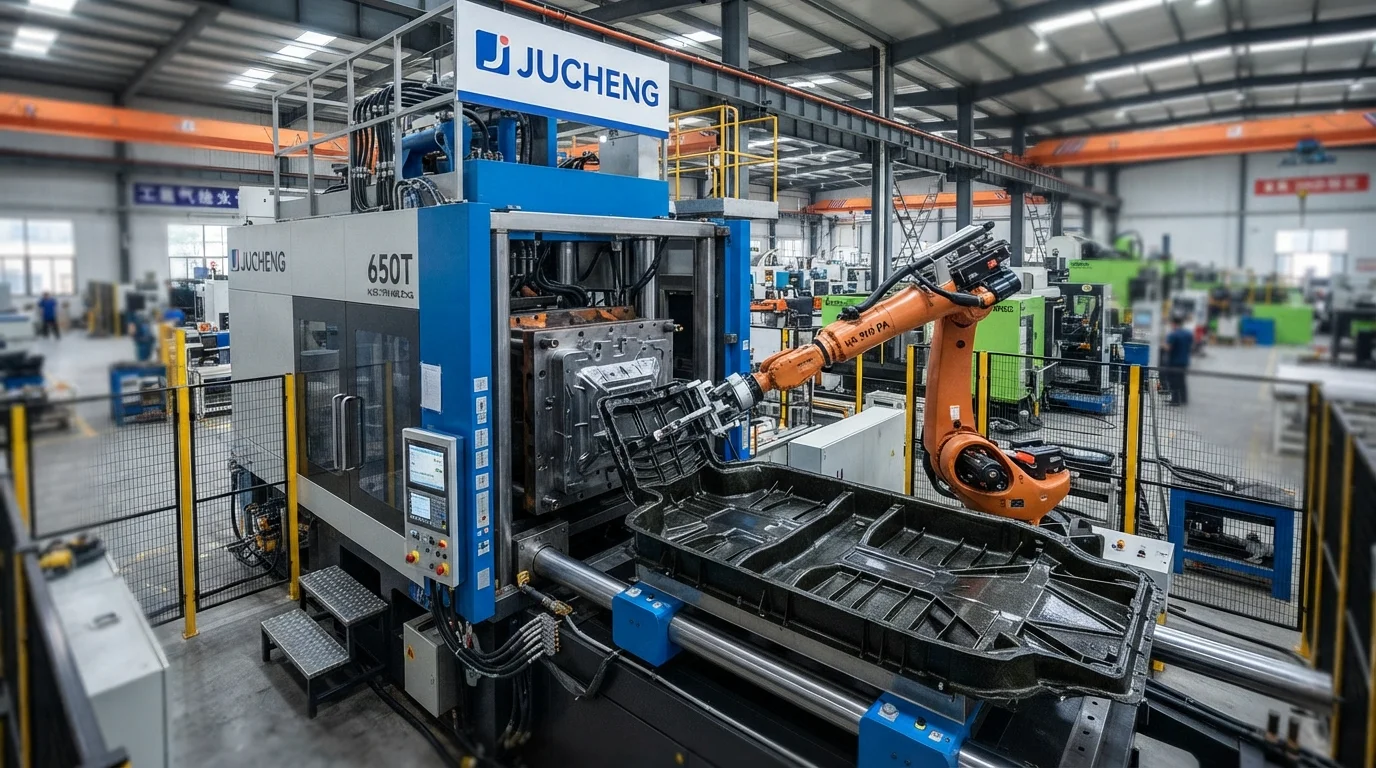
Molding large-format battery trays requires massive clamping forces to prevent parting line flash.
JUCHENG Injection Molding operates a fleet of heavy-duty horizontal presses ranging from 500T to 650T of clamping force.
These automated machines deliver the hydraulic pressure needed to hold complex mold halves shut under extreme injection pressures.
Our expertise in glass fiber reinforced polyamide battery trays manufacturing provides a lightweight structural foundation for larger custom plastic battery housings for EV.
By combining precision tooling with IATF 16949-certified quality systems, JUCHENG offers reliable manufacturing solutions.
Our team provides comprehensive DfM reviews within 24 hours to optimize your structural component designs.
Managing Moisture Absorption and Dimensional Growth in Polyamides
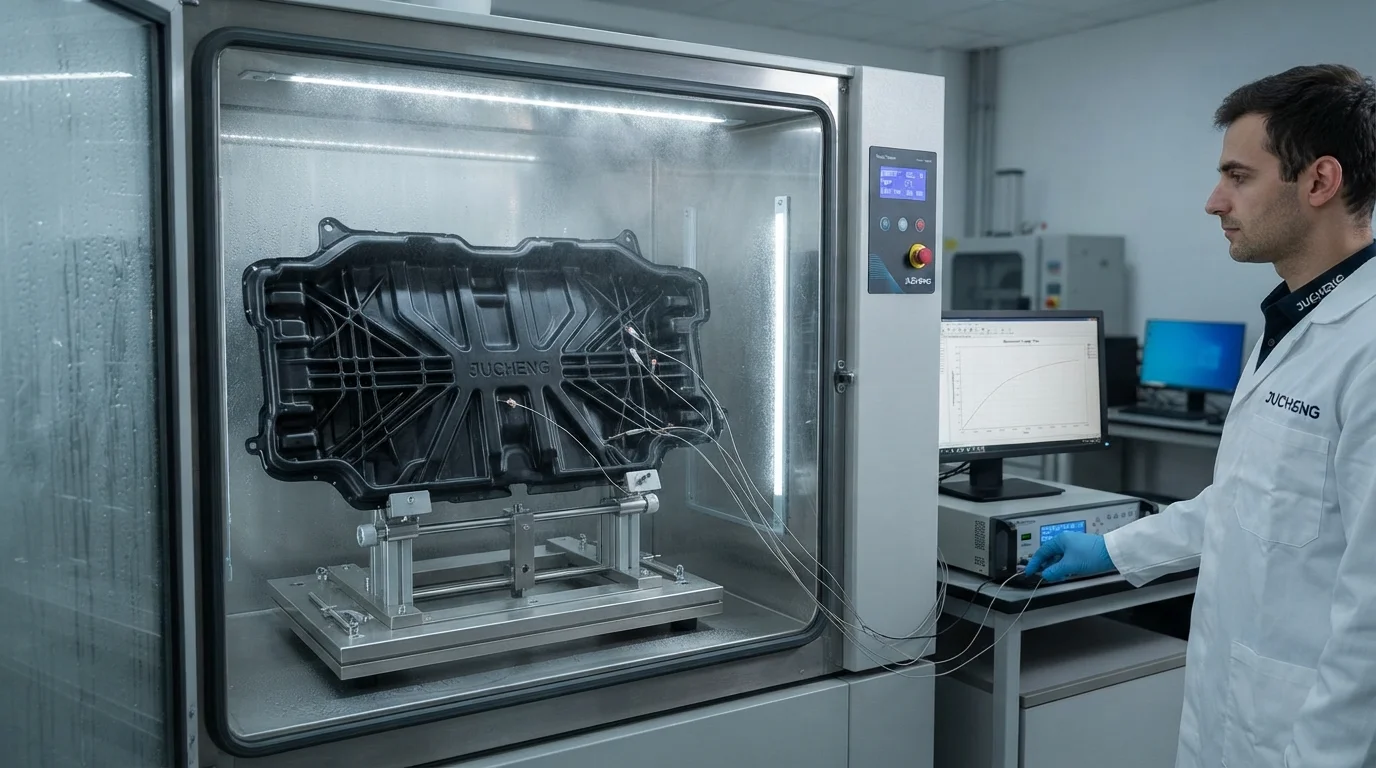
Polyamides are polar polymers that naturally absorb moisture from the surrounding environment.
Absorbing moisture acts as a plasticizer, increasing ductility but slightly reducing tensile strength and increasing part dimensions.
We account for this dimensional growth during the mold design stage, adjusting core cavity dimensions accordingly.
Pre-drying the resin pellets to below 0.05% moisture content prior to molding remains a mandatory quality gate.
Wet resin undergoes hydrolytic degradation during melting, resulting in brittle parts and cosmetic defects like silver splay.
Our material preparation procedures include continuous dew-point monitoring to ensure absolute dryness.
Frequently Asked Questions (FAQ)
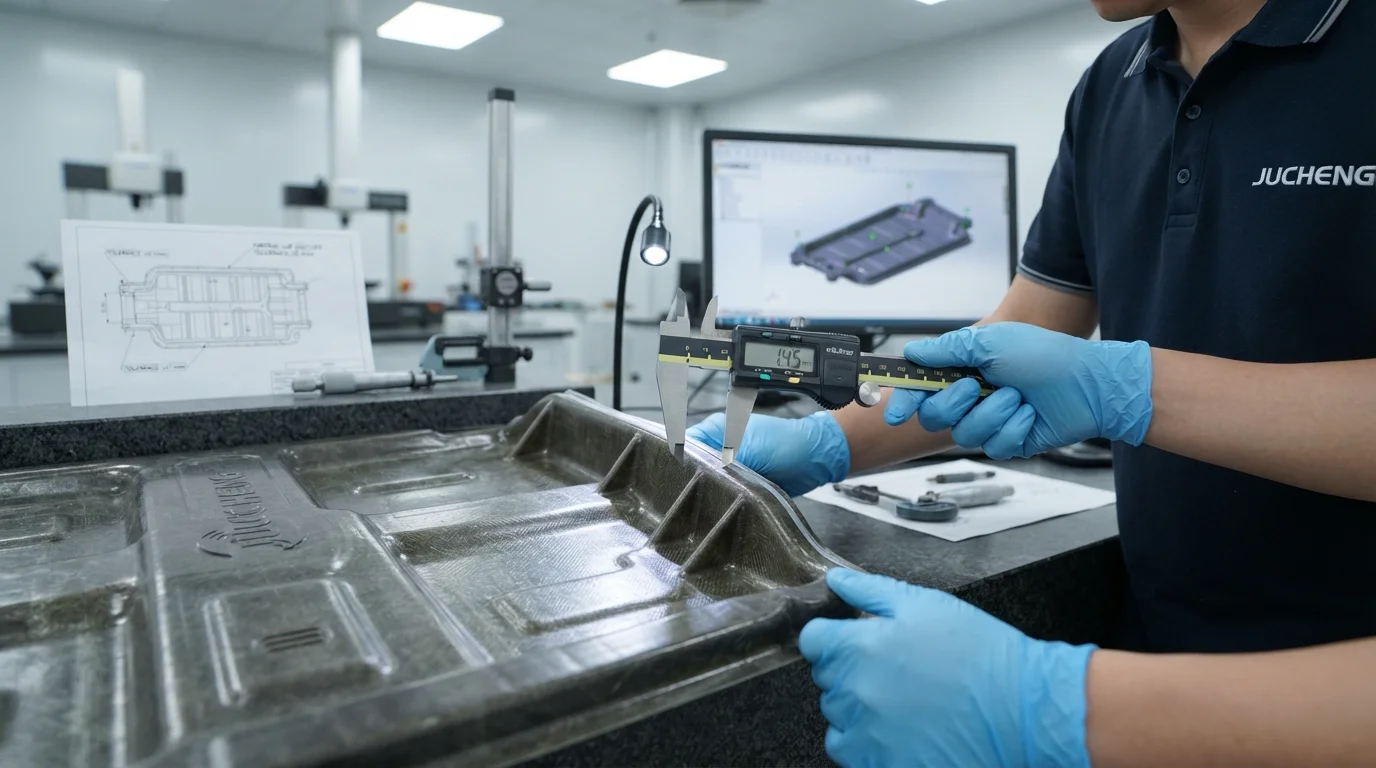
How does glass fiber loading affect the shrinkage rate of polyamide?
Increasing glass fiber loading significantly reduces shrinkage parallel to the flow direction while leaving cross-flow shrinkage relatively unchanged. For example, unfilled polyamide shrinks at approximately 1.5%, while a 30% glass-filled compound shrinks at just 0.3% along the flow path. This substantial difference must be modeled during DfM to prevent dimensional warpage.
Why is bimetallic machinery wear a concern when molding glass-filled nylon?
Glass fibers are highly abrasive and cause rapid erosion on standard steel screws and barrels. This abrasive wear increases the clearance between the screw flights and barrel wall, leading to melt slippage and inconsistent injection shots. Utilizing bimetallic barrels and carbide-coated screws is mandatory to preserve molding repeatability over high-volume runs.
Can large structural trays be molded with zero flash without high clamping forces?
Molding large-format parts with thin walls requires high injection pressures to pack the cavities, which inevitably forces the mold halves apart. Without sufficient clamping force, molten plastic escapes along the parting line, creating flash. Operating heavy presses with over 500 tons of clamping force is essential to maintain tight shut-offs.