
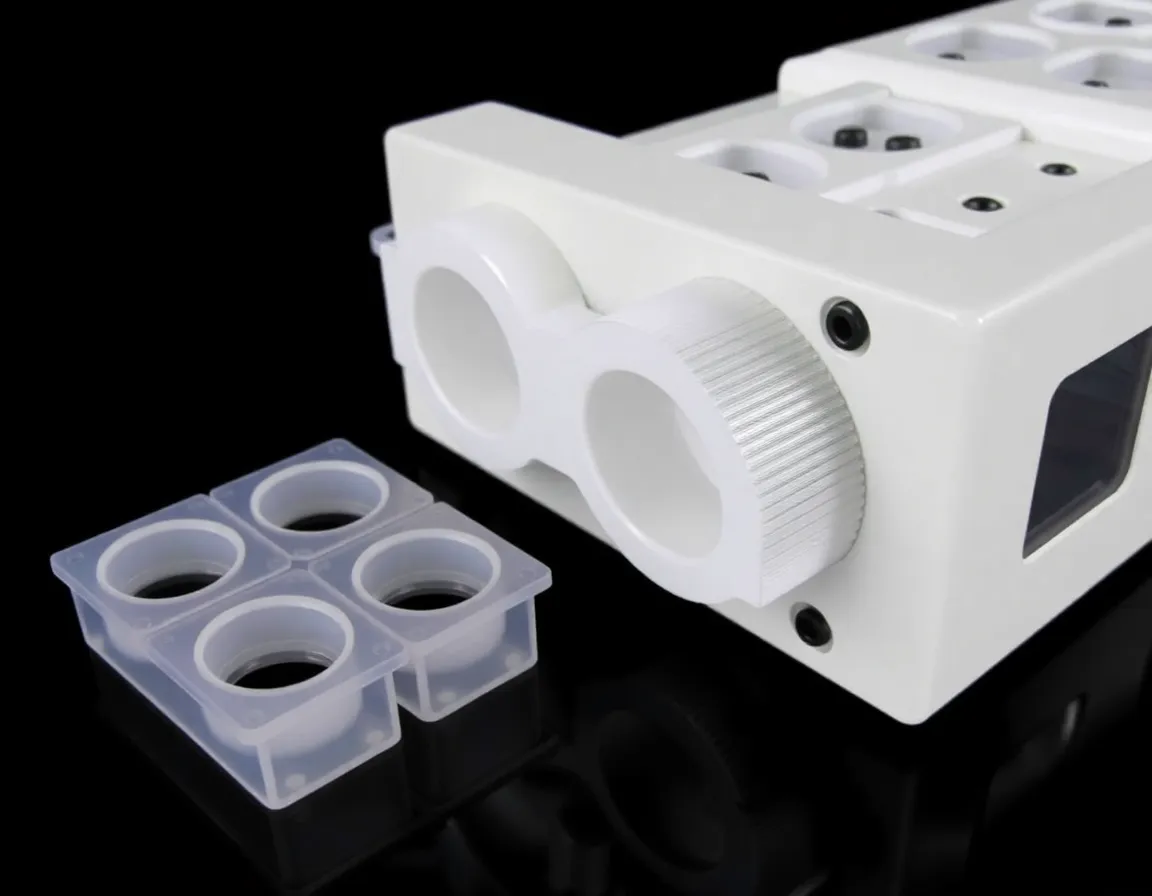
Plastic injection molding is one of the most versatile and widely used manufacturing processes in the world. From automotive components and medical devices to consumer electronics and packaging, millions of precision parts are produced every day through this method. Yet for buyers, achieving accurate plastic injection molding is not as simple as sending a 3D file to a supplier and waiting for parts to arrive. Accuracy depends on a complex interplay of design, material selection, tooling quality, process control, and communication.
Whether you are sourcing your first injection-molded component or managing a high-volume production program, understanding the factors that influence precision will save you time, money, and countless revision cycles. This article breaks down the seven secrets every buyer should know before committing to a molding project.
What Is Accurate Plastic Injection Molding?
Accurate plastic injection molding refers to the ability of a molding process to consistently produce parts that match the intended design specifications within defined tolerances. Accuracy covers several dimensions:
- Dimensional accuracy: The part's length, width, thickness, and feature positions fall within the tolerance range.
- Repeatability: Every part in a production run is essentially identical to the next.
- Surface quality: The finish meets aesthetic and functional requirements without defects.
- Material integrity: The plastic retains its intended mechanical, thermal, and chemical properties.
In practice, "accurate" does not mean "perfect." Every manufacturing process has tolerances. What matters is that the tolerances are realistic, clearly specified, and consistently met. Buyers who understand this distinction avoid the trap of demanding impossible precision and then blaming the supplier when parts fail inspection.
How the Injection Molding Process Works
Before diving into the secrets, it helps to understand the basic workflow. Injection molding involves several stages:
- Clamping: The two halves of the mold are pressed together under high pressure.
- Injection: Molten plastic is injected into the mold cavity through a sprue and runner system.
- Packing and holding: Additional pressure is applied to compensate for material shrinkage as the plastic cools.
- Cooling: The part solidifies inside the mold. Cooling time often represents the largest portion of the cycle.
- Ejection: The mold opens, and ejector pins push the finished part out.
Each stage introduces variables that affect accuracy. Temperature fluctuations, injection speed, pressure settings, and cooling uniformity can all shift dimensions by fractions of a millimeter. Controlling these variables is where the real expertise lies.
Secret 1: Design for Manufacturability From Day One
The single biggest driver of accurate molding is the part design itself. No amount of process tuning can fully compensate for a design that ignores molding fundamentals.
Wall Thickness Consistency
Uneven wall thickness causes differential cooling, which leads to warping, sink marks, and dimensional drift. Aim for uniform walls, and where thickness changes are unavoidable, transition gradually rather than abruptly.
Draft Angles
Vertical walls make ejection difficult and can cause scuffing or drag marks. A minimum draft of 1 to 2 degrees per side is standard, with more required for textured surfaces.
Ribs, Bosses, and Radii
Structural features should be designed with proper radii and thickness ratios. Ribs that are too thick relative to the main wall create sink marks; bosses without gussets may crack under load.
Buyers should insist on a design-for-manufacturability (DFM) review before tooling begins. A reputable supplier will flag potential issues early, when changes are cheap, rather than after the mold is cut.
Secret 2: Material Selection Drives Dimensional Stability
Different plastics behave very differently during and after molding. Semicrystalline materials like polypropylene and nylon shrink significantly and anisotropically, meaning shrinkage varies by direction. Amorphous materials like ABS and polycarbonate shrink less and more uniformly.
Key considerations include:
- Shrinkage rate: Typically expressed as a range (e.g., 0.4–0.7 percent). The mold must be cut to compensate.
- Moisture absorption: Hygroscopic materials like nylon absorb water and swell, changing dimensions over time.
- Thermal expansion: Parts exposed to temperature swings may grow or contract in service.
- Filler content: Glass-filled resins shrink less but are more abrasive and anisotropic.
Buyers should confirm that the chosen material matches the application's functional requirements and that the molder has experience processing it. A material that works beautifully in a brochure may be a nightmare on the production floor.
Secret 3: Tooling Quality Determines Long-Term Accuracy
The mold is the heart of the process. A poorly built tool will produce inconsistent parts regardless of how skilled the operator is.
Steel Selection and Machining Tolerance
Production molds are typically cut from hardened tool steel, while prototype molds may use aluminum or softer metals. The steel grade affects wear resistance, polishability, and thermal conductivity. Cavity dimensions must be machined to tolerances tighter than the final part tolerance, because the process adds variation on top.
Cooling Channel Design
Uniform cooling is essential for dimensional consistency. Conformal cooling channels, made possible by additive manufacturing, can follow the part contour and dramatically reduce cycle time and warpage. Buyers working on complex geometries should ask whether conformal cooling is feasible.
Maintenance and Lifespan
Molds wear. Ejector pins bend, gates erode, and surfaces scratch. A documented maintenance schedule keeps dimensions stable over hundreds of thousands of cycles. Buyers should request maintenance records when evaluating a supplier's track record.
Secret 4: Process Control Beats Guesswork
Once the mold and material are set, accuracy depends on process discipline. Modern injection molding machines are equipped with sensors and closed-loop controls that adjust injection pressure, speed, and hold time in real time.
Critical parameters include:
- Melt temperature: Too low causes short shots; too high degrades the polymer.
- Injection pressure and speed: Affects fill patterns and molecular orientation.
- Holding pressure and time: Compensates for shrinkage during cooling.
- Cooling time: Must be long enough to prevent ejection deformation.
- Clamp force: Prevents flash while allowing proper venting.
Scientific molding methodologies, such as Design of Experiments (DOE) and gate freeze studies, help establish a robust process window. Buyers should ask suppliers whether they use these techniques or rely on operator intuition. The difference shows up in part-to-part consistency.
Secret 5: Tolerances Must Be Realistic and Clearly Communicated
One of the most common sources of friction between buyers and molders is tolerance mismatch. A drawing that specifies plus or minus 0.05 mm on every dimension is likely to generate costly scrap and endless debates.
Best practices for tolerance communication:
- Reference recognized standards such as ISO 2768 or SPI tolerance guidelines.
- Apply tight tolerances only to features that truly matter for fit or function.
- Allow looser tolerances on cosmetic or non-critical dimensions.
- Specify datum surfaces so measurements are repeatable.
- Clarify whether tolerances apply before or after any secondary operations.
Buyers who take the time to define tolerances thoughtfully get better quotes, fewer rejections, and more reliable supply.
Secret 6: Inspection and Quality Systems Close the Loop
Accuracy cannot be verified without measurement. A robust quality system includes incoming material checks, in-process monitoring, and final inspection.
Measurement Tools
Calipers and micrometers are fine for basic checks, but precision parts often require coordinate measuring machines (CMMs), optical comparators, or vision systems. Suppliers serving medical, aerospace, or automotive markets typically have these tools in-house.
Statistical Process Control
SPC uses control charts to track dimensions over time. When a trend appears, operators can adjust before parts go out of specification. Buyers should request SPC data on critical dimensions, not just a pass/fail report.
First Article Inspection
An FAI compares the first production parts against the drawing in detail. It is a critical milestone before full production release and should be documented with a formal report.
Secret 7: Communication and Partnership Matter More Than Price
The final secret is not technical at all. Accurate injection molding is a collaborative effort. Suppliers who understand your application, your quality expectations, and your timeline will make better decisions at every stage.
Signs of a strong partner include:
- Early engagement during design, not just at the quoting stage.
- Transparent communication about risks, lead times, and cost drivers.
- Willingness to share process data and inspection results.
- Responsiveness when issues arise, with corrective action rather than excuses.
Choosing a supplier solely on the lowest price often leads to hidden costs: rework, delays, and field failures. Buyers who invest in the relationship and treat the molder as an extension of their engineering team consistently achieve better results.
Applications Where Accuracy Is Critical
While all molding projects benefit from precision, some industries demand it:
- Medical devices: Syringes, diagnostic housings, and surgical instruments require tight tolerances and documented traceability.
- Automotive: Connectors, sensors, and under-hood components must withstand heat, vibration, and chemical exposure.
- Electronics: Housings and internal components must fit precisely to protect delicate circuitry.
- Aerospace: Lightweight structural parts demand consistent mechanical properties and dimensional control.
In each case, the seven secrets above apply. The stakes are simply higher, and the margin for error is smaller.
Final Thoughts
Accurate plastic injection molding is not a single action but the result of many decisions made correctly. Design, material, tooling, process control, tolerances, inspection, and partnership all contribute to the final outcome. Buyers who understand these levers can ask better questions, set realistic expectations, and build supply chains that deliver consistent quality.
Before your next molding project, review each secret against your current plans. Identify where you have gaps, and address them early. The effort you invest upfront will pay off in parts that fit, function, and perform exactly as intended.