
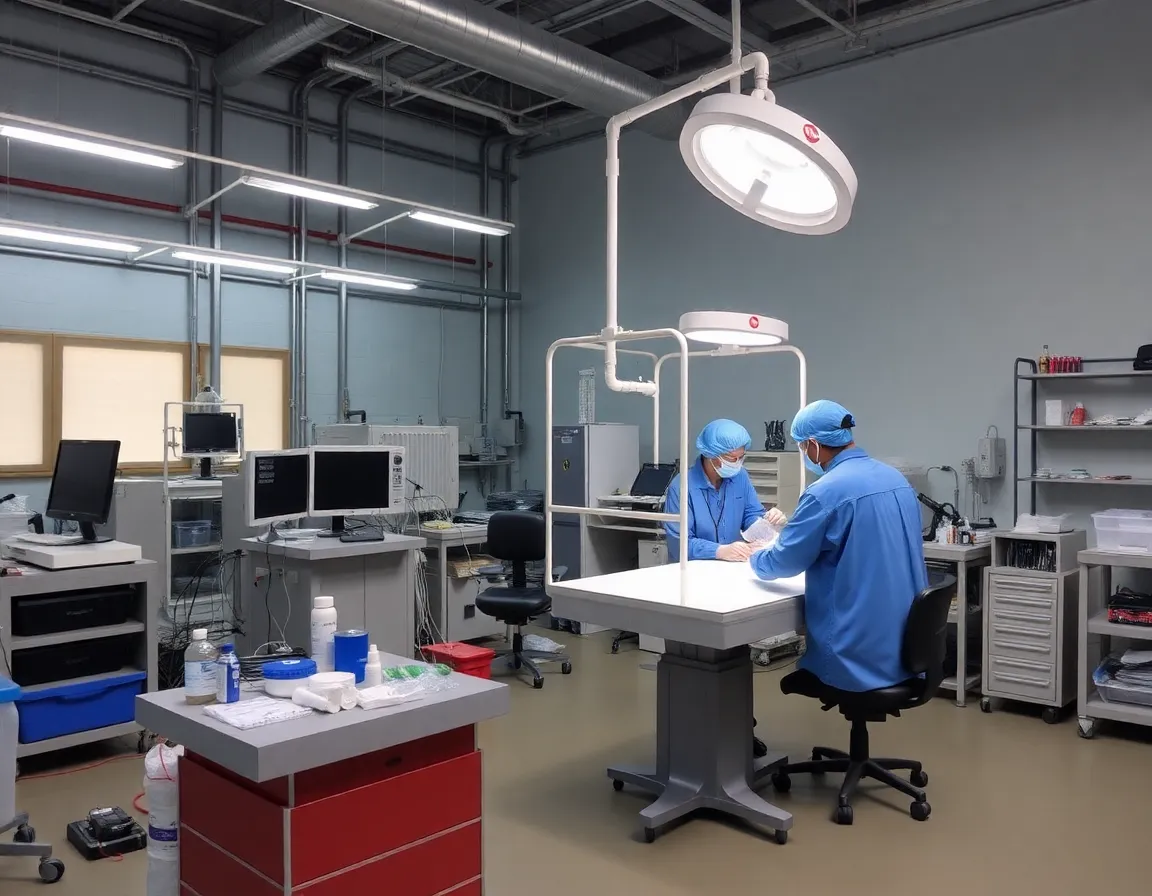
Введение: Основа современной стоматологии
Современная стоматологическая практика - это чудо точного машиностроения. От высокоскоростного наконечника, формирующего коронку, до цифрового сканера, создающего идеальный слепок, каждая процедура зависит от сложного взаимодействия специализированного оборудования. Для производителей и специалистов по техническому обслуживанию в стоматологической отрасли качество конечного продукта определяется только качеством поставщик компонентов для стоматологического оборудования с которыми они предпочитают работать. Надежный поиск компонентов - это не просто вопрос логистики; это критический фактор, определяющий безопасность пациентов, клиническую точность, долговечность оборудования и соответствие нормативным требованиям.
В отрасли, где единственный сбой может привести к нарушению процедуры или дорогостоящему простою, понимание того, какие компоненты требуют самого высокого уровня контроля при закупке, имеет важное значение. В этой статье рассматриваются пять основных компонентов стоматологического оборудования, которые должны поставляться надежным поставщик компонентов для стоматологического оборудования. We will explore what each component is, how it functions, why sourcing reliability is non-negotiable, and best practices for procurement.
1. High-Speed Handpiece Turbines and Bearings
What They Are and How They Work
The handpiece is the workhorse of any dental operatory. At its core lies the turbine assembly, which consists of a rotor, blades, and a set of miniature precision bearings. Compressed air drives the turbine, spinning the bur at speeds exceeding 400,000 RPM. This incredible rotational velocity allows for efficient cutting of enamel, dentin, and restorative materials. The bearings, often ceramic or stainless steel, are the critical components that enable this frictionless, high-speed rotation.
Why Reliable Sourcing is Critical
Handpiece bearings are subject to extreme stress. A bearing failure during a procedure can cause the bur to seize, generating intense heat that can damage the tooth pulp or even fracture the bur. Furthermore, a substandard bearing will quickly lose its lubrication, leading to excessive vibration, noise, and eventual catastrophic failure. A reputable поставщик компонентов для стоматологического оборудования provides bearings that meet exacting ISO standards for dimensional accuracy, material purity, and lubrication life. Sourcing counterfeit or inferior bearings can void warranties, increase repair costs, and create a significant patient safety risk.
Best Practices for Sourcing
- Demand Certifications: Always request material certifications (e.g., for ceramic grade or stainless steel composition) and bearing tolerance specifications.
- Verify Manufacturer Origin: Many high-quality bearings are manufactured in Switzerland, Germany, or Japan. Verify the supply chain to avoid re-labeled or counterfeit products.
- Test for Run-Out: Implement a quality control process to measure the radial and axial run-out of incoming bearing lots. Excessive run-out is a primary cause of handpiece vibration.
- Choose a Supplier with Technical Support: Надежный поставщик предоставит рекомендации по типам смазки и моменту затяжки при установке, которые напрямую влияют на срок службы подшипников.
2. Компоненты стоматологического компрессора (поршневые уплотнения и клапаны)
What They Are and How They Work
Стоматологический компрессор является сердцем воздушной системы кабинета, обеспечивая чистый, сухой и безмасляный сжатый воздух для наконечников, скейлеров и трехфункциональных шприцев. Ключевые компоненты компрессора включают поршневые уплотнения (или поршневые кольца) и впускные/выпускные клапаны. Поршневые уплотнения создают плотный барьер между поршнем и стенкой цилиндра, сжимая воздух. Клапаны контролируют впуск и выпуск воздуха, обеспечивая эффективную и стабильную подачу давления. В безмасляных компрессорах эти компоненты часто изготавливаются из современных полимеров, таких как PTFE или PEEK.
Why Reliable Sourcing is Critical
Отказ компрессора может остановить работу всей клиники. Изношенное поршневое уплотнение пропускает воздух мимо поршня, что резко снижает давление и заставляет компрессор работать непрерывно, что приводит к перегреву и выходу двигателя из строя. Аналогично, неисправный клапан может вызвать колебания давления, которые повреждают чувствительные турбины наконечников. Загрязненные или некачественные материалы уплотнений также могут выделять летучие органические соединения (ЛОС) в воздушный поток, что потенциально может вызвать раздражение дыхательных путей у пациентов. Надежный поставщик компонентов для стоматологического оборудования гарантирует, что уплотнения и клапаны изготовлены из медицинских, не выделяющих газов материалов, совместимых с конкретной моделью компрессора.
Best Practices for Sourcing
- Укажите класс материала: Настаивайте на материалах, соответствующих требованиям FDA для работы с воздухом и имеющих документально подтвержденные характеристики низкого износа.
- Запросите допуски на размеры: Уплотнения компрессора должны подходить с точностью до микрон. Поставщик должен предоставить подробные данные о размерах и продемонстрировать стабильное качество от партии к партии.
- Оцените данные о долговечности: Запросите данные испытаний, показывающие ожидаемое количество рабочих часов до отказа (например, от 5000 до 10000 часов для качественного уплотнения).
- Рассмотрите комплекты: Надежный поставщик часто предлагает полные ремонтные комплекты (уплотнения, клапаны, прокладки) для конкретных моделей компрессоров, что упрощает закупку и обеспечивает совместимость.
3. Приводы и гидравлические цилиндры стоматологических кресел
What They Are and How They Work
Стоматологические кресла — это сложное эргономичное оборудование, которое должно обеспечивать точное позиционирование как для комфорта пациента, так и для доступа врача. Основными компонентами, отвечающими за это движение, являются приводы и гидравлические цилиндры. Электрические линейные приводы используют двигатель и ходовой винт для плавного подъема, опускания и наклона кресла. Гидравлические цилиндры, часто встречающиеся в старых или тяжелых моделях, используют давление жидкости для достижения того же движения. Эти компоненты должны выдерживать значительные нагрузки (часто 300-500 фунтов), обеспечивая при этом бесшумную работу без вибраций.
Why Reliable Sourcing is Critical
A failed actuator or hydraulic cylinder during a procedure is a serious safety hazard. A sudden chair drop can injure a patient or disrupt a delicate surgical procedure. Furthermore, a leaking hydraulic cylinder can expose patients and staff to potentially irritating hydraulic fluid. Sourcing these components from a reputable поставщик компонентов для стоматологического оборудования is essential because they must meet rigorous safety standards (e.g., CE marking, UL listing). They must also be engineered for smooth motion without jerking, which requires high-quality seals, precision-machined pistons, and robust motor windings.
Best Practices for Sourcing
- Verify Safety Certifications: Ensure components have passed relevant safety tests for load capacity, emergency stop functionality, and leak resistance.
- Check for IP Ratings: Actuators in dental chairs may be exposed to saliva, disinfectants, and water. Look for components with IP54 or higher ingress protection ratings.
- Assess Cycle Life: Request data on the expected number of operational cycles (e.g., 50,000 to 100,000 cycles) before maintenance is required.
- Prioritize Customization: A good supplier can provide actuators with custom stroke lengths, mounting brackets, and feedback sensors (e.g., Hall effect sensors for position control).
4. Imaging Sensors and X-Ray Tubes
What They Are and How They Work
Digital radiography has revolutionized dental diagnostics. The two critical components here are the X-ray tube (in the intraoral or panoramic unit) and the digital sensor (CMOS or CCD). The X-ray tube generates a controlled beam of radiation that passes through the patient's oral structures. The digital sensor captures the attenuated radiation and converts it into an electronic signal, which is then processed into a high-resolution image. These components are highly specialized and require precise manufacturing to ensure image quality and patient safety.
Why Reliable Sourcing is Critical
An unreliable X-ray tube can produce inconsistent radiation output, leading to underexposed or overexposed images and potentially requiring repeated exposures (increasing patient radiation dose). A defective digital sensor can produce artifacts, dead pixels, or image noise, compromising diagnostic accuracy. Moreover, counterfeit or substandard X-ray tubes may lack proper shielding, posing radiation leakage risks. A certified поставщик компонентов для стоматологического оборудования will provide components that comply with stringent radiation safety regulations (e.g., FDA, IEC 60601) and offer guaranteed image resolution (e.g., 20 lp/mm for intraoral sensors).
Best Practices for Sourcing
- Require Radiation Compliance Documents: The supplier must provide documentation proving the X-ray tube meets local and international radiation safety standards.
- Demand Pixel Mapping Data: For sensors, request a pixel map showing no dead or stuck pixels. A warranty against pixel failure is also essential.
- Test for Image Uniformity: Implement a simple quality control test by capturing a uniform phantom image and analyzing for graininess or shading inconsistencies.
- Choose a Supplier with Calibration Services: Some suppliers offer calibration services for X-ray tubes and sensors, ensuring long-term accuracy and performance.
5. Suction System Components (Pumps and Separators)
What They Are and How They Work
The dental suction system is critical for maintaining a clear operating field by removing saliva, blood, debris, and aerosols. The main components are the vacuum pump (either dry-vane, oil-lubricated, or water-ring type) and the amalgam separator. The vacuum pump creates the necessary negative pressure to draw fluids through the suction lines. The amalgam separator is an environmental compliance device that captures mercury-containing amalgam particles from the waste stream, preventing them from entering the municipal water supply. These systems must operate continuously and reliably throughout the day.
Why Reliable Sourcing is Critical
A failing vacuum pump can lead to a complete loss of suction in the middle of a procedure, causing significant clinical disruption and potential aspiration risks for the patient. A faulty amalgam separator can lead to severe environmental fines and reputational damage for the practice. The components of these systems—such as pump vanes, motor bearings, and separator filters—are subject to wear from debris and moisture. A reliable поставщик компонентов для стоматологического оборудования provides parts that are specifically designed for the high-duty cycle and corrosive environment of dental suction, using materials like anodized aluminum, stainless steel, and chemical-resistant polymers.
Best Practices for Sourcing
- Check for ISO 11143 Compliance: Amalgam separator components must meet ISO 11143 standards for mercury removal efficiency (typically >95%).
- Assess Pump Vane Material: For dry-vane pumps, the vane material (often carbon graphite) must be sourced for consistent wear rates. Ask for material data sheets.
- Evaluate Motor Quality: The vacuum pump motor should be a continuous-duty rated motor (S1 rating) to handle long operational hours without overheating.
- Look for Filter Compatibility: Ensure that replacement filters for the amalgam separator are exact-fit parts to prevent bypass of mercury-laden water.
Conclusion: Building a Reliable Supply Chain
Sourcing the top five components discussed here—handpiece turbines and bearings, compressor seals and valves, chair actuators and cylinders, imaging sensors and X-ray tubes, and suction system pumps and separators—requires a strategic approach. The cost of a failed component extends far beyond the purchase price; it includes lost clinical time, patient dissatisfaction, potential safety incidents, and damage to the brand's reputation.
To build a truly reliable supply chain, dental equipment manufacturers and service organizations should partner with a поставщик компонентов для стоматологического оборудования that demonstrates transparency in sourcing, rigorous quality control, technical expertise, и consistent inventory availability. Conducting regular supplier audits, maintaining a safety stock of critical parts, and establishing long-term contracts with proven vendors are best practices that will ensure your equipment performs at its peak, day in and day out. In the fast-paced world of modern dentistry, reliable components are not just a convenience—they are a clinical necessity.