
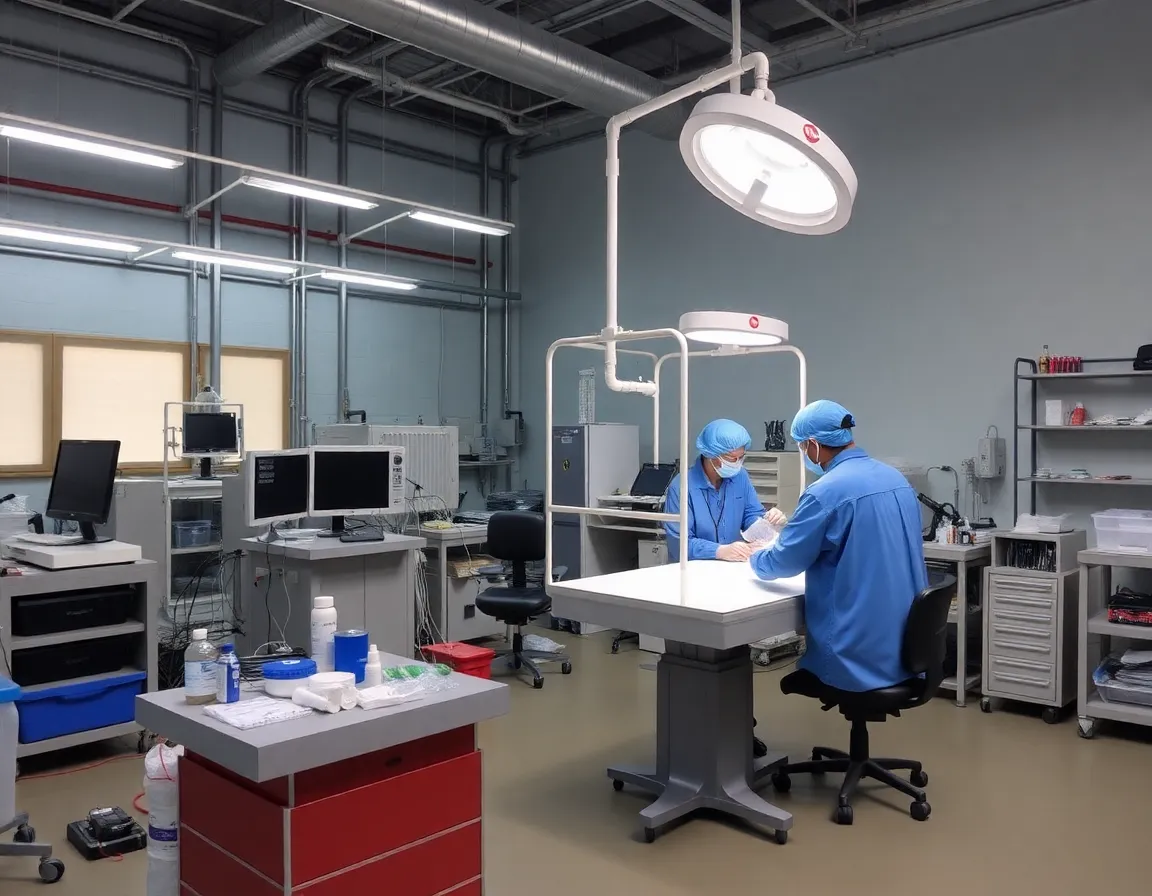
Einleitung: Das Rückgrat der modernen Zahnmedizin
Die moderne Zahnarztpraxis ist ein Wunderwerk der Präzisionstechnik. Von dem Hochgeschwindigkeits-Handstück, das eine Krone formt, bis zum digitalen Scanner, der einen perfekten Abdruck erfasst, beruht jeder Eingriff auf einem komplexen Zusammenspiel spezialisierter Maschinen. Für Hersteller und Wartungsfachleute in der Dentalindustrie ist die Qualität des Endprodukts nur so gut wie die Lieferant für Dentalausrüstungskomponenten mit denen sie arbeiten möchten. Die zuverlässige Beschaffung von Komponenten ist nicht nur eine Frage der Logistik; sie ist ein kritischer Faktor, der Patientensicherheit, klinische Genauigkeit, Langlebigkeit der Geräte und Einhaltung gesetzlicher Vorschriften bestimmt.
In einer Branche, in der eine einzige Fehlfunktion zu einem beeinträchtigten Eingriff oder kostspieligen Ausfallzeiten führen kann, ist es wichtig zu verstehen, welche Komponenten das höchste Maß an Beschaffungskontrolle erfordern. Dieser Artikel befasst sich mit den fünf wichtigsten Dentalausrüstungskomponenten, die von einem vertrauenswürdigen Lieferanten bezogen werden müssen Lieferant für Dentalausrüstungskomponenten. We will explore what each component is, how it functions, why sourcing reliability is non-negotiable, and best practices for procurement.
1. High-Speed Handpiece Turbines and Bearings
What They Are and How They Work
The handpiece is the workhorse of any dental operatory. At its core lies the turbine assembly, which consists of a rotor, blades, and a set of miniature precision bearings. Compressed air drives the turbine, spinning the bur at speeds exceeding 400,000 RPM. This incredible rotational velocity allows for efficient cutting of enamel, dentin, and restorative materials. The bearings, often ceramic or stainless steel, are the critical components that enable this frictionless, high-speed rotation.
Why Reliable Sourcing is Critical
Handpiece bearings are subject to extreme stress. A bearing failure during a procedure can cause the bur to seize, generating intense heat that can damage the tooth pulp or even fracture the bur. Furthermore, a substandard bearing will quickly lose its lubrication, leading to excessive vibration, noise, and eventual catastrophic failure. A reputable Lieferant für Dentalausrüstungskomponenten provides bearings that meet exacting ISO standards for dimensional accuracy, material purity, and lubrication life. Sourcing counterfeit or inferior bearings can void warranties, increase repair costs, and create a significant patient safety risk.
Best Practices for Sourcing
- Demand Certifications: Always request material certifications (e.g., for ceramic grade or stainless steel composition) and bearing tolerance specifications.
- Verify Manufacturer Origin: Many high-quality bearings are manufactured in Switzerland, Germany, or Japan. Verify the supply chain to avoid re-labeled or counterfeit products.
- Test for Run-Out: Implement a quality control process to measure the radial and axial run-out of incoming bearing lots. Excessive run-out is a primary cause of handpiece vibration.
- Choose a Supplier with Technical Support: Ein zuverlässiger Lieferant bietet Beratung zu Schmierstofftypen und Anzugsdrehmoment, die sich direkt auf die Lebensdauer der Lager auswirken.
2. Komponenten des Dental-Kompressors (Kolbendichtungen und Ventile)
What They Are and How They Work
Der Dental-Kompressor ist das Herzstück des Luftsystems der Praxis und liefert saubere, trockene und ölfreie Druckluft für Handstücke, Scaler und Dreifachspritzen. Zu den Schlüsselkomponenten im Kompressor gehören Kolbendichtungen (oder Kolbenringe) sowie Einlass-/Auslassventile. Die Kolbendichtungen bilden eine dichte Barriere zwischen Kolben und Zylinderwand und komprimieren die Luft. Die Ventile steuern die Luftansaugung und -abfuhr und gewährleisten eine effiziente und konstante Druckversorgung. In ölfreien Kompressoren bestehen diese Komponenten oft aus fortschrittlichen Polymeren wie PTFE oder PEEK.
Why Reliable Sourcing is Critical
Ein Kompressorausfall kann eine gesamte Praxis lahmlegen. Eine verschlissene Kolbendichtung lässt Luft am Kolben vorbeiströmen, was den Druck drastisch reduziert und den Kompressor dauerhaft laufen lässt, was zu Überhitzung und Motorausfall führt. Ebenso kann ein defektes Ventil Druckschwankungen verursachen, die empfindliche Handstückturbinen beschädigen. Verunreinigte oder minderwertige Dichtungsmaterialien können auch flüchtige organische Verbindungen (VOCs) in die Luftzufuhr abgeben, was möglicherweise Atemwegsreizungen bei Patienten verursacht. Ein vertrauenswürdiger Lieferant für Dentalausrüstungskomponenten stellt sicher, dass Dichtungen und Ventile aus medizinischen, nicht ausgasenden Materialien hergestellt werden, die mit dem jeweiligen Kompressormodell kompatibel sind.
Best Practices for Sourcing
- Materialqualität angeben: Bestehen Sie auf Materialien, die FDA-konform für die Luftbehandlung sind und dokumentierte geringe Verschleißeigenschaften aufweisen.
- Maßtoleranzen anfordern: Kompressordichtungen müssen im Mikrometerbereich passen. Ein Lieferant sollte detaillierte Maßdaten bereitstellen und eine gleichbleibende Chargenqualität nachweisen.
- Lebensdauerdaten bewerten: Fordern Sie Testdaten an, die die erwarteten Betriebsstunden bis zum Ausfall zeigen (z. B. 5.000 bis 10.000 Stunden für eine Qualitätsdichtung).
- Kits in Betracht ziehen: Ein zuverlässiger Lieferant bietet oft komplette Überholungssätze (Dichtungen, Ventile, Dichtungen) für bestimmte Kompressormodelle an, was die Beschaffung vereinfacht und die Kompatibilität gewährleistet.
3. Dentalstuhl-Aktuatoren und Hydraulikzylinder
What They Are and How They Work
Dentalstühle sind komplexe ergonomische Geräte, die eine präzise Positionierung sowohl für den Patientenkomfort als auch für den Zugang des Klinikers bieten müssen. Die Hauptkomponenten, die für diese Bewegung verantwortlich sind, sind Aktuatoren und Hydraulikzylinder. Elektrische Linearaktuatoren verwenden einen Motor und eine Leitspindel, um den Stuhl sanft zu heben, zu senken und zu neigen. Hydraulikzylinder, die oft in älteren oder schweren Modellen zu finden sind, nutzen Flüssigkeitsdruck, um die gleiche Bewegung zu erzielen. Diese Komponenten müssen erhebliche Lasten (oft 300-500 lbs) aufnehmen und gleichzeitig einen leisen, vibrationsfreien Betrieb gewährleisten.
Why Reliable Sourcing is Critical
A failed actuator or hydraulic cylinder during a procedure is a serious safety hazard. A sudden chair drop can injure a patient or disrupt a delicate surgical procedure. Furthermore, a leaking hydraulic cylinder can expose patients and staff to potentially irritating hydraulic fluid. Sourcing these components from a reputable Lieferant für Dentalausrüstungskomponenten is essential because they must meet rigorous safety standards (e.g., CE marking, UL listing). They must also be engineered for smooth motion without jerking, which requires high-quality seals, precision-machined pistons, and robust motor windings.
Best Practices for Sourcing
- Verify Safety Certifications: Ensure components have passed relevant safety tests for load capacity, emergency stop functionality, and leak resistance.
- Check for IP Ratings: Actuators in dental chairs may be exposed to saliva, disinfectants, and water. Look for components with IP54 or higher ingress protection ratings.
- Assess Cycle Life: Request data on the expected number of operational cycles (e.g., 50,000 to 100,000 cycles) before maintenance is required.
- Prioritize Customization: A good supplier can provide actuators with custom stroke lengths, mounting brackets, and feedback sensors (e.g., Hall effect sensors for position control).
4. Imaging Sensors and X-Ray Tubes
What They Are and How They Work
Digital radiography has revolutionized dental diagnostics. The two critical components here are the X-ray tube (in the intraoral or panoramic unit) and the digital sensor (CMOS or CCD). The X-ray tube generates a controlled beam of radiation that passes through the patient's oral structures. The digital sensor captures the attenuated radiation and converts it into an electronic signal, which is then processed into a high-resolution image. These components are highly specialized and require precise manufacturing to ensure image quality and patient safety.
Why Reliable Sourcing is Critical
An unreliable X-ray tube can produce inconsistent radiation output, leading to underexposed or overexposed images and potentially requiring repeated exposures (increasing patient radiation dose). A defective digital sensor can produce artifacts, dead pixels, or image noise, compromising diagnostic accuracy. Moreover, counterfeit or substandard X-ray tubes may lack proper shielding, posing radiation leakage risks. A certified Lieferant für Dentalausrüstungskomponenten will provide components that comply with stringent radiation safety regulations (e.g., FDA, IEC 60601) and offer guaranteed image resolution (e.g., 20 lp/mm for intraoral sensors).
Best Practices for Sourcing
- Require Radiation Compliance Documents: The supplier must provide documentation proving the X-ray tube meets local and international radiation safety standards.
- Demand Pixel Mapping Data: For sensors, request a pixel map showing no dead or stuck pixels. A warranty against pixel failure is also essential.
- Test for Image Uniformity: Implement a simple quality control test by capturing a uniform phantom image and analyzing for graininess or shading inconsistencies.
- Choose a Supplier with Calibration Services: Some suppliers offer calibration services for X-ray tubes and sensors, ensuring long-term accuracy and performance.
5. Suction System Components (Pumps and Separators)
What They Are and How They Work
The dental suction system is critical for maintaining a clear operating field by removing saliva, blood, debris, and aerosols. The main components are the vacuum pump (either dry-vane, oil-lubricated, or water-ring type) and the amalgam separator. The vacuum pump creates the necessary negative pressure to draw fluids through the suction lines. The amalgam separator is an environmental compliance device that captures mercury-containing amalgam particles from the waste stream, preventing them from entering the municipal water supply. These systems must operate continuously and reliably throughout the day.
Why Reliable Sourcing is Critical
A failing vacuum pump can lead to a complete loss of suction in the middle of a procedure, causing significant clinical disruption and potential aspiration risks for the patient. A faulty amalgam separator can lead to severe environmental fines and reputational damage for the practice. The components of these systems—such as pump vanes, motor bearings, and separator filters—are subject to wear from debris and moisture. A reliable Lieferant für Dentalausrüstungskomponenten provides parts that are specifically designed for the high-duty cycle and corrosive environment of dental suction, using materials like anodized aluminum, stainless steel, and chemical-resistant polymers.
Best Practices for Sourcing
- Check for ISO 11143 Compliance: Amalgam separator components must meet ISO 11143 standards for mercury removal efficiency (typically >95%).
- Assess Pump Vane Material: For dry-vane pumps, the vane material (often carbon graphite) must be sourced for consistent wear rates. Ask for material data sheets.
- Evaluate Motor Quality: The vacuum pump motor should be a continuous-duty rated motor (S1 rating) to handle long operational hours without overheating.
- Look for Filter Compatibility: Ensure that replacement filters for the amalgam separator are exact-fit parts to prevent bypass of mercury-laden water.
Conclusion: Building a Reliable Supply Chain
Sourcing the top five components discussed here—handpiece turbines and bearings, compressor seals and valves, chair actuators and cylinders, imaging sensors and X-ray tubes, and suction system pumps and separators—requires a strategic approach. The cost of a failed component extends far beyond the purchase price; it includes lost clinical time, patient dissatisfaction, potential safety incidents, and damage to the brand's reputation.
To build a truly reliable supply chain, dental equipment manufacturers and service organizations should partner with a Lieferant für Dentalausrüstungskomponenten that demonstrates transparency in sourcing, rigorous quality control, technical expertise, und consistent inventory availability. Conducting regular supplier audits, maintaining a safety stock of critical parts, and establishing long-term contracts with proven vendors are best practices that will ensure your equipment performs at its peak, day in and day out. In the fast-paced world of modern dentistry, reliable components are not just a convenience—they are a clinical necessity.