
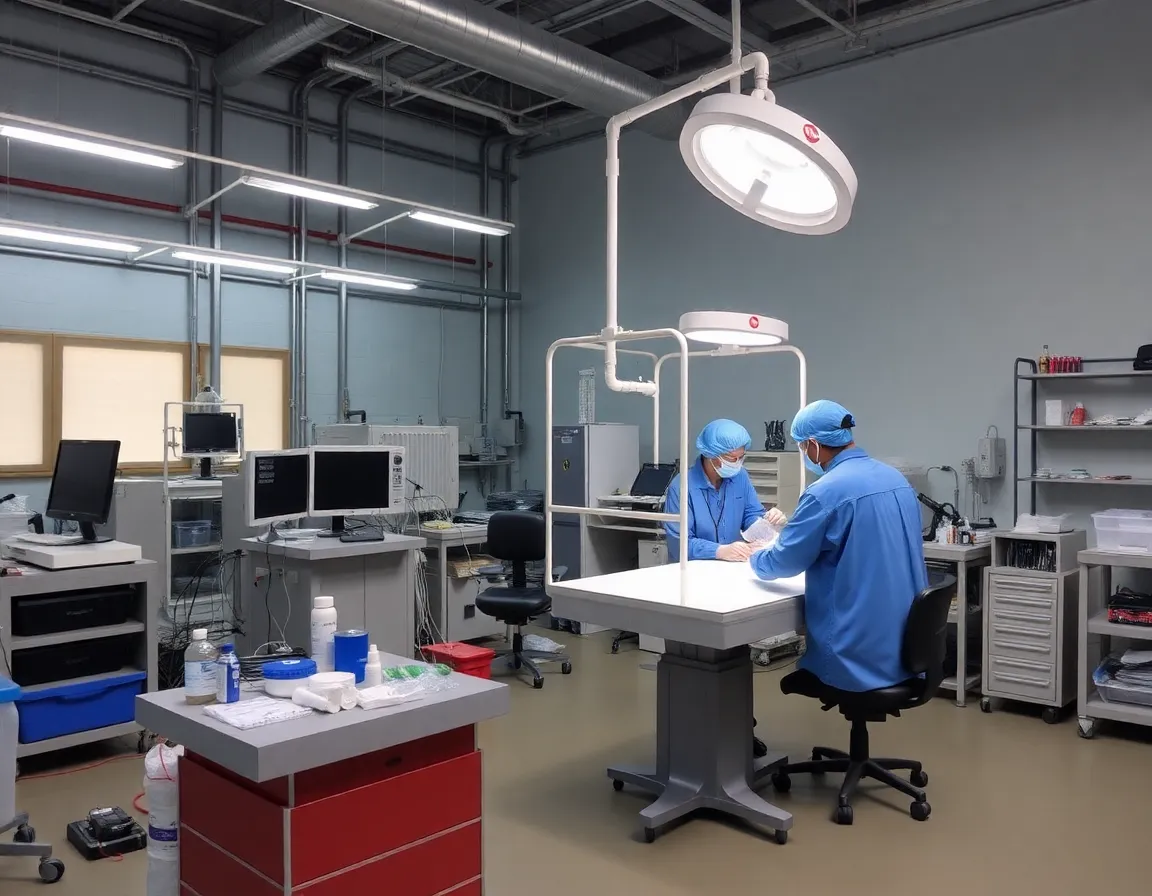
Introdução: A Espinha Dorsal da Odontologia Moderna
A prática odontológica moderna é uma maravilha da engenharia de precisão. Desde a peça de mão de alta velocidade que esculpe uma coroa até o scanner digital que captura uma impressão perfeita, cada procedimento depende de uma interação complexa de maquinário especializado. Para fabricantes e profissionais de manutenção na indústria odontológica, a qualidade do produto final é tão boa quanto os fornecedor de componentes para equipamentos odontológicos que eles escolhem trabalhar. A aquisição confiável de componentes não é meramente uma questão de logística; é um fator crítico que determina a segurança do paciente, a precisão clínica, a longevidade do equipamento e a conformidade regulatória.
Em uma indústria onde uma única falha pode levar a um procedimento comprometido ou a um tempo de inatividade caro, entender quais componentes exigem o mais alto nível de escrutínio na aquisição é essencial. Este artigo aborda os cinco principais componentes de equipamentos odontológicos que devem ser adquiridos de um fornecedor confiável fornecedor de componentes para equipamentos odontológicos. We will explore what each component is, how it functions, why sourcing reliability is non-negotiable, and best practices for procurement.
1. High-Speed Handpiece Turbines and Bearings
What They Are and How They Work
The handpiece is the workhorse of any dental operatory. At its core lies the turbine assembly, which consists of a rotor, blades, and a set of miniature precision bearings. Compressed air drives the turbine, spinning the bur at speeds exceeding 400,000 RPM. This incredible rotational velocity allows for efficient cutting of enamel, dentin, and restorative materials. The bearings, often ceramic or stainless steel, are the critical components that enable this frictionless, high-speed rotation.
Why Reliable Sourcing is Critical
Handpiece bearings are subject to extreme stress. A bearing failure during a procedure can cause the bur to seize, generating intense heat that can damage the tooth pulp or even fracture the bur. Furthermore, a substandard bearing will quickly lose its lubrication, leading to excessive vibration, noise, and eventual catastrophic failure. A reputable fornecedor de componentes para equipamentos odontológicos provides bearings that meet exacting ISO standards for dimensional accuracy, material purity, and lubrication life. Sourcing counterfeit or inferior bearings can void warranties, increase repair costs, and create a significant patient safety risk.
Best Practices for Sourcing
- Demand Certifications: Always request material certifications (e.g., for ceramic grade or stainless steel composition) and bearing tolerance specifications.
- Verify Manufacturer Origin: Many high-quality bearings are manufactured in Switzerland, Germany, or Japan. Verify the supply chain to avoid re-labeled or counterfeit products.
- Test for Run-Out: Implement a quality control process to measure the radial and axial run-out of incoming bearing lots. Excessive run-out is a primary cause of handpiece vibration.
- Choose a Supplier with Technical Support: Um fornecedor confiável oferecerá orientação sobre tipos de lubrificação e torque de instalação, que afetam diretamente a vida útil do rolamento.
2. Componentes do Compressor Odontológico (Selos de Pistão e Válvulas)
What They Are and How They Work
O compressor odontológico é o coração do sistema de ar do consultório, fornecendo ar comprimido limpo, seco e sem óleo para peças de mão, raspadores e seringas tríplices. Os principais componentes do compressor incluem selos de pistão (ou anéis de pistão) e válvulas de admissão/escape. Os selos de pistão criam uma barreira firme entre o pistão e a parede do cilindro, comprimindo o ar. As válvulas controlam a admissão e a exaustão do ar, garantindo uma entrega de pressão eficiente e consistente. Em compressores sem óleo, esses componentes são frequentemente feitos de polímeros avançados como PTFE ou PEEK.
Why Reliable Sourcing is Critical
A falha do compressor pode paralisar todo o consultório. Um selo de pistão desgastado permitirá que o ar vaze pelo pistão, reduzindo drasticamente a pressão e fazendo o compressor funcionar continuamente, levando ao superaquecimento e queima do motor. Da mesma forma, uma válvula defeituosa pode causar flutuações de pressão que danificam as turbinas sensíveis das peças de mão. Materiais de selo contaminados ou de baixa qualidade também podem liberar compostos orgânicos voláteis (COVs) no suprimento de ar, potencialmente causando irritação respiratória no paciente. Um fornecedor confiável fornecedor de componentes para equipamentos odontológicos garante que os selos e válvulas sejam fabricados com materiais de grau médico, sem desgaseificação, compatíveis com o modelo específico do compressor.
Best Practices for Sourcing
- Especifique o Grau do Material: Insista em materiais em conformidade com a FDA para manuseio de ar e com características documentadas de baixo desgaste.
- Solicite Tolerâncias Dimensionais: Os selos do compressor devem se ajustar dentro de mícrons. Um fornecedor deve fornecer dados dimensionais detalhados e demonstrar qualidade consistente de lote para lote.
- Avalie os Dados de Longevidade: Peça dados de teste que mostrem as horas operacionais esperadas antes da falha (por exemplo, 5.000 a 10.000 horas para um selo de qualidade).
- Considere o Kitting: Um fornecedor confiável frequentemente oferece kits completos de reconstrução (selos, válvulas, juntas) para modelos específicos de compressores, simplificando a aquisição e garantindo a compatibilidade.
3. Atuadores de Cadeira Odontológica e Cilindros Hidráulicos
What They Are and How They Work
As cadeiras odontológicas são equipamentos ergonômicos complexos que devem fornecer posicionamento preciso tanto para o conforto do paciente quanto para o acesso do clínico. Os principais componentes responsáveis por esse movimento são os atuadores e os cilindros hidráulicos. Os atuadores lineares elétricos usam um motor e um fuso para elevar, abaixar e inclinar suavemente a cadeira. Os cilindros hidráulicos, frequentemente encontrados em modelos mais antigos ou de serviço pesado, usam pressão de fluido para alcançar o mesmo movimento. Esses componentes devem suportar cargas significativas (frequentemente 300-500 lbs) enquanto fornecem operação silenciosa e sem vibração.
Why Reliable Sourcing is Critical
A failed actuator or hydraulic cylinder during a procedure is a serious safety hazard. A sudden chair drop can injure a patient or disrupt a delicate surgical procedure. Furthermore, a leaking hydraulic cylinder can expose patients and staff to potentially irritating hydraulic fluid. Sourcing these components from a reputable fornecedor de componentes para equipamentos odontológicos is essential because they must meet rigorous safety standards (e.g., CE marking, UL listing). They must also be engineered for smooth motion without jerking, which requires high-quality seals, precision-machined pistons, and robust motor windings.
Best Practices for Sourcing
- Verify Safety Certifications: Ensure components have passed relevant safety tests for load capacity, emergency stop functionality, and leak resistance.
- Check for IP Ratings: Actuators in dental chairs may be exposed to saliva, disinfectants, and water. Look for components with IP54 or higher ingress protection ratings.
- Assess Cycle Life: Request data on the expected number of operational cycles (e.g., 50,000 to 100,000 cycles) before maintenance is required.
- Prioritize Customization: A good supplier can provide actuators with custom stroke lengths, mounting brackets, and feedback sensors (e.g., Hall effect sensors for position control).
4. Imaging Sensors and X-Ray Tubes
What They Are and How They Work
Digital radiography has revolutionized dental diagnostics. The two critical components here are the X-ray tube (in the intraoral or panoramic unit) and the digital sensor (CMOS or CCD). The X-ray tube generates a controlled beam of radiation that passes through the patient's oral structures. The digital sensor captures the attenuated radiation and converts it into an electronic signal, which is then processed into a high-resolution image. These components are highly specialized and require precise manufacturing to ensure image quality and patient safety.
Why Reliable Sourcing is Critical
An unreliable X-ray tube can produce inconsistent radiation output, leading to underexposed or overexposed images and potentially requiring repeated exposures (increasing patient radiation dose). A defective digital sensor can produce artifacts, dead pixels, or image noise, compromising diagnostic accuracy. Moreover, counterfeit or substandard X-ray tubes may lack proper shielding, posing radiation leakage risks. A certified fornecedor de componentes para equipamentos odontológicos will provide components that comply with stringent radiation safety regulations (e.g., FDA, IEC 60601) and offer guaranteed image resolution (e.g., 20 lp/mm for intraoral sensors).
Best Practices for Sourcing
- Require Radiation Compliance Documents: The supplier must provide documentation proving the X-ray tube meets local and international radiation safety standards.
- Demand Pixel Mapping Data: For sensors, request a pixel map showing no dead or stuck pixels. A warranty against pixel failure is also essential.
- Test for Image Uniformity: Implement a simple quality control test by capturing a uniform phantom image and analyzing for graininess or shading inconsistencies.
- Choose a Supplier with Calibration Services: Some suppliers offer calibration services for X-ray tubes and sensors, ensuring long-term accuracy and performance.
5. Suction System Components (Pumps and Separators)
What They Are and How They Work
The dental suction system is critical for maintaining a clear operating field by removing saliva, blood, debris, and aerosols. The main components are the vacuum pump (either dry-vane, oil-lubricated, or water-ring type) and the amalgam separator. The vacuum pump creates the necessary negative pressure to draw fluids through the suction lines. The amalgam separator is an environmental compliance device that captures mercury-containing amalgam particles from the waste stream, preventing them from entering the municipal water supply. These systems must operate continuously and reliably throughout the day.
Why Reliable Sourcing is Critical
A failing vacuum pump can lead to a complete loss of suction in the middle of a procedure, causing significant clinical disruption and potential aspiration risks for the patient. A faulty amalgam separator can lead to severe environmental fines and reputational damage for the practice. The components of these systems—such as pump vanes, motor bearings, and separator filters—are subject to wear from debris and moisture. A reliable fornecedor de componentes para equipamentos odontológicos provides parts that are specifically designed for the high-duty cycle and corrosive environment of dental suction, using materials like anodized aluminum, stainless steel, and chemical-resistant polymers.
Best Practices for Sourcing
- Check for ISO 11143 Compliance: Amalgam separator components must meet ISO 11143 standards for mercury removal efficiency (typically >95%).
- Assess Pump Vane Material: For dry-vane pumps, the vane material (often carbon graphite) must be sourced for consistent wear rates. Ask for material data sheets.
- Evaluate Motor Quality: The vacuum pump motor should be a continuous-duty rated motor (S1 rating) to handle long operational hours without overheating.
- Look for Filter Compatibility: Ensure that replacement filters for the amalgam separator are exact-fit parts to prevent bypass of mercury-laden water.
Conclusion: Building a Reliable Supply Chain
Sourcing the top five components discussed here—handpiece turbines and bearings, compressor seals and valves, chair actuators and cylinders, imaging sensors and X-ray tubes, and suction system pumps and separators—requires a strategic approach. The cost of a failed component extends far beyond the purchase price; it includes lost clinical time, patient dissatisfaction, potential safety incidents, and damage to the brand's reputation.
To build a truly reliable supply chain, dental equipment manufacturers and service organizations should partner with a fornecedor de componentes para equipamentos odontológicos that demonstrates transparency in sourcing, rigorous quality control, technical expertise, e consistent inventory availability. Conducting regular supplier audits, maintaining a safety stock of critical parts, and establishing long-term contracts with proven vendors are best practices that will ensure your equipment performs at its peak, day in and day out. In the fast-paced world of modern dentistry, reliable components are not just a convenience—they are a clinical necessity.