
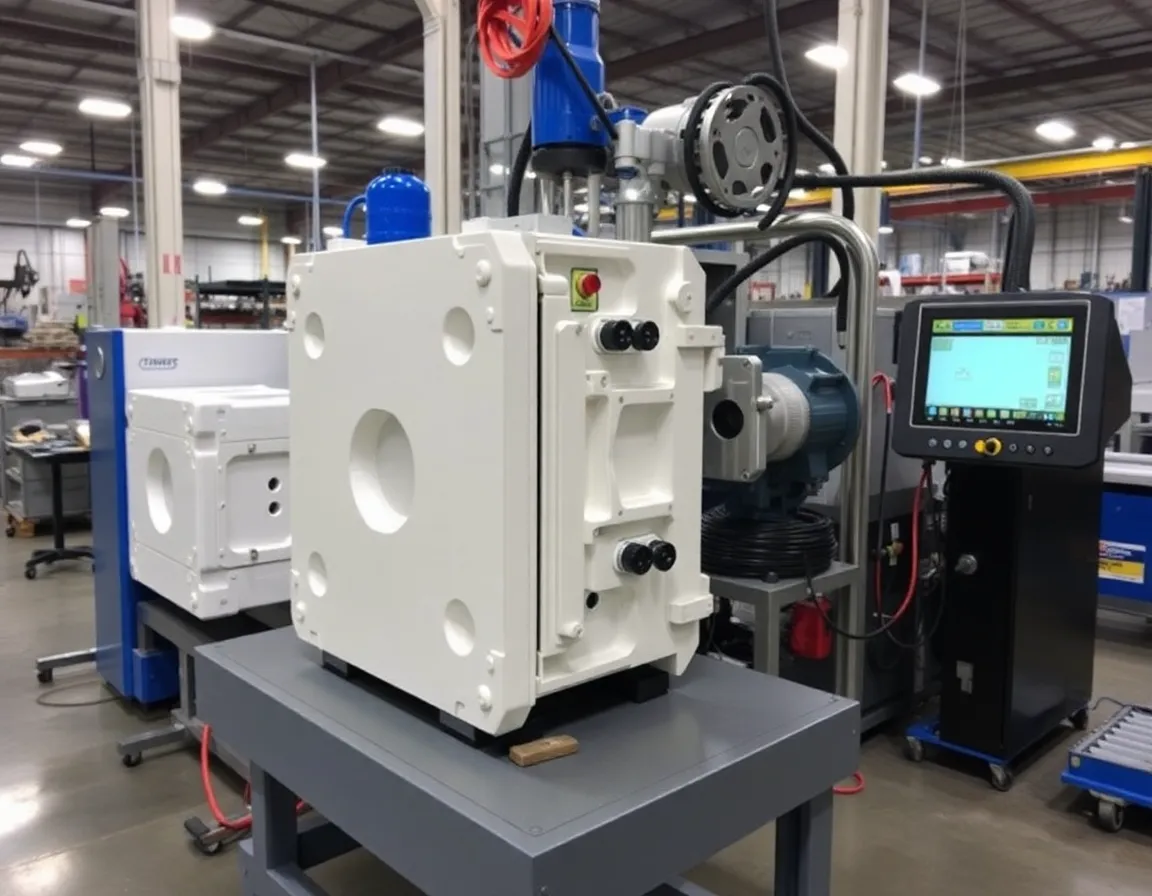
Comprendre le moulage par injection et l'assemblage clés en main
Dans le paysage manufacturier moderne, l'efficacité n'est pas simplement un objectif—c'est la monnaie de la survie. Les entreprises cherchent constamment des moyens de compresser les délais, de réduire les dépenses d'investissement et d'éliminer les frictions qui surviennent lorsque les produits circulent entre plusieurs fournisseurs. C'est là que moulage par injection et assemblage clés en main apparaît comme une solution transformatrice. Contrairement aux modèles de fabrication traditionnels où une entreprise doit s'approvisionner séparément auprès d'un mouleur, d'un finisseur et d'un assembleur, un fournisseur clés en main gère l'ensemble du processus sous un même toit, de la matière première au produit entièrement emballé, prêt à être expédié.
À la base, la fabrication clés en main représente un transfert de responsabilité. Le client fournit une spécification de conception ou un fichier CAO, et le fournisseur prend en charge l'ensemble du cycle de production. Cela comprend la conception et la fabrication du moule, la sélection des matériaux, le moulage par injection, les opérations secondaires telles que le soudage par ultrasons ou l'impression par tampographie, et l'assemblage final de pièces à composants multiples. Le résultat est un point unique de responsabilité, ce qui simplifie considérablement la gestion de projet pour les fabricants d'équipements d'origine (OEM) et les startups.
La philosophie derrière cette approche est ancrée dans le concept de intégration verticale. Lorsque le moulage et l'assemblage sont séparés, les pièces doivent être emballées, expédiées vers une autre installation, déballées, puis traitées. Chaque étape introduit un risque : dommages pendant le transport, désalignement des tolérances et retards de communication. Une opération clé en main élimine ces transferts. La pièce moulée passe directement de la presse à injection à la ligne d'assemblage via un convoyeur ou un transfert robotisé, maintenant le contrôle environnemental et réduisant le risque de contamination ou de dommage physique.
L'anatomie d'une installation clé en main
Une véritable installation clé en main n'est pas simplement une usine avec des tables supplémentaires pour visser les pièces ensemble. C'est un écosystème méticuleusement conçu. L'agencement est conçu pour l'optimisation des flux, avec les machines de moulage par injection positionnées dans des cellules adjacentes aux stations d'assemblage automatisées. L'inspection qualité en ligne utilisant des systèmes de vision est intégrée directement au processus, plutôt que d'être une étape distincte après production. Cela permet un retour d'information et des ajustements en temps réel, garantissant que les défauts sont détectés à la source plutôt qu'à l'inspection finale.
De plus, ces installations abritent généralement des salles blanches avancées pour les composants médicaux ou électroniques, ainsi que des équipements spécialisés pour des procédés comme le surmoulage, le moulage sur insert et le moulage bi-injection. Le côté assemblage est tout aussi sophistiqué, offrant tout, des postes de travail manuels pour les produits complexes à faible volume aux lignes d'assemblage robotisées entièrement automatisées pour les biens de consommation à grand volume. Cette diversité permet au fournisseur clé en main d'augmenter ou de réduire la production en fonction de la demande sans que le client ait à gérer plusieurs contrats.
Les avantages stratégiques d'un partenariat à source unique
Les bénéfices de l'adoption d'une stratégie clé en main de moulage et d'assemblage vont bien au-delà de la simple commodité. Ils touchent aux piliers financiers, opérationnels et stratégiques d'une entreprise. Ci-dessous, nous analysons les avantages critiques qui rendent ce modèle si convaincant.
Réduction du coût total de possession
Bien que le prix unitaire d'un fournisseur clé en main puisse parfois sembler plus élevé que le devis d'un mouleur spécialisé, le coût total de possession est invariablement plus faible. Considérez les coûts cachés du modèle traditionnel : fret entre les installations, courtage en douane si l'assembleur est à l'étranger, stock tampon nécessaire pour couvrir le temps de transit, et les frais administratifs de gestion de multiples bons de commande et relations fournisseurs. Un fournisseur clé en main consolide tous ces coûts en une seule facture. De plus, comme le fournisseur est responsable du produit assemblé final, il est incité à réduire les déchets et à optimiser l'utilisation des matériaux, sachant que toute inefficacité impacte directement sa propre marge bénéficiaire.
Accélération du délai de mise sur le marché
Dans des industries comme l'électronique grand public ou les dispositifs médicaux, être le premier sur le marché peut déterminer toute la viabilité commerciale d'un produit. La fabrication clé en main compresse considérablement le calendrier. En co-localisant la fabrication des moules, la production et l'assemblage, le fournisseur peut commencer la mise en place et les tests de la ligne d'assemblage while the molds are still being machined. This parallel processing is impossible when working with separate vendors. Furthermore, design changes are implemented faster. Instead of a change order bouncing between a molder and an assembler, a single engineering team assesses the impact on the whole system, implements the change, and validates it in a fraction of the time.
Unified Quality Assurance and Traceability
When a defect is found in a fully assembled product, tracing the root cause can be a nightmare if parts came from different sources. Was it the plastic resin that was contaminated at the molder? Was it the torque applied at the assembler? With turnkey production, the provider has complete visibility over the entire genealogy of the product. They can trace a specific unit back to the exact molding machine, the exact cavity of the mold, the specific batch of resin, and the specific assembly station and operator. This unified traceability is not just a convenience; it is a regulatory requirement in sectors like aerospace and medical devices. It ensures that if a recall is necessary, it is precise and limited, protecting both the brand’s reputation and the end user’s safety.
Streamlined Supply Chain and Logistics
Managing a global supply chain is fraught with volatility—port strikes, raw material shortages, and geopolitical instability. By consolidating molding and assembly, a company reduces its supplier count and simplifies its inbound logistics. The turnkey provider takes on the burden of sourcing the plastic pellets, the metal inserts, the electronic components, and the packaging materials. They manage the sub-tier supplier risks. For the client, this means fewer disruption points and a more resilient supply chain. The client receives a single, predictable shipment of finished goods, ready for distribution, rather than juggling multiple inbound deliveries that must be coordinated precisely to avoid production stoppages.
How the Turnkey Process Works: From Concept to Crate
Understanding the operational mechanics of a turnkey project is essential for any procurement manager or engineer looking to engage such a partner. The process is highly structured and typically follows a phased approach, ensuring that all engineering, quality, and commercial requirements are aligned before mass production begins.
Phase 1: Design for Manufacturability (DFM) and Quote
The journey begins with an engineering review. The turnkey provider’s team analyzes the client’s CAD files, not just for moldability, but for assemble-ability. They look for features that might be difficult to grip by a robot, or geometries that require excessive manual labor to fit. They provide a comprehensive DFM report, suggesting changes that will reduce cycle time, simplify assembly, and lower costs. This collaborative phase is critical, as it establishes the technical foundation and provides an accurate, all-inclusive quote that covers tooling, piece price, and assembly labor. The quote is not a guess; it is a detailed breakdown of how the product will be made.
Phase 2: Tooling and Automation Development
Once the contract is signed, the provider begins the simultaneous engineering of the mold and the assembly system. For high-volume projects, this involves designing custom automation—such as bowl feeders for screws, vision-guided robots for part placement, and automated testing rigs. The mold design incorporates features for hot runners, efficient cooling channels, and ejection systems that will present the part in the correct orientation for the next step. This phase is where the provider’s experience is most valuable, as they must ensure the mold’s cycle time is synchronized with the assembly line’s takt time to avoid bottlenecks. A mismatch here would negate all the benefits of the turnkey model.
Phase 3: Pilot Run and Process Validation
Before full-scale production, the provider runs a pilot batch. This is not merely a test of the mold, but a full simulation of the entire production line. They run the molding machines, transfer the parts to assembly, complete the assembly process, and perform final functional testing. This stage is used to validate the process capability (Cpk values) and to fine-tune robotic parameters. In regulated industries, this phase generates the validation documentation (IQ, OQ, PQ) required for regulatory submission. The client’s engineers are invited to witness these trials, providing a final sign-off before the production ramp-up.
Phase 4: Ramp-Up and Continuous Production
With validation complete, the provider ramps up to full volume. The key advantage here is the ability to adjust production rates dynamically. If a client’s sales forecast dips, the provider can slow the line. If demand spikes, they can run additional shifts without needing to coordinate with a secondary facility. Daily production reports are shared via a secure portal, giving the client real-time visibility into output, yield, and quality metrics. This transparency builds trust and allows for data-driven decisions regarding inventory levels and replenishment schedules.
Key Applications and Industries Benefiting from Turnkey Solutions
While any product with multiple components can benefit from turnkey manufacturing, certain industries have adopted this model more aggressively due to their stringent requirements for precision, cleanliness, and speed.
- Medical Devices: From insulin pens to surgical staplers, these devices require sterile assembly and absolute precision. Turnkey facilities offer ISO 13485 certified cleanrooms and full traceability, making them the preferred choice for Class II and Class III devices.
- Automotive Electronics: Sensors, connectors, and control modules require insert molding of metal contacts followed by precise assembly. The high volume and tight tolerances make automated turnkey lines economically essential.
- Électronique grand public et appareils portables : Products like smartwatches and earbuds involve delicate components, overmolded soft-touch surfaces, and micro-assembly. Turnkey providers excel at handling these fragile parts without damage, using specialized handling systems.
- Aérospatiale et défense : Though lower volume, these parts demand exotic materials and rigorous documentation. A turnkey partner handles the complex material certifications and provides the meticulous assembly records required for flight safety.
- Industrial Tools & Power Equipment: Products like drills and lawn equipment require robust assembly of gears, motors, and housings. Turnkey molding allows for multi-material grips and seals to be molded directly onto the housing, reducing assembly steps and improving durability.
Best Practices for Selecting and Managing a Turnkey Partner
Engaging a turnkey partner is a strategic decision that requires due diligence. Not all providers are created equal, and the cost of a poor choice is high. The following best practices will help ensure a successful partnership.
Audit the Engineering Depth, Not Just the Sales Pitch
When visiting a potential partner, do not just look at the number of injection molding machines. Look at the engineering staff. Ask to see their simulation software for mold flow analysis and their failure mode and effects analysis (FMEA) documentation. A provider that cannot demonstrate proactive engineering is likely just a broker of services, not a true turnkey manufacturer. Ensure they have in-house mold makers who can repair tools quickly, rather than sending them to an external shop, which causes delays.
Define Clear Specifications and Exit Criteria
Ambiguity is the enemy of turnkey success. Before production begins, define every specification in writing, from the gloss level of the plastic to the torque required for a screw. More importantly, define the exit criteria for each phase. What constitutes a successful pilot run? What is the acceptable defect rate (PPM) for the assembly line? Having these numbers locked in prevents disputes later. Your contract should include penalties for missed milestones and clear Service Level Agreements (SLAs) for production uptime and quality.
Prioritize Communication and Cultural Fit
Because the turnkey partner has immense control over your product’s destiny, you must have a high level of trust. This requires open communication channels and regular business reviews. Look for a partner who is transparent about challenges, rather than one who hides issues until they become crises. A weekly conference call to review production metrics is a minimum requirement. Furthermore, consider the geographic proximity. While overseas turnkey providers offer cost advantages, a partner in a similar time zone or with a local support office can be invaluable when urgent issues arise on the factory floor.
Start Small, Scale Strategically
If you are new to turnkey manufacturing, do not transfer your entire product portfolio to a single provider on day one. Instead, select one critical, medium-complexity product as a test case. This allows you to evaluate the partner’s performance, communication, and quality systems without putting all your eggs in one basket. Once they have proven their capability on this initial project, you can confidently expand the partnership to include more complex, higher-volume products. This phased approach mitigates risk and builds a solid foundation for a long-term, mutually beneficial relationship.
The Future of Turnkey Manufacturing: Industry 4.0 and Beyond
As we look ahead, the turnkey model is evolving with the advent of the Industrial Internet of Things (IIoT) and digital twin technology. Modern turnkey facilities are becoming "lights-out" operations, where machines communicate with each other via M2M (machine-to-machine) protocols. The molding machine automatically signals the assembly robot about a slight variation in part dimensions, and the robot adjusts its gripper pressure accordingly. This level of adaptive control is the next frontier of quality.
De plus, l'essor des on-demand manufacturing is pushing turnkey providers to become more agile. Instead of requiring large minimum order quantities, they are leveraging data analytics to forecast demand and run smaller, more frequent batches. This reduces the client’s inventory carrying costs and allows for more frequent design refreshes. In conclusion, turnkey injection molding and assembly is not just a service; it is a strategic partnership that leverages engineering synergy, operational efficiency, and technological innovation to deliver a superior product, faster and more cost-effectively than fragmented manufacturing ever could.