
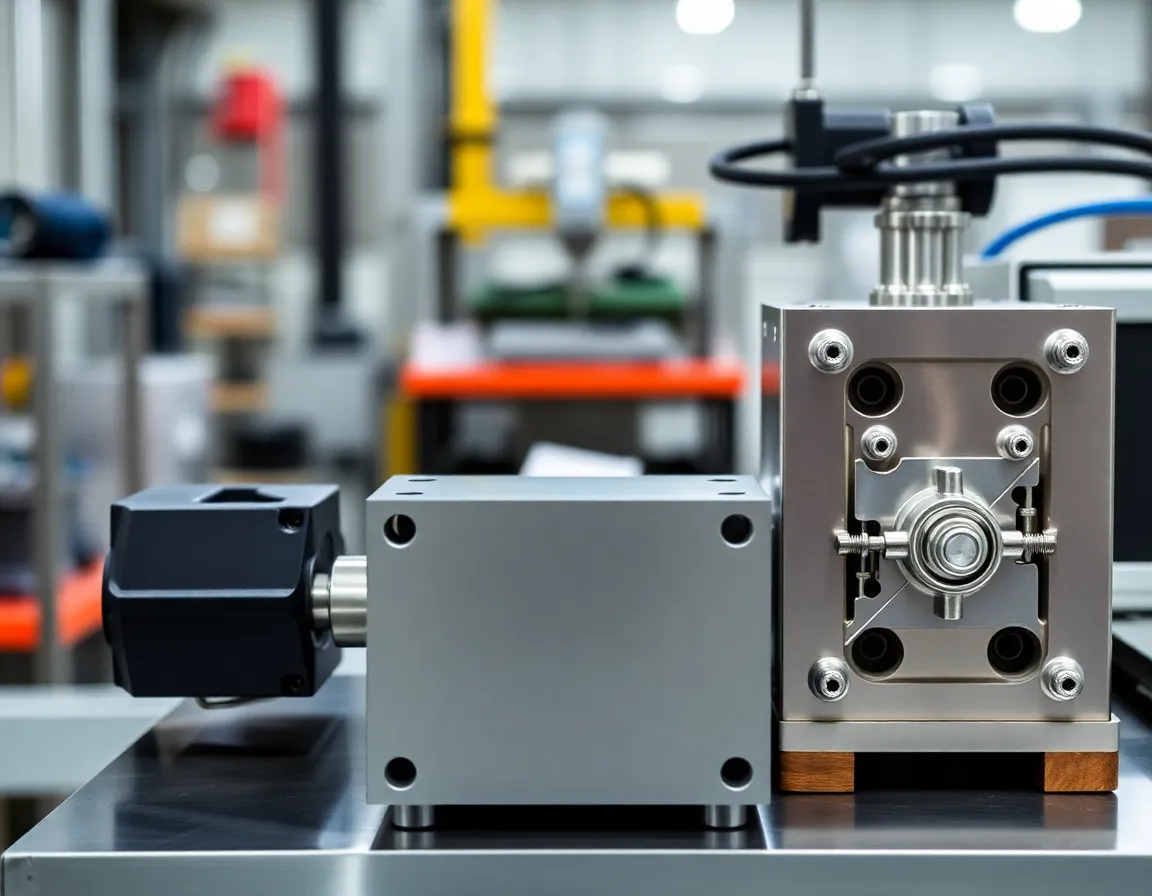
The Complete Spectrum of Full-Service Injection Molding
In the modern manufacturing landscape, the phrase “full-service injection molding” represents far more than a simple production capability. It signifies a holistic partnership where a single provider manages every facet of a plastic component’s lifecycle—from the initial spark of an idea and material selection, through precision tooling and pilot runs, to high-volume production, finishing, assembly, and even logistics. For original equipment manufacturers (OEMs) and product developers, engaging a full-service injection molding company eliminates the fragmented chaos of managing multiple vendors, reduces time-to-market, and ensures a single point of accountability for quality and cost. This article delves deeply into the architecture of full-service injection molding, its operational workflow, the substantial benefits it offers, and the critical best practices that separate exceptional providers from mere commodity molders.
What Defines a Full-Service Injection Molding Company?
A true full-service injection molding company operates as an extension of your engineering and supply chain teams. Unlike a traditional “molder” that simply receives a mold and runs a press, a full-service provider integrates design for manufacturability (DFM), in-house tooling, advanced process control, and value-added post-molding operations under one roof. This vertical integration is the cornerstone of the model, ensuring that knowledge gained in the tool room directly informs the molding floor, and that quality feedback loops back into design iterations.
Core Pillars of the Full-Service Model
- Design & Engineering Collaboration: Mechanical engineers, moldflow analysts, and material scientists work directly with your team to optimize wall thickness, draft angles, gate locations, and rib design before steel is ever cut.
- In-House Tool Building & Maintenance: The company owns the mold-making process, including CNC machining, EDM (electrical discharge machining), and precision grinding. This allows for rapid prototyping, iterative modifications, and proactive maintenance schedules.
- Material Science Expertise: Full-service providers maintain extensive catalogs of engineering thermoplastics, elastomers, and additives. They guide you on resin selection based on mechanical requirements, chemical resistance, UL flammability ratings, and regulatory compliance (FDA, RoHS, REACH).
- Precision Molding & Process Validation: Using scientific molding principles, they validate processes through Design of Experiments (DOE), ensuring repeatability across millions of cycles. Modern facilities employ real-time process monitoring and robotic part removal.
- Secondary Operations & Assembly: Beyond the press, services include ultrasonic welding, heat staking, pad printing, laser engraving, EMI/RFI shielding, and cleanroom assembly. Some providers even offer functional testing and packaging design.
How the Full-Service Workflow Operates: From Design to Delivery
The journey of a component through a full-service injection molding company is a meticulously choreographed sequence. Understanding this workflow helps you appreciate the value of a single-source partner. The process is typically divided into five distinct, yet interconnected, phases.
Phase 1: Concept, DFM, and Material Selection
The process begins with an in-depth feasibility review. Your initial CAD file—even if it is a rough concept—is subjected to a rigorous Design for Manufacturability analysis. The provider’s engineers use moldflow simulation software to predict how molten polymer will fill the cavity, where weld lines and air traps will occur, and how cooling will affect cycle time. During this phase, they will recommend critical modifications, such as increasing a draft angle to prevent ejection marks or adjusting the gate location to improve cosmetic appearance. Simultaneously, the material selection team works to match the resin’s properties to the application’s demands—whether it is a high-impact ABS for a power tool housing or a glass-filled nylon for an automotive bracket. At the end of this phase, you receive a comprehensive quote that includes tooling costs, per-part pricing, and a realistic production timeline.
Phase 2: Precision Tooling and Prototyping
Once the design is frozen and the material is specified, the tooling phase begins. Unlike simple molders, a full-service company will often build class 101 or class 102 tooling (production-grade steel molds rated for one million or more cycles). The tool room uses high-speed milling and wire EDM to achieve tolerances within ±0.005 mm. Before committing to the final hardened tool, many providers offer bridge tooling or 3D-printed inserts for prototype molding. This allows you to produce 50 to 5,000 parts in the actual production resin for field testing and clinical trials if required. This step is critical because it validates the part’s function and the mold’s cooling efficiency without the expense of a full production tool.
Phase 3: Scientific Molding and Process Validation
When the production tool is mounted in the injection molding machine, the process engineer performs a series of trials to establish a “golden” process window. They analyze pressure curves, melt temperature, and cooling time to balance part quality against cycle efficiency. The goal is to achieve a robust process that is insensitive to minor variations in material batch or ambient humidity. Following the initial trials, the company executes a formal validation—often aligning with ISO 13485 (medical) or IATF 16949 (automotive) standards. This includes First Article Inspection (FAI), where every critical dimension is measured and documented, and Process Capability Studies (Cpk/Ppk) to statistically prove that the process can hold tolerances over time.
Phase 4: High-Volume Production and Quality Control
With validation complete, the operation moves to full-scale production. Full-service facilities utilize a range of presses—from micro-molding machines for intricate medical components to 1,000-ton hydraulic presses for large automotive bumpers. Throughout production, automated robots remove parts and place them on conveyor systems for inspection. In-line vision systems check for flash, burns, short shots, and dimensional deviations in real time. Statistical Process Control (SPC) software tracks key parameters, alerting operators to any drift before it produces defective parts. For critical applications, the company may employ cavity pressure sensors to monitor consistency cycle-by-cycle, ensuring that each part is identical to the validated golden sample.
Phase 5: Secondary Operations, Assembly, and Global Logistics
The final phase transforms raw molded parts into ready-to-ship products. In cleanrooms, operators perform ultrasonic welding to join two halves of a fluid reservoir. Automated stations apply gaskets, lubricants, or thread sealants. Pad printing and laser marking add logos and serial numbers. For complex devices, the provider manages kitting—combining the molded housing with purchased electronic components, screws, and springs—and performs final functional testing before packaging. The logistics team then coordinates either just-in-time delivery to your assembly plant or direct-to-consumer fulfillment from their warehouse. Many full-service companies offer vendor-managed inventory (VMI) systems, where they monitor your stock levels and automatically trigger production runs to maintain optimal inventory without overstocking.
The Strategic Benefits of Partnering with a Full-Service Provider
The decision to consolidate your injection molding needs with a single, full-service partner yields tangible, measurable advantages that go far beyond simple convenience. These benefits directly impact your bottom line, your product’s quality, and your team’s ability to innovate.
Reduced Risk and Accelerated Time-to-Market
When tooling is built in-house, the communication delay between a molder and a separate toolmaker disappears. If a modification is needed during trials, the mold maker is already on-site, reducing a potential three-week delay to three days. This parallel processing compresses the overall project timeline by 20% to 30%. Furthermore, having a single accountable partner eliminates the “finger-pointing” that occurs when a part fails due to a design issue versus a tooling issue versus a material issue. The full-service provider owns all variables, forcing them to solve problems holistically rather than shifting blame.
Superior Quality Through Process Ownership
Quality is not an afterthought; it is engineered into the process. Because the same company designs the gate, cuts the steel, and runs the press, they understand the nuances of the tool’s wear patterns and can adjust process parameters proactively. This leads to higher first-pass yields—often exceeding 99%—and significantly lower scrap rates. For industries like medical devices or aerospace, where traceability is mandatory, the full-service model provides a complete digital thread. Every part can be traced back to the exact resin lot, the mold cavity number, and the specific molding cycle timestamp, ensuring full compliance with regulatory audits.
Cost Efficiency Across the Product Lifecycle
While the per-part price from a low-cost offshore molder might appear lower, the total cost of ownership (TCO) often favors the full-service provider. Consider the hidden costs: freight and customs brokerage, long lead times for engineering changes, travel expenses for audits, and the risk of receiving defective parts that halt your production line. A full-service partner mitigates these. Moreover, their expertise in DFM often results in material savings of 5% to 15% by optimizing wall thickness and runner systems. They also manage tooling maintenance to extend mold life, avoiding the sudden capital expense of a premature tool replacement.
Scalability and Flexibility
As your product gains market traction, a full-service provider can scale production seamlessly. They have multiple presses of varying tonnage, allowing them to move your mold to a larger or faster machine as volume demands change. They also offer flexible supply chain solutions, such as consignment inventory where you only pay for parts as you consume them. This financial flexibility is invaluable for startups and established enterprises alike, allowing you to adapt to market demand without tying up capital in raw materials or finished goods.
Best Practices for Selecting and Working with a Full-Service Molder
Not all companies that claim to be “full-service” deliver on that promise. To maximize your chances of success, you must conduct a diligent evaluation and establish a collaborative working relationship from day one.
Evaluating Capabilities and Certifications
Begin by auditing the provider’s facility. Look beyond the number of injection molding machines. Ask about their in-house mold shop capabilities—do they have 5-axis CNC machines and wire EDM? Do they employ dedicated process engineers with certifications in scientific molding (e.g., RJG or Paulson)? Review their quality certifications: ISO 9001 for general quality, ISO 13485 for medical, and IATF 16949 for automotive are non-negotiable for those industries. Critically, ask for references from clients who have similar product complexities. A provider that excels at simple packaging may struggle with intricate, thin-walled medical components.
Establishing Clear Communication Protocols
The most successful partnerships are built on transparency. Establish a regular cadence of project reviews—weekly during tooling and monthly during production. Demand a single Program Manager as your point of contact who has the authority to allocate resources across the design, tooling, and molding departments. Insist on receiving detailed open-loop reports that list every engineering change request (ECR) with its cost and timeline impact. Furthermore, define your quality expectations in writing, including acceptable AQL (Acceptable Quality Limit) levels, and agree on the corrective action process for non-conformances.
Planning for the Entire Product Lifecycle
Do not negotiate only for the initial production run. Discuss the product’s projected lifecycle—will you need parts for five years or fifteen? Ensure the provider has a documented tooling maintenance plan and a spare parts strategy for critical mold components. For long-life products, clarify their policy on tooling storage and obsolescence management. A best-in-class partner will help you create a risk mitigation plan for resins that may be discontinued by chemical manufacturers, suggesting alternative materials with similar properties that can be qualified in advance.
In conclusion, full-service injection molding is not merely a service offering; it is a strategic approach to manufacturing that aligns engineering, production, and logistics into a single, cohesive force. By choosing a partner that embodies this philosophy, you gain more than a supplier—you gain an integrated team dedicated to turning your concept into a high-quality, cost-effective, and reliable product, delivered on time and ready to perform in the hands of your customers.