
Molding thick-walled structural components like handles, grab bars, and thick enclosure ribs presents severe cosmetic and processing challenges. Solid thick plastic sections cool unevenly and contract substantially, creating deep surface sink marks, internal voids, and prolonged cycle times. Specifying gas assist injection molding overcomes these physical limits by injecting high-pressure nitrogen gas directly into the molten polymer core. JUCHENG operates specialized gas-assisted production cells, manufacturing hollow structural hardware strictly according to customer CAD files.
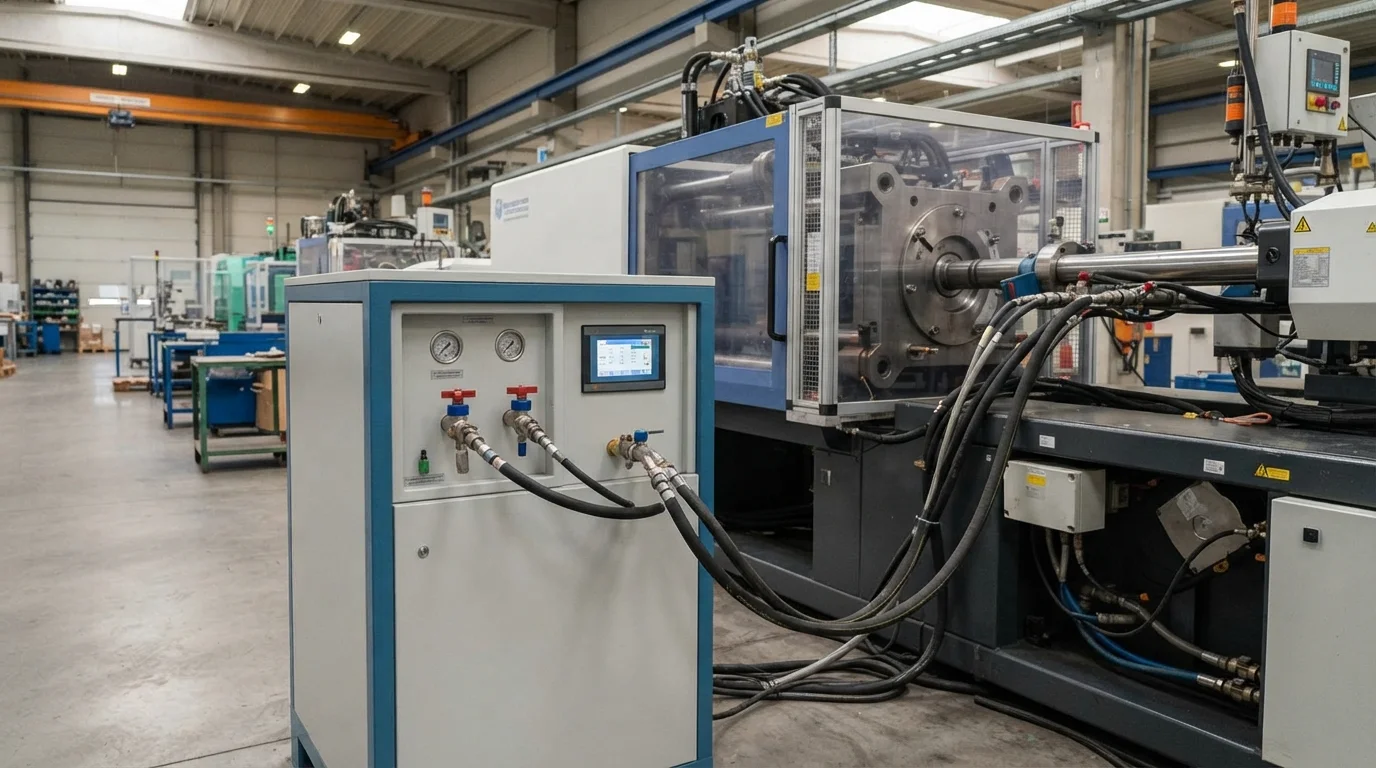
Table of Contents
Nitrogen Gas Injection Systems & Eliminating Sink Marks
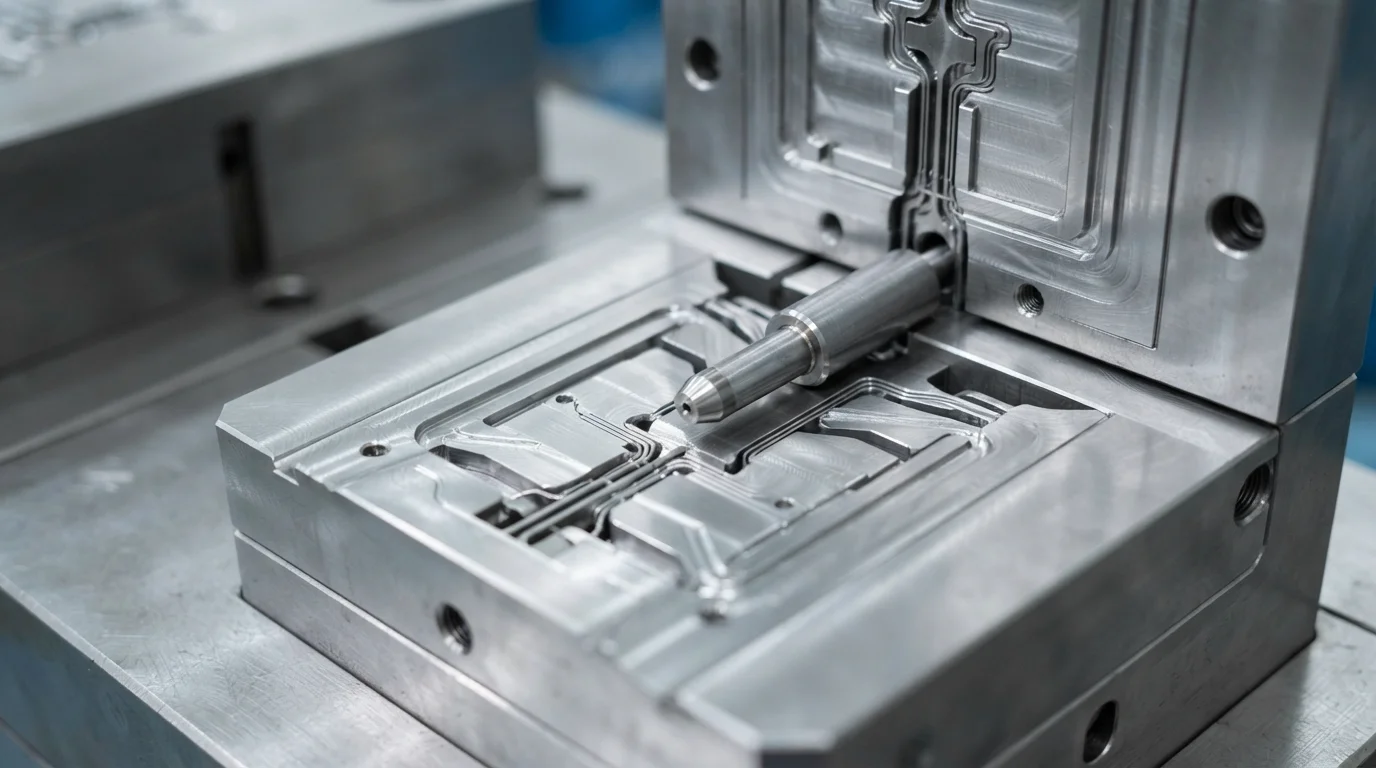
Injecting high-purity nitrogen gas into the melt stream forces molten plastic against the cavity walls from the inside out. Executing nitrogen gas injection through specialized gas pins or machine nozzles packs the polymer skin firmly against cooled tool steel. Gas pressure can help pack the polymer against the cavity wall as it cools and reduce visible sink over thick ribs and bosses. The result depends on the resin, part and channel geometry, and molding conditions. Check appearance on representative molded parts against the specified finish requirements.
Gas assist processing steps include:
- Short-shot resin dosing—Injecting a controlled partial shot of molten resin prepares the cavity for gas displacement.
- Gas pin penetration—Injecting high-pressure nitrogen gas into the core creates a continuous hollow gas channel.
- Internal packing pressure—Holding nitrogen pressure at 10 to 30 MPa holds the polymer skin firmly against the mold walls.
- Gas venting and part ejection—Venting internal nitrogen pressure back into the unit prior to mold opening enables safe part ejection.
Weight Reduction & Hollow Structural Design for Handles and Tubing
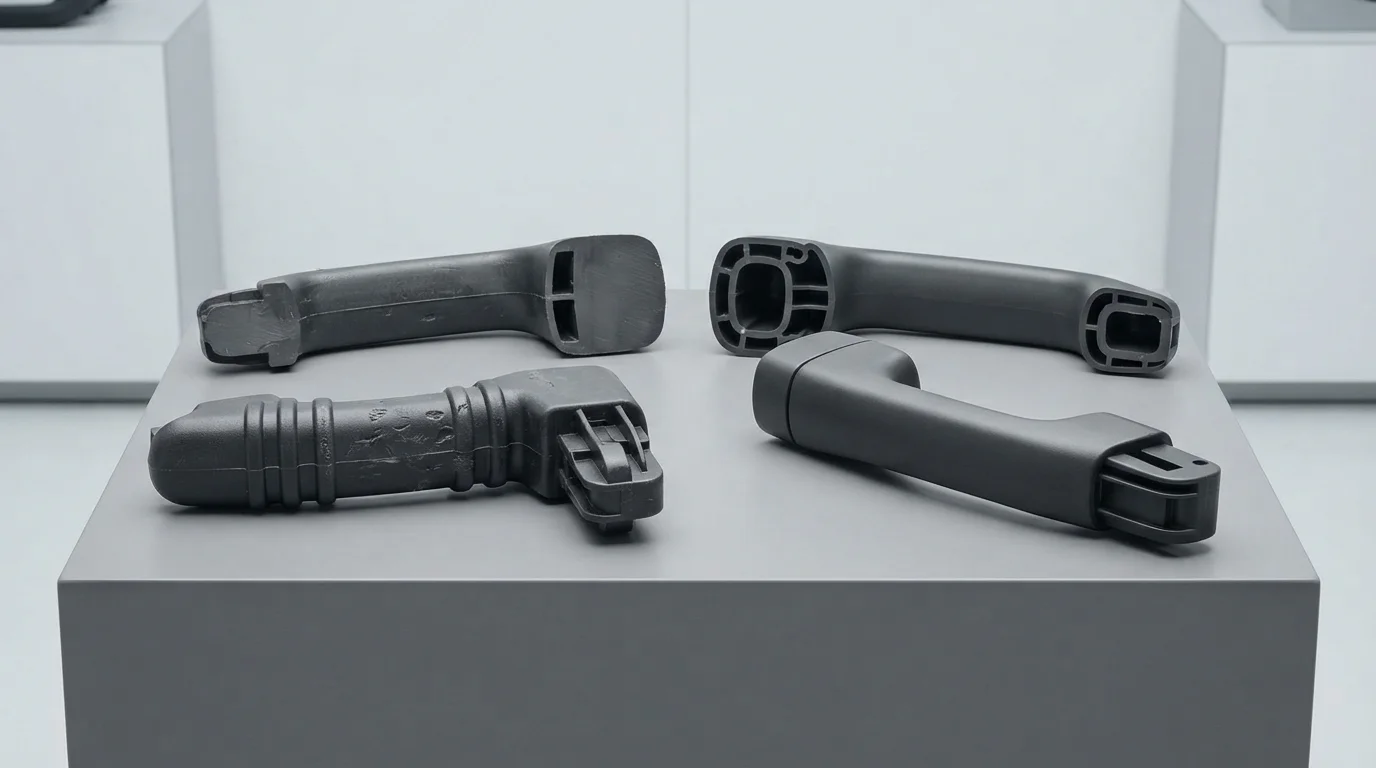
Hollow cores can reduce weight, but bending stiffness and load capacity depend on the remaining wall, channel geometry and resin. Verify wall thickness and performance under the intended loads on molded samples. Hollow structural geometries cut material usage by 20% to 40%, delivering substantial cost savings on expensive engineering thermoplastics. Common resins processed with gas assistance include polypropylene (PP), ABS, polycarbonate (PC), and glass-filled PA66-GF30. Removing massive solid resin cores speeds up thermal heat dissipation dramatically. Cooling times drop by up to 50% on thick-section handles, increasing hourly press throughput. Treat these published ranges as illustrative, not as tooling inputs or validated project outcomes; confirm mass and cycle time in part-specific trials.
| Target Polymer Resin | Gas Pressure Range (MPa) | Weight Reduction (%) | Cooling Time Saving (%) | Primary Gas-Assist Part |
|---|---|---|---|---|
| Polypropylene (PP) | 10 – 20 MPa | 25% – 40% | 40% – 50% | Automotive grab handles & appliance tubing |
| ABS / PC+ABS Alloys | 15 – 25 MPa | 20% – 35% | 35% – 45% | Automotive door handles & mirror brackets |
| PA66-GF30 (Glass-Filled) | 20 – 30 MPa | 15% – 30% | 30% – 40% | Structural pedals & heavy-duty frames |
Internal Gas Pressure Control & Structural Integrity
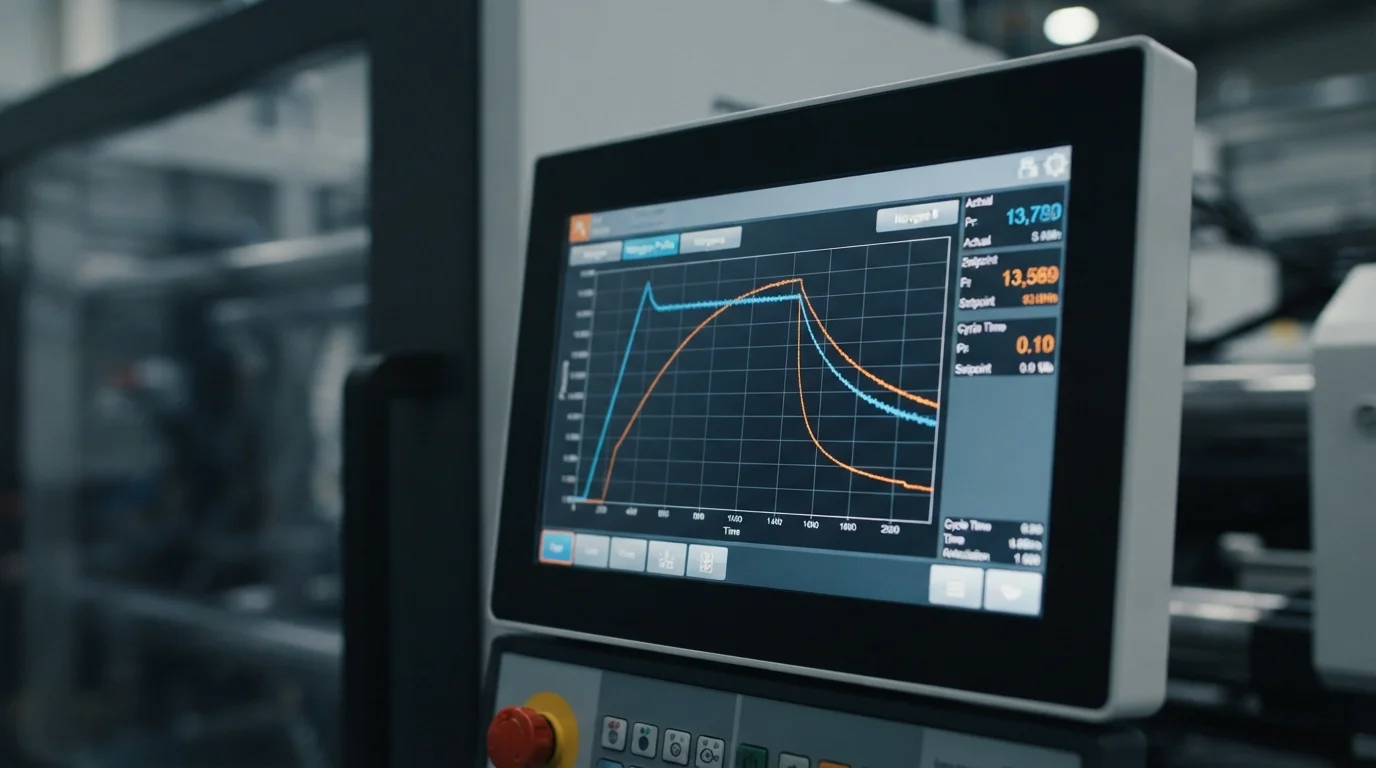
Maintaining precise internal gas pressure control prevents structural defects like gas blow-through or thin wall fingering. Gas blow-through occurs if nitrogen breaks through the melt front before the skin layer establishes sufficient thickness. Tooling engineers design strategic gas pin nozzles at thick cross-sections to guide gas flow paths along designated channels. Precise timing delays between resin injection and gas entry ensure a uniform polymer skin wall thickness. Process optimization preserves mechanical load limits while delivering defect-free appearance surfaces.
Frequently Asked Questions (FAQs)
How does gas assist molding eliminate sink marks in thick parts?
Gas assist molding injects high-pressure nitrogen into the center of the molten resin. Internal gas pressure can help compensate for shrinkage by pressing the cooling polymer against the cavity walls. This can reduce visible sink, but it does not guarantee a mark-free surface. Verify the finished appearance in trials.
What is the difference between short-shot and full-shot gas assist molding?
Short-shot gas assist starts with a partial resin fill (70% to 90% is an illustrative range, not a setup target), and gas helps complete the fill. Full-shot gas assist starts with a full resin fill before gas injection. Gas can form a designed hollow channel in either variant, depending on the tool and where the melt can move. Check the channel, remaining wall thickness, appearance and load performance on trial parts.
What gas is used for gas assist injection molding?
High-purity nitrogen gas (98% to 99.9% purity) is universally used because it is chemically inert and does not react with molten polymers. Nitrogen prevents oxidation, burning, or chemical degradation of the internal hollow channel walls.