
Consolidating multiple plastic materials, contrasting colors, and elastomeric seals into a unified component represents a primary goal in modern hardware engineering. Traditional manufacturing relies on separate single-material injection molding cycles followed by manual adhesive bonding, mechanical fastening, or ultrasonic welding. Secondary assembly operations introduce cumulative dimensional tolerance stack-up, increase piece-part labor expenses, and create potential joint failure points under cyclic fatigue.
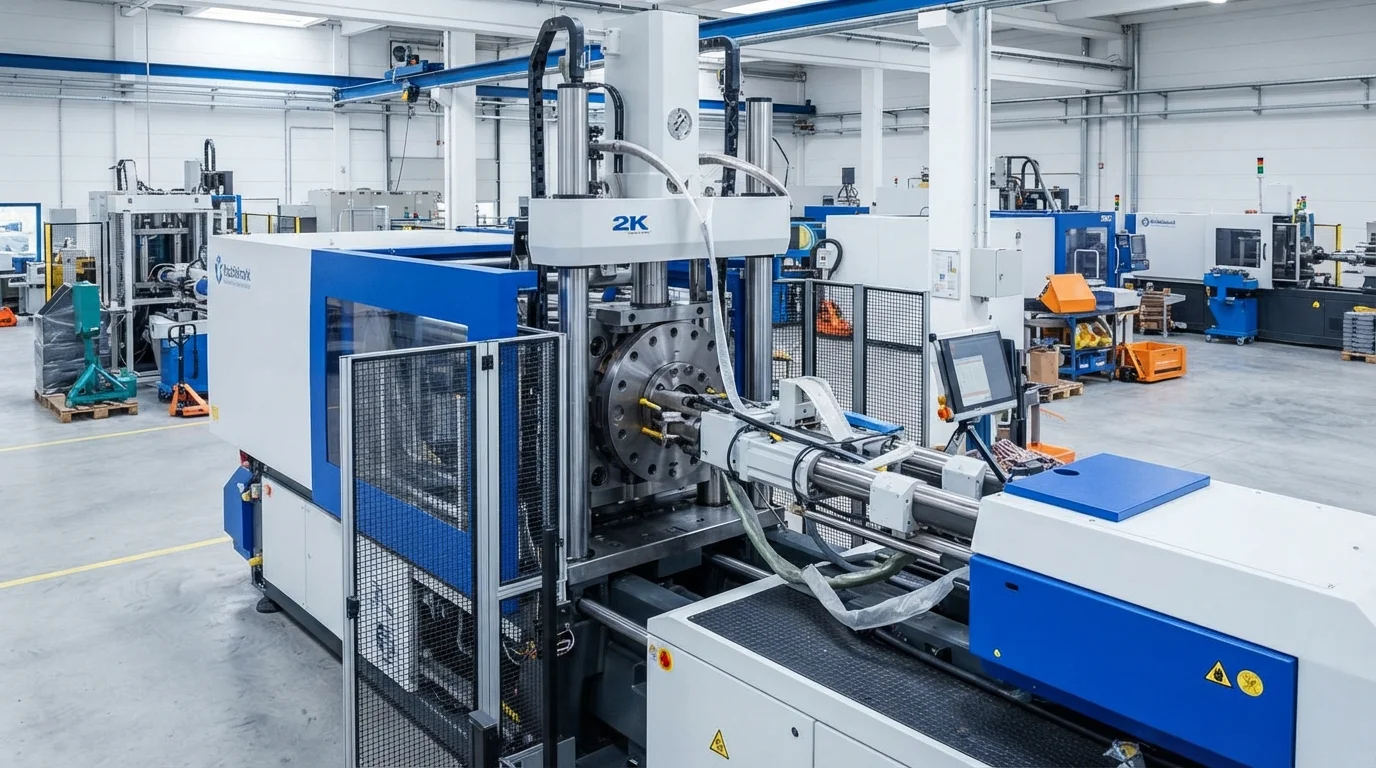
Multi-material processing resolves these assembly inefficiencies by molding two distinct polymer resins inside a single press cycle. This technical engineering guide reviews fundamental process mechanics, rotary tooling architectures, material compatibility criteria, and commercial selection parameters.
Defining Two-Shot (2K) Molding in Multi-Material Manufacturing
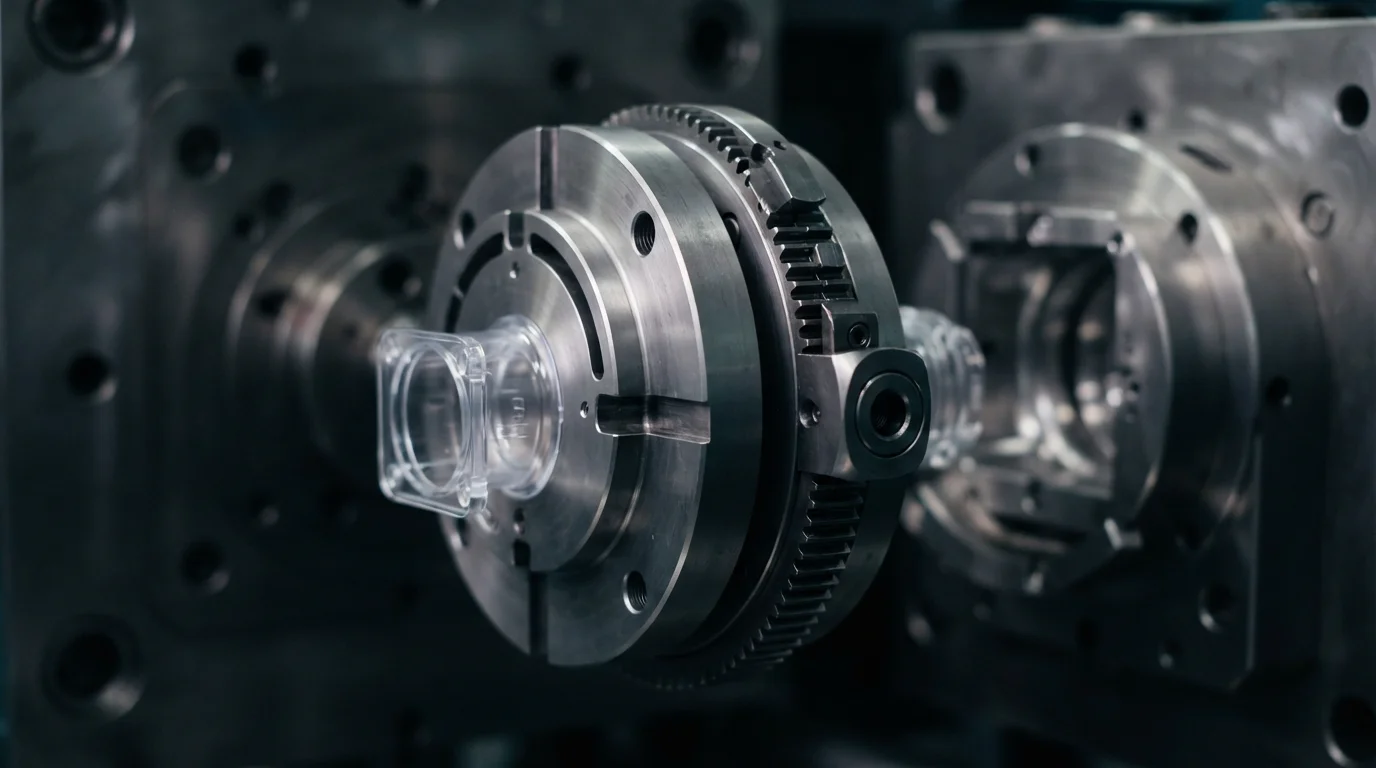
Explaining what is two shot injection molding requires examining how two distinct polymer melts are injected into a single specialized mold tool. Primary processing utilizes an independent injection barrel to shoot the structural substrate using engineering thermoplastics like polycarbonate (PC), ABS, or polyamide. Once the first shot solidifies to maintain geometric shape, a precision rotary turntable platen swivels the core plate 180 degrees into a secondary cavity.
Secondary processing immediately injects a second colored resin or a flexible elastomer like TPE or TPU over designated substrate zones. Injecting the second shot onto a warm substrate boundary allows polymer chains to interdiffuse deeply, creating a permanent cohesive weld upon final cooling.
Two-Shot Molding vs. Conventional Single-Shot Molding
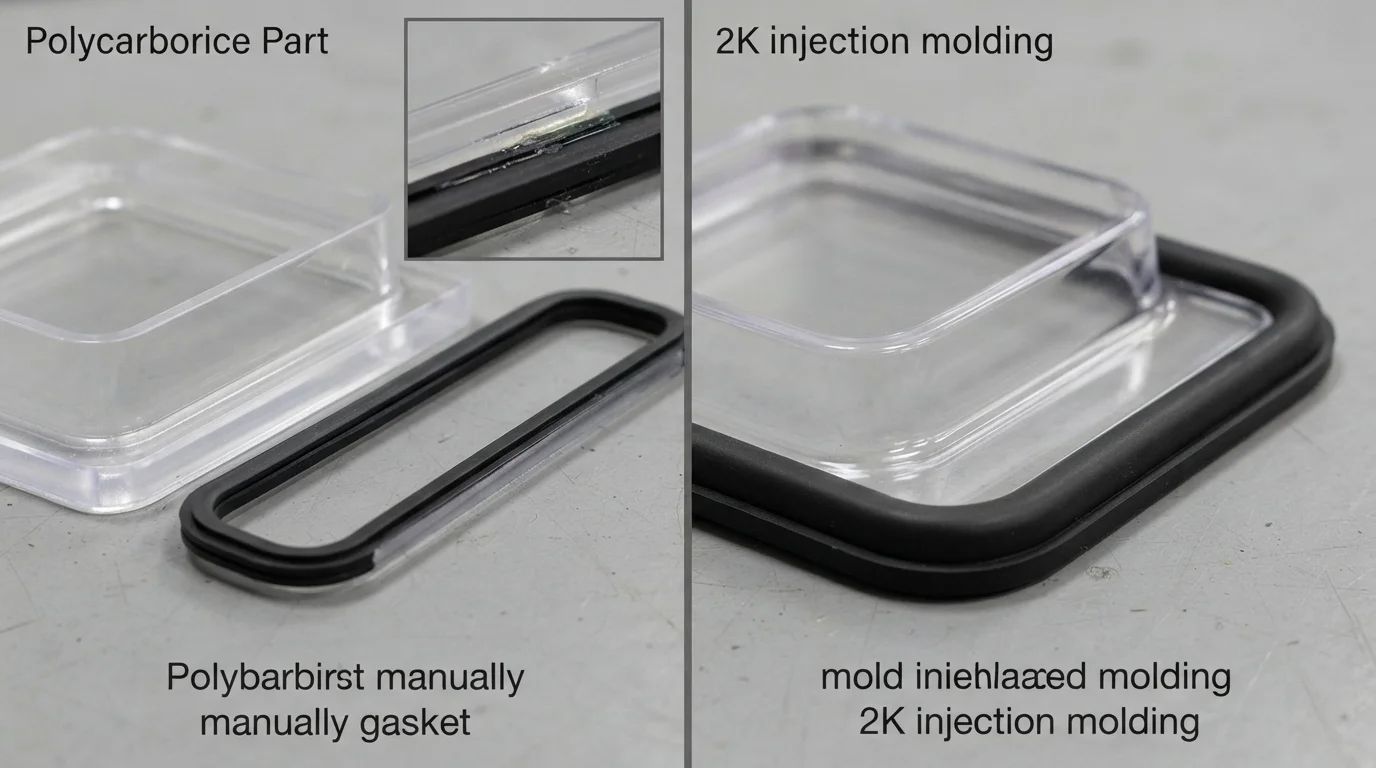
Comparing multi-shot processing against conventional single-shot molding reveals substantial structural and manufacturing advantages. Conventional single-shot molding requires producing two separate plastic parts on independent machines and joining them manually. Secondary joint lines rely on adhesives or mechanical snaps that can loosen, leak, or delaminate under dynamic road vibration.
Two-shot molding achieves chemical molecular fusion along the material interface, creating a monolithic, hermetically sealed boundary. Understanding what is two shot injection molding highlights why single-cycle 2K tooling eliminates downstream labor while ensuring razor-sharp color separation lines.
| Process Metric | Conventional Single-Shot Assembly | Integrated Two-Shot (2K) Molding | Primary Engineering Advantage |
|---|---|---|---|
| Machine & Cycle Architecture | Two separate presses + manual assembly | Single dual-barrel press with 180° rotary platen | Eliminates secondary assembly labor |
| Interfacial Joint Strength | Glued or snapped (Vulnerable to fatigue) | Molecular chemical fusion + mechanical lock | Hermetic waterproof & vibration proof |
| Tolerance Stack-up Risk | High (Manual alignment variance) | Zero (Sub-micron mold core indexing) | Guarantees perfect cosmetic alignment |
| Parting Line Aesthetics | Visible assembly gaps & adhesive seams | Sharp, seamless boundary transitions | Flawless backlit buttons & optical windows |
When Should Engineers Choose Two-Shot Injection Molding?
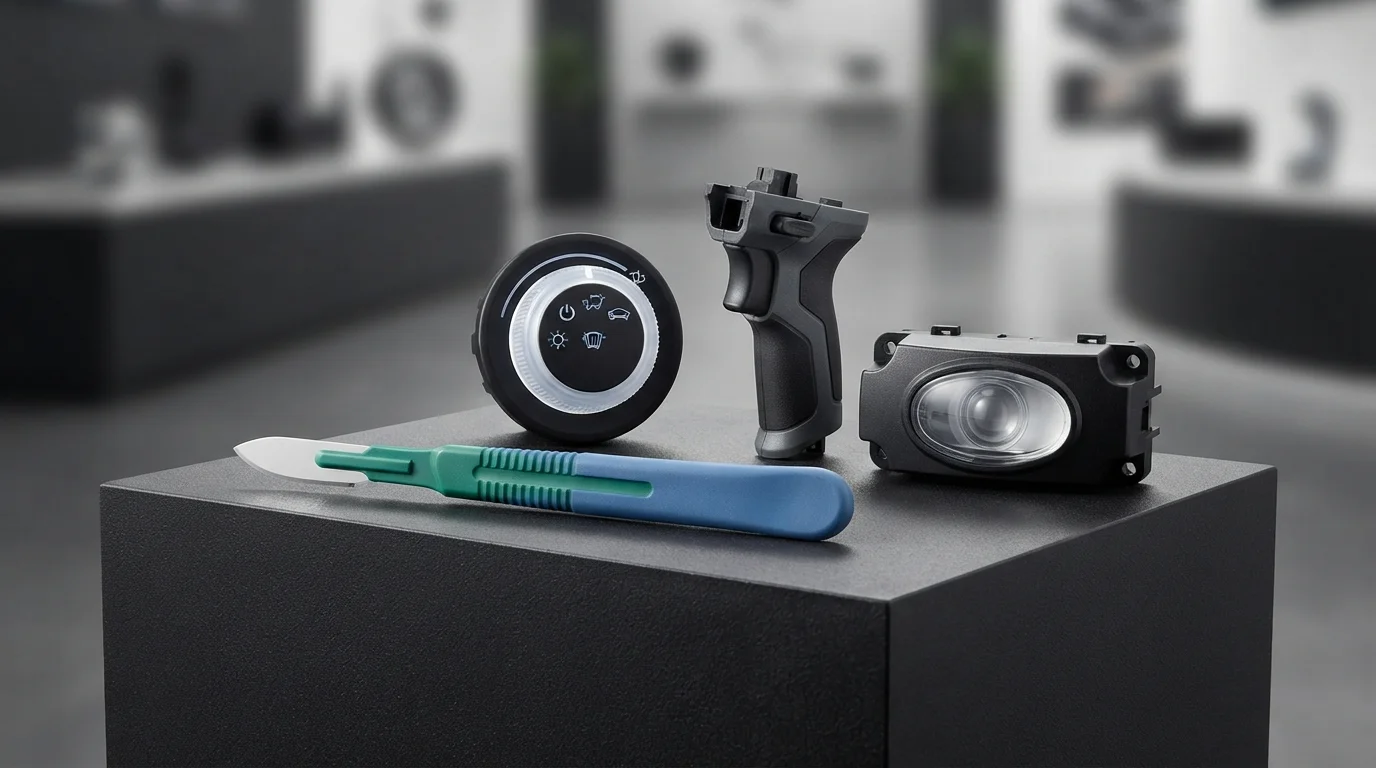
Selecting 2K multi-material molding depends heavily on production volume requirements, cosmetic targets, and functional sealing demands. Automotive interior controls utilize dual-shot molding to integrate opaque ABS frames with transparent PC symbols for wear-resistant backlit buttons. Medical equipment designers specify 2K processing to bond soft elastomeric grips directly onto rigid surgical instrument handles without adhesive glues.
Evaluating what is two shot injection molding suitability helps engineering teams decide whether annual production volumes justify initial 2K mold tooling investments.
Core 2K manufacturing triggers include:
- High-volume production runs (50,000+ parts)—Single-press 2K processing slashes cycle labor and delivers the lowest total piece-part cost.
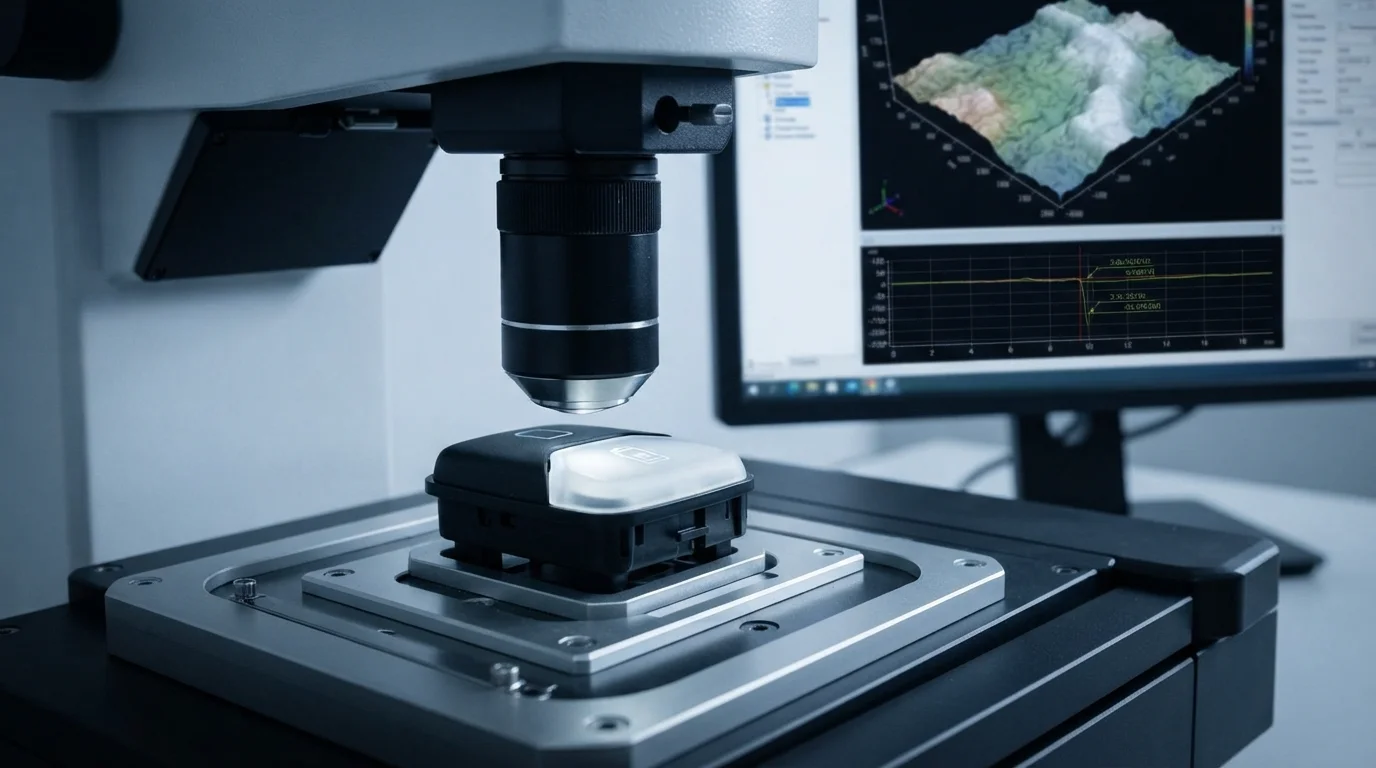
- Backlit illuminated controls—Encapsulating transparent PC symbols directly inside opaque ABS frames prevents light bleed and symbol wear.
- Integrated environmental seals—Molding elastomeric TPE gaskets directly onto rigid housings achieves IP67 fluid sealing without manual assembly.
Why Choose JUCHENG for Precision 2K Contract Manufacturing
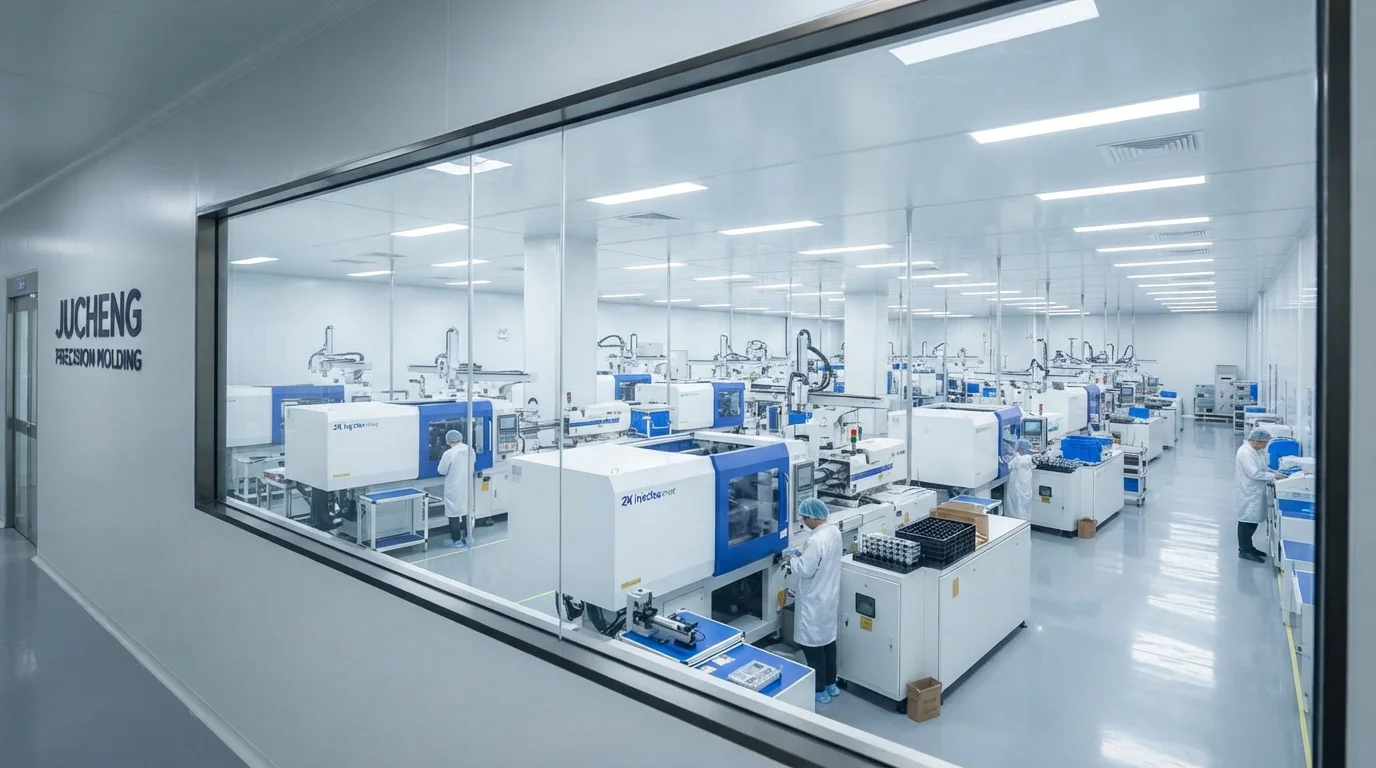
Partnering with JUCHENG for multi-material encapsulation projects provides access to an extensive production floor equipped with 35+ automated injection presses ranging from 15T to 3000T clamping force. Our facility operates dedicated multi-barrel presses fitted with high-precision hydraulic and servo-electric rotary platens. Toolmakers machine precision shut-off lands from hardened S136 stainless steel or H13 tool steel, guaranteeing flash-free sealing over 1,000,000 cycles.
Quality management systems certified to IATF 16949 and ISO 13485 back every multi-shot production run, offering full PPAP Level 3 documentation. Operating an ISO Class 8 cleanroom molding department protects medical overmolded components from airborne contamination during processing. Understanding what is two shot injection molding enables designers to consolidate parts into a single two shot injection molding cycle.
Frequently Asked Questions (FAQs)
What is two shot injection molding in simple terms?
Two shot injection molding, also known as 2K molding, is an automated manufacturing process where two different plastic resins or colors are injected into a single mold tool during one continuous machine cycle. A rotating mold platen moves the first-shot substrate into a second cavity where the second material is injected over it.
How does 2K molding differ from standard overmolding?
Two shot (2K) molding completes both material injections within a single press cycle using a rotating mold platen. Standard overmolding is a two-step process where the substrate is molded on one press, manually transferred, and overmolded on a second press.
What materials are most commonly paired in two shot molding?
Common 2K material pairs include rigid ABS with soft TPE for tool handles, rigid polycarbonate with transparent optical PC for backlit buttons, and glass-filled Nylon with TPU for rugged industrial housings.
Why does two shot molding create stronger bonds than secondary assembly?
Two shot molding injects the second material immediately after the first shot forms, while the substrate boundary surface is still warm. Warm boundary temperatures permit polymer chains from both materials to interdiffuse deeply, forming a permanent cohesive chemical bond.
What is the minimum annual volume needed to justify 2K tooling costs?
Annual production volumes exceeding 50,000 units typically justify the higher upfront investment of 2K rotary tooling. Faster cycle times, zero manual assembly labor, and lower scrap rates quickly offset initial mold development expenses.
Can two shot molding produce clear optical windows in colored housings?
Two shot molding routinely integrates crystal-clear PC or PMMA optical lenses directly into opaque ABS or nylon housings. Single-cycle molding creates seamless, dust-proof, and waterproof optical windows without secondary gluing.