

ABS

Acrylonitrile Butadiene Styrene (ABS) is a premier engineering thermoplastic celebrated for its exceptional impact toughness, dimensional stability, and aesthetic versatility (painting/plating). Jucheng Precision, holding ISO 9001, ISO 13485, and IATF 16949 certifications, specializes in high-precision ABS molding. Utilizing over 35 state-of-the-art molding presses (50-650T) and 25+ in-house 5-axis CNC machines, we ensure optimal melt flow and flawless surface finishes. Our engineering team delivers a comprehensive, free DFM analysis within 24 hours to address critical details like gate placement and shrinkage (0.4%-0.7%), guaranteeing micron-level precision verified by Zeiss CMM inspection.

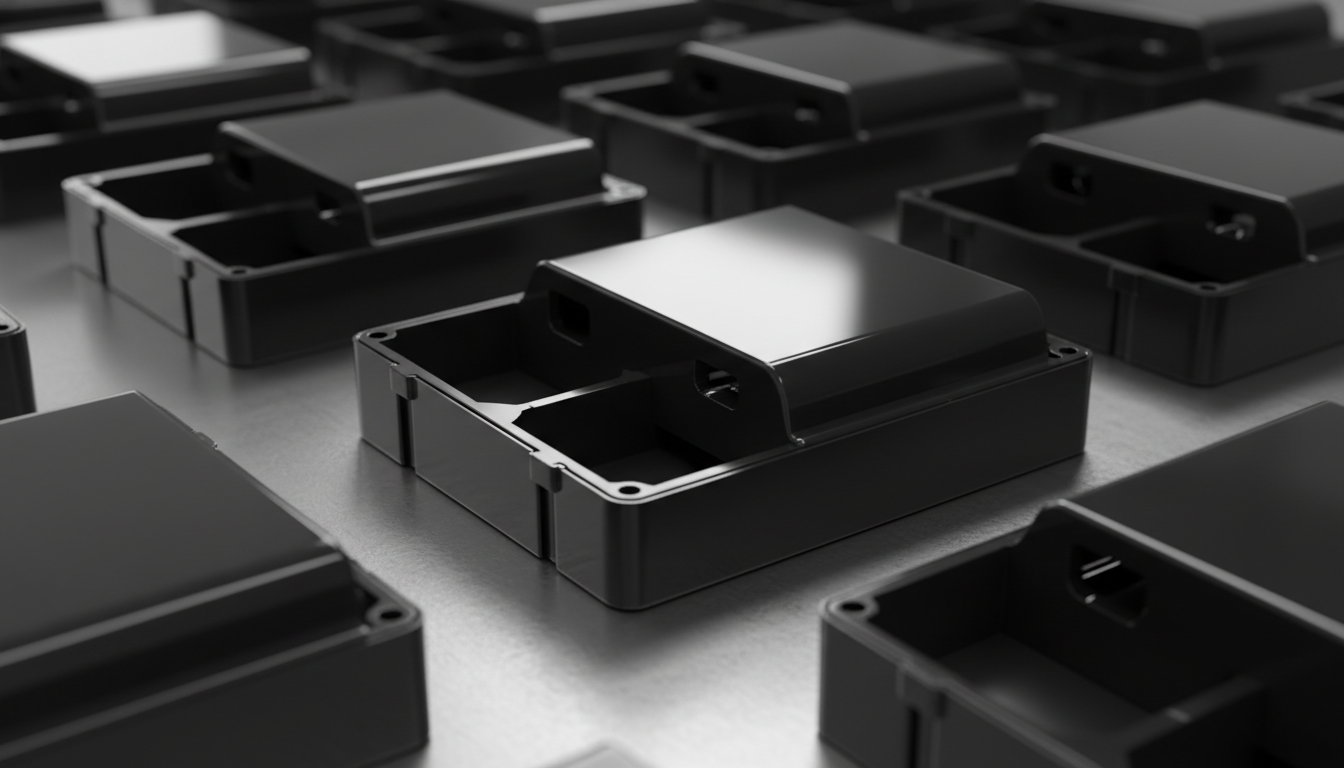
High-precision-injection-molded-glossy-black-ABS-electronic-enclosures-with-snap-fit-joints-1

Our available materials

ABS-Chi Mei POLYLAC PA-757

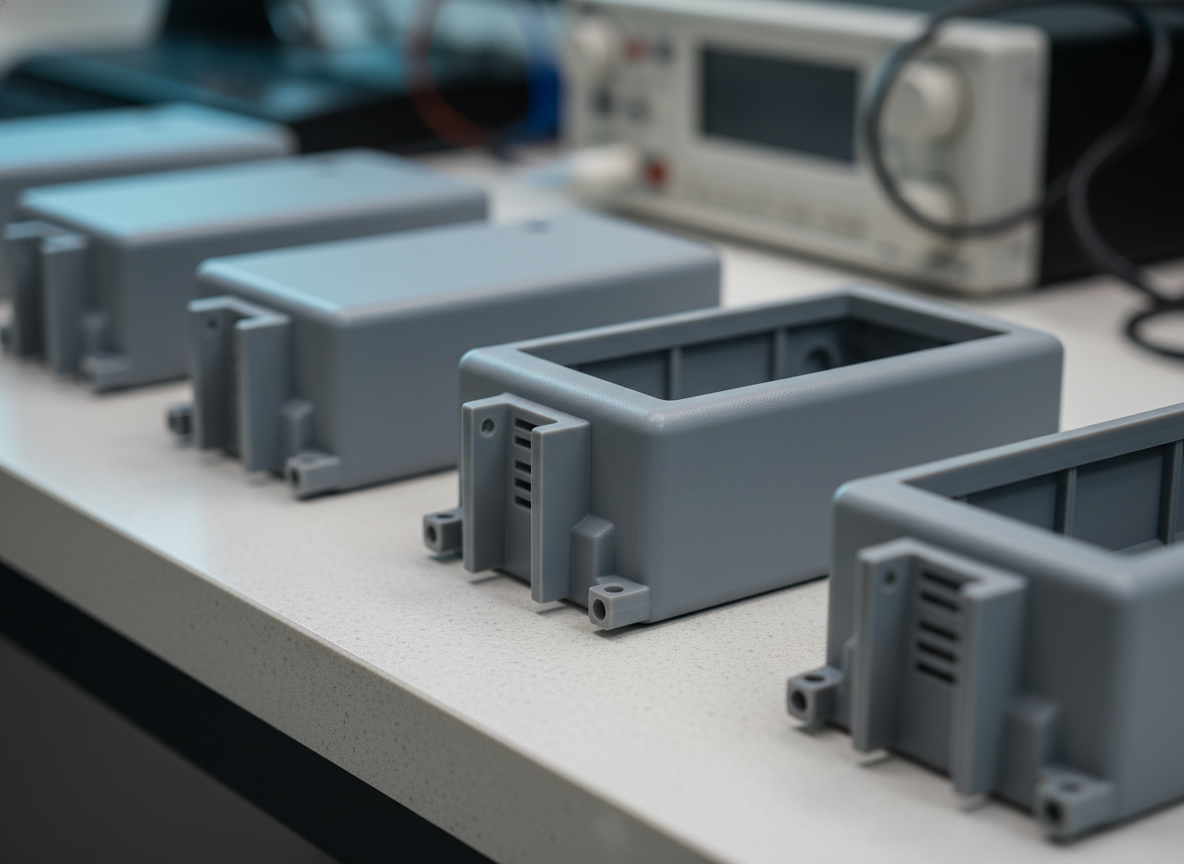
ABS-Chi Mei POLYLAC PA-757 is a premium general-purpose acrylonitrile butadiene styrene copolymer engineered by Chi Mei Corporation, celebrated for its exceptional surface gloss, high rigidity, and robust medium-impact resistance[2][3]. Featuring a density of 1.05 g/cm³ and a stable melt flow index of 1.8 g/10 min (at 200°C/5kg), this grade is the global standard for high-aesthetic consumer electronics, household appliance bezels, and structural toy components[4]. Jucheng Precision, under IATF 16949 and ISO 9001 quality frameworks, specializes in molding POLYLAC PA-757 to yield high-gloss, defect-free parts. Supported by our 5-axis CNC mirror-polished tooling and 35+ advanced injection presses, we prevent weld lines and control shrinkage (0.4%-0.7%), verified by Zeiss CMM inspection.
READ MORE

ABS-Chi Mei POLYLAC PA-765

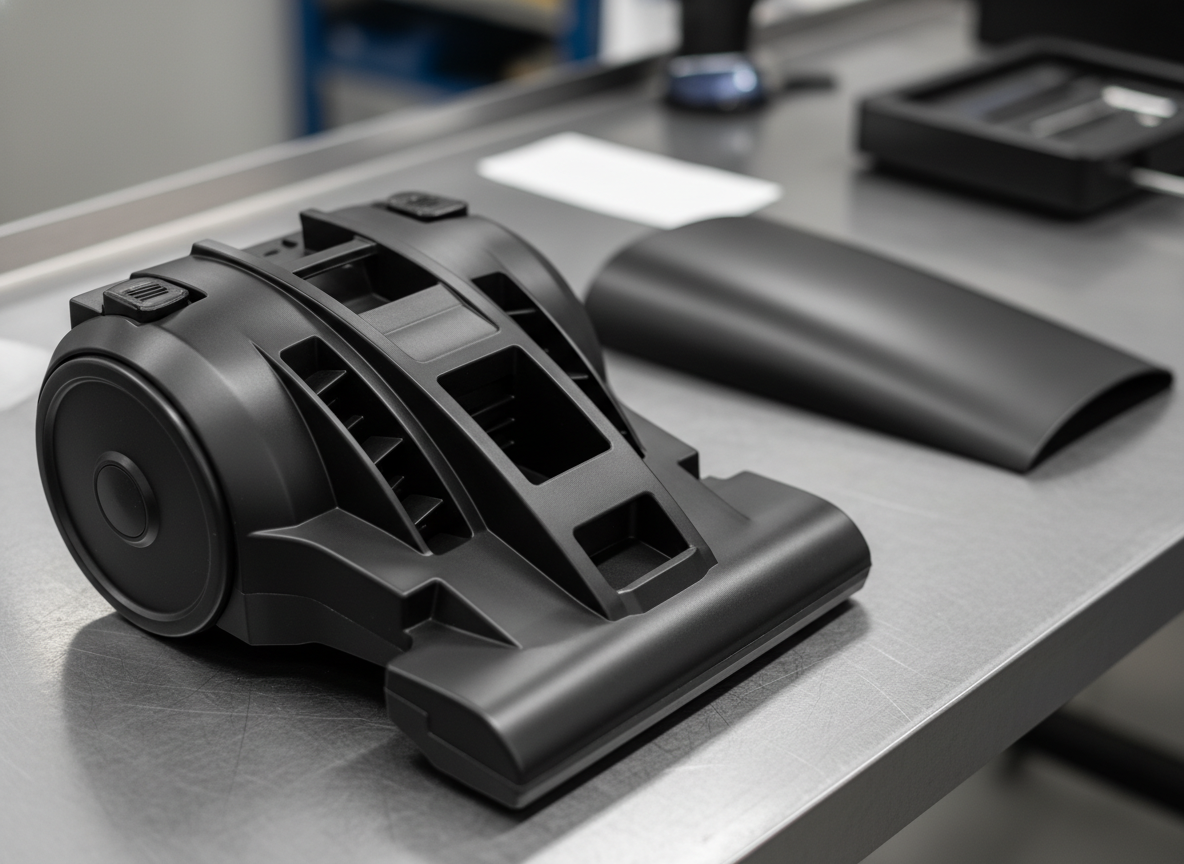
ABS-Chi Mei POLYLAC PA-765 is a high-flow, flame-retardant acrylonitrile butadiene styrene copolymer engineered by Chi Mei Corporation, certified to meet stringent UL 94 V-0, 5VB, and 5VA flammability standards. With a density of 1.19 g/cm³ and a melt index of 5.0 g/10 min, this grade is the global standard for complex power panels, EV battery enclosures, and telecommunication housings. Jucheng Precision, under ISO 9001 and IATF 16949 frameworks, specializes in molding PA-765, resolving processing outgassing and mold corrosion. Utilizing S136 corrosion-resistant stainless tool steel and optimized venting, we secure zero-defect, high-aesthetic parts verified by Zeiss CMM inspection.

READ MORE

ABS-LG Chem HF380

ABS-LG Chem HF380 is an advanced high-fluidity acrylonitrile butadiene styrene copolymer engineered by LG Chem, specifically designed to fill highly intricate, thin-walled, and large-area cavities. Boasting an outstanding melt volume-flow rate of 40 g/10 min (at 220°C/10kg) and a density of 1.04 g/cm³, this grade resolves standard ABS flow limitations while preserving excellent mechanical balance and impact toughness (Izod 24 kJ/m²). Jucheng Precision, under IATF 16949 and ISO 9001 quality frameworks, specializes in molding LG HF380 for high-yield runs. Supported by our 5-axis CNC-machined conformal cooling tools, we shorten cycle times and eliminate knit lines, verified by Zeiss CMM inspection.

READ MORE

Comprehensive ABS Resins & Grades We Mold

We process high-performance ABS resins from world-leading compounders, supporting properties from flame retardancy to high thermal resistance:

ABS Material Class Typical Brand & Grade Key Characteristics & Advantages
General Purpose • Chi Mei POLYLAC PA-757
• Sabic Cycolac T
• LG ABS HF380
Balanced mechanical strength, high rigidity, and excellent processability. Exceptional gloss and surface finish. Ideal for consumer goods, electronic enclosures, and toys.
Flame Retardant (FR) • Chi Mei POLYLAC PA-765
• Sabic Cycolac KJW
• LG ABS AF312
UL 94 V-0 to V-2 rated grades that suppress fire propagation. Excellent impact resistance and flow. Suited for power tools, appliances, and office electronic housings.
High Heat Resistant • Chi Mei POLYLAC PA-777D
• Sabic Cycolac S705
• LG ABS XR401
Designed to withstand elevated operational temperatures without mechanical deformation. Ideal for automotive interior trims, radiator grilles, and kitchen appliances.
Electroplating Grade • Chi Mei POLYLAC PA-727
• Sabic Cycolac EP3510
Specially formulated with low butadiene distribution to ensure uniform metallic layer adhesion. Extensively applied in automotive emblems, chrome handles, and bathroom fixtures.

Applicable Molding Processes for ABS

ABS offers excellent dimensional stability and chemical adhesion, making it highly compatible with advanced molding configurations:

Molding Process Process Suitability & Application
Standard Injection Molding Excellent. Highly suitable for structural housings, keyboards, domestic appliance shells, and toys requiring precise snap-fits.
Overmolding / 2K Molding Excellent. Often used as the rigid substrate overmolded with soft TPE or TPU to create hand-grips, aesthetic borders, and tactile power buttons.
Insert Molding Excellent. Brass knurled nuts, electronic terminal connectors, and metal brackets can be seamlessly insert-molded to enhance mechanical fastening.

ABS Injection Molding Manufacturing & Tooling Guide

While ABS is generally forgiving to process, maintaining cosmetic excellence and high dimensional repeatability demands scientific process controls:

  • Pre-Drying: ABS is moderately hygroscopic and will absorb atmospheric moisture. We strictly pre-dry ABS resin in desiccant dryers at 80°C–85°C (176°F–185°F) for 2–4 hours to prevent splay, cosmetic silver streaks, and mechanical weakening.
  • Melt Temperature: Processed between 200°C and 240°C (392°F to 464°F). For flame retardant (FR) grades, we limit melt temperatures to 230°C to prevent thermal degradation of FR additives.
  • Mold Temperature: Kept between 40°C and 80°C (104°F to 176°F). Higher mold temperatures improve flow, reduce molded-in stresses, and elevate the final part’s surface gloss.
  • Draft Angles: Due to ABS’s rigid nature, draft angles of 1.5° to 2° are recommended to facilitate clean ejection without drag marks, particularly on textured surface finishes (e.g., MT11010).
  • Shrinkage Calculation: ABS exhibits low and predictable shrinkage (typically 0.4% to 0.7%). Our tooling division utilizes 5-axis CNC machining to cut mold cavities with precise scaling, ensuring tight dimensional tolerances.

Key Application Industries for Molded ABS Parts

  • Automotive (IATF 16949 Certified): Instrument panels, door panels, glove compartment covers, grilles, wheel covers, and chrome trims.
  • Consumer Electronics: Desktop printer housings, gaming console shells, remote controls, keyboards, router enclosures, and phone bezels.
  • Medical Housings (ISO 13485 Compliant): Handheld diagnostics covers, laboratory device casings, medical monitor bezels, and non-invasive equipment handles.
  • Consumer Goods & Toys: Rigid toy blocks, kitchen appliance enclosures, power tool housings, suitcases, and structural storage organizers.

Material Properties

Density 1.03 - 1.07 g/cm³
Melt Mass-Flow Rate (MFR) (220°C/10kg) 10 - 45 g/10 min
Tensile Strength at Yield 35 - 50 MPa
Tensile Elongation at Break 10 - 40 %
Flexural Modulus 2,000 - 2,800 MPa
Izod Impact Strength (Notched, 23°C) 150 - 300 J/m
Rockwell Hardness (R-Scale) 100 - 115 -
Melting Temperature 210 - 240 °C
Heat Deflection Temperature (HDT @ 0.45 MPa) 85 - 105 °C
Linear Mold Shrinkage 0.4 - 0.7 %
Dielectric Strength 18 - 25 kV/mm
Volume Resistivity 1.0E+15 Ohm·cm
Maximum Part Size 1000 x 800 mm
Minimum Part Size 1 x 1 mm