
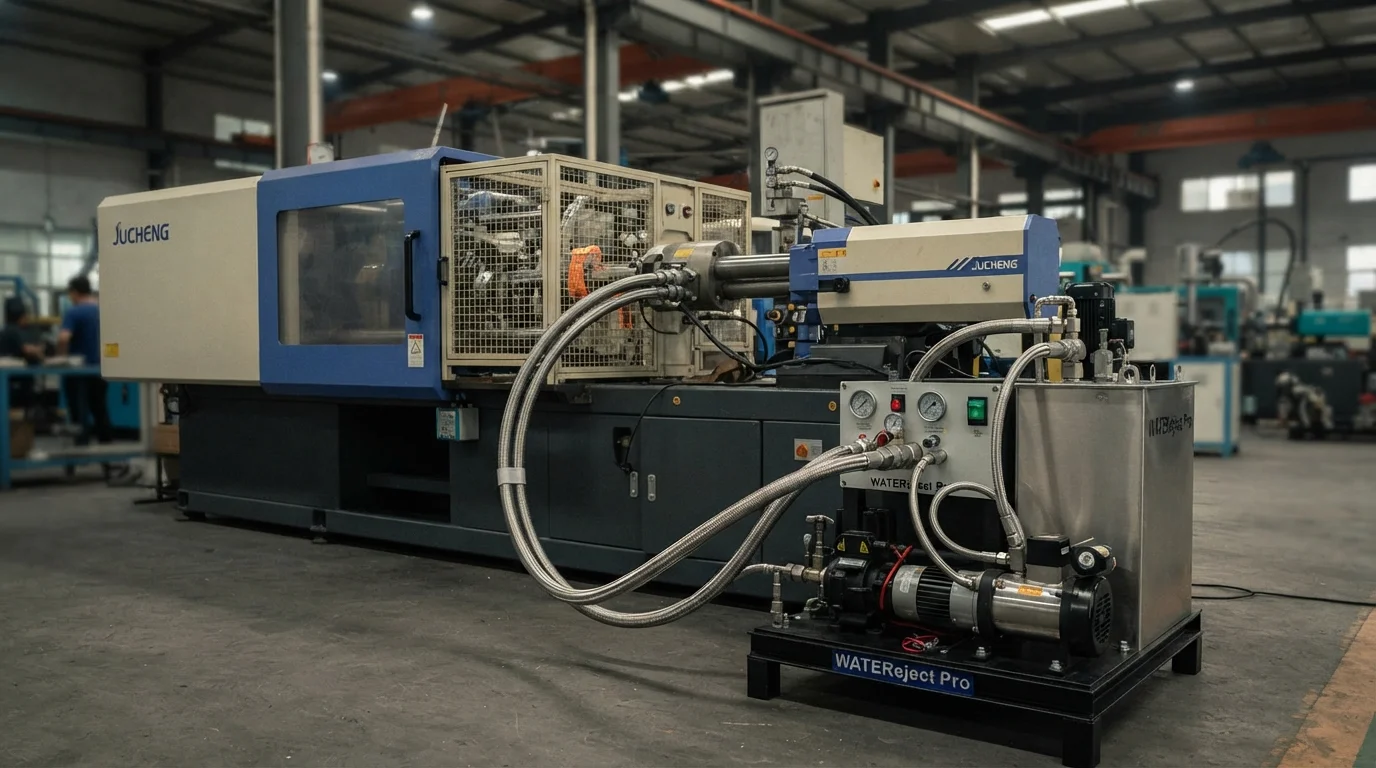
Manufacturing heavy-walled fluid transport pipes, automotive coolant lines, and structural handles requires internal core evacuation to reduce material usage and shorten cycle times. Gas-assisted molding effectively creates hollow channels, but nitrogen gas possesses low heat capacity, resulting in long cooling delays for thick polymer walls. Specifying high-pressure water assist injection molding overcomes these thermal limitations by utilizing pressurized water to coring out molten resin cores. JUCHENG operates specialized water-assisted manufacturing cells, producing hollow plastic fluid channels strictly according to customer technical CAD files.
目錄
Water Injection Technology for Hollow Fluid Channels & Automotive Pipes
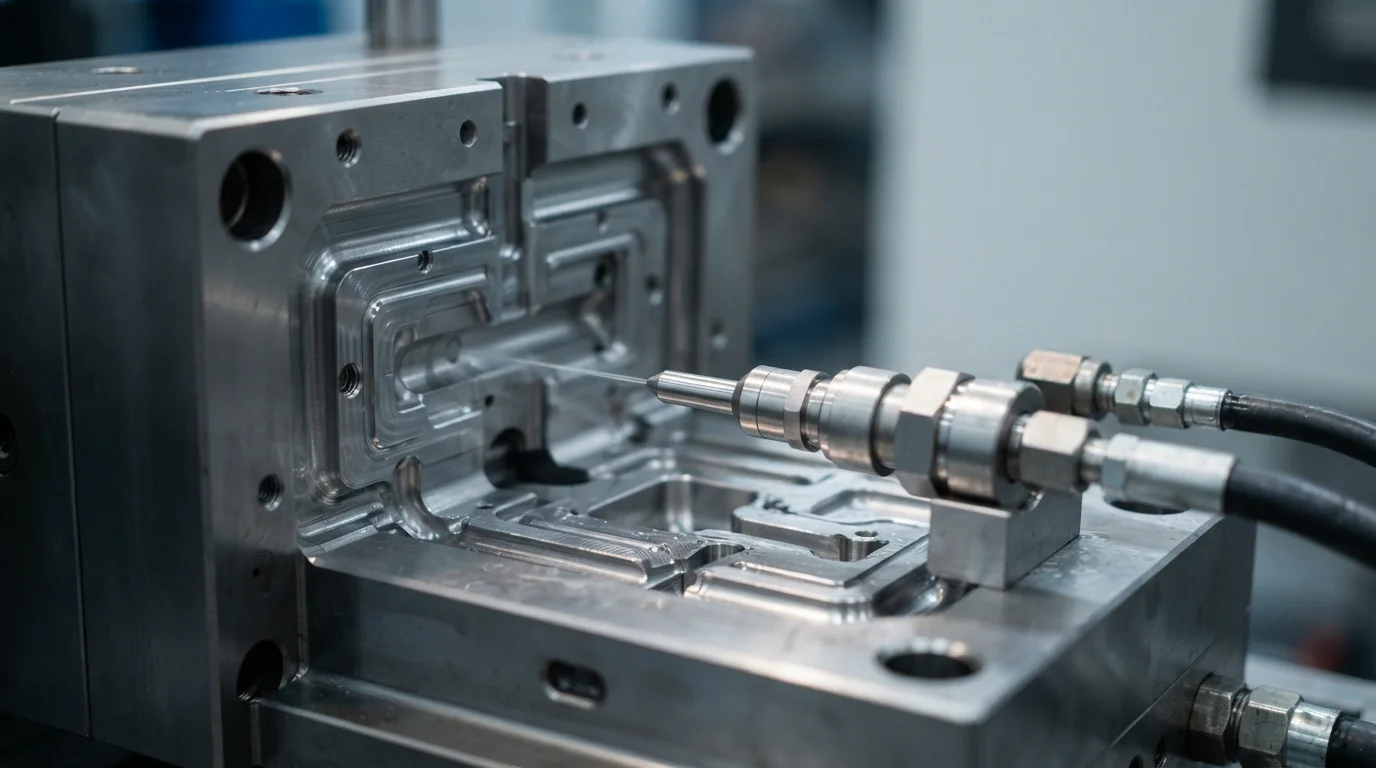
Utilizing water injection technology involves injecting pressurized water into the center of a partially filled mold cavity. High-pressure water displaces the molten polymer core, forcing the liquid plastic forward into overflow wells or unfilled sections of the cavity. Water acts as an incompressible fluid medium, maintaining a uniform wall thickness along complex three-dimensional pipe curves. Incompressible water pressure prevents wall collapse and maintains consistent internal channel diameters throughout the cooling cycle. Automotive fluid pipes molded with water assistance deliver smooth, unobstructed flow paths for engine coolants and hydraulic oils.
Water assist injection process sequence includes:
- Resin partial dosing—Injecting a precise volume of molten polymer prepares the cavity for fluid core displacement.
- High-pressure water entry—Pumping pressurized water through specialized injector pins cores out the molten polymer center.
- Internal water circulation—Circulating cold water through the hollow core extracts thermal energy directly from the inside wall.
- Water purging and air purge—Evacuating internal water using compressed air dries the hollow channel prior to mold opening.
Accelerated In-Cavity Cooling Rates & Smooth Internal Surface Finishes
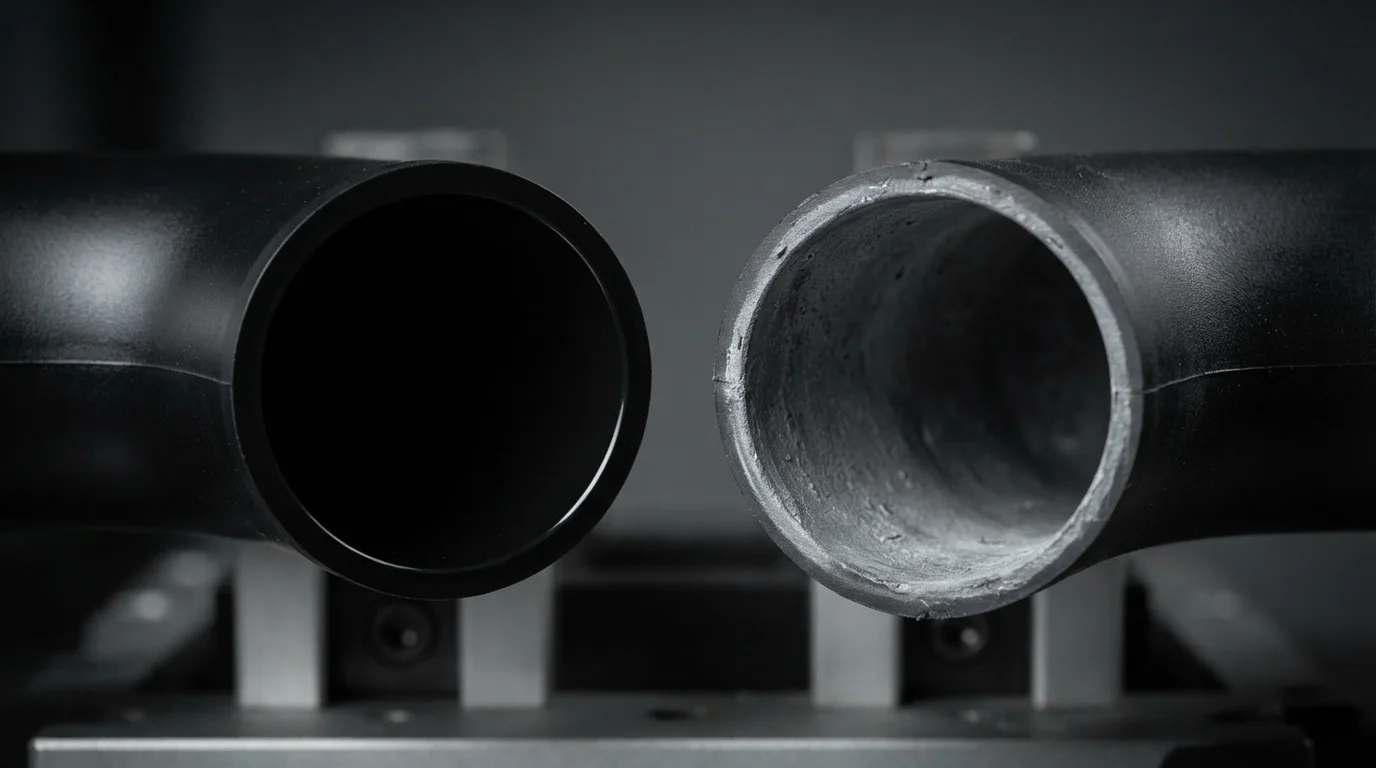
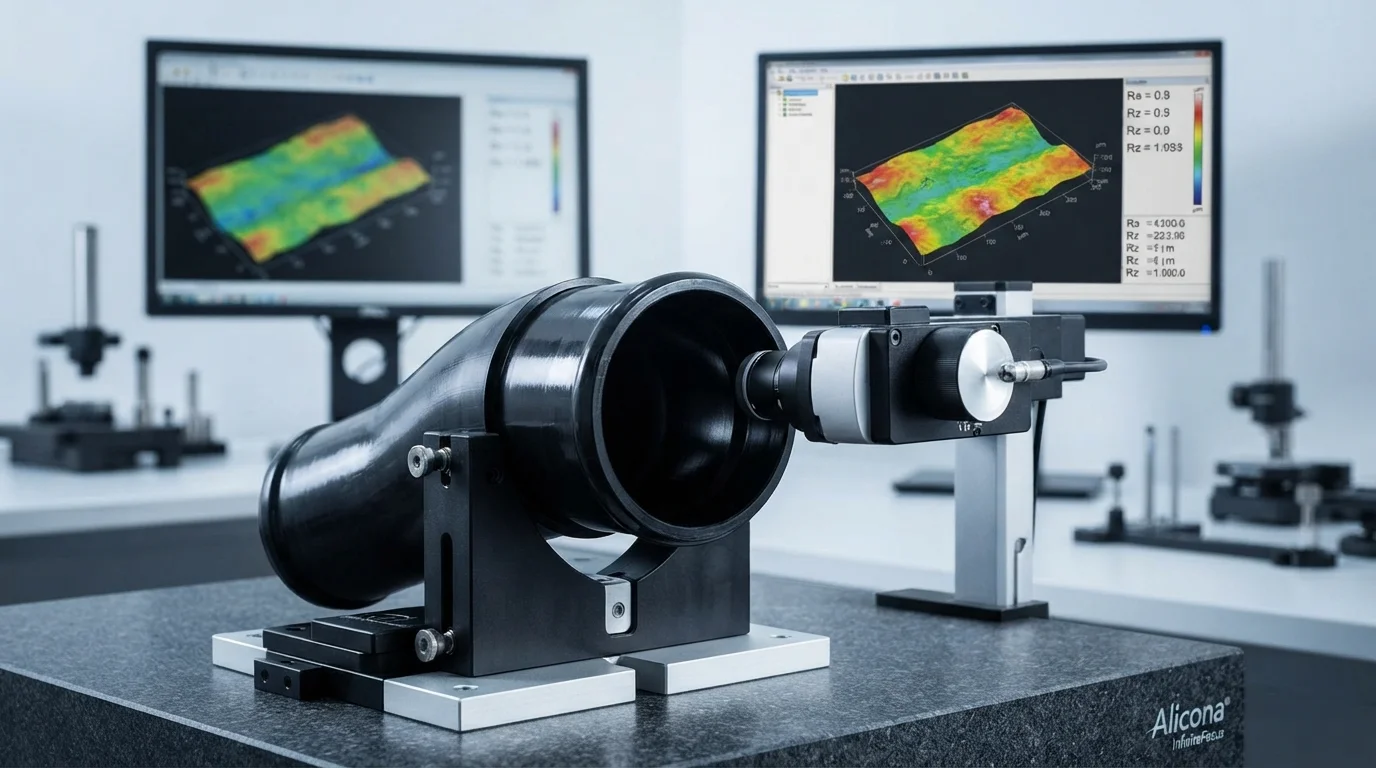
Achieving accelerated in-cavity cooling represents the primary physical advantage of water-assisted processing over gas assistance. Water possesses a thermal conductivity and heat capacity vastly superior to nitrogen gas. Direct contact between cold water and the internal polymer wall extracts thermal energy rapidly from both sides of the part wall. Cooling times drop by up to 70% compared to solid injection molding, drastically reducing overall cycle duration for thick structural parts. Yielding smooth internal surface finishes without residual polymer webbing or internal skin foaming ensures optimal fluid dynamics in automotive cooling ducts.
Material Compatibility: PA66, PBT & Polypropylene Fluid Lines
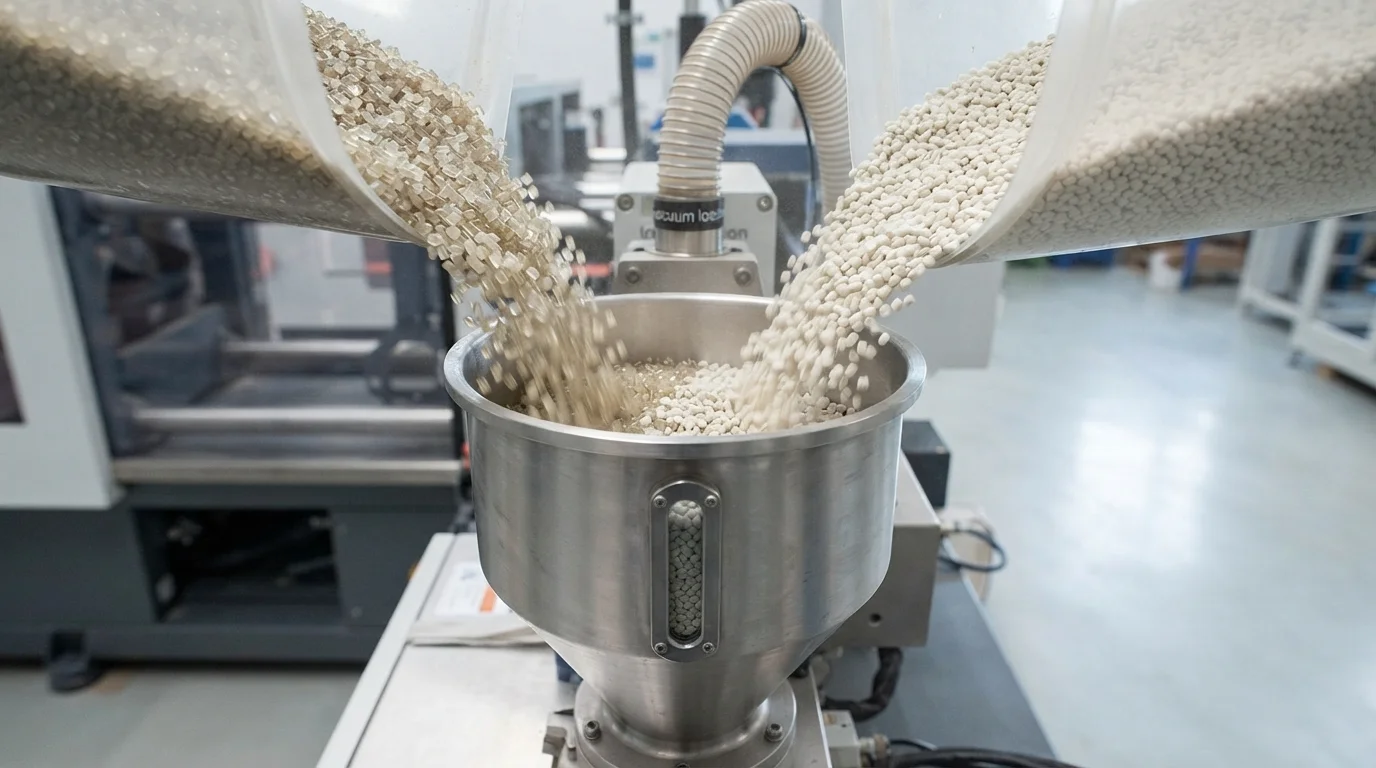
Material selection determines the chemical resistance and hydrolytic stability of hollow fluid conduits. Polymers suitable for water-assisted processing include glass-filled PA66-GF30, PBT, and high-flow polypropylene (PP). Resin grades must resist temporary hydrolytic degradation during short-duration contact with high-temperature water. Formulating polyamides with specialized hydrolysis stabilizers prevents polymer chain scission during the injection phase. Engineers select glass-reinforced grades to ensure high burst pressure resistance in automotive under-hood coolant lines.
| Target WIT Polymer Grade | Water Pressure (bar) | Inner Wall Surface Roughness | Cooling Time Reduction (%) | Primary WIT Conduit Part |
|---|---|---|---|---|
| PA66-GF30 (Zytel 70G33L) | 150 – 250 bar | Smooth (Ra < 1.6 μm) | 50% – 70% | Automotive radiator pipes & oil tubes |
| PBT-GF30 (Valox 420) | 180 – 280 bar | Glass-Smooth (Ra < 1.2 μm) | 55% – 70% | Engine coolant thermostat housings |
| Polypropylene (PP-HP500N) | 100 – 200 bar | Smooth (Ra < 2.0 μm) | 40% – 60% | Appliance fluid lines & door handles |
Frequently Asked Questions (FAQs)
Why is water assist injection molding faster than gas assist molding?
Water possesses a heat capacity and thermal conductivity significantly higher than nitrogen gas. Injecting cold water directly into the hollow core extracts heat from the inside of the part wall while mold water channels cool the outside, reducing cycle times by up to 70%.
How does water assist molding produce smoother inner pipe walls?
Water is an incompressible fluid that pushes molten resin against cavity walls with uniform hydrostatic pressure. Uniform liquid pressure prevents gas fingering, foaming, or internal skin porosity, yielding a glass-smooth inner diameter suitable for high-velocity fluid flow.
What happens to the water inside the part before mold opening?
Before the mold opens, high-pressure compressed air purges the internal water out through drainage valves back into a recovery reservoir. Air purging dries the hollow interior channel completely, preventing water spills on the press platen during part ejection.