
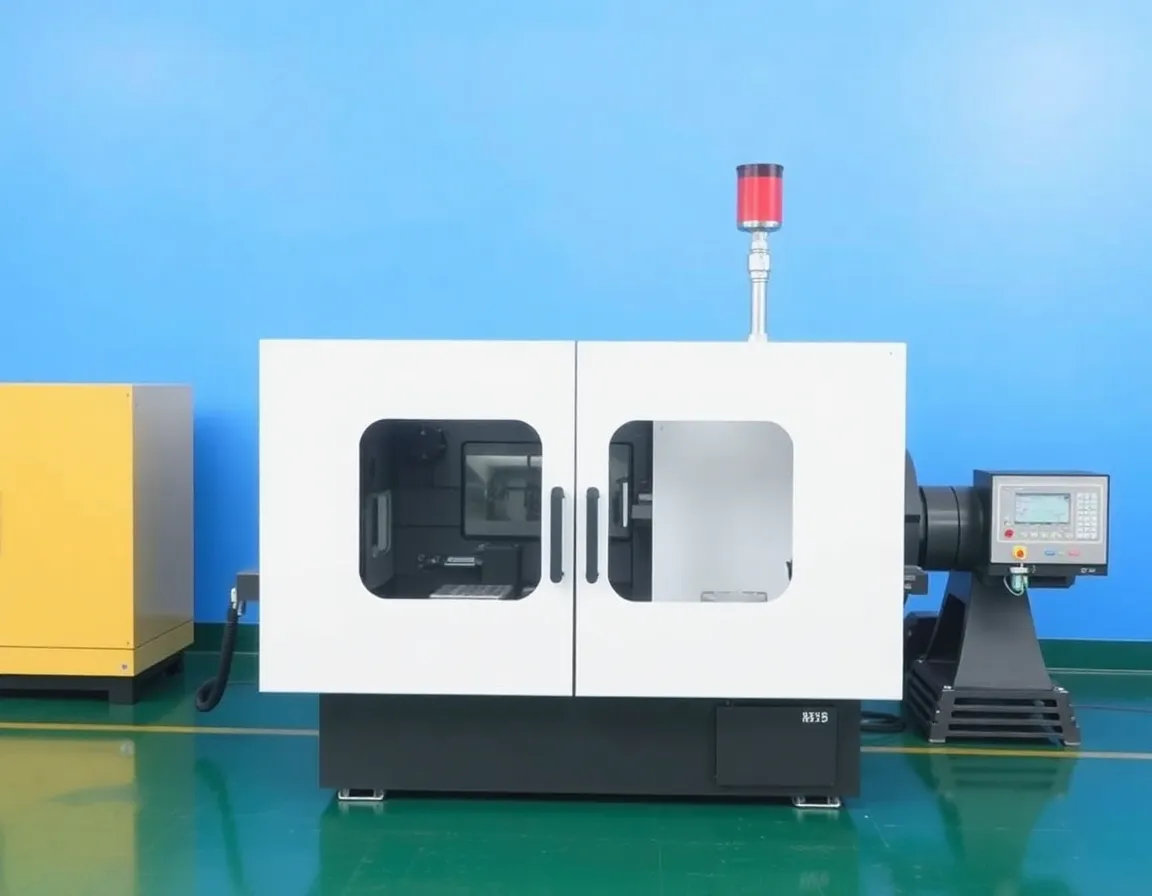
해외 사출 성형과 그 전략적 가치에 대한 이해
현대 제조업의 경쟁 환경에서 엄격한 품질 기준을 유지하면서 생산 비용을 절감해야 한다는 압박은 그 어느 때보다 큽니다. 제품 개발자, OEM, 기업가에게 "해외 사출 성형"이라는 말은 흔히 긴 리드 타임, 의사소통 장벽, 일관되지 않은 부품 품질을 떠올리게 합니다. 그러나 전략적 파트너와 규율 있는 엔지니어링 접근 방식으로 실행할 경우, 해외 사출 성형 서비스는 정밀도, 재료 무결성, 표면 마감을 타협하지 않고도 국내 생산 대비 흔히 20%에서 40% 사이의 상당한 비용 절감을 달성할 수 있는 강력한 수단을 제공합니다. 이 글에서는 해외 사출 성형의 메커니즘, 실제 적용 사례, 그리고 성공적인 프로그램과 값비싼 실수를 구분하는 모범 사례를 자세히 살펴봅니다.
해외 사출 성형은 플라스틱 부품 제조를 저비용 지역, 가장 흔하게는 동남아시아(중국, 베트남, 태국), 남아시아(인도), 또는 동유럽과 라틴아메리카 일부에 위치한 시설에 위탁하는 과정을 말합니다. 이들 지역은 Engel, Arburg, Nissei 같은 브랜드의 첨단 기계와 ISO 9001 및 IATF 16949와 같은 국제 품질 표준 인증을 점점 더 많이 받은 숙련된 인력을 갖춘 성숙한 플라스틱 생태계를 발전시켜 왔습니다. 핵심 경제적 이점은 낮은 인건비, 공장 운영에 대한 낮은 간접비, 그리고 흔히 수출 지향 제조에 대한 정부 인센티브에 있습니다. 그러나 진정한 가치 제안은 단순히 값싼 노동력이 아니라, 원자재와 2차 공정의 방대한 공급망에 접근하면서 더 긴 생산 실행에 걸쳐 값비싼 툴링 비용을 상각할 수 있는 능력입니다.
경제적 방정식: 단가를 넘어서
When evaluating offshore injection molding services, a common mistake is to compare only the per-unit piece price. A comprehensive cost analysis must include the total landed cost, which factors in mold construction, shipping, customs duties, logistics, inventory holding, and potential quality-control visits. Offshore molding often wins on piece price due to lower hourly machine rates and labor costs, but the savings can be eroded if the mold requires frequent engineering changes or if the shipping schedule is not synchronized with demand. For example, a simple polypropylene bracket produced in the U.S. might cost $0.85 per unit. The same part produced in a Tier-1 Chinese facility might cost $0.42 per unit. However, when you add ocean freight (approximately $2,500 per 40-foot container) and a 30-day lead time, the effective cost per unit might rise to $0.58—still a significant 32% saving, but the decision requires a volume forecast that justifies the inventory buffer.
Furthermore, offshore molding offers distinct advantages for high-volume production and for parts with complex geometries that require long cycle times. Since the hourly machine rate in Asia or Mexico is a fraction of that in Germany or the U.S., running a 60-second cycle on a 500-ton press becomes economically viable offshore, whereas domestically, such a part might be cost-prohibitive. This allows designers to consolidate multiple components into a single, more complex molded part, reducing assembly costs and improving part consistency.
How Offshore Injection Molding Services Operate: A Step-by-Step Process
To appreciate the potential and pitfalls of offshore injection molding, one must understand the workflow. It is not a simple "send a CAD file and wait" transaction. A robust offshore program follows a structured, multi-phase approach that ensures alignment between the client’s design intent and the molder’s manufacturing realities.
1. Design for Manufacturability (DFM) and Mold Flow Analysis
The first critical step is a collaborative DFM review. A reputable offshore partner will assign a project engineer who speaks fluent English and has deep experience in mold design. This engineer will analyze your part geometry for draft angles, wall thickness uniformity, gate placement, and ejection feasibility. They will use Moldflow or Moldex3D simulation software to predict filling patterns, weld lines, air traps, and cooling times. This step is where the quality battle is won or lost. For instance, if your part has a living hinge, the offshore molder must ensure the material flow orientation is correct to avoid premature cracking. A good DFM will result in a mold design that minimizes cycle time, reduces scrap, and ensures repeatable dimensions across millions of cycles.
2. Tooling Construction and Sample Approval
Once the DFM is approved, the mold construction begins. Offshore tool shops typically use hardened steel (P20, H13, or S136) for high-volume production, while pre-hardened steel is used for lower volumes. The key advantage is that the cost of tooling steel and precision machining (EDM, CNC) is significantly lower offshore. A complex two-cavity mold that costs $80,000 in the U.S. might cost $35,000 in Vietnam or China. However, the client must be vigilant about the mold’s steel quality and the supplier’s adherence to specified tolerances. After the mold is cut, the molder will produce T1 (trial) samples. These samples are shipped to the client for full dimensional inspection, material testing, and aesthetic evaluation. It is common to go through two or three iterations (T1, T2, T3) before the client signs off on the "golden sample." This approval is the legal and technical baseline for mass production.
3. Production, Inspection, and Logistics
After sample approval, the molder schedules mass production. Unlike domestic suppliers who may offer just-in-time delivery, offshore programs typically use a push-pull inventory model. The client places a blanket purchase order, and the molder produces in batches, holding finished goods in a bonded warehouse. During production, the molder performs in-process quality checks, including dimensional measurements using CMM (Coordinate Measuring Machines), visual inspection for sink marks or flash, and material verification via spectroscopy. Many top-tier offshore facilities are equipped with automated vision systems that inspect 100% of critical dimensions. Finally, the finished parts are packed in export-grade cartons, loaded into containers, and shipped via sea or air. A good logistics partner will handle customs brokerage and ensure the goods arrive at your warehouse or directly to your assembly line.
Key Benefits of Outsourcing to Offshore Injection Molding Facilities
The decision to go offshore is driven by more than just arithmetic. It offers strategic flexibility and access to capabilities that may not be available locally. Below are the primary benefits that companies realize when engaging professional offshore injection molding services.
Significant Cost Reduction on Tooling and Piece Price
This is the headline advantage. The cost of mold fabrication in countries like China or India is typically 40-60% lower than in North America or Western Europe. This is not due to inferior quality, but rather lower labor costs for toolmakers, cheaper electricity for machining, and a highly competitive ecosystem of mold component suppliers. For piece parts, the lower hourly rates for injection molding machines (which include operator wages, overhead, and utilities) translate directly into a lower price per part. For a product requiring a new mold, the savings on tooling alone can fund other aspects of product development, such as packaging design or regulatory testing.
Access to Advanced Machinery and Material Expertise
Contrary to outdated stereotypes, many offshore molding facilities are equipped with 전동 사출 성형기 that offer superior precision, repeatability, and energy efficiency compared to older hydraulic machines. For instance, a factory in Shenzhen might operate a fleet of 50-ton to 1,500-ton machines, including multi-shot (two-color) molding capabilities and insert molding with automation. Furthermore, offshore molders often have extensive experience working with engineering-grade polymers such as PC/ABS, PEEK, LCP, and glass-filled nylon. They can also source specialty additives (UV stabilizers, flame retardants, anti-static agents) at a lower cost due to local chemical manufacturing hubs.
Scalability and Capacity Flexibility
Offshore facilities often have enormous production capacity. If your product suddenly gains market traction and you need to double your output, a large offshore factory can allocate additional presses and shifts quickly, sometimes within a week. Domestic molders with limited machine capacity might quote you a 16-week lead time for additional capacity. This scalability is crucial for seasonal products or for companies launching into new markets where demand forecasting is uncertain. Moreover, you can start with a single-cavity tool offshore to prove the market, and then later expand to a family mold or multi-cavity tool without changing suppliers—the same engineering team will handle the tooling upgrade at a fraction of the original cost.
Vertical Integration of Secondary Operations
Many offshore injection molding services are part of larger manufacturing conglomerates that offer secondary operations in-house, including pad printing, laser engraving, ultrasonic welding, pad printing, and even basic assembly. This reduces the need for multiple suppliers and eliminates the logistical headache of shipping parts to a separate finishing facility. For example, if your part requires a threaded metal insert, the offshore molder can perform insert molding automatically within the cycle, rather than sending the part to a secondary press. This integration reduces labor costs, improves quality control, and shortens your overall supply chain timeline.
Applications and Industries That Benefit Most from Offshore Molding
Not all products are ideal candidates for offshore injection molding. However, a wide range of industries have successfully leveraged this strategy to improve margins and accelerate time-to-market.
- Consumer Electronics and Appliances: Housings, internal chassis, buttons, and connectors for smartphones, laptops, and home appliances. The high volume and need for cosmetic finishes make offshore molding highly effective.
- Automotive Components: Interior trim clips, under-the-hood fluid reservoirs, sensor housings, and connector bodies. Many Tier-1 automotive suppliers use offshore molding for non-safety-critical parts, then perform final assembly and testing locally.
- Medical Devices and Diagnostics: Disposable pipette tips, syringe barrels, housings for diagnostic instruments, and surgical instrument handles. Offshore molders certified to ISO 13485 offer the cleanroom molding capabilities required for medical applications at a fraction of the cost.
- Industrial and Power Tools: Gear housings, trigger assemblies, handle grips, and cooling fan blades. The toughness of engineering plastics and the need for precision fit make offshore molding viable for high-durability applications.
- Recreational and Outdoor Products: Components for bicycles, camping gear, fishing reels, and power sports equipment. The cost savings allow brands to offer competitive retail pricing.
However, it is crucial to note that parts with very tight tolerances (under ±0.01mm), those requiring exotic materials with limited global supply, or those with extremely low volumes (under 1,000 units per year) may not be suitable for offshore molding. The shipping and tooling amortization costs would outweigh the per-piece savings. For such cases, a domestic prototyping or low-volume molder is more pragmatic.
Best Practices for a Successful Offshore Injection Molding Partnership
To avoid the horror stories of delayed shipments and defective parts, one must approach offshore sourcing with a disciplined, engineering-driven mindset. Here are the critical best practices that separate successful programs from failures.
Conduct a Rigorous Supplier Audit and Qualification
Do not choose a molder based solely on the lowest quote. Perform a virtual or on-site audit focusing on their quality management system, machine maintenance logs, mold repair capabilities, and English-speaking engineering staff. Ask for references from clients in your industry, and request to see their rejection rate data (PPM - parts per million). Ideally, visit the factory during the T1 trial to observe the mold setup and the operator’s skill level. If an on-site visit is impossible, request a live video walkthrough of the production floor and a detailed list of their equipment. Verify their certifications independently, not just by looking at a PDF on their website.
Over-Communicate Specifications and Tolerances
Ambiguity is the enemy of quality. Your engineering drawing must include not only the 3D model but also a comprehensive 2D drawing with GD&T (Geometric Dimensioning and Tolerancing) symbols. Specify the exact material grade, supplier, and lot number if necessary. Do not rely on verbal agreements. Every critical dimension, surface finish requirement (e.g., VDI 30 or SPI A-2), and appearance standard (e.g., no visible weld lines on the front face) must be documented in a quality agreement. A best practice is to provide a boundary sample—a physical part that represents the maximum acceptable limit of cosmetic defects. This gives the offshore quality inspectors a tangible reference.
Invest in a Robust Quality Control Plan and Third-Party Inspection
Even with a good supplier, you should implement a layered quality control strategy. First, require the molder to send a First Article Inspection Report (FAIR) with actual measurement data for every dimension, not just a "pass/fail" checkbox. Second, for critical production runs, hire a third-party inspection agency (such as SGS, Bureau Veritas, or TÜV) to conduct a pre-shipment inspection (PSI) at the factory. These inspectors will randomly sample parts from the production lot, measure key dimensions, and verify that the packaging is correct. This costs a few hundred dollars per shipment but can save you from receiving an entire container of unusable parts. Third, establish a clear process for corrective actions. If defects are found, require the molder to submit a formal 8D report explaining the root cause and the permanent corrective action.
Plan Logistics and Inventory with Precision
Offshore shipping times are not negotiable. A sea shipment from Shanghai to Los Angeles takes 18-25 days, plus customs clearance and inland trucking. You must factor this into your inventory planning. A common strategy is to hold a safety stock equivalent to 6-8 weeks of demand to buffer against port delays, factory shutdowns (e.g., Chinese New Year), or unexpected demand spikes. Work with a freight forwarder who specializes in your industry and understands the nuances of plastic goods classification (HS codes). Also, consider splitting your shipment into multiple smaller containers if your demand is variable, rather than waiting to fill a full 40-foot container, which could lead to stockouts. For urgent needs, air freight is an option, but it can double your total cost—so use it sparingly for critical components only.
Maintain a Long-Term Relationship and Continuous Improvement
Offshore molding is not a one-off transaction. The best results come from building a strategic partnership. Once a supplier proves their reliability, avoid shopping around for a cheaper quote on every new part. Instead, leverage your existing relationship for engineering support on new projects. A good offshore molder will proactively suggest design modifications that reduce cycle time or material usage, further lowering your costs. Schedule quarterly business reviews to discuss quality metrics, cost reduction ideas, and upcoming product roadmaps. By treating them as an extension of your engineering team, you will unlock the true potential of offshore manufacturing—a continuous, compounding reduction in cost and improvement in quality.
In conclusion, offshore injection molding is a powerful tool for companies that need to compete on price without sacrificing the integrity of their product. It requires a significant investment in time for supplier selection, detailed engineering communication, and logistics planning. However, with the right approach, companies can achieve a sustainable competitive advantage. The key is not to view offshore molding as a shortcut, but as a sophisticated supply chain strategy that demands professional management. When executed correctly, it delivers a compelling return on investment, enabling you to bring high-quality products to market at a price point that wins customers and grows your business.