
La scelta tra overmolding a trasferimento in due fasi e stampaggio a due componenti (2K) a singola pressa rappresenta una delle decisioni più critiche nello sviluppo di prodotti multimateriale. I team di sviluppo prodotto devono bilanciare i budget iniziali per le attrezzature di stampaggio con l'efficienza produttiva a lungo termine dei singoli componenti. Scegliere il processo sbagliato può portare a spese di capitale iniziali eccessive per progetti a basso volume o a costi di manodopera non competitivi durante la produzione in serie ad alto volume.
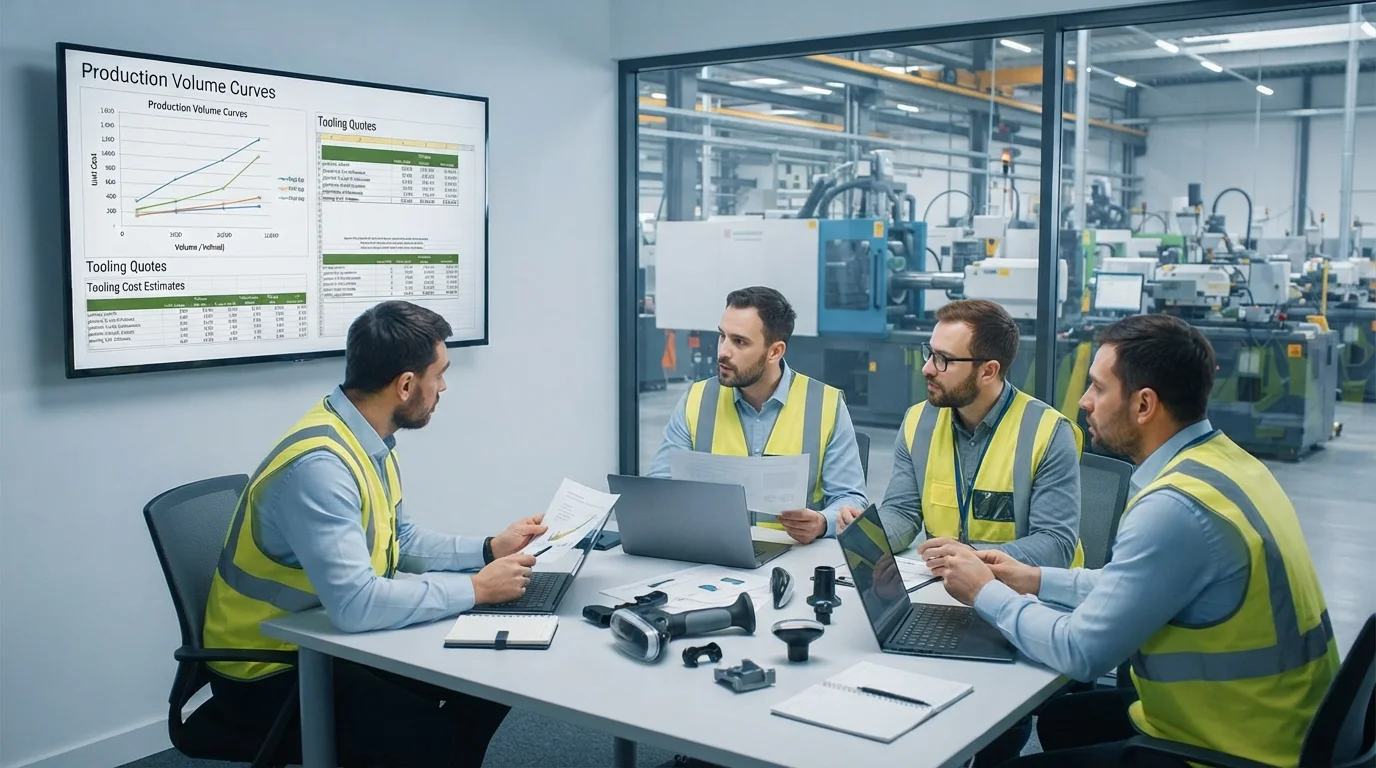
Comprendere le architetture delle macchine, le complessità delle attrezzature e le soglie di volume annuale consente ai team di ingegneria di ottimizzare l'economia unitaria. Questa guida di confronto tecnico valuta i meccanismi di lavorazione, gli investimenti in attrezzature, le curve di pareggio dei volumi di produzione e le considerazioni sulla qualità.
Overmolding (Processo a Due Fasi) vs. Stampaggio a Due Componenti/2K (Processo a Singola Pressa)
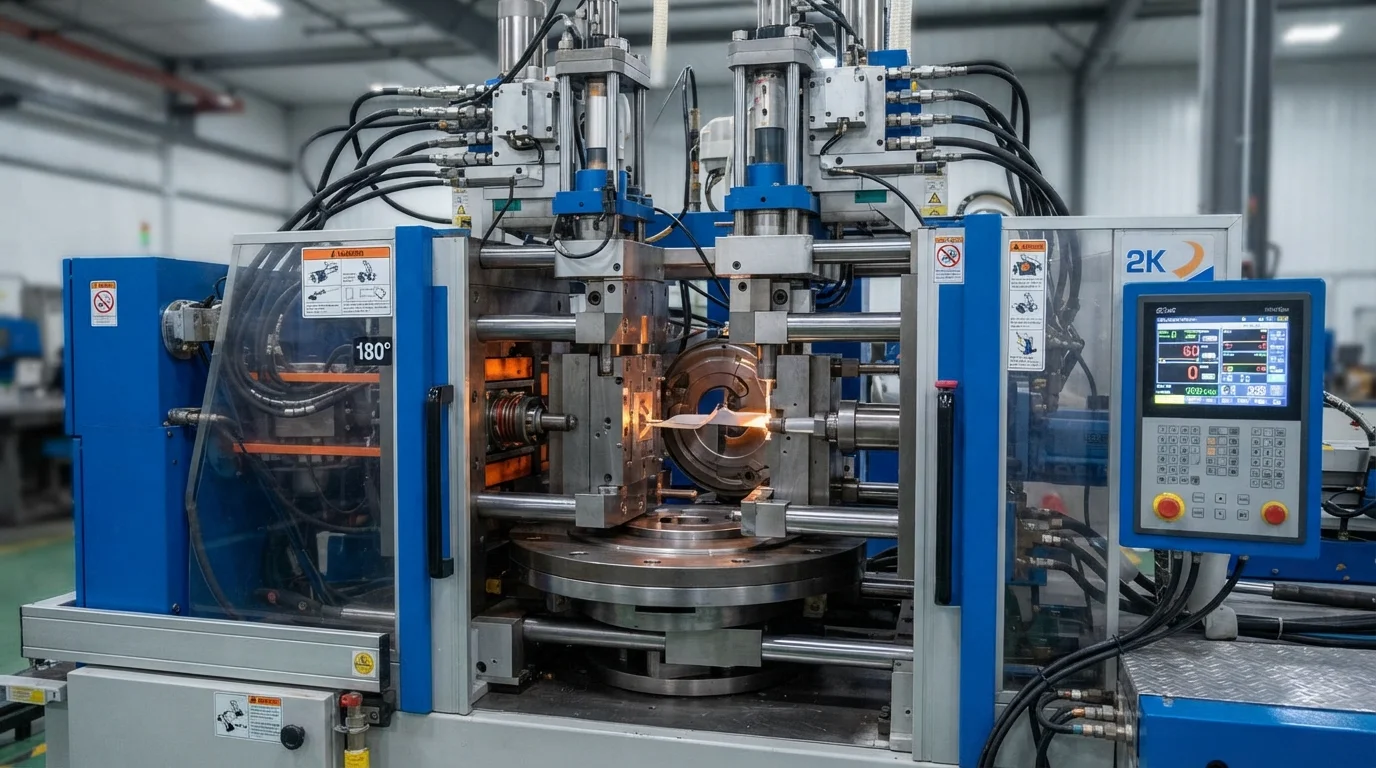
Valutare overmolding vs stampaggio a due componenti richiede l'analisi di come le materie prime vengono sequenziate all'interno della macchina di stampaggio a iniezione. Lo stampaggio a trasferimento in due fasi standard divide la produzione in due operazioni separate, stampando il substrato rigido su una pressa primaria prima di trasferirlo a una pressa secondaria per l'incapsulamento elastomerico. I substrati stampati da resine rigide come ABS, policarbonato (PC), o nylon si raffreddano completamente prima che inizi la lavorazione secondaria.
Al contrario, lo stampaggio a due componenti—comunemente noto come stampaggio 2K—esegue entrambe le iniezioni in un unico ciclo di macchina utilizzando attrezzature specializzate attrezzatura a piatto rotante. Il funzionamento di doppi cilindri di iniezione su una singola pressa inietta resina rigida e morbida TPE o TPU in sequenza, eliminando i ritardi di trasferimento manuale. L'iniezione del secondo materiale su un substrato caldo favorisce una profonda diffusione delle catene molecolari, con conseguente superiore resistenza di adesione interfacciale.
Soglie di volume di produzione: quando passare dall'overmolding al 2K
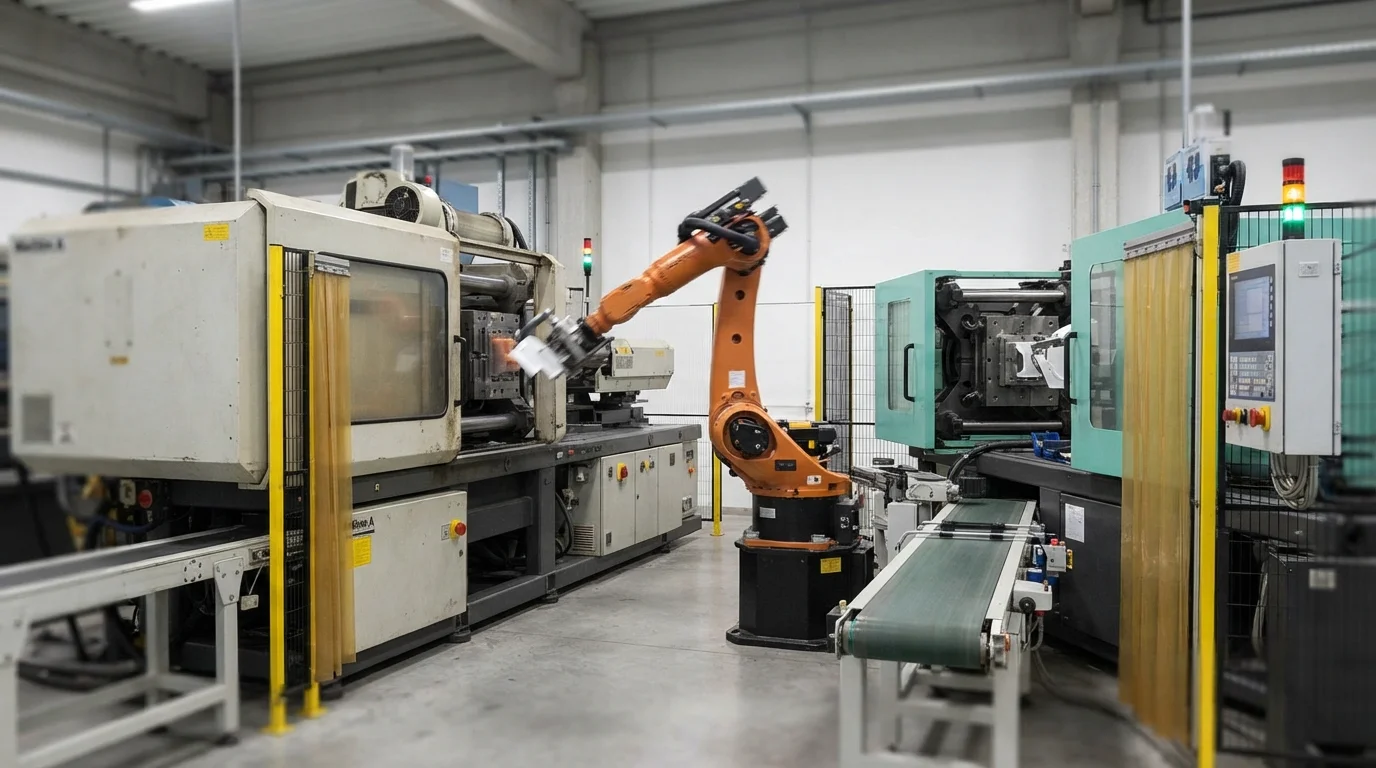
La determinazione dell'approccio corretto tra overmolding e stampaggio a due colpi si concentra sul volume di produzione annuale e sulla durata del progetto. L'overmolding a trasferimento in due fasi è la soluzione preferita per la validazione di prototipi e per produzioni da bassa a media di 1.000 a 20.000 unità. L'utilizzo di presse a iniezione standard e basi di stampo modulari mantiene bassi gli investimenti iniziali in attrezzature, consentendo un rapido ingresso sul mercato.
I programmi ad alto volume superiori a 50.000 unità giustificano il maggiore investimento iniziale nell'attrezzatura a piatto rotante 2K. Lo stampaggio 2K a pressa singola elimina la movimentazione secondaria dei pezzi, riduce i tempi di ciclo fino al 40% e abbassa i tassi di scarto al di sotto dello 0,5%. I minori costi di manodopera e la maggiore produttività oraria compensano rapidamente i costi iniziali di sviluppo dello stampo su lunghe serie di produzione.
I criteri di selezione del volume di produzione includono:
- Produzioni da basso a medio volume (da 1.000 a 20.000 pezzi)—L'overmolding a trasferimento minimizza il capitale NRE iniziale per le attrezzature e accorcia i tempi di consegna dello stampo.
- Produzione in serie ad alto volume (oltre 50.000 pezzi)—Lo stampaggio 2K a due colpi offre il costo unitario più basso e massimizza la resa oraria della pressa.
- Componenti estetici con tolleranze strette—L'indicizzazione rotante 2K a pressa singola garantisce un allineamento preciso di chiusura, eliminando gli errori di movimentazione durante il trasferimento.
Costi delle attrezzature, tempi di consegna ed economia di produzione
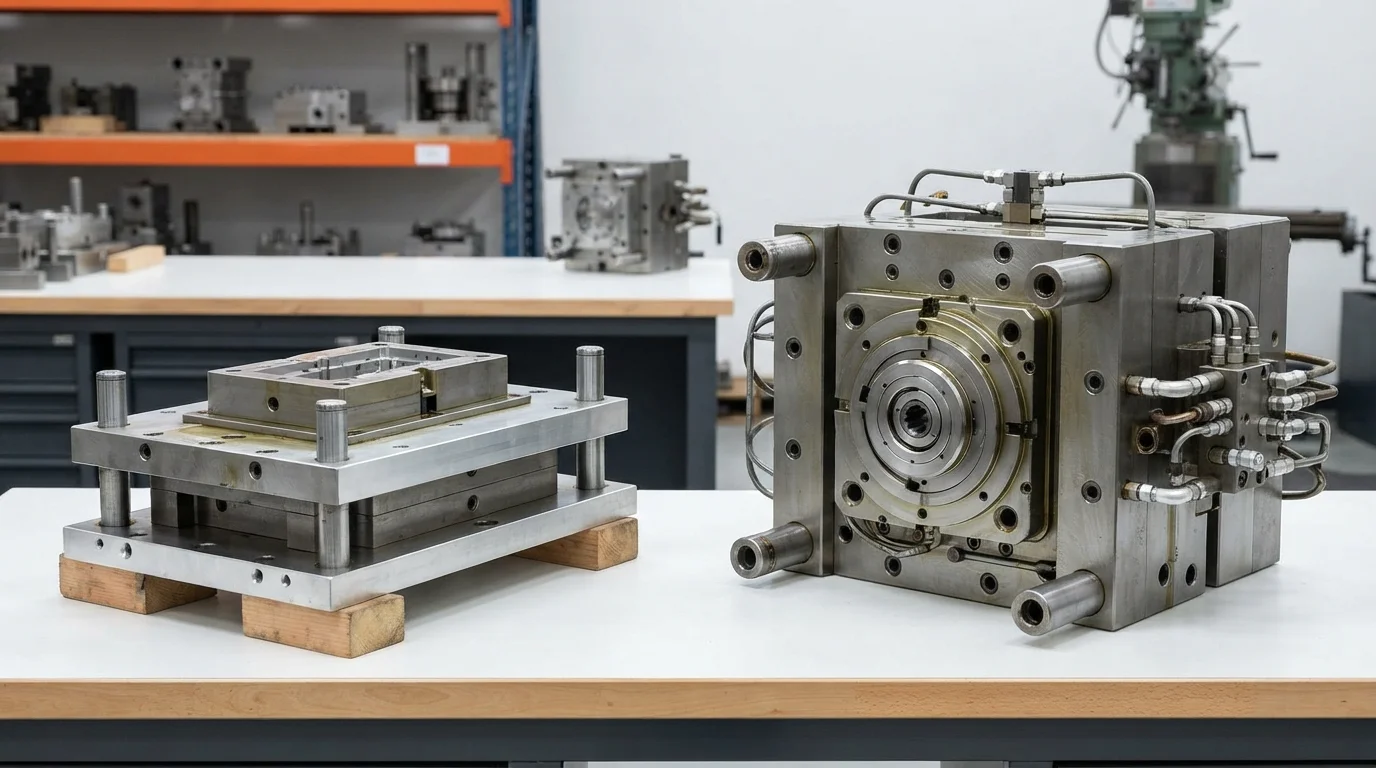
L'investimento in attrezzature e la manodopera per pezzo costituiscono il nucleo dei compromessi finanziari tra i due percorsi di produzione. L'overmolding a trasferimento richiede due basi di stampo a cavità singola più semplici, riducendo i tempi di produzione dello stampo a 2-3 settimane. Le basi di stampo 2K a due colpi incorporano piatti rotanti complessi a 180 gradi, doppi collettori a canale caldo e sistemi di chiusura indipendenti, richiedendo da 4 a 8 settimane di tempo di fabbricazione.
Confrontare l'economia dell'overmolding rispetto allo stampaggio a due colpi dimostra che, sebbene l'attrezzatura 2K richieda un capitale più elevato, offre significativi risparmi di manodopera per unità su lunghe serie di produzione. La Tabella 1 di seguito illustra le principali differenze tecniche, finanziarie e operative tra i due processi:
| Metrica di confronto | Overmolding a trasferimento in due fasi | Stampaggio integrato a due colpi (2K) | Linea guida per la selezione ingegneristica |
|---|---|---|---|
| Architettura della macchina | Due presse standard a canna singola | Una pressa specializzata a doppia canna con piatto rotante | Il 2K richiede macchinari per presse specializzati |
| Costo NRE iniziale dell'attrezzatura | Inferiore ($8.000 – $18.000 USD) | Superiore ($25.000 – $65.000+ USD) | Selezionare l'overmolding a trasferimento per budget a basso volume |
| Tempi di produzione dello stampo | Da 2 a 3 settimane (basi di stampo più semplici) | Da 4 a 8 settimane (utensileria rotativa complessa) | L'utensileria di trasferimento accelera i tempi del prototipo T1 |
| Tempo di ciclo per pezzo finito | Da 35 a 65 secondi (due cicli separati) | Da 20 a 35 secondi (ciclo singolo simultaneo) | Lo stampaggio 2K riduce il tempo di ciclo fino al 40% |
| Volume di produzione ottimale | Da 1.000 a 20.000 unità | Da 50.000 a 500.000+ unità | La soglia di volume determina il ROI dell'ammortamento dell'utensileria |
Perché scegliere JUCHENG per soluzioni di stampaggio multi-materiale
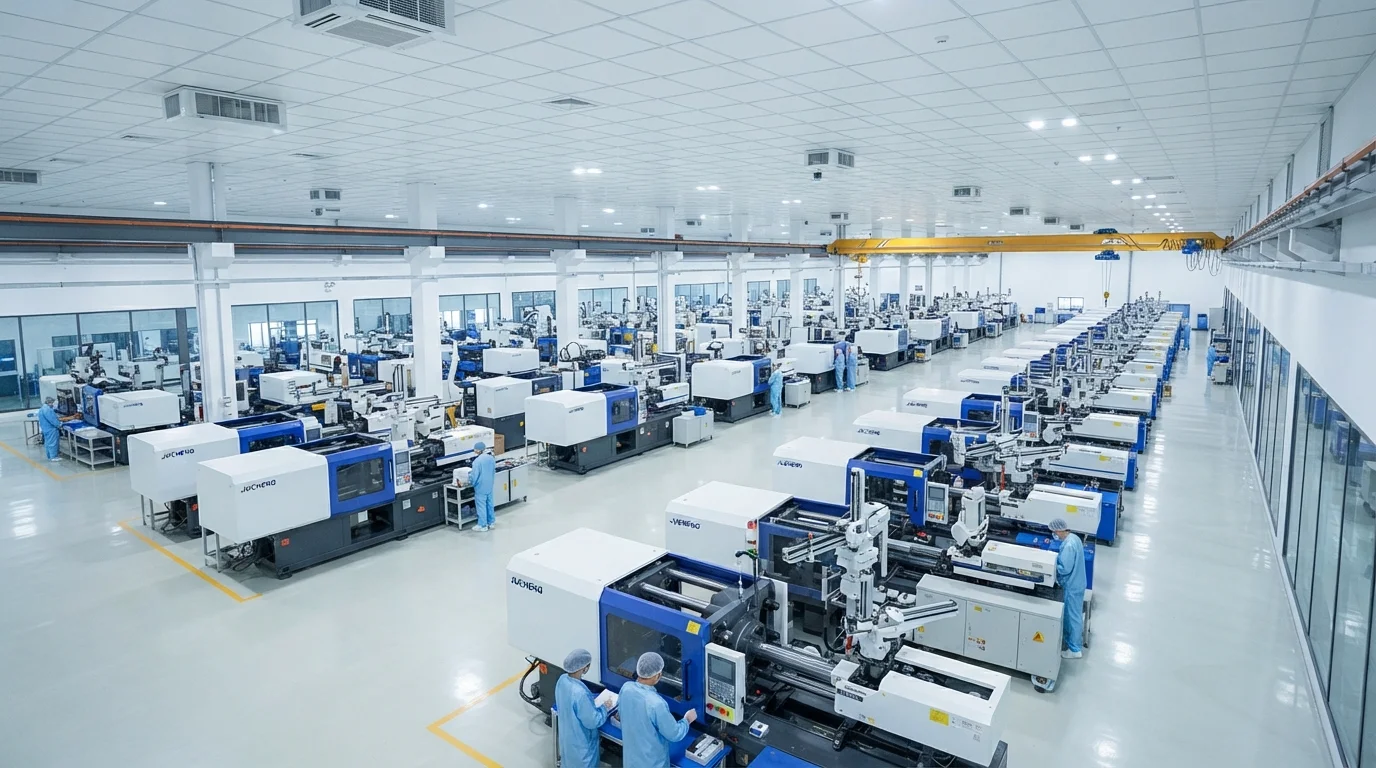
Collaborare con JUCHENG offre accesso a uno stabilimento manifatturiero avanzato che ospita oltre 35 presse a iniezione automatiche con forza di chiusura da 15T a 3000T. La gestione di un'officina utensili interna con 25 set di macchine CNC a 5 assi consente la lavorazione precisa delle superfici di acciaio temprato per la chiusura acciaio inossidabile S136 o Acciaio per utensili H13.
La valutazione dell'overmolding rispetto allo stampaggio a due componenti aiuta a selezionare l'approccio ottimale per il prodotto personalizzato sovrastampaggio a iniezione. I sistemi di gestione della qualità certificati IATF 16949 e ISO 13485 supportano ogni ciclo di produzione multi-iniezione, offrendo documentazione completa PPAP Livello 3 per programmi automobilistici. La gestione di un reparto di stampaggio in camera bianca ISO Classe 8 protegge i componenti medici dalla contaminazione da particelle durante lo stampaggio e l'imballaggio drop.
Domande Frequenti (FAQ)
Qual è la differenza principale tra overmolding e stampaggio a due componenti?
L'overmolding di trasferimento è un processo in due fasi in cui il substrato viene stampato su una pressa e trasferito a una seconda pressa per l'incapsulamento dell'elastomero. Lo stampaggio a due componenti (2K) inietta entrambi i materiali in un unico ciclo di pressa utilizzando uno stampo rotativo specializzato a piastra da 180 gradi.
Quando ha senso dal punto di vista finanziario passare dall'overmolding di trasferimento allo stampaggio 2K?
Il passaggio allo stampaggio 2K diventa conveniente quando il volume di produzione annuale supera le 50.000 unità. Tempi di ciclo più rapidi, zero lavoro manuale di trasferimento e tassi di scarto inferiori compensano rapidamente l'investimento iniziale più elevato in attrezzature NRE.
Lo stampaggio 2K a due componenti produce legami materiali più forti rispetto all'overmolding a trasferimento?
Lo stampaggio a due componenti offre tipicamente una forza di adesione superiore perché l'elastomero secondario viene iniettato immediatamente dopo la formazione del substrato, mentre la pelle del bordo del substrato è ancora calda. Le superfici di confine calde massimizzano l'interdiffusione delle catene molecolari.
Le normali macchine per stampaggio a iniezione possono eseguire stampi 2K a due componenti?
Le presse standard a canale singolo non possono eseguire stampi a due componenti senza modifiche significative. Lo stampaggio a due componenti richiede presse specializzate dotate di doppi cilindri di iniezione, circuiti idraulici indipendenti e controlli integrati del piatto rotante.
Quale processo è più adatto per la prototipazione rapida e la produzione ponte?
L'overmolding a trasferimento è di gran lunga superiore per la prototipazione rapida e la produzione ponte di 1.000-10.000 unità. La costruzione di due basi di stampo a cavità singola più semplici riduce i tempi di consegna delle attrezzature a 2-3 settimane e minimizza il rischio di capitale iniziale.
In che modo la geometria del pezzo influenza la scelta tra overmolding e stampaggio 2K?
Le parti con sezioni overmoldate semplici e concentriche si adattano facilmente agli stampi 2K rotativi. Le geometrie complesse che richiedono slitte laterali profonde o inserti caricati manualmente sono spesso più economiche da produrre utilizzando l'overmolding a trasferimento in due fasi.