
A part that fits immediately after molding can tighten, loosen or shift after humid storage. For a precision interface, that environmental change may be more important than dry tensile strength. The central issue in PPS vs nylon is often not strength—it is environmental stability. Nylon can provide toughness, wear performance and attractive economics, but it absorbs moisture and its dimensions and properties change as it conditions. PPS offers lower moisture sensitivity, strong chemical resistance and high-temperature stability, yet it can be more brittle and demanding in tooling.
In questo articolo:
- Why dry-room data misleads
- Temperature and chemistry
- Impact versus stiffness
- Filled-grade shrinkage
- How to approve the choice
Decide whether moisture is part of the load case
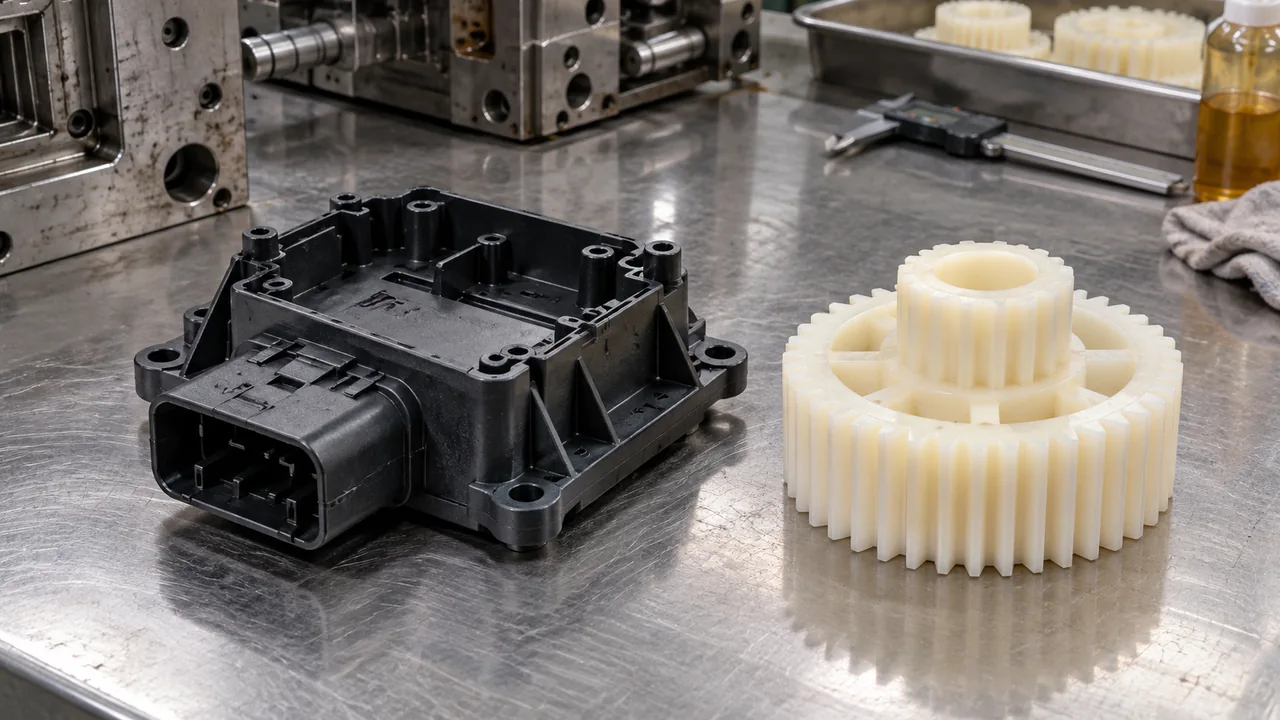
A nylon component measured immediately after molding may not represent its in-service condition. Humidity, water immersion and temperature can change dimensions and mechanical behavior. For gears, connectors, sensor bodies and valve components, that shift may matter more than the nominal tensile strength. Nylon parts can leave the mold dry and later move as they absorb environmental moisture. A drawing checked only at molding inspection may not represent assembly or field dimensions. Specify conditioning state and measurement timing for critical features. For a close-fitting connector or valve element, the difference between inspection immediately after molding and dimensions after humid storage can control assembly yield.
PPS is commonly considered when moisture-driven movement is unacceptable. The correct comparison is conditioned nylon against production PPS—not two dry datasheet specimens. Define the reference humidity, conditioning method and measurement time on the acceptance plan. Nylon’s absorbed moisture can also change stiffness and impact behavior, so dimensional movement should not be reviewed alone. Compare the state that the component will actually encounter during assembly and service, including repeated wet-dry exposure when that is relevant. PA6, PA66, high-temperature polyamides and reinforced grades differ in heat, moisture uptake and toughness. Comparing generic nylon with one PPS grade can create a false conclusion. Screen exact grades with equivalent fillers and approvals. Do not group PA6, PA66 and high-temperature polyamides into one undifferentiated nylon column.
The choice by failure mode
| Failure risk | Better starting point | What to test |
|---|---|---|
| Humidity-driven dimensional change | PPS | Conditioned dimensions and sealing |
| Impact and snap-fit abuse | Often nylon | Notch, temperature and conditioning |
| Hot chemical exposure | Often PPS | Exact chemical and stress |
| Cost-sensitive wear component | Nylon | Moisture, friction and lubrication |
Heat changes both the material and the assembly
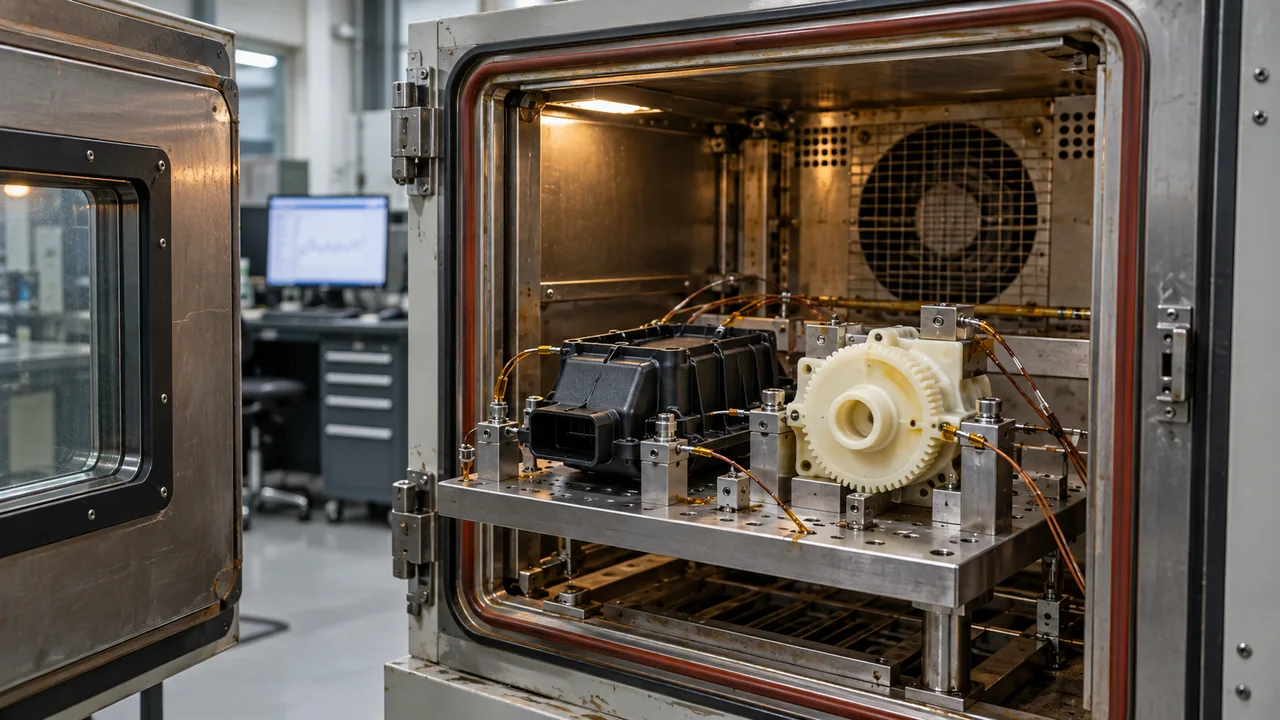
PPS generally operates in a higher thermal class than common PA6 or PA66 grades. High-temperature nylons and reinforced grades can narrow the gap, but their moisture behavior and grade-specific chemistry remain important. Include thermal expansion of metal inserts, seals and mating components in the assessment. Reinforcement and additives further change thermal performance, moisture response and toughness. Equally, PPS grades with glass or mineral reinforcement are not equivalent to unfilled resin. Create a shortlist of exact grade designations before collecting data. Keep test method, specimen state, units and source edition together; a dry mechanical value and a conditioned value answer different questions and should not be ranked as if identical. Temperature changes stiffness and can accelerate moisture or chemical interaction with nylon. PPS often offers a wider stability margin, but brittle features and weld lines still need review. Test the assembled part through combined humidity and thermal cycles. A metal insert and its polymer housing may expand differently, creating interference or a leak path as temperature changes. Moisture-induced movement can add to that effect in nylon. For a connector, compare contact alignment and retention; for a pump feature, compare clearances and seal performance. Test the assembly through the combined environmental cycle rather than evaluating temperature and humidity on unrelated specimens. This reveals whether a nominal material advantage survives at the interfaces that govern function.
Filled grades are not isotropic upgrades
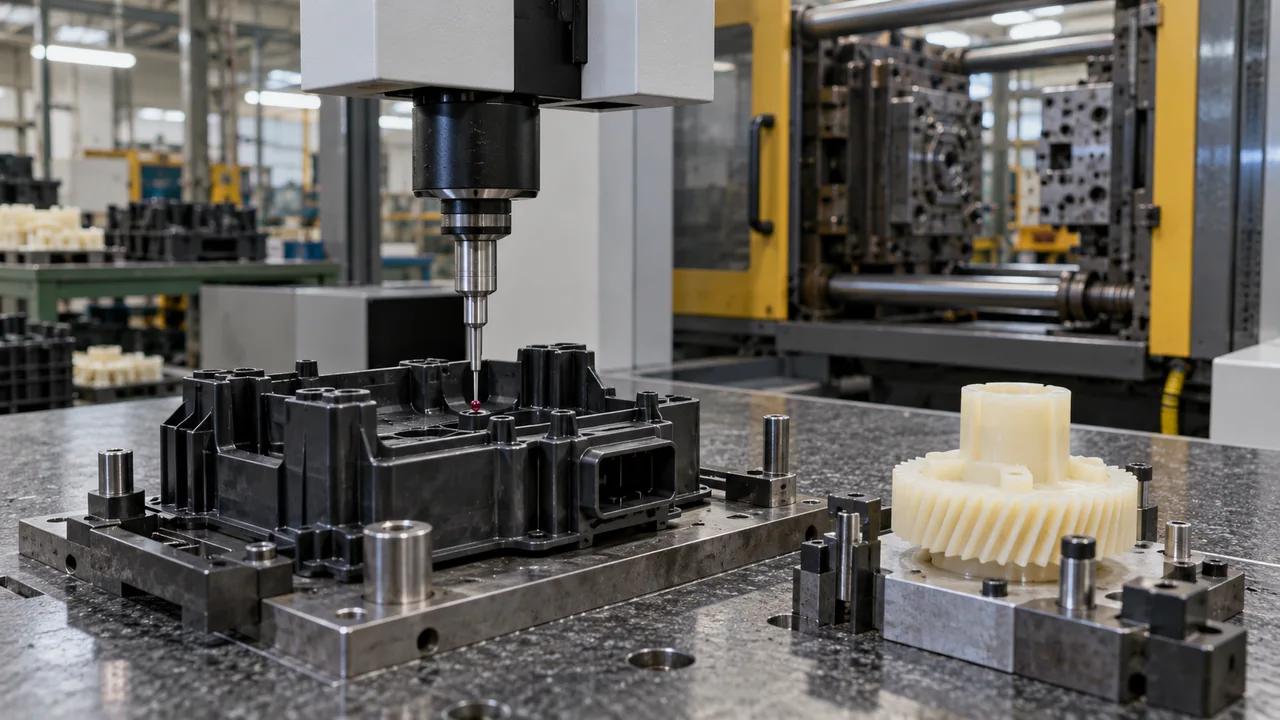
Glass fiber can raise stiffness and reduce shrinkage, but it creates directional properties. Long flow paths align fibers, weld lines interrupt load transfer and ribs may pull the wall during cooling. A low shrinkage number in one direction does not guarantee a flat production part. Glass fiber reduces bulk shrinkage but makes flow and cross-flow behavior different. A sealing face can twist when gate location directs fibers unevenly around openings. Correlate warpage measurement with fill pattern and cavity temperature. A nominally low-shrinkage filled grade can still develop warpage when fibers align unevenly around a hole or rib.
Use dell'analisi del flusso nello stampo where gate location and fiber orientation affect a sealing face or critical datum. Gate position, flow-front meeting and packing balance determine where the weakest or least stable direction appears. Inspect the datums and sealing faces that matter instead of averaging overall dimensions. If a gate change is considered, evaluate the resulting weld-line position as well as flatness; improving one characteristic can relocate a weakness into a more critical area.
Processing and tooling consequences
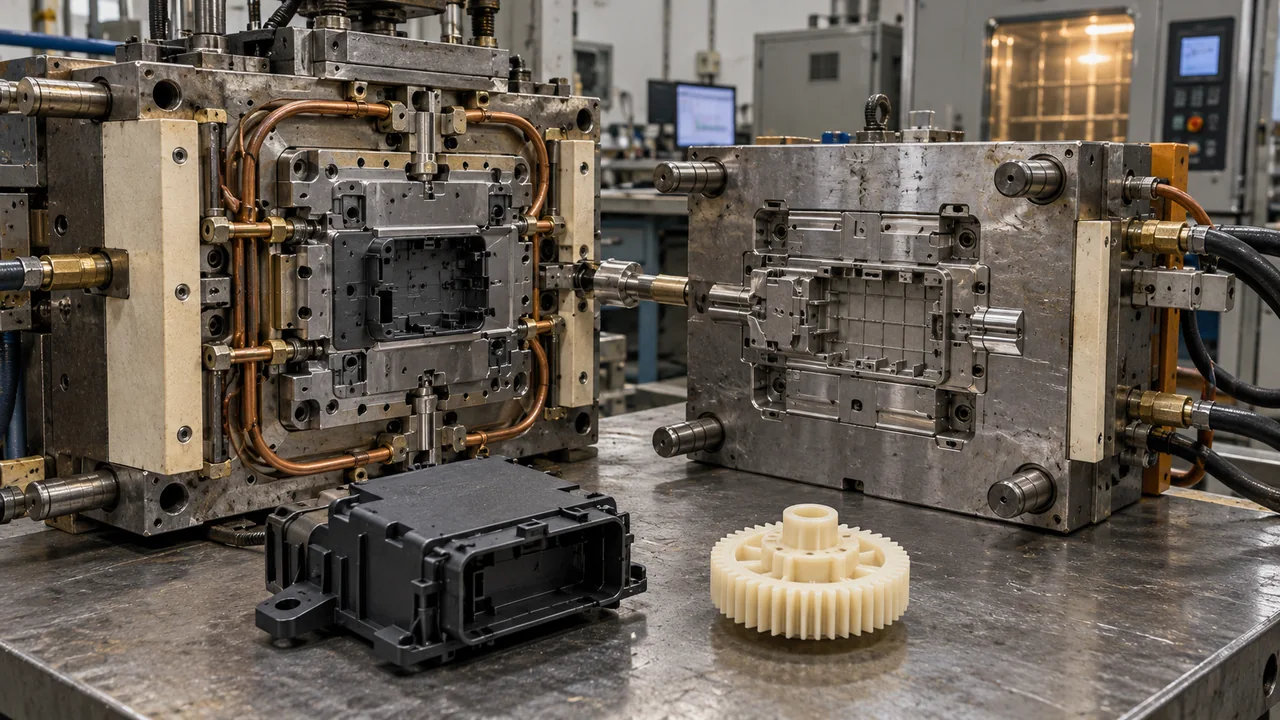
Both families require grade-appropriate material preparation. Nylon moisture must be controlled before molding and accounted for after molding. PPS uses higher thermal conditions and abrasive filled grades may require hardened steel and robust venting. The process should be reviewed as part of High-Temperature Polymer Molding. Nylon requires disciplined drying and controlled post-mold conditioning, while PPS demands elevated tooling conditions and wear-resistant details for filled grades. Mixing those control plans produces unstable comparisons. Document family-specific setup, handling and restart limits. For nylon, control pre-molding moisture separately from the intentional conditioning needed to represent service.
Compare the exact nylon grade with the selected PPS grade; family-level averages are inadequate for release. Those operations have different purposes and should not be confused. For PPS, review the exact grade’s temperature recommendations, tool heating and abrasive-wear provisions. Establish material handling and startup records for each candidate so the comparison reflects capable production. An inconsistent process can make one resin appear inferior when the real difference is preparation, local tool temperature or measurement timing.
Approve dimensions in the condition that matters
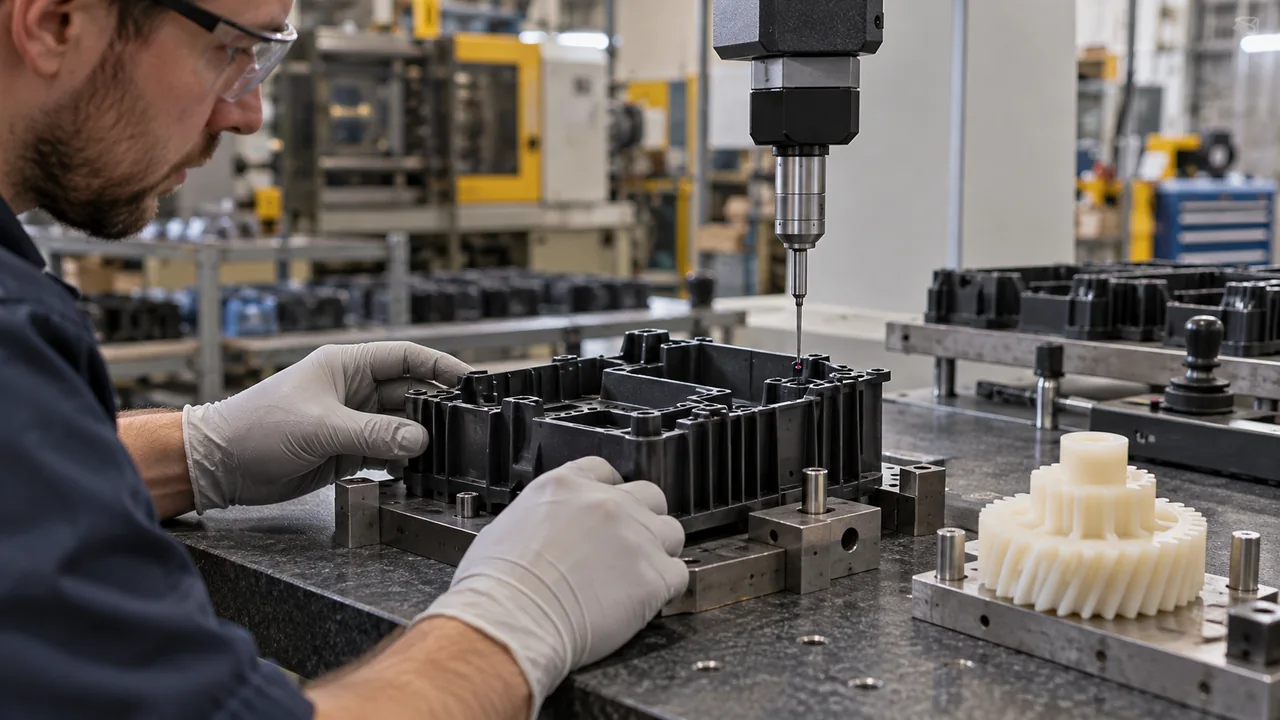
- Define incoming and in-service humidity. Final approval should include conditioned dimensions, impact at low temperature, hot chemical exposure and assembly retention. These tests expose the practical trade between nylon toughness and PPS stability.
- Condition samples to the expected environment. Use production cavities and preserve lot identity through testing. Use the drawing to define acceptance at the relevant moisture state and after the service cycle.
- Measure critical dimensions before and after conditioning. Include sealing, fit, impact and electrical requirements only where the component needs them. Track samples by cavity and material lot, then compare failures with those identities.
- Run heat and chemical exposure under assembly load. Ask what variation the assembly can tolerate before considering a tighter molding tolerance. Sometimes a clearance or interface redesign reduces risk more economically than switching material solely to control one dimension.
- Test impact at the lowest service temperature.
- Compare qualified part cost and scrap risk.
Domande frequenti
Is PPS always more dimensionally stable than nylon?
It is generally less moisture-sensitive, but reinforcement, geometry, flow orientation and process control still govern actual part stability. Specify conditioning and measure the critical feature after the relevant humidity cycle. Low moisture uptake does not eliminate orientation-driven shrinkage or tool-induced warpage.
Which material is better for gears?
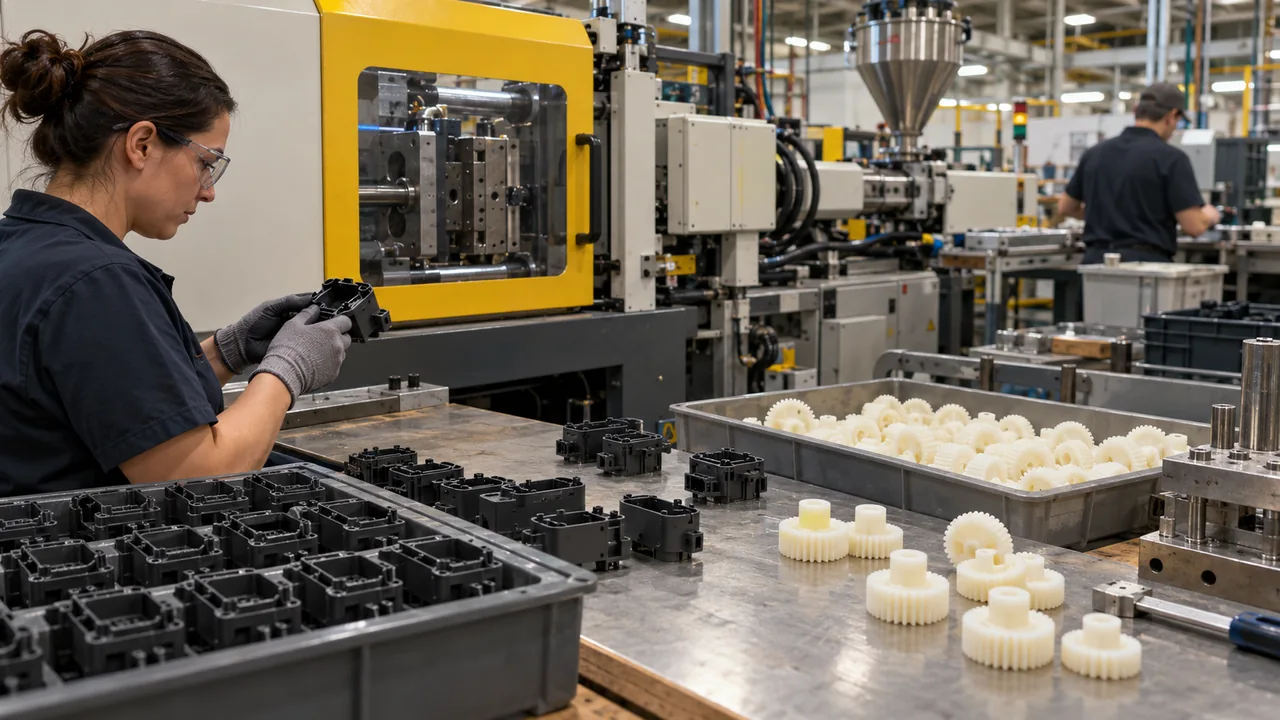
Nylon is often an economical wear material; PPS is useful when heat, chemistry or moisture stability dominates. Test the real load and lubrication. Evaluate torque, wear and operating clearances after conditioning. A grade that works dry can behave differently when humidity changes contact geometry or stiffness.
Can glass-filled nylon replace PPS?
Sometimes. Compare conditioned dimensions, chemical exposure, temperature and impact rather than stiffness alone. PA6, PA66 and high-temperature polyamides need separate comparison. Confirm the exact grade and service state before assuming reinforcement closes the thermal or environmental gap.