
A transparent cover and a hot structural support demand different evidence from a polymer. An upgrade that improves heat performance but removes the required transparency is not a successful substitution. PEEK vs polycarbonate is usually an escalation decision. Polycarbonate is a versatile choice for tough, sometimes transparent molded parts at moderate temperatures. PEEK belongs in a different processing and cost class, justified when sustained heat, aggressive chemistry, wear or high-temperature mechanical retention exceeds the selected PC grade.
What this article answers:
- When PC is enough
- When PEEK becomes necessary
- Why clarity changes the decision
- How tooling requirements diverge
- What to validate before release
When polycarbonate is the better engineering choice
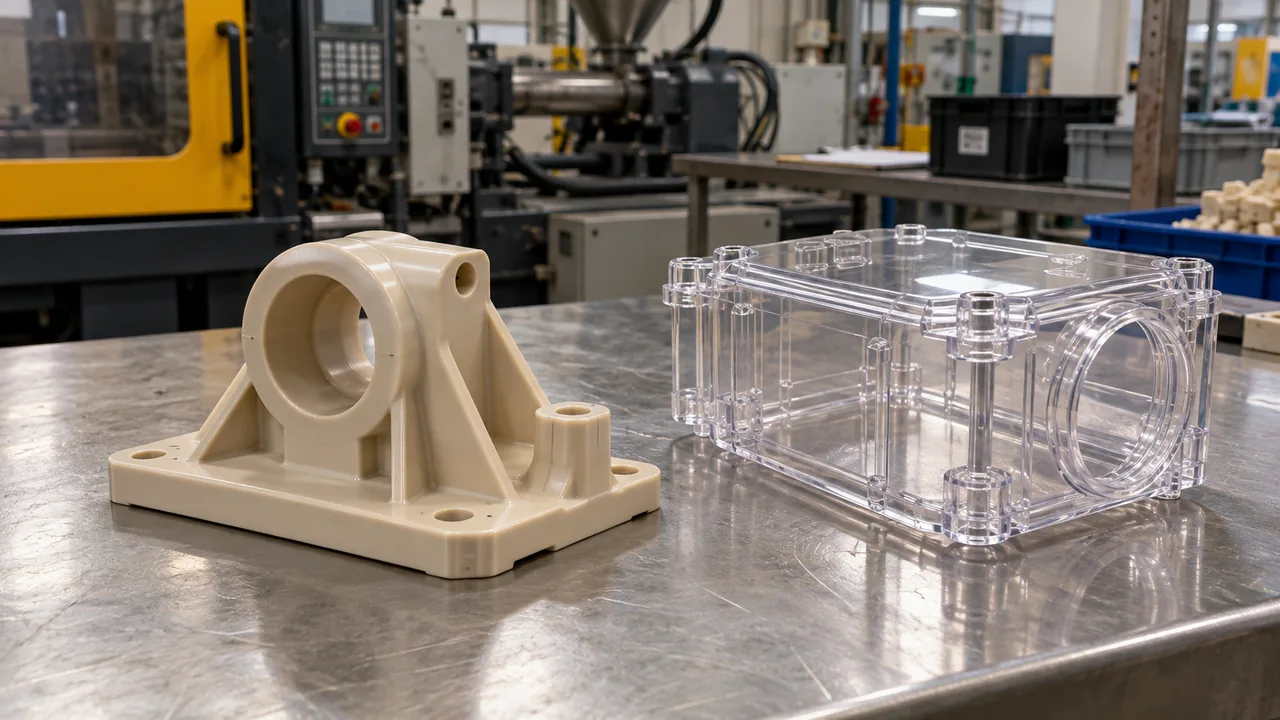
Choose PC first for transparent covers, impact-resistant housings, lenses and structural enclosures whose heat and chemical exposure remain inside the grade’s capability. It offers broad grade availability, more accessible processing and lower material cost than PEEK. Polycarbonate is valuable for impact toughness, optical options and practical processing, and specialty grades extend heat or flame capability. PEEK is unnecessary if the design remains inside those verified boundaries. Define the failing PC requirement before opening a premium-material review. Ask whether the PC component must transmit light, resist impact or hold a mechanical load at heat.
Do not replace it merely because the specification uses words such as “industrial” or “high performance.” Define the actual failure margin. Those functions lead to different material decisions. A transparent protective cover can depend on optical quality and toughness more than high-temperature stiffness. Review specialty PC grades before rejecting the family, but verify color, thickness and application approvals independently. A material upgrade should solve a documented requirement without discarding another function that the existing design already delivers.
What should force the move to PEEK?
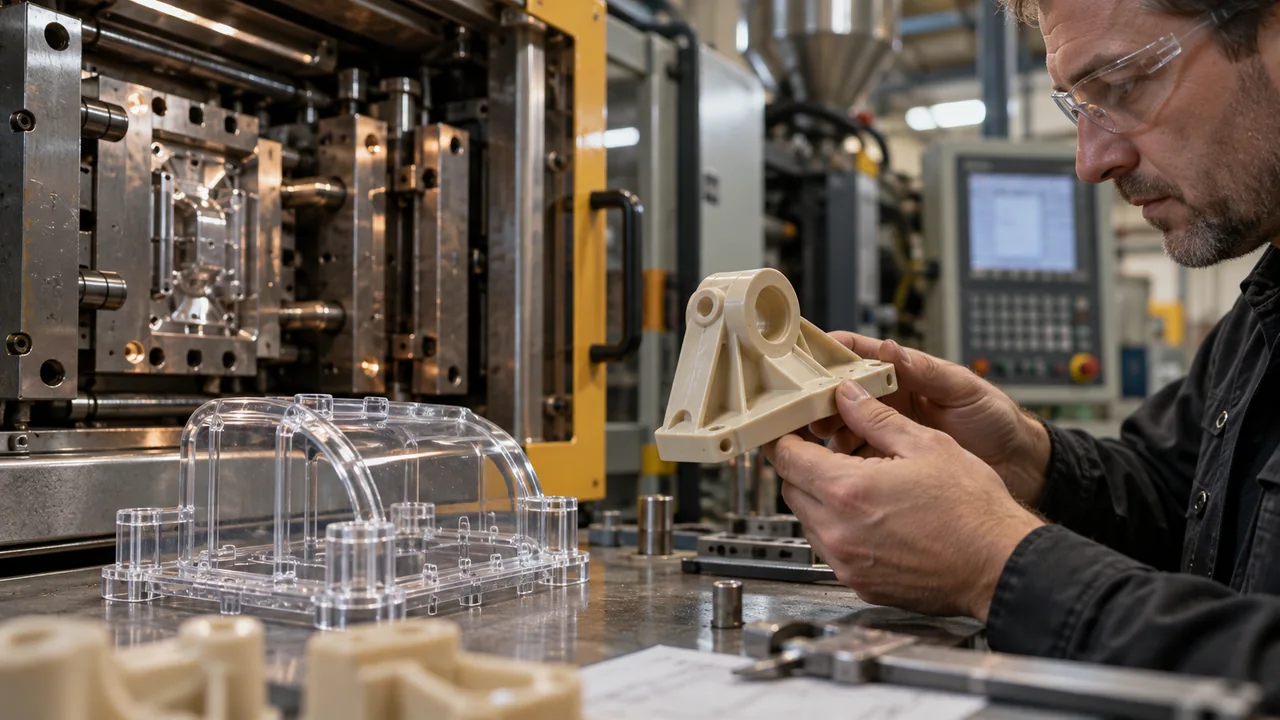
The upgrade is defensible when PC loses stiffness at operating temperature, cracks in the required chemical environment, wears too quickly, cannot retain fastening load or fails a demanding life test. PEEK also offers reinforced and specialty grades for structural and medical applications. Cracking around bosses, sink at thick sections or weak weld lines can originate in design and process rather than polymer capability. PEEK may mask one symptom while adding new shrinkage and tooling demands. Review radii, wall transitions, gate location and assembly load first. Cracks during screw assembly can result from geometry, fastening torque, molded stress or chemical exposure.
If transparency is mandatory, natural PEEK is generally not a like-for-like optical substitute. The design may need PEI, PSU/PPSU or a separated window rather than a wholesale PEEK conversion. They do not automatically prove that PC is incapable of the service. Review the failed location and operating sequence before introducing PEEK. If the real condition is sustained hot load or an incompatible environment, make that the upgrade trigger. Separating material limits from design faults avoids paying for a premium resin while leaving the original stress concentration intact. Transparent PC can serve windows, lenses and light-management parts, while natural PEEK is not a direct clear substitute. If transparency is mandatory, the project needs a different material shortlist or a two-part architecture. Separate optical and structural functions before comparing cost. When optical transmission is required, PEEK cannot simply be inserted into the PC column as a higher-performance transparent option.
Failure-first comparison
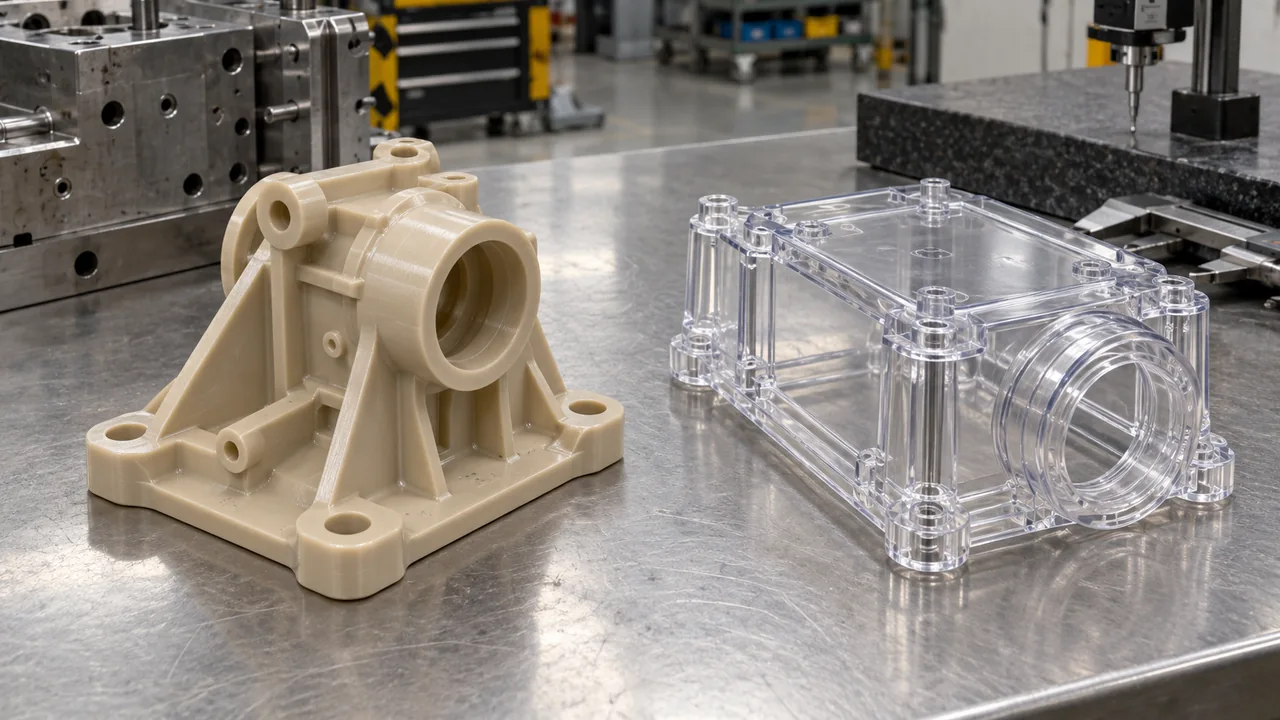
| Requirement | Likely starting point | Critical check |
|---|---|---|
| Optical transparency | Polycarbonate | Haze, stress and coating |
| Impact at moderate temperature | Polycarbonate | Notches and chemical contact |
| High-temperature structural load | PEEK | Creep and fiber orientation |
| Aggressive chemical service | Often PEEK | Exact fluid and stress state |
Molded stress matters more for PC than the datasheet suggests
PC parts can carry residual stress from filling, packing, cooling and assembly. Chemicals that appear mild may trigger environmental stress cracking in a stressed feature. Gate placement, sharp corners, press fits and screw torque therefore belong in the material review. Consider whether a transparent window can be separated from the structural body or whether another clear polymer belongs on the shortlist. For electrical applications, fillers can also change conductivity and insulation behavior. Decide which properties are mandatory before comparing strength and cost, so the preferred material does not quietly fail an unrelated essential requirement. Residual molding stress and assembly strain can make PC vulnerable to cleaners, oils or thread-locking chemicals. A compatible fluid on an unstressed plaque may still crack a production boss. Test assembled molded parts after realistic aging. Environmental stress cracking requires the exposure and stress state to be considered together.
PEEK has broader chemical capability, but poor crystallinity, weld lines or fiber orientation can still create weak regions. Neither resin rescues an uncontrolled process. Cleaners, lubricants and assembly chemicals may act on areas around bosses, inserts or tight fits. Use production-equivalent parts assembled with the intended fastening procedure, then expose them under relevant conditions. PEEK’s broader resistance does not eliminate the need to examine its weld lines, geometry and interfaces. The useful test demonstrates retained function, rather than only showing that an unstressed sample has no visible damage.
The same mold is unlikely to be neutral
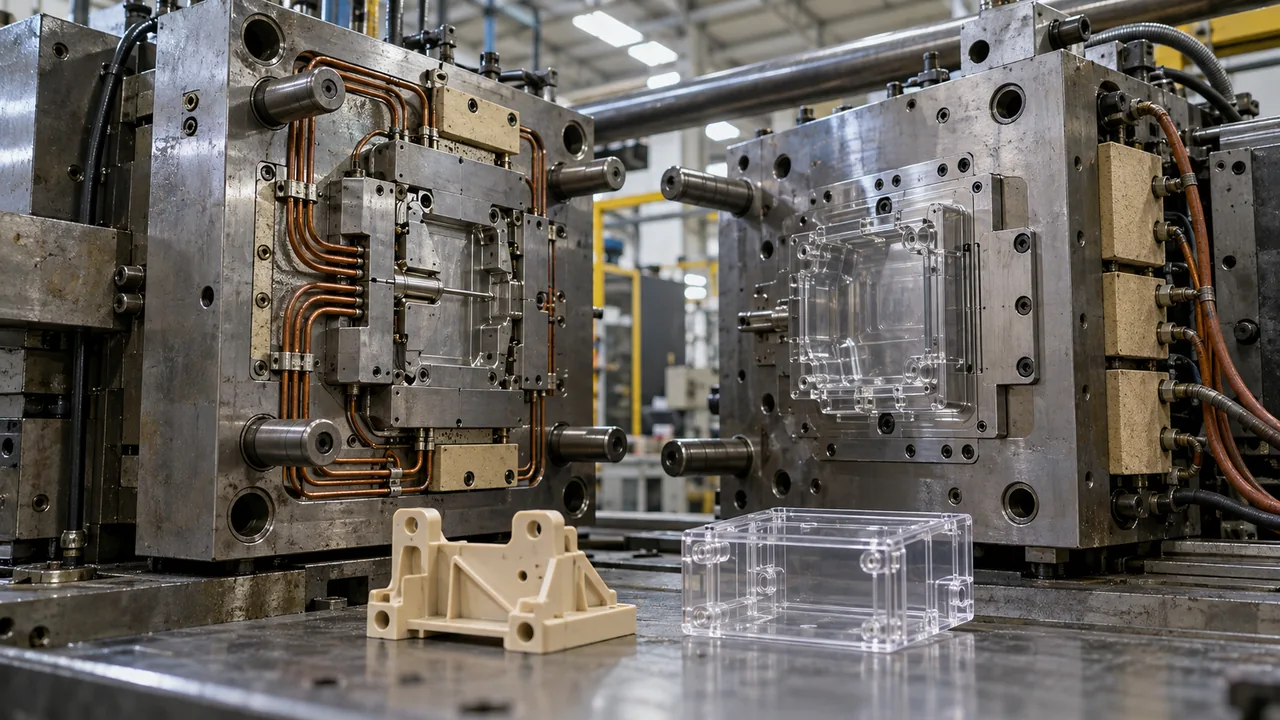
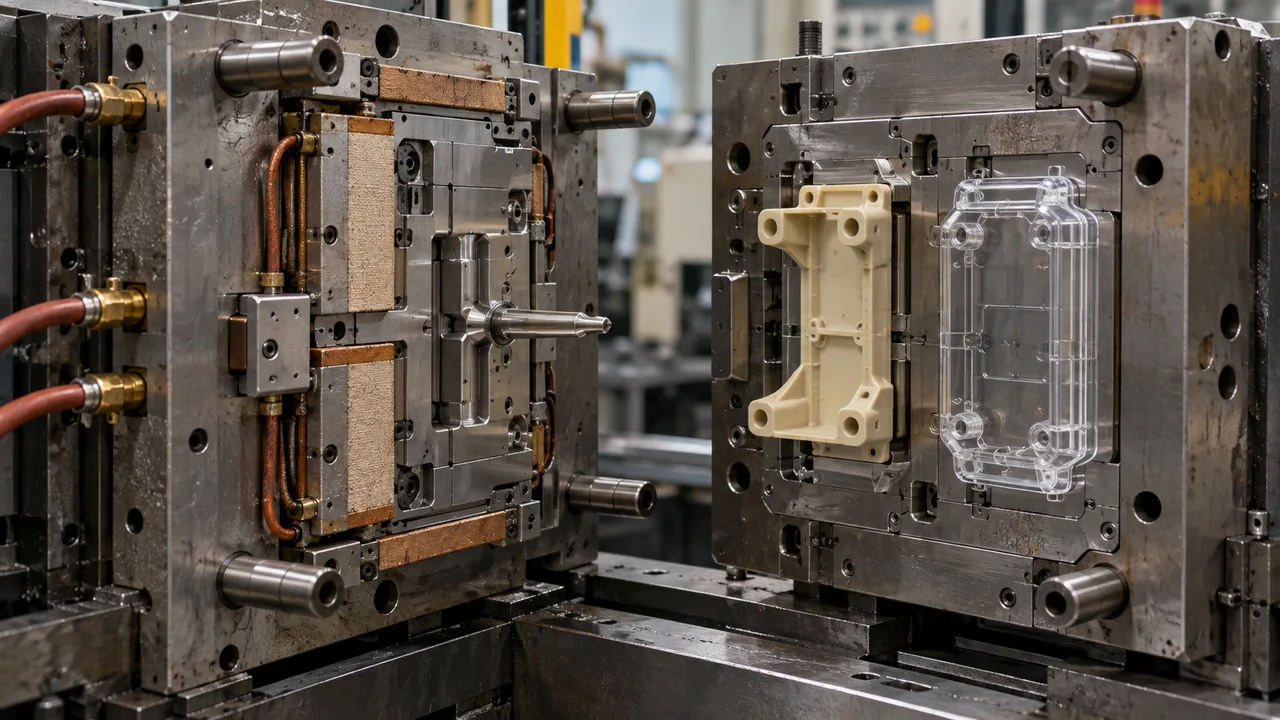
PEEK requires much higher melt and mold temperatures than typical PC processing. Tool heating, insulation, steel selection, shrinkage and gate design need a new review. A mold designed around PC may not safely or uniformly achieve PEEK’s thermal conditions. PEEK requires higher melt and mold temperatures, different shrinkage assumptions and often different steel or insulation provisions. An existing PC tool may not reach uniform conditions safely. Complete a thermal, gating and ejection review before promising reuse. Review whether the existing steel can reach the necessary thermal conditions uniformly and whether the machine interfaces, seals and auxiliary equipment are rated for them.
Compare polycarbonate grades e PEEK grades inside a qualified High-Temperature Polymer Molding plan before assuming a direct substitution. The changed shrinkage may require dimension corrections, while gate and packing behavior can demand a separate process study. Keep the existing tool dimensions as a baseline before any conversion. A quotation that assumes PC-to-PEEK substitution is merely a change of pellets omits the engineering work that makes the result repeatable.
A useful material-downselect sequence
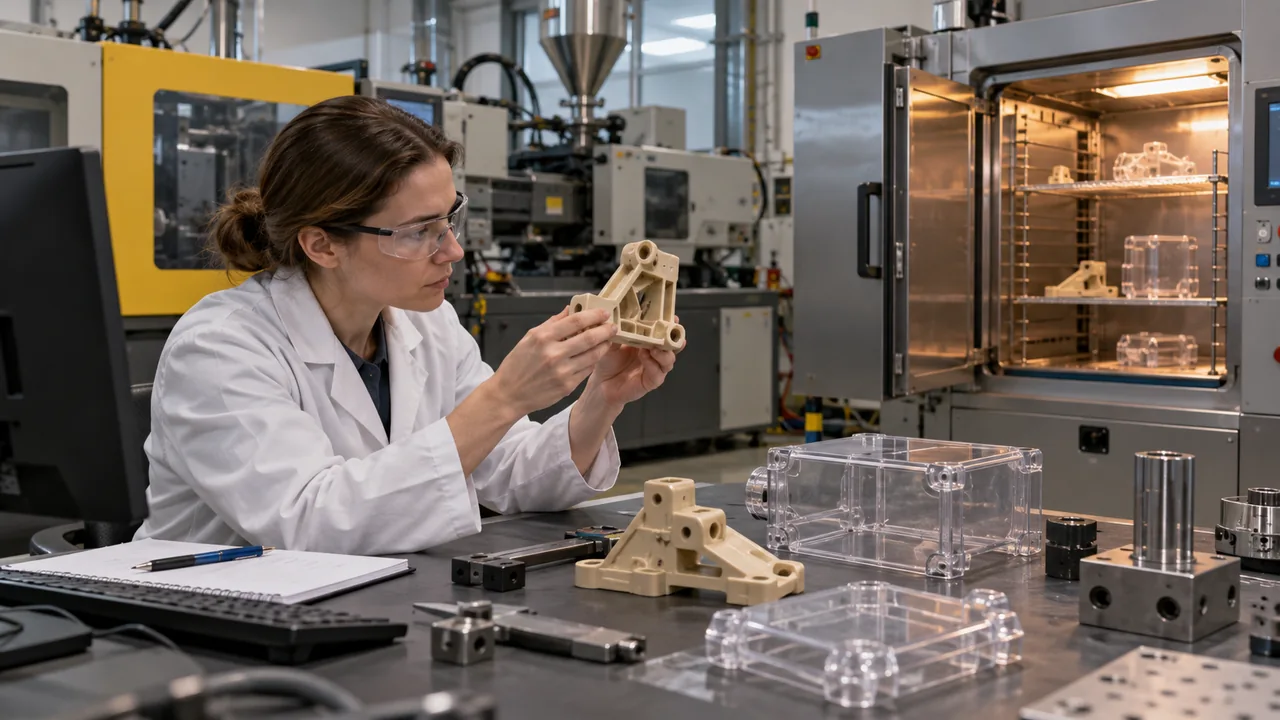
- List temperature, impact, optical and chemical requirements. First test whether design changes or a higher-performance PC grade solve the failure, then consider intermediate polymers before PEEK. This approach protects cost while keeping evidence for the final choice.
- Identify the exact PC failure risk. Approve the lowest-complexity material that passes the same production test. Compare candidates using one functional specification and a consistent assembly state.
- Screen specialty PC or an intermediate high-temperature polymer. Include optical requirements where they remain relevant, impact after conditioning, chemical exposure and load retention at temperature. An intermediate material or design revision may solve the problem with less manufacturing complexity.
- Evaluate PEEK only where the remaining requirement justifies it. Once a candidate passes, record the approved grade and process assumptions. This prevents a later purchasing substitution from changing performance without repeating the tests that supported the original decision.
- Mold representative parts and test after conditioning and assembly.
Domande frequenti
Is PEEK stronger than polycarbonate?
PEEK generally offers greater high-temperature structural capability, while PC is known for impact toughness and optical grades. Exact grades and conditions must be compared. Compare retained function under the intended condition, not unrelated room-temperature values. An impact-resistant clear cover and a hot loaded support need different evidence.
Can PEEK replace a transparent PC cover?
Not as a direct transparent substitute in most cases. Reconsider the optical requirement or evaluate another transparent high-temperature polymer. If optics remain essential, compare appropriate transparent grades or separate the window from the structural body. The new design then needs its own interface validation.
Which material costs less to mold?
PC normally has lower resin and processing demands. PEEK can still reduce total cost when it prevents a proven high-temperature or chemical failure. Assess the finished component at approved yield and volume. Development, tool conversion and inspection can alter the cost even before resin price is considered.