
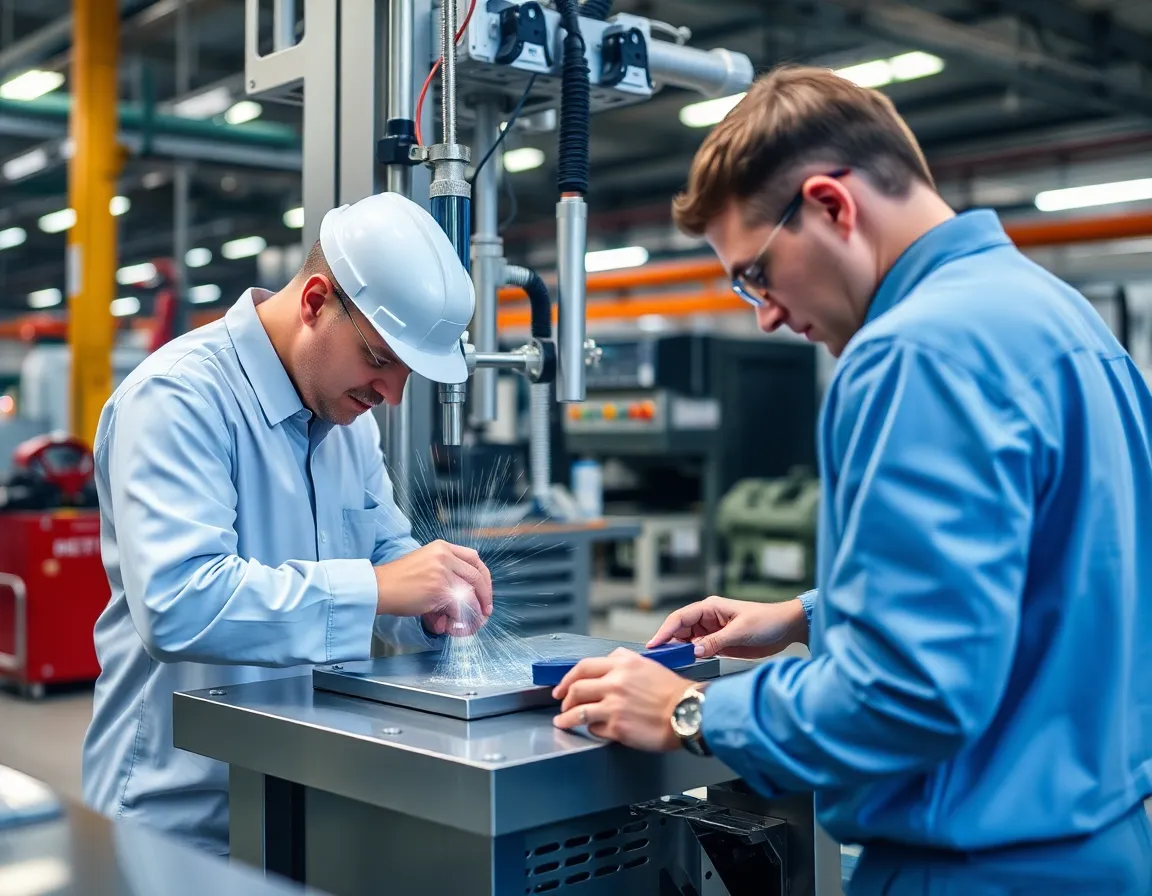
Introduction : l'évolution de la fabrication moderne
Le paysage manufacturier a connu un bouleversement majeur au cours des deux dernières décennies. L'époque où un seul matériau — souvent une nuance spécifique de plastique ou d'aluminium — définissait tout le cycle de vie d'un produit est révolue. Les dispositifs les plus innovants d'aujourd'hui, des capteurs médicaux portables aux actionneurs aérospatiaux, exigent une symphonie complexe de matériaux : des polymères rigides pour l'intégrité structurelle, des élastomères souples pour l'étanchéité, des métaux conducteurs pour les circuits, et même des céramiques biocompatibles pour les composants implantables. Cette convergence des besoins a donné naissance à une discipline spécialisée connue sous le nom de fabrication sous contrat multi-matériaux. À la base, il s'agit de la pratique consistant à externaliser la production d'un composant ou d'un assemblage fini unique — qui intègre deux matériaux distincts ou plus — auprès d'un fabricant tiers disposant de l'équipement spécialisé, de l'outillage et de l'expertise de processus nécessaires pour gérer cette complexité. Contrairement à la fabrication sous contrat traditionnelle, qui se concentre souvent sur un seul procédé comme le moulage par injection ou l'usinage CNC, la fabrication multi-matériaux est une approche intégrée et holistique. Ce guide analysera ce que cela implique, comment cela fonctionne, pourquoi c'est devenu indispensable, et comment vous pouvez en tirer parti pour votre prochain lancement de produit.
Définir la fabrication sous contrat multi-matériaux : au-delà du simple assemblage
Pour vraiment comprendre ce domaine, il faut d'abord le distinguer du simple assemblage ou de la sous-traitance traditionnelle. Un fabricant sous contrat (CM) qui se contente de visser un support métallique sur un boîtier en plastique effectue un assemblage. Un fabricant sous contrat multi-matériaux, en revanche, crée la liaison des matériaux au niveau moléculaire ou mécanique lors du processus de formage primaire. Cela implique des techniques comme le moulage par injection bi-matière (2K), le surmoulage, le moulage par insertion et le moulage par transfert multi-processus. La proposition de valeur ne réside pas simplement dans la combinaison de pièces, mais dans la création d'une structure monolithique et inséparable offrant des caractéristiques de performance inaccessibles par l'assemblage de composants distincts.
Par exemple, prenons un outil électroportatif. Un CM standard pourrait mouler un boîtier rigide en nylon, puis y coller une poignée en caoutchouc. Un CM multi-matériaux moule la base en nylon, puis fait pivoter l'outil dans la même machine pour injecter un élastomère thermoplastique (TPE) directement sur le nylon. La liaison chimique créée lors de ce processus garantit que la poignée ne se décolle jamais, offre un amortissement supérieur des vibrations et élimine le besoin d'adhésifs ou de fixations mécaniques. C'est l'essence de la discipline : l'intégration des processus pour une synergie améliorée des matériaux.
Les technologies clés qui animent le secteur
La fabrication multi-matériaux n'est pas une technologie unique, mais un portefeuille de processus avancés. Les plus courants incluent :
- Moulage par injection bi-matière (2K) : Celui-ci utilise une presse à injecter spécialisée avec deux barillets. La première injection solidifie le substrat rigide, et la seconde injecte un matériau plus souple ou de couleur différente sur ou autour de celui-ci. C'est idéal pour la production à grand volume d'articles comme les manches de brosses à dents, les interrupteurs d'intérieur automobiles et les seringues médicales.
- Surmoulage : Souvent utilisé de manière interchangeable avec le 2K, mais à proprement parler, le surmoulage consiste à prendre un substrat préformé (qui peut avoir été moulé ailleurs ou usiné) et à le placer dans un second moule pour le recouvrir d'un autre matériau. C'est courant pour ajouter des revêtements soft-touch au métal ou pour encapsuler l'électronique.
- Moulage par insertion : Cela implique de placer un composant préfabriqué—généralement métallique (comme un écrou fileté ou un contact électrique)—dans la cavité du moule avant d'injecter du plastique autour. Cela crée un verrouillage mécanique robuste, éliminant les opérations de pressage secondaires.
- Fabrication multi-processus : Il s'agit d'un terme plus large où un CM combine diverses techniques dans un seul flux de travail, comme l'impression 3D d'une structure en treillis interne complexe, puis le surmoulage d'une peau en silicone par-dessus, suivi du soudage laser d'un insert métallique.
Ces technologies nécessitent des machines uniques—telles que les presses à plateau rotatif—et, surtout, une conception de moule avancée qui tient compte du retrait différentiel, de la dilatation thermique et de la compatibilité chimique entre les matériaux.
Pourquoi choisir la fabrication sous contrat multi-matériaux ? Principaux avantages
La décision de passer d'une production mono-matériau à une production multi-matériaux est motivée par des avantages tangibles et quantifiables qui ont un impact sur les résultats financiers et les performances du produit.
1. Amélioration des performances du produit et de l'ergonomie
Le principal moteur est la supériorité fonctionnelle. La combinaison d'un plastique rigide avec un élastomère souple produit des articles à la fois structurellement solides et agréables à tenir. Dans les dispositifs médicaux, cela signifie un boîtier rigide pour l'électronique avec une surface souple et flexible en contact avec le patient, ce qui réduit les lésions tissulaires. Dans l'électronique grand public, cela permet des joints intégrés assurant une étanchéité IP67 sans avoir besoin de joints toriques en caoutchouc séparés, qui peuvent être perdus ou mal positionnés lors de l'assemblage. Le résultat est un produit offrant une meilleure sensation au toucher, une étanchéité acoustique et une résistance aux chocs supérieures.
2. Réduction des coûts d'assemblage et de la complexité de la chaîne d'approvisionnement
Chaque pièce éliminée de votre nomenclature (BOM) réduit les coûts. La fabrication multi-matériaux consolide ce qui serait un assemblage en trois pièces (boîtier, joint et fixation) en une seule pièce moulée. Cela élimine le coût d'achat de ces pièces séparées, la gestion de multiples fournisseurs, les frais de main-d'œuvre d'assemblage secondaire et la logistique des stocks. Selon des études sectorielles, la consolidation des pièces par moulage multi-matériaux peut réduire les coûts de fabrication totaux de 20 à 40% pour les dispositifs électromécaniques complexes. De plus, le risque de problèmes de qualité liés à un assemblage manuel incorrect est moindre.
3. Liberté de conception et miniaturisation
Lorsque les composants sont moulés ensemble, les concepteurs ne sont plus contraints par la nécessité de bossages à vis, d'éléments d'encliquetage ou de brides de soudure. Cela permet une miniaturisation significative. Par exemple, une membrane de pompe multi-matériaux peut être moulée directement sur un bras d'actionneur rigide, créant un joint hermétique dans un espace 50% plus petit qu'un assemblage traditionnel fixé mécaniquement. Cela est essentiel dans le développement des systèmes implantables d'administration de médicaments de nouvelle génération et des diagnostics microfluidiques.
4. Amélioration de la fiabilité et de l'esthétique du produit
Les joints mécaniques sont souvent le point le plus faible de tout produit : ils sont sensibles au desserrage par vibration, à la corrosion galvanique et à l'infiltration d'humidité. En éliminant ces joints, les pièces multi-matériaux présentent une fiabilité à long terme supérieure. Sur le plan esthétique, le procédé permet une intégration transparente de différentes couleurs et textures sans lignes de joint ni coutures visibles. Une poignée mate au toucher doux qui se fond parfaitement dans une coque rigide brillante est la marque d'un design de produit haut de gamme, réalisable uniquement par cette méthode.
Applications critiques dans tous les secteurs
The versatility of multi-material contract manufacturing has made it the standard across several high-stakes industries.
Medical and Life Sciences
This is arguably the most demanding sector. Multi-material molding is used to produce insulin pens with soft-grip bodies and rigid internal mechanisms. Surgical staplers require handles that are rigid enough to transmit force yet soft enough to prevent surgeon fatigue. Furthermore, the production of combination products—like pre-filled syringes with elastomeric rubber tips molded onto plastic plungers—relies heavily on this technology to ensure a tight seal without leachable adhesives. Contract manufacturers in this space must adhere to ISO 13485 and FDA regulations, ensuring the material bond is validated for biocompatibility and sterilization resistance.
Automotive and E-Mobility
Modern vehicles are packed with sensors, connectors, and control units that must survive extreme temperature fluctuations and vibration. Multi-material molding is used to create sealed connectors where a liquid silicone rubber (LSR) gasket is molded directly onto a PBT (polybutylene terephthalate) housing. This provides an absolute seal against moisture and road salts. Additionally, the interior cabin uses 2K molding for decorative trim with integrated soft-touch surfaces, and for airbag covers that require a defined tear seam between a rigid substrate and a flexible skin.
Consumer Electronics and Wearables
In this industry, aesthetics and thinness are paramount. Smartwatches use multi-material frames where a stainless steel antenna is insert-molded into a ceramic or polymer backplate. Earbuds rely on overmolding to bond silicone ear tips to rigid acoustic tubes. The structural frame of laptops often features overmolded rubber feet that are virtually impossible to pull off, thanks to the chemical bond formed during manufacturing. The ability to create complex curves and integrate antennas without visible seams is a direct result of this technology.
Best Practices and Critical Considerations for Success
While the benefits are immense, multi-material manufacturing is not a plug-and-play solution. It requires meticulous planning and a partnership approach with your contract manufacturer.
Material Selection: The Golden Rule
Not all plastics stick together. If you are using 2K molding, you must ensure that the two polymers are chemically compatible. For example, polypropylene (PP) is notoriously difficult to bond to other materials without specialized adhesion promoters. Conversely, ABS and TPU (thermoplastic polyurethane) form excellent chemical bonds. If materials are incompatible, the CM must design mechanical interlocking features—such as undercuts or holes—into the substrate to physically lock the second material in place. Your CM’s material scientists should be involved in the design review before the mold is cut to validate this chemistry.
Design for Manufacturability (DFM) for Multi-Material
The design rules differ significantly from single-shot molding. You must account for the shrinkage differential between the two materials. If the soft material shrinks more than the rigid one, it can cause warpage or internal stress. Wall thicknesses must be balanced to prevent flow marks. Furthermore, the mold design is complex—it requires precise temperature control zones to ensure the first shot does not melt or deform when the second shot is injected. A successful DFM review will focus on gate placement, venting, and the sequencing of the injection cycles.
Selecting the Right Contract Manufacturing Partner
Do not select a partner solely based on the number of molding machines they own. Look for a partner with in-house tooling capabilities for complex rotating molds, as this is where the true engineering challenge lies. Ask for case studies of similar multi-material projects. Inquire about their process validation protocols—how do they test the bond strength? Do they use pull-testing or ultrasonic inspection? For regulated industries, they must be able to provide a full Material Traceability Report. Furthermore, consider their location; a partner with a cleanroom environment is essential for medical and optical applications.
Prototyping and Iterative Testing
Even the best simulation software cannot fully predict the behavior of two materials bonding under high pressure and temperature. It is essential to build prototype molds—often using soft tooling or 3D printed inserts—to test the material interface. This phase is critical for evaluating the peel strength and environmental resistance (e.g., UV exposure, chemical resistance). A professional CM will insist on a rigorous Design of Experiments (DOE) to optimize the melt temperature and injection speed for the second shot, as these parameters directly affect the adhesion quality.
Conclusion: The Future is Multi-Material
As products continue to shrink in size while growing in functional complexity, the limitations of single-material manufacturing become increasingly apparent. Multi-material contract manufacturing represents a paradigm shift from "make parts and join them" to "grow the complete part in one step." It offers a compelling value proposition: lower total cost through consolidation, enhanced user experience through optimized haptics, and engineering breakthroughs that were previously impossible. However, success demands more than just buying a 2K injection molding machine. It requires a deep understanding of polymer chemistry, advanced mold flow analysis, and a collaborative relationship between the OEM’s design team and the manufacturer’s process engineers.
For any product development team facing the challenge of integrating dissimilar materials—whether for a waterproof connector, a wearable health monitor, or a high-performance automotive component—engaging a specialist multi-material contract manufacturer early in the design phase is not just a recommendation; it is a strategic imperative. By leveraging their expertise in tooling, material science, and process control, you can accelerate your time-to-market, reduce warranty risks, and deliver a product that stands head and shoulders above the competition in both performance and durability.