
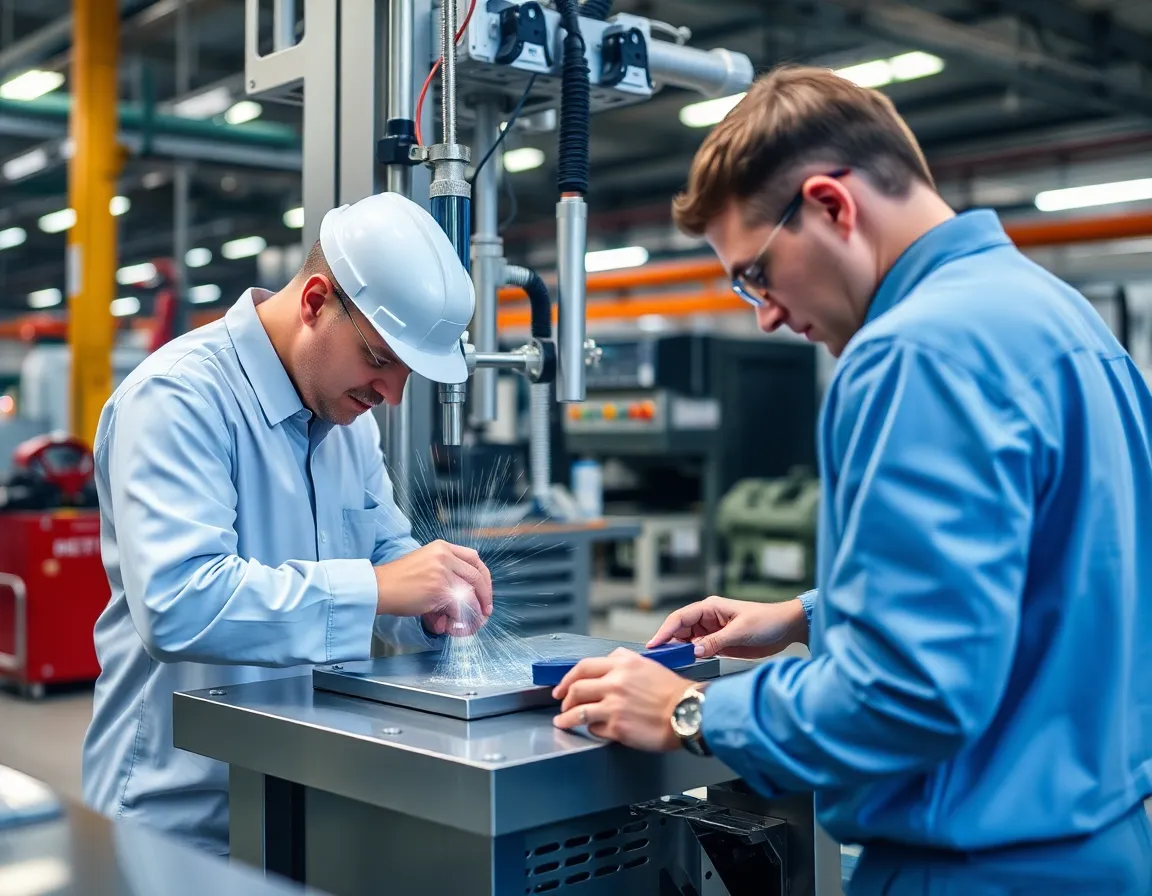
Introducción: La evolución de la fabricación moderna
El panorama manufacturero ha experimentado un cambio sísmico en las últimas dos décadas. Ya pasaron los días en que un solo material —a menudo un grado específico de plástico o aluminio— definía todo el ciclo de vida de un producto. Los dispositivos más innovadores de hoy, desde sensores médicos portátiles hasta actuadores aeroespaciales, exigen una compleja sinfonía de materiales: polímeros rígidos para la integridad estructural, elastómeros blandos para el sellado, metales conductores para la circuitería e incluso cerámicas biocompatibles para componentes implantables. Esta convergencia de necesidades ha dado origen a una disciplina especializada conocida como fabricación por contrato multimaterial. En esencia, se trata de la práctica de externalizar la producción de un único componente o conjunto terminado —que integra dos o más materiales distintos— a un fabricante externo con el equipo especializado, los utillajes y la experiencia en procesos necesarios para manejar esa complejidad. A diferencia de la fabricación por contrato tradicional, que a menudo se centra en un solo proceso como el moldeo por inyección o el mecanizado CNC, la fabricación multimaterial es un enfoque integrado y holístico. Esta guía analizará qué implica, cómo funciona, por qué se ha vuelto indispensable y cómo puede aprovecharla para el lanzamiento de su próximo producto.
Definición de la fabricación por contrato multimaterial: más allá del simple ensamblaje
Para comprender verdaderamente este campo, primero hay que distinguirlo del simple ensamblaje o la subcontratación tradicional. Un fabricante por contrato (CM, por sus siglas en inglés) que simplemente atornilla un soporte metálico a una carcasa de plástico está realizando un ensamblaje. Sin embargo, un fabricante por contrato multimaterial, crea la unión de materiales a nivel molecular o mecánico durante el proceso de conformado primario. Esto implica técnicas como el moldeo por inyección de dos disparos (2K), el sobremoldeo, el moldeo con insertos y el moldeo por transferencia multiproceso. La propuesta de valor no radica simplemente en combinar piezas, sino en crear una estructura monolítica e inseparable que ofrezca características de rendimiento inalcanzables mediante la unión de componentes separados.
Por ejemplo, consideremos una herramienta eléctrica manual. Un CM estándar podría moldear una carcasa rígida de nailon y luego pegarle una empuñadura de goma. Un CM multimaterial moldeará la base de nailon y luego girará la herramienta en la misma máquina para inyectar un elastómero termoplástico (TPE) directamente sobre el nailon. La unión química creada durante este proceso garantiza que la empuñadura nunca se despegue, proporciona una amortiguación de vibraciones superior y elimina la necesidad de adhesivos o sujetadores mecánicos. Esta es la esencia de la disciplina: integración de procesos para una sinergia de materiales mejorada.
Las tecnologías centrales que impulsan el sector
La fabricación multimaterial no es una única tecnología, sino una cartera de procesos avanzados. Los más comunes incluyen:
- Moldeo por inyección de dos disparos (2K): Utiliza una máquina de moldeo por inyección especializada con dos barriles. El primer disparo solidifica el sustrato rígido, y el segundo disparo inyecta un material más blando o de diferente color sobre él o a su alrededor. Esto es ideal para la producción en grandes volúmenes de artículos como mangos de cepillos de dientes, interruptores de interiores de automóviles y jeringas médicas.
- Sobremoldeo: A menudo se usa indistintamente con 2K, pero estrictamente hablando, el sobremoldeo implica tomar un sustrato preformado (que puede haber sido moldeado en otro lugar o mecanizado) y colocarlo en un segundo molde para cubrirlo con otro material. Esto es común para añadir recubrimientos de tacto suave al metal o para encapsular componentes electrónicos.
- Moldeo por inserción: Esto implica colocar un componente prefabricado —típicamente de metal (como una tuerca roscada o un contacto eléctrico)— en la cavidad del molde antes de inyectar plástico a su alrededor. Esto crea un bloqueo mecánico robusto, eliminando las operaciones secundarias de prensado.
- Fabricación multiproceso: Este es un término más amplio en el que un CM combina diversas técnicas en un único flujo de trabajo, como imprimir en 3D una estructura de celosía interna compleja, luego sobremoldear una capa de silicona sobre ella y, a continuación, soldar por láser un inserto metálico.
Estas tecnologías requieren maquinaria única —como prensas de plato giratorio— y, de manera crítica, un diseño de molde avanzado que tenga en cuenta la contracción diferencial, la expansión térmica y la compatibilidad química entre los materiales.
¿Por qué elegir la fabricación por contrato multimaterial? Beneficios clave
La decisión de pasar de la producción monomaterial a la producción multimaterial está impulsada por beneficios tangibles y cuantificables que impactan en los resultados finales y en el rendimiento del producto.
1. Rendimiento y ergonomía del producto mejorados
El factor principal es la superioridad funcional. La combinación de un plástico rígido con un elastómero blando da como resultado productos que son a la vez estructuralmente resistentes y cómodos de sujetar. En los dispositivos médicos, esto significa una carcasa rígida para la electrónica con una superficie blanda y flexible en contacto con el paciente que reduce el daño tisular. En la electrónica de consumo, permite juntas integradas que proporcionan impermeabilidad IP67 sin necesidad de juntas tóricas de goma independientes, que pueden perderse o colocarse incorrectamente durante el montaje. El resultado es un producto con una háptica superior, sellado acústico y resistencia a los impactos.
2. Reducción de los costes de montaje y de la complejidad de la cadena de suministro
Cada pieza que se elimina de la lista de materiales (BOM) reduce el coste. La fabricación multimaterial consolida lo que sería un conjunto de tres piezas (carcasa, junta y elemento de fijación) en una única pieza moldeada. Esto elimina el coste de comprar esas piezas por separado, gestionar múltiples proveedores, pagar la mano de obra de montaje secundario y lidiar con la logística de inventario. Según estudios del sector, la consolidación de piezas mediante moldeo multimaterial puede reducir los costes totales de fabricación en un 20-40% para dispositivos electromecánicos complejos. Además, hay menos riesgo de que surjan problemas de calidad derivados de un montaje manual incorrecto.
3. Libertad de diseño y miniaturización
Cuando los componentes se moldean juntos, los diseñadores ya no están limitados por la necesidad de jefes de tornillo, elementos de encaje a presión o bridas de soldadura. Esto permite una miniaturización significativa. Por ejemplo, un diafragma de bomba multimaterial puede moldearse directamente sobre un brazo actuador rígido, creando un sellado hermético en un espacio un 50% más pequeño que un conjunto fijado mecánicamente tradicional. Esto es fundamental en el desarrollo de sistemas de administración de fármacos implantables y diagnósticos microfluídicos de próxima generación.
4. Mejora de la fiabilidad y la estética del producto
Las uniones mecánicas suelen ser el punto más débil de cualquier producto: son susceptibles de aflojarse por vibración, corrosión galvánica y entrada de humedad. Al eliminar estas uniones, las piezas multimaterial presentan una mayor fiabilidad a largo plazo. Estéticamente, el proceso permite una integración perfecta de diferentes colores y texturas sin líneas de separación ni costuras visibles. Un agarre mate de tacto suave que se transforma impecablemente en una carcasa rígida brillante es un sello distintivo del diseño de productos premium, alcanzable solo mediante este método.
Aplicaciones críticas en diversos sectores
La versatilidad de la fabricación por contrato multimaterial la ha convertido en el estándar en varios sectores de alto riesgo.
Medical and Life Sciences
This is arguably the most demanding sector. Multi-material molding is used to produce insulin pens with soft-grip bodies and rigid internal mechanisms. Surgical staplers require handles that are rigid enough to transmit force yet soft enough to prevent surgeon fatigue. Furthermore, the production of combination products—like pre-filled syringes with elastomeric rubber tips molded onto plastic plungers—relies heavily on this technology to ensure a tight seal without leachable adhesives. Contract manufacturers in this space must adhere to ISO 13485 and FDA regulations, ensuring the material bond is validated for biocompatibility and sterilization resistance.
Automotive and E-Mobility
Modern vehicles are packed with sensors, connectors, and control units that must survive extreme temperature fluctuations and vibration. Multi-material molding is used to create sealed connectors where a liquid silicone rubber (LSR) gasket is molded directly onto a PBT (polybutylene terephthalate) housing. This provides an absolute seal against moisture and road salts. Additionally, the interior cabin uses 2K molding for decorative trim with integrated soft-touch surfaces, and for airbag covers that require a defined tear seam between a rigid substrate and a flexible skin.
Electrónica de consumo y dispositivos portátiles
In this industry, aesthetics and thinness are paramount. Smartwatches use multi-material frames where a stainless steel antenna is insert-molded into a ceramic or polymer backplate. Earbuds rely on overmolding to bond silicone ear tips to rigid acoustic tubes. The structural frame of laptops often features overmolded rubber feet that are virtually impossible to pull off, thanks to the chemical bond formed during manufacturing. The ability to create complex curves and integrate antennas without visible seams is a direct result of this technology.
Best Practices and Critical Considerations for Success
While the benefits are immense, multi-material manufacturing is not a plug-and-play solution. It requires meticulous planning and a partnership approach with your contract manufacturer.
Material Selection: The Golden Rule
Not all plastics stick together. If you are using 2K molding, you must ensure that the two polymers are chemically compatible. For example, polypropylene (PP) is notoriously difficult to bond to other materials without specialized adhesion promoters. Conversely, ABS and TPU (thermoplastic polyurethane) form excellent chemical bonds. If materials are incompatible, the CM must design mechanical interlocking features—such as undercuts or holes—into the substrate to physically lock the second material in place. Your CM’s material scientists should be involved in the design review before the mold is cut to validate this chemistry.
Design for Manufacturability (DFM) for Multi-Material
The design rules differ significantly from single-shot molding. You must account for the shrinkage differential between the two materials. If the soft material shrinks more than the rigid one, it can cause warpage or internal stress. Wall thicknesses must be balanced to prevent flow marks. Furthermore, the mold design is complex—it requires precise temperature control zones to ensure the first shot does not melt or deform when the second shot is injected. A successful DFM review will focus on gate placement, venting, and the sequencing of the injection cycles.
Selecting the Right Contract Manufacturing Partner
Do not select a partner solely based on the number of molding machines they own. Look for a partner with in-house tooling capabilities for complex rotating molds, as this is where the true engineering challenge lies. Ask for case studies of similar multi-material projects. Inquire about their process validation protocols—how do they test the bond strength? Do they use pull-testing or ultrasonic inspection? For regulated industries, they must be able to provide a full Material Traceability Report. Furthermore, consider their location; a partner with a cleanroom environment is essential for medical and optical applications.
Prototyping and Iterative Testing
Even the best simulation software cannot fully predict the behavior of two materials bonding under high pressure and temperature. It is essential to build prototype molds—often using soft tooling or 3D printed inserts—to test the material interface. This phase is critical for evaluating the peel strength and environmental resistance (e.g., UV exposure, chemical resistance). A professional CM will insist on a rigorous Design of Experiments (DOE) to optimize the melt temperature and injection speed for the second shot, as these parameters directly affect the adhesion quality.
Conclusion: The Future is Multi-Material
As products continue to shrink in size while growing in functional complexity, the limitations of single-material manufacturing become increasingly apparent. Multi-material contract manufacturing represents a paradigm shift from "make parts and join them" to "grow the complete part in one step." It offers a compelling value proposition: lower total cost through consolidation, enhanced user experience through optimized haptics, and engineering breakthroughs that were previously impossible. However, success demands more than just buying a 2K injection molding machine. It requires a deep understanding of polymer chemistry, advanced mold flow analysis, and a collaborative relationship between the OEM’s design team and the manufacturer’s process engineers.
For any product development team facing the challenge of integrating dissimilar materials—whether for a waterproof connector, a wearable health monitor, or a high-performance automotive component—engaging a specialist multi-material contract manufacturer early in the design phase is not just a recommendation; it is a strategic imperative. By leveraging their expertise in tooling, material science, and process control, you can accelerate your time-to-market, reduce warranty risks, and deliver a product that stands head and shoulders above the competition in both performance and durability.