
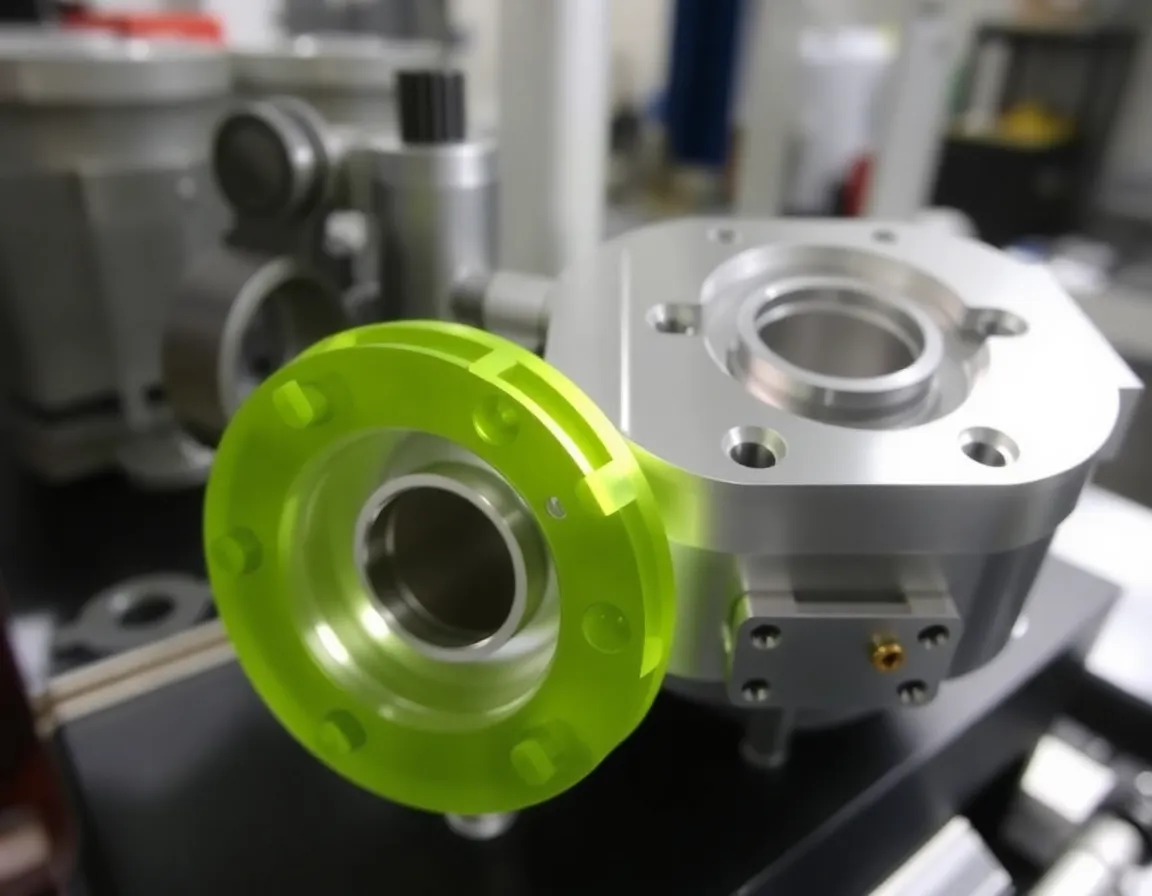
Einführung in den Präzisions-Kunststoffspritzguss für Armaturenbrett- und Konsolenteile
Der Fahrzeuginnenraum ist die primäre Schnittstelle zwischen Fahrer und Fahrzeug. Zu seinen kritischsten Komponenten gehören das Armaturenbrett und Mittelkonsole, die wichtige Bedienelemente, Infotainmentsysteme und Stauraum beherbergen. Die Herstellung dieser Teile erfordert extreme Präzision, Langlebigkeit und ästhetische Qualität. Präzisionskunststoffspritzguss hat sich als das definitive Verfahren zur Herstellung dieser komplexen, hochvolumigen Komponenten erwiesen. Dieser Artikel bietet einen umfassenden Überblick über den Kunststoffspritzguss von Armaturenbrettern und Konsolen und erläutert die Technologien, Vorteile und bewährten Verfahren, die die moderne Automobil-Innenraumfertigung prägen.
Im Gegensatz zu Außenhautteilen müssen Armaturenbrett- und Konsolenteile strenge Anforderungen an Haptik, Optik, Dimensionsstabilität und die Integration mehrerer Unterkomponenten erfüllen. Vom Blendenrahmen des Instrumentenclusters bis zur Schaltkulisse erfordert jedes Teil einen sorgfältigen Ansatz bei Materialauswahl, Werkzeugkonstruktion und Prozesskontrolle. Dieser Leitfaden untersucht die Nuancen dieses spezialisierten Bereichs und bietet Einblicke für Ingenieure, Einkaufsspezialisten und Qualitätsmanager.
Was ist Präzisionskunststoffspritzguss für Armaturenbrett- und Konsolenteile?
Präzisionskunststoffspritzguss bezeichnet die Verwendung von Spritzgussverfahren zur Herstellung von Komponenten mit extrem engen Toleranzen, die oft in Mikrometern (0,001 mm) gemessen werden. Für Armaturenbrett- und Konsolenteile bedeutet dies die Herstellung von Geometrien, die perfekt mit angrenzenden Paneelen, elektronischen Modulen und Befestigungselementen passen, ohne Spalte, Verzug oder Grat. Das Verfahren verwendet typischerweise thermoplastische Materialien wie ABS, PC/ABS-Blends, Polypropylen (PP) und Polyamid (PA), die oft mit Glasfaser oder mineralischen Füllstoffen zur Verbesserung von Steifigkeit und Hitzebeständigkeit verstärkt sind.
Der entscheidende Unterschied zum Standard-Spritzguss liegt im Grad der Kontrolle. Präzisionsspritzguss für Automobil-Innenräume verwendet fortschrittliche Maschinensteuerungssysteme, hochwertige Werkzeugstähle und anspruchsvolle Simulationssoftware, um Probleme wie Schrumpfung, Einfallstellen und Bindenähte vorherzusagen und zu minimieren. Das Ergebnis ist ein Teil, das strengen OEM-Spezifikationen für Klasse-A-Oberflächen (sichtbare, kosmetische Bereiche) und Klasse-B-Oberflächen (nicht sichtbare, strukturelle Bereiche) entspricht.
Hauptmerkmale des Armaturenbrett- und Konsolenspritzgusses
- Komplexe Geometrien: Teile weisen oft Hinterschnitte, Filmscharniere, Schnappverbindungen und komplexe Verrippungen zur strukturellen Unterstützung auf.
- Multi-Material-Integration: Umspritzen oder Zwei-Komponenten-Spritzguss wird häufig verwendet, um harte Substrate mit weichen Elastomeren (z. B. TPE oder TPU) für ein hochwertiges Gefühl zu kombinieren.
- Hochglanz- oder Matt-Oberflächen: Die Texturierung der Formoberfläche (mittels EDM, chemischem Ätzen oder Laser gravieren) ist entscheidend, um den gewünschten Glanzgrad und die Kornstruktur zu erreichen.
- Insert-Molding: Metallinserts (für Gewindebefestigungen) oder elektronische Steckverbinder werden oft direkt in das Kunststoffteil eingeformt, um Montageschritte zu reduzieren.
- Null-Fehler-Standards: Automobil-OEMs setzen strenge kosmetische Standards durch (z. B. keine Fließmarken, kein Anlaufen, keine Verunreinigungen) aufgrund der hohen Sichtbarkeit von Armaturenbrett- und Konsolenbereichen.
So funktioniert Präzisionskunststoffspritzguss für Automobil-Innenräume
Der Prozess zur Herstellung eines präzisen Armaturenbrett- oder Konsolenteils umfasst mehrere verschiedene Phasen, vom ersten Design bis zur endgültigen Qualitätskontrolle. Das Verständnis jedes Schritts ist entscheidend, um eine gleichbleibend hohe Qualität zu erzielen.
Phase 1: Teiledesign und Materialauswahl
Ingenieursteams verwenden CAD-Software (z. B. CATIA, NX, SolidWorks), um ein 3D-Modell des Teils zu erstellen. Dieses Modell muss Entformungsschrägen (typischerweise 1-3 Grad) berücksichtigen, um das Auswerfen aus der Form zu erleichtern, Wanddicken-Gleichmäßigkeit (normalerweise 2,5-4,0 mm für Strukturteile) und die Position des Angusses, um sichtbare Markierungen zu minimieren. Die Materialauswahl wird bestimmt durch mechanische Anforderungen (Schlagzähigkeit, Wärmeformbeständigkeitstemperatur), chemische Beständigkeit (gegen Öle, Reinigungsmittel und UV) und Verarbeitungsverhalten (Schmelzflussindex, Schrumpfrate). Zum Beispiel könnte ein Mittelkonsolen-Behälter ein hochschlagfestes Polypropylen verwenden, während ein Armaturenbrett-Zierteil eine PC/ABS-Mischung für eine Hochglanzoberfläche verwenden könnte.
Phase 2: Formenbau und Fertigung
Die Form (oder das Werkzeug) ist das Herzstück des Prozesses. Für präzise Armaturenbrett- und Konsolenteile werden Formen typischerweise aus gehärtetem Werkzeugstahl (z. B. P20, H13 oder S7) hergestellt, um Millionen von Zyklen standzuhalten. Zu den wichtigsten Designelementen gehören:
- Heißkanalsysteme: Diese halten das Kunststoffmaterial im Verteiler geschmolzen, reduzieren Abfall und ermöglichen eine präzise Kontrolle über Angusszeitpunkt und -druck.
- Kühlkanäle: Konforme Kühlung (mit 3D-gedruckten Einsätzen) oder traditionelle gebohrte Kanäle gewährleisten eine gleichmäßige Wärmeabfuhr und minimieren Zykluszeit und Verzug.
- Entlüftung: Mikro-Entlüftungen (0,001-0,003 Zoll tief) ermöglichen das Entweichen eingeschlossener Luft und Gase und verhindern so Brandflecken und Kurzspritzungen.
- Schieber und Auswerfer: Diese beweglichen Komponenten erzeugen Hinterschneidungen (z. B. für seitliche Befestigungsclips oder komplexe Konturen) und werden durch hydraulische oder pneumatische Zylinder betätigt.
Phase 3: Spritzgussverfahren
Der eigentliche Spritzzyklus umfasst vier Hauptphasen: Spannen, Einspritzen, Kühlen und Auswerfen. Präzisionsspritzguss erfordert eine strenge Kontrolle mehrerer Parameter:
- Einspritzgeschwindigkeit und -druck: Mehrstufige Einspritzprofile werden verwendet, um die Kavität gleichmäßig zu füllen und Strahlbildung oder Verzögerungen zu vermeiden. Spitzendrücke können 2000 bar überschreiten.
- Schmelztemperatur: Typischerweise zwischen 220 °C und 280 °C für gängige Automobilkunststoffe, überwacht durch Thermoelemente in Düse und Zylinder.
- Werkzeugtemperatur: Controlled by a temperature control unit (TCU) to maintain surface temperatures that promote proper crystallization and surface replication.
- Packing and Holding: After initial fill, a holding pressure (often 50-70% of injection pressure) is applied to compensate for material shrinkage as the part cools.
Phase 4: Post-Processing and Quality Control
After ejection, parts may undergo secondary operations such as de-gating (removing the runner), de-flashing (removing thin excess plastic), and surface inspection. Advanced quality control methods include:
- CMM (Koordinatenmessmaschine): For dimensional verification against CAD data.
- Optical Inspection: Automated vision systems check for surface defects, color consistency, and correct texture.
- Functional Testing: Snap-fit strength, hinge durability, and insert pull-out force tests are performed on sample parts.
Key Benefits of Precision Plastic Molding for Dash and Console Parts
The adoption of precision molding techniques offers substantial advantages over alternative manufacturing methods (e.g., machining, casting, or 3D printing) for high-volume automotive production.
Unmatched Dimensional Accuracy and Repeatability
Precision injection molding can hold tolerances of ±0.05 mm or better on critical dimensions. This ensures that dash and console parts fit seamlessly with other interior components, eliminating gaps and rattles that would compromise perceived quality. The repeatability of the process (part-to-part and batch-to-batch) is essential for mass production, where thousands of identical parts must be produced daily.
Design Flexibility and Part Consolidation
Molding allows for the creation of complex shapes that would be impossible or prohibitively expensive to machine. Features like snap-fits, bosses, and living hinges can be integrated directly into the part, reducing the number of separate components and eliminating secondary assembly operations. For example, a single molded console panel can incorporate mounting points for a cup holder, USB ports, and a storage compartment lid, replacing what would otherwise be a multi-part assembly.
Superior Surface Finish and Aesthetics
Modern mold texturing techniques enable the replication of virtually any grain pattern, from fine leather to brushed metal. Precision control over mold temperature and injection speed ensures that the plastic faithfully reproduces the mold surface, resulting in a consistent, high-quality appearance. This is critical for dash parts that are directly in the driver’s line of sight and must meet strict OEM gloss and color standards.
Cost-Effectiveness at High Volumes
While the initial investment in a precision mold can be significant ($50,000 to $500,000+ for complex tools), the per-part cost decreases dramatically with volume. Cycle times for dash and console parts range from 30 to 90 seconds, allowing for annual production volumes of hundreds of thousands of parts. Additionally, the elimination of secondary operations and reduced scrap rates further lower total manufacturing costs.
Enhanced Material Performance
Precision molding allows for the use of advanced engineering plastics that offer superior mechanical, thermal, and chemical properties. Glass-filled nylon provides high stiffness for structural console brackets. UV-stabilized ASA or PC/ABS maintains color and gloss over years of sun exposure. Soft-touch overmolding improves ergonomics and reduces noise, vibration, and harshness (NVH).
Applications of Precision Molding in Dash and Console Systems
The scope of precision plastic molding in automotive interiors is vast. Below are specific examples of components commonly produced using this technology.
Dashboard Components
- Instrument Cluster Bezel: A highly visible part surrounding the speedometer and gauges, requiring a flawless Class A surface and precise fit to the cluster housing.
- Air Vent Assemblies: Complex multi-piece parts with movable louvers, often using two-shot molding for a soft-touch perimeter and a hard interior vane.
- Glove Box Door: A large, structurally reinforced part with integrated latch mechanisms and dampening features.
- Center Stack Trim: The panel that houses the radio, climate controls, and display screen, often featuring intricate cutouts and a high-gloss or piano-black finish.
Center Console Components
- Console Upper Panel: The main visible surface surrounding the gear shifter, cup holders, and armrest. It must resist scratches, spills, and daily wear.
- Storage Bin Liners: Molded from textured polypropylene for durability and easy cleaning.
- Armrest Covers: Often produced using foam-in-place or overmolding techniques to provide a padded, comfortable surface.
- USB and Power Port Housings: Precision-molded inserts that must align perfectly with electronic modules and provide secure mounting.
Best Practices for Successful Dash and Console Molding
Achieving consistent, defect-free production requires adherence to several best practices throughout the product lifecycle.
Invest in Robust Mold Design and Simulation
Before cutting steel, use mold flow analysis software (e.g., Moldflow, Moldex3D) to simulate the filling, packing, cooling, and warpage of the part. This can identify potential issues such as air traps, weld lines in cosmetic areas, or excessive shrinkage. Optimize gate location, runner balance, and cooling channel layout based on simulation results. A well-designed mold reduces trial-and-error during the tool tryout phase and ensures faster ramp-up to full production.
Implement Statistical Process Control (SPC)
Monitor key process parameters (melt temperature, injection pressure, cycle time, and part weight) in real-time. Use control charts to detect trends or shifts before they result in defective parts. For example, a gradual increase in part weight may indicate a leaking check valve or inconsistent material feed. Automate data collection via machine interfaces to enable rapid corrective actions.
Prioritize Mold Maintenance
Precision molds require regular maintenance to preserve tolerances and surface finish. Establish a preventive maintenance schedule that includes cleaning of vent channels, inspection of hot runner tips, and measurement of critical mold inserts. Replace worn components (e.g., seals, springs, and slides) proactively. A well-maintained mold can produce millions of parts without significant degradation in quality.
Optimize Material Handling and Drying
Many engineering plastics used in dash and console parts are hygroscopic (absorb moisture from the air). Inadequate drying can lead to splay (silver streaks), bubbles, or reduced mechanical properties. Use dryers with dew point monitoring and ensure that material is dried to manufacturer-recommended moisture levels (typically below 0.02% for PC/ABS). Implement closed-loop material handling systems to prevent contamination from dust or regrind.
Collaborate Early with the Molder
Engage the injection molder during the product design phase. Their expertise in gate placement, draft angles, and ejection can prevent costly mold modifications later. A Design for Manufacturability (DFM) review should be conducted to identify potential issues, such as sharp corners that cause stress concentrations or deep ribs that trap air. Early collaboration also facilitates the selection of the most cost-effective material and mold construction.
Conclusion
Precision plastic molding is the cornerstone of modern automotive interior manufacturing, enabling the production of dash and console parts that meet the highest standards for fit, finish, and function. By leveraging advanced mold design, rigorous process control, and careful material selection, manufacturers can achieve the dimensional accuracy and repeatability required for these critical components. As vehicles become more sophisticated—with integrated displays, touch-sensitive surfaces, and ambient lighting—the demands on precision molding will only increase. Companies that invest in the best practices outlined in this article will be well-positioned to deliver interiors that delight drivers and passengers while maintaining cost efficiency and production scalability.