
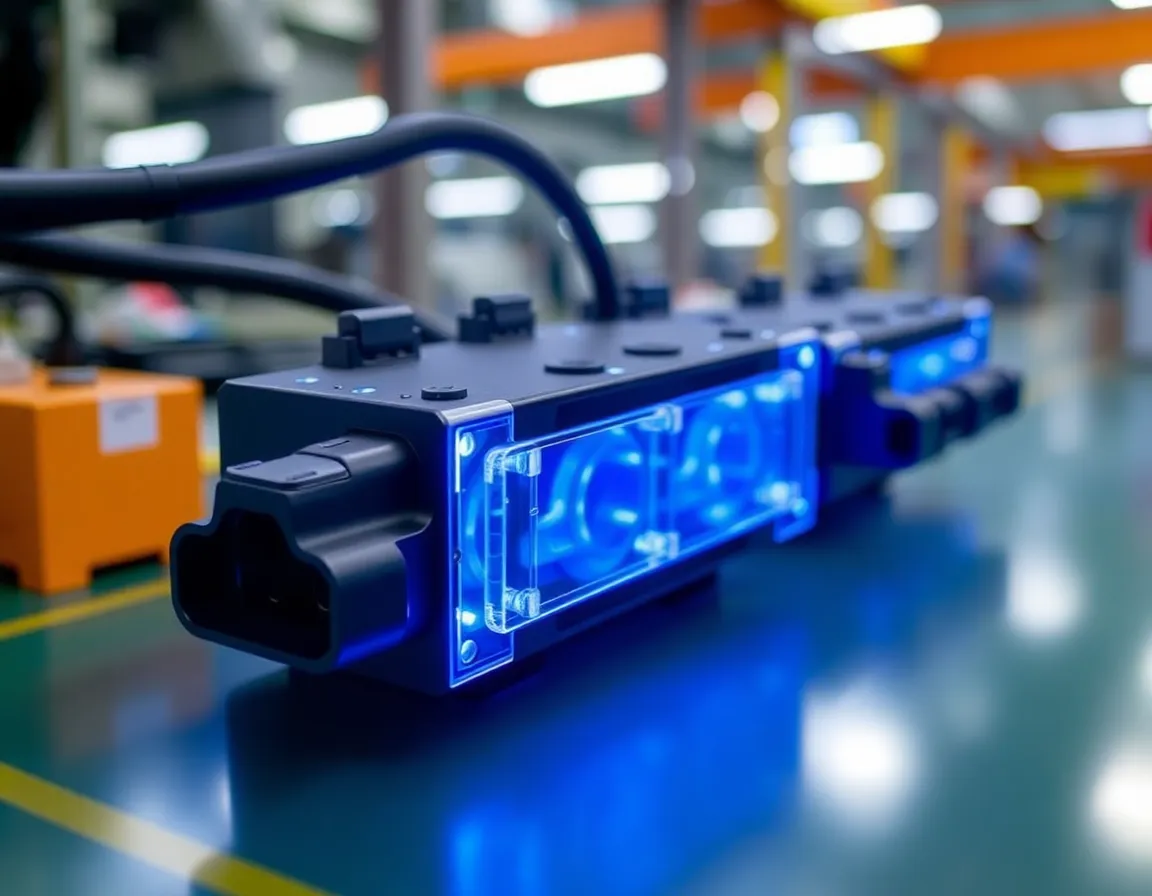
Der Paradigmenwechsel in der Automobilherstellung
Die Automobilindustrie durchläuft eine tiefgreifende Transformation, angetrieben von der unermüdlichen Verfolgung von Gewichtsreduzierung, Kraftstoffeffizienz, und Designfreiheit. Im Herzen dieser Revolution liegt eine kritische, aber oft übersehene Disziplin: Montagedienstleistungen für Kunststoffteile im Automobilbereich. Vorbei sind die Zeiten, in denen Kunststoffe nur auf Innenverkleidungsteile beschränkt waren. Heute definieren fortschrittliche Polymere und hochentwickelte Fügetechnologien neu, wie Fahrzeuge gebaut werden, von strukturellen Karosserieteilen bis hin zu komplexen Komponenten unter der Haube und komplizierten elektrischen Systemen.
Dieser Wandel betrifft nicht nur das Ersetzen von Metall durch Kunststoff. Es geht darum, den gesamten Montageprozess neu zu denken. Moderne Fahrzeuge integrieren Dutzende verschiedener Kunststoffmaterialien – jedes mit einzigartigen thermischen, mechanischen und chemischen Eigenschaften. Die Herausforderung und die Chance liegen darin, wie diese unterschiedlichen Materialien gefügt, abgedichtet und veredelt werden. Dienstleistungen für die Montage von Kunststoffteilen im Automobilbereich haben sich zu einer spezialisierten Ingenieurdisziplin entwickelt, die Materialwissenschaft, Präzisionswerkzeuge und Prozessautomatisierung kombiniert, um Baugruppen zu schaffen, die leichter, stärker und langlebiger sind als je zuvor.
Kerntechnologien in der modernen Kunststoffmontage
Um die Auswirkungen dieser Dienstleistungen zu verstehen, muss man zunächst die Vielfalt der verfügbaren Fügetechniken kennenlernen. Jede Methode bietet je nach Kunststoffart, Teilegeometrie, Produktionsvolumen und Leistungsanforderungen unterschiedliche Vorteile. Im Folgenden sind die wichtigsten Technologien aufgeführt, die dieses Feld vorantreiben.
Vibrations- und Ultraschallschweißen
Diese reibungsbasierten Schweißverfahren Techniken gehören zu den am weitesten verbreiteten in der Automobilproduktion mit hohen Stückzahlen. Ultraschallschweißen nutzt hochfrequente mechanische Vibrationen (typischerweise 20-40 kHz), um lokale Wärme an der Fügestelle zu erzeugen, den Kunststoff zu schmelzen und in Millisekunden eine molekulare Bindung zu bilden. Es ist ideal für kleine bis mittelgroße Teile wie Sensoren, Steckverbinder und Innenverkleidungen. Vibrationsschweißen, hingegen nutzt eine niedrigere Frequenz, aber höhere Amplitude lineare Bewegung, um größere Teile wie Ansaugkrümmer, Instrumententafeln und Stoßfängeranordnungen zu verbinden. Beide Methoden bieten außergewöhnliche Verbindungsfestigkeit, Wiederholbarkeit und Geschwindigkeit, was sie unverzichtbar macht für Montagedienstleistungen für Kunststoffteile im Automobilbereich.
Laserschweißen
Für Anwendungen, die hermetische Dichtungen, minimale ästhetische Beeinträchtigung oder das Verbinden komplexer 3D-Geometrien erfordern, ist das Laserschweißen zu einer bevorzugten Lösung geworden. Bei diesem Verfahren durchdringt ein Laserstrahl ein laser-transparentes Oberteil und wird von einem laser-absorbierenden Unterteil absorbiert, wobei die Grenzfläche ohne Kontakt mit dem Material geschmolzen wird. Das Ergebnis ist eine saubere, gratfreie und hochpräzise Schweißnaht. Diese Technologie wird zunehmend eingesetzt für LED-Beleuchtungsbaugruppen, Flüssigkeitsreservoirs, und Gehäuse für elektronische Steuergeräte (ECU) bei denen Partikelkontamination nicht toleriert werden kann.
Heißplatten- und Heißgasschweißen
Für große, dickwandige oder stark gefüllte Kunststoffteile, Heißplattenschweißen bleibt eine robuste und zuverlässige Methode. Eine beheizte Platte schmilzt die Fügeflächen, die dann zusammengepresst werden, um eine Verbindung zu bilden. Diese Technik wird häufig eingesetzt für Batterieträger in Elektrofahrzeugen, Kanalsysteme, und schwere Unterbodenschutzbleche. Heißgasschweißen, unter Verwendung eines Stroms erhitzter Luft oder Stickstoff, wird häufig für Reparaturen oder Kleinserienfertigung von thermoplastischen Teilen verwendet.
Mechanische Befestigung und Presssitz-Lösungen
Während das Schweißen dauerhafte Verbindungen erzeugt, erfordern viele Automobilbaugruppen Wartbarkeit oder die Möglichkeit der Demontage für das Recycling. Dienstleistungen für die Montage von Kunststoffteilen im Automobilbereich haben mechanische Befestigungstechniken perfektioniert, einschließlich Push-Pin-Clips, Schraubbosse, barbed fittings, und Schnappverbindungen. Diese Methoden sind entscheidend für die Befestigung von Innenverkleidungen, Türverkleidungen und elektrischen Komponenten. Fortschrittliche Pressfügetechniken wie Wärmenieten und Kaltumformen, bieten einen hybriden Ansatz – sie erzeugen eine dauerhafte mechanische Verriegelung ohne zusätzliche Befestigungselemente.
Strategische Vorteile für OEMs und Zulieferer
Die Einführung spezialisierter Montagedienstleistungen für Kunststoffteile im Automobilbereich liefert messbare Vorteile über den gesamten Fahrzeuglebenszyklus. Diese Vorteile gehen weit über einfache Kosteneinsparungen hinaus.
Gewichtsreduzierung und Kraftstoffeffizienz
Der Ersatz von Metallbaugruppen durch Kunststoffäquivalente kann das Komponentengewicht um 30% bis 50% oder mehr reduzieren. Für jede 10% Reduzierung des Fahrzeuggewichts verbessert sich die Kraftstoffeffizienz um etwa 6-8%. Bei Elektrofahrzeugen führt die Gewichtsreduzierung direkt zu einer erhöhten Reichweite. Fortschrittliche Montagetechniken ermöglichen es Ingenieuren, dünnwandige, hohle oder verrippte Strukturen zu konstruieren, die Festigkeit bewahren und gleichzeitig Masse einsparen. Durch die Zusammenarbeit mit erfahrenen Montagedienstleistungen für Kunststoffteile im Automobilbereich, können Hersteller den Materialeinsatz optimieren, ohne die strukturelle Integrität zu beeinträchtigen.
Designfreiheit und Teilekonsolidierung
Kunststoffe können in komplexe Formen gespritzt werden, die mit Metall unmöglich oder unerschwinglich teuer wären. In Kombination mit anspruchsvollen Montagemethoden ermöglicht dies die Teilekonsolidierung—das Ersetzen mehrteiliger Metallbaugruppen durch einzelne oder weniger Kunststoffkomponenten. Zum Beispiel könnte ein traditioneller Motoransaugkrümmer aus 10-15 zusammengeschweißten Metallteilen bestehen. Eine moderne Kunststoffversion kann als zwei Hälften gespritzt und durch Vibrationsschweißen zu einer Einheit verbunden werden, wodurch Gewicht, Montagezeit und potenzielle Leckagepfade reduziert werden. Diese Designfreiheit ermöglicht auch die Integration von Funktionen wie Schnappverbindungen, Filmscharnieren und integrierten Dichtungen direkt in das Bauteil.
Korrosionsbeständigkeit und Langlebigkeit
Im Gegensatz zu Metallen rosten oder korrodieren Kunststoffe nicht. Dies macht sie ideal für Komponenten, die Streusalz, Feuchtigkeit, Chemikalien und extremen Temperaturen ausgesetzt sind. Dienstleistungen für die Montage von Kunststoffteilen im Automobilbereich stellen sicher, dass Verbindungen nicht nur stark, sondern auch gegen Umwelteinflüsse abgedichtet sind. Ordnungsgemäß geschweißte Kunststoffbaugruppen können Tausende von Stunden thermischer Wechselbelastung, Vibration und Chemikalienexposition ohne Beeinträchtigung überstehen. Diese Langlebigkeit ist besonders wichtig für Anwendungen unter der Motorhaube, Kraftstoffsysteme, und Kühlkreisläufe.
Reduzierung von Geräusch, Vibration und Rauheit (NVH)
Kunststoffe dämpfen Vibrationen auf natürliche Weise und reduzieren die Geräuschübertragung im Vergleich zu Metall. Fortschrittliche Montagetechniken, insbesondere solche mit Elastomerdichtungen oder umspritzten Dichtungen, können die NVH-Leistung. weiter verbessern. Zum Beispiel können vibrationsgeschweißte Ansaugluftkanäle mit integrierten Resonatoren konstruiert werden, um bestimmte Frequenzen zu eliminieren, was zu einem leiseren, komfortableren Fahrgastraum führt. Dies ist ein wichtiges Verkaufsargument für Premiumfahrzeuge.
Kritische Anwendungen im gesamten Fahrzeug
The scope of Montagedienstleistungen für Kunststoffteile im Automobilbereich touches nearly every subsystem of a modern car, truck, or SUV. Below are some of the most demanding and innovative applications.
Powertrain and Underhood Systems
Engine compartments have become increasingly hostile environments, with temperatures exceeding 150°C and constant exposure to oil, coolant, and fuel. Plastics like nylon (PA) with glass fiber reinforcement, Polyphenylensulfid (PPS), und Polyetheretherketon (PEEK) are now standard for air intake manifolds, engine covers, oil pans, und coolant pumps. These components are often assembled using vibration or laser welding to ensure leak-tight joints that can withstand extreme pressure cycles.
Lighting and Optical Systems
Modern headlights and taillights are complex assemblies of polycarbonate (PC) lenses, polybutylene terephthalate (PBT) housings, and multiple electronic modules. Dienstleistungen für die Montage von Kunststoffteilen im Automobilbereich use hot plate welding and adhesive bonding to create hermetische Dichtungen that prevent fogging and moisture ingress. Laser welding is also employed for attaching lens covers to housings, providing a clean, invisible joint that meets strict optical clarity requirements.
Interior Trim and Structural Components
The passenger cabin is a showcase for plastic assembly innovation. Instrument panels are often assembled from multiple layers of different plastics—a rigid substrate for structure, a foam layer for soft-touch feel, and a skin for aesthetics—all bonded using adhesives or heat staking. Door panels, center consoles, und seat structures increasingly use vibration welding to join hollow, lightweight components that reduce weight while meeting safety standards. Even airbag deployment chutes are precision-welded to ensure reliable, controlled opening during a crash.
Battery Enclosures and Thermal Management
The electric vehicle (EV) revolution has created entirely new demands for plastic assembly. Battery pack enclosures require materials that are electrically insulating, flame-retardant, and capable of dissipating heat. Dienstleistungen für die Montage von Kunststoffteilen im Automobilbereich now offer solutions using glass-filled polypropylene (PP) oder polyamide (PA) that are vibration-welded or adhesive-bonded to create lightweight, crash-resistant enclosures. Additionally, coolant manifolds und thermal interface materials are assembled using precision techniques to ensure efficient battery thermal management.
Best Practices for Optimal Results
Success in Montagedienstleistungen für Kunststoffteile im Automobilbereich requires more than just selecting the right welding machine. It demands a holistic approach that begins at the design stage and extends through production quality control.
Design for Assembly (DFA) Principles
The most successful plastic assemblies are designed with the joining process in mind. Key considerations include:
- Uniform wall thickness near weld joints to ensure consistent melting.
- Energy directors (small triangular ridges) on parts to be ultrasonic or vibration welded, which concentrate energy and initiate melting.
- Adequate draft angles for molded parts to ensure proper fit-up.
- Clearance for weld flash and venting of trapped air.
- Accessibility for welding tools or robotic end-effectors.
Material Selection and Compatibility
Not all plastics can be welded together. Amorphous polymers (like PC, ABS, and acrylic) generally weld well to themselves and each other. Semi-crystalline polymers (like PA, PP, and POM) weld well to themselves but poorly to amorphous materials. Dienstleistungen für die Montage von Kunststoffteilen im Automobilbereich providers maintain extensive databases of material compatibility and can recommend alternative materials or surface treatments (such as plasma or flame treatment) to enable bonding of dissimilar plastics. Always consult a specialist before specifying a material combination.
Process Validation and Quality Control
Rigorous testing is essential to ensure joint integrity. Standard quality control measures include:
- Destructive tensile or peel tests on sample parts to measure weld strength.
- Pressure decay or helium leak testing for sealed assemblies.
- Microscopic cross-sectioning to examine weld bead morphology.
- In-line process monitoring using power curves, displacement sensors, and temperature feedback to detect anomalies in real time.
- Thermal shock and vibration testing to simulate vehicle life cycles.
Partnering with Experts
Given the complexity of modern materials and processes, most OEMs and Tier 1 suppliers choose to partner with specialized Montagedienstleistungen für Kunststoffteile im Automobilbereich providers. These partners bring deep expertise in tooling design, process optimization, and automation integration. They can also manage the entire supply chain—from molding to assembly to final inspection—ensuring consistent quality and on-time delivery. When selecting a partner, look for certifications such as IATF 16949 (automotive quality management), proven experience with your specific materials, and a track record of innovation in joining technology.
The Future of Automotive Plastic Assembly
As the industry moves toward autonomous vehicles, electrification, und sustainable materials, the role of Montagedienstleistungen für Kunststoffteile im Automobilbereich will only grow. Emerging trends include the use of bio-based and recycled plastics, which present new joining challenges due to variable material properties. Additive manufacturing (3D printing) is also entering the assembly space, enabling the production of custom tooling or low-volume parts with integrated features. Furthermore, Industrie 4.0 technologies—such as digital twins, machine learning for process optimization, and IoT-enabled quality tracking—are making plastic assembly lines smarter and more efficient.
In conclusion, Montagedienstleistungen für Kunststoffteile im Automobilbereich are no longer a secondary consideration but a core strategic capability. They enable the lightweight, durable, and complex designs that define modern vehicles. By understanding the technologies, benefits, and best practices outlined above, manufacturers can harness the full potential of plastics to build better, safer, and more sustainable automobiles. The revolution in auto assembly is here, and it is built on a foundation of advanced plastic solutions.