
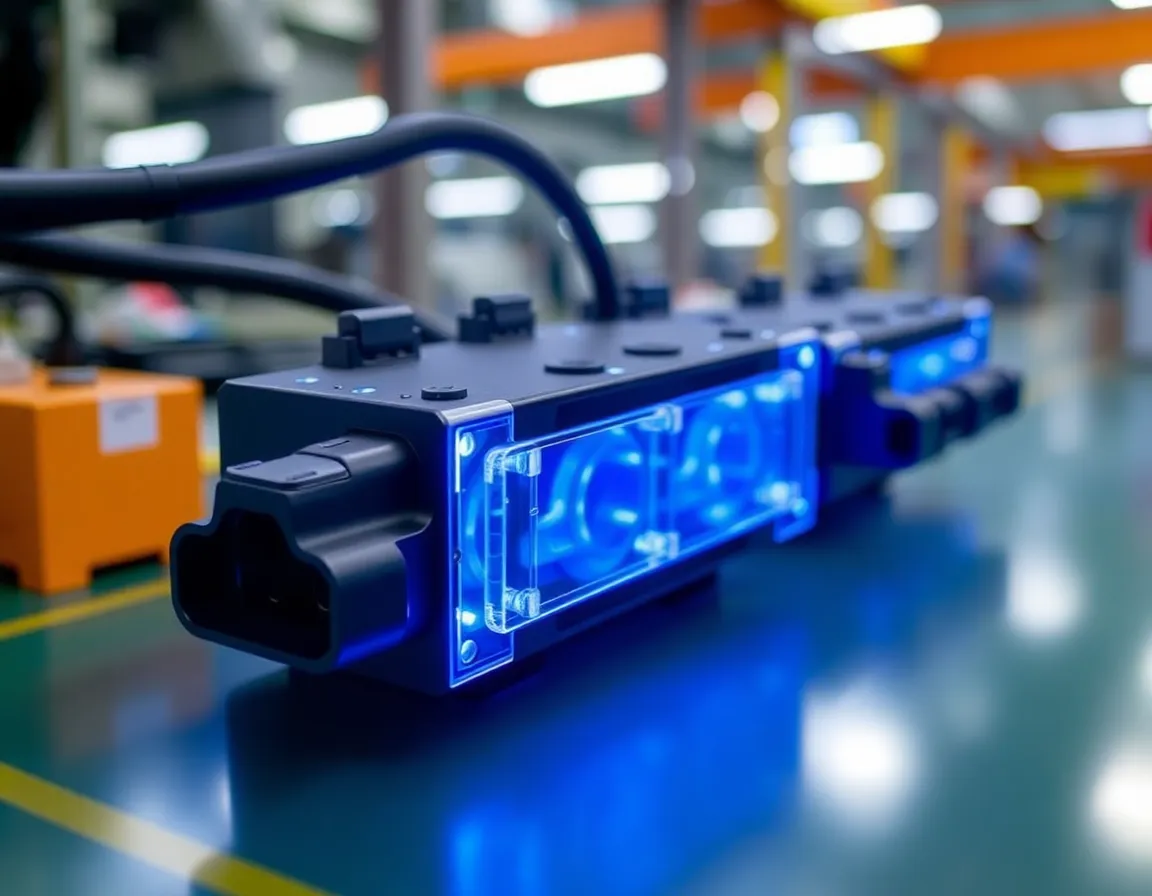
A mudança de paradigma na fabricação automotiva
A indústria automotiva está passando por uma transformação profunda, impulsionada pela busca incansável de leveza, eficiência de combustível, e liberdade de design. No coração desta revolução está uma disciplina crítica, mas muitas vezes negligenciada: serviços de montagem de plásticos automotivos. Os dias em que os plásticos eram meramente relegados a peças de acabamento interior acabaram. Hoje, polímeros avançados e tecnologias sofisticadas de união estão redefinindo como os veículos são construídos, desde painéis de carroceria estruturais até componentes complexos sob o capô e sistemas elétricos intrincados.
Esta mudança não se trata apenas de substituir metal por plástico. Trata-se de reimaginar todo o processo de montagem. Os veículos modernos integram dezenas de materiais plásticos diferentes—cada um com propriedades térmicas, mecânicas e químicas únicas. O desafio, e a oportunidade, reside em como esses materiais dissimilares são unidos, selados e acabados. Serviços de montagem de plástico automotivo evoluíram para uma disciplina de engenharia especializada que combina ciência de materiais, ferramentas de precisão e automação de processos para criar montagens que são mais leves, mais fortes e mais duráveis do que nunca.
Tecnologias Principais na Montagem Moderna de Plástico
Para entender o impacto desses serviços, é preciso primeiro apreciar a variedade de técnicas de união disponíveis. Cada método oferece vantagens distintas dependendo do tipo de plástico, geometria da peça, volume de produção e requisitos de desempenho. Abaixo estão as principais tecnologias que impulsionam este campo.
Soldagem por Vibração e Ultrassônica
Estas técnicas de soldagem por fricção estão entre as mais utilizadas na produção automotiva de alto volume. Soldagem ultrassônica usa vibrações mecânicas de alta frequência (tipicamente 20-40 kHz) para gerar calor localizado na interface da junta, derretendo o plástico e criando uma ligação molecular em milissegundos. É ideal para peças pequenas a médias, como sensores, conectores e painéis internos. Soldagem por vibração, por outro lado, utiliza movimento linear de menor frequência, mas maior amplitude, para unir peças maiores, como coletores de admissão, painéis de instrumentos e conjuntos de para-choques. Ambos os métodos oferecem excepcional resistência de junta, repetibilidade e velocidade, tornando-os indispensáveis para serviços de montagem de plásticos automotivos.
Soldagem a Laser
Para aplicações que exigem vedações herméticas, impacto estético mínimo ou união de geometrias 3D complexas, a soldagem a laser tornou-se uma solução preferida. Neste processo, um feixe de laser passa através de uma peça superior transparente ao laser e é absorvido por uma peça inferior absorvente de laser, fundindo a interface sem contato com o material. O resultado é uma solda limpa, sem rebarbas e altamente precisa. Esta tecnologia é cada vez mais utilizada para conjuntos de iluminação LED, reservatórios de fluido, e carcaças de unidade de controle eletrônico (ECU) onde a contaminação por partículas não pode ser tolerada.
Soldagem por Placa Quente e Gás Quente
Para peças plásticas grandes, de paredes espessas ou altamente preenchidas, a, soldagem por placa quente permanece um método robusto e confiável. Uma placa aquecida funde as superfícies de união, que são então pressionadas juntas para formar uma ligação. Esta técnica é comumente empregada para bandejas de bateria em veículos elétricos, sistemas de dutos, e proteções inferiores para serviço pesado. Soldagem a gás quente, usando um fluxo de ar aquecido ou nitrogênio, é frequentemente utilizada para reparo ou produção de baixo volume de peças termoplásticas.
Soluções de Fixação Mecânica e Encaixe por Pressão
Enquanto a soldagem cria ligações permanentes, muitas montagens automotivas exigem facilidade de manutenção ou a capacidade de desmontagem para reciclagem. Serviços de montagem de plástico automotivo aperfeiçoaram técnicas de fixação mecânica, incluindo clipes de pino de pressão, chefes de parafuso, conexões com farpas, e projetos de encaixe por pressão. Esses métodos são críticos para fixar acabamentos internos, painéis de portas e componentes elétricos. Tecnologias avançadas de encaixe por pressão, como cravação térmica e conformação a frio, oferecem uma abordagem híbrida—criando um travamento mecânico permanente sem a necessidade de fixadores adicionais.
Benefícios Estratégicos para OEMs e Fornecedores de Nível 1
A adoção de técnicas especializadas serviços de montagem de plásticos automotivos proporciona vantagens mensuráveis em todo o ciclo de vida do veículo. Esses benefícios vão muito além da simples redução de custos.
Redução de Peso e Eficiência de Combustível
Substituir conjuntos metálicos por equivalentes plásticos pode reduzir o peso dos componentes em 30% a 50% ou mais. Para cada redução de 10% no peso do veículo, a economia de combustível melhora em aproximadamente 6-8%. Em veículos elétricos, a redução de peso se traduz diretamente em aumento de autonomia. Técnicas avançadas de montagem permitem aos engenheiros projetar estruturas de paredes finas, ocas ou com nervuras que mantêm a resistência enquanto reduzem massa. Ao fazer parceria com serviços de montagem de plásticos automotivos, experientes, os fabricantes podem otimizar o uso de material sem comprometer a integridade estrutural.
Liberdade de Design e Consolidação de Peças
Os plásticos podem ser moldados em formas complexas que são impossíveis ou proibitivamente caras com metal. Quando combinados com métodos sofisticados de montagem, isso permite a consolidação de peças—substituindo conjuntos metálicos multicomponentes por componentes plásticos únicos ou em menor número. Por exemplo, um coletor de admissão de motor tradicional pode consistir em 10 a 15 peças metálicas soldadas entre si. Uma versão moderna em plástico pode ser moldada em duas metades e soldada por vibração em uma única unidade, reduzindo peso, tempo de montagem e possíveis caminhos de vazamento. Essa liberdade de design também permite a integração de recursos como encaixes por pressão, dobradiças vivas e vedações integradas diretamente na peça.
Resistência à Corrosão e Durabilidade
Ao contrário dos metais, os plásticos não enferrujam nem corroem. Isso os torna ideais para componentes expostos a sal de estrada, umidade, produtos químicos e temperaturas extremas. Serviços de montagem de plástico automotivo garantem que as juntas não sejam apenas fortes, mas também vedadas contra a entrada de agentes ambientais. Conjuntos plásticos devidamente soldados podem suportar milhares de horas de ciclos térmicos, vibração e exposição química sem degradação. Essa durabilidade é particularmente crítica para aplicações no compartimento do motor, sistemas de combustível, e circuitos de arrefecimento.
Redução de Ruído, Vibração e Aspereza (NVH)
Os plásticos amortizam naturalmente a vibração e reduzem a transmissão de ruído em comparação com o metal. Técnicas avançadas de montagem, particularmente as que utilizam vedações elastoméricas ou juntas sobreinjetadas, podem melhorar ainda mais o desempenho de NVH. Por exemplo, condutas de admissão de ar soldadas por vibração podem ser concebidas com ressonadores integrados para cancelar frequências específicas, resultando numa experiência de cabine mais silenciosa e refinada. Este é um argumento de venda fundamental para veículos premium.
Aplicações Críticas em Todo o Veículo
O âmbito de serviços de montagem de plásticos automotivos abrange quase todos os subsistemas de um automóvel, camião ou SUV moderno. Abaixo estão algumas das aplicações mais exigentes e inovadoras.
Sistemas de Trem de Potência e do Compartimento do Motor
Os compartimentos do motor tornaram-se ambientes cada vez mais hostis, com temperaturas superiores a 150°C e exposição constante a óleo, líquido de arrefecimento e combustível. Plásticos como nylon (PA) com reforço de fibra de vidro, sulfeto de polifenileno (PPS), e poliéter-éter-cetona (PEEK) são agora padrão para colectores de admissão de ar, tampas de motor, cárteres de óleo, e bombas de refrigerante. Esses componentes são frequentemente montados usando soldagem por vibração ou laser para garantir juntas estanques que possam suportar ciclos extremos de pressão.
Sistemas de Iluminação e Ópticos
Os faróis e lanternas modernos são conjuntos complexos de lentes de policarbonato (PC), carcaças de politereftalato de butileno (PBT) e múltiplos módulos eletrônicos. Serviços de montagem de plástico automotivo usam soldagem por placa quente e colagem adesiva para criar vedações herméticas que previnem embaçamento e entrada de umidade. A soldagem a laser também é empregada para fixar tampas de lentes às carcaças, proporcionando uma junta limpa e invisível que atende a rigorosos requisitos de clareza óptica.
Acabamento Interno e Componentes Estruturais
A cabine de passageiros é um showroom de inovação em montagem de plásticos. Painéis de instrumentos são frequentemente montados a partir de múltiplas camadas de plásticos diferentes — um substrato rígido para estrutura, uma camada de espuma para sensação de toque suave e uma película para estética — todas unidas usando adesivos ou cravação térmica. Painéis de portas, consoles centrais, e estruturas de assentos usam cada vez mais a soldagem por vibração para unir componentes ocos e leves que reduzem o peso enquanto atendem aos padrões de segurança. Até mesmo calhas de acionamento do airbag são soldadas com precisão para garantir uma abertura confiável e controlada durante uma colisão.
Invólucros de Bateria e Gestão Térmica
A revolução dos veículos elétricos (VE) criou demandas totalmente novas para a montagem de plásticos. Invólucros de pacotes de baterias exigem materiais que sejam eletricamente isolantes, retardantes de chama e capazes de dissipar calor. Serviços de montagem de plástico automotivo agora oferecem soluções usando polipropileno reforçado com fibra de vidro (PP) ou poliamida (PA) que são soldados por vibração ou unidos por adesivo para criar invólucros leves e resistentes a colisões. Além disso, coletores de refrigerante e materiais de interface térmica são montados usando técnicas de precisão para garantir uma gestão térmica eficiente da bateria.
Melhores Práticas para Resultados Ideais
O sucesso em serviços de montagem de plásticos automotivos requires more than just selecting the right welding machine. It demands a holistic approach that begins at the design stage and extends through production quality control.
Design for Assembly (DFA) Principles
The most successful plastic assemblies are designed with the joining process in mind. Key considerations include:
- Uniform wall thickness near weld joints to ensure consistent melting.
- Energy directors (small triangular ridges) on parts to be ultrasonic or vibration welded, which concentrate energy and initiate melting.
- Adequate draft angles for molded parts to ensure proper fit-up.
- Clearance for weld flash and venting of trapped air.
- Accessibility for welding tools or robotic end-effectors.
Material Selection and Compatibility
Not all plastics can be welded together. Amorphous polymers (like PC, ABS, and acrylic) generally weld well to themselves and each other. Semi-crystalline polymers (like PA, PP, and POM) weld well to themselves but poorly to amorphous materials. Serviços de montagem de plástico automotivo providers maintain extensive databases of material compatibility and can recommend alternative materials or surface treatments (such as plasma or flame treatment) to enable bonding of dissimilar plastics. Always consult a specialist before specifying a material combination.
Process Validation and Quality Control
Rigorous testing is essential to ensure joint integrity. Standard quality control measures include:
- Destructive tensile or peel tests on sample parts to measure weld strength.
- Pressure decay or helium leak testing for sealed assemblies.
- Microscopic cross-sectioning to examine weld bead morphology.
- In-line process monitoring using power curves, displacement sensors, and temperature feedback to detect anomalies in real time.
- Thermal shock and vibration testing to simulate vehicle life cycles.
Partnering with Experts
Given the complexity of modern materials and processes, most OEMs and Tier 1 suppliers choose to partner with specialized serviços de montagem de plásticos automotivos providers. These partners bring deep expertise in tooling design, process optimization, and automation integration. They can also manage the entire supply chain—from molding to assembly to final inspection—ensuring consistent quality and on-time delivery. When selecting a partner, look for certifications such as IATF 16949 (automotive quality management), proven experience with your specific materials, and a track record of innovation in joining technology.
The Future of Automotive Plastic Assembly
As the industry moves toward autonomous vehicles, electrification, e sustainable materials, the role of serviços de montagem de plásticos automotivos will only grow. Emerging trends include the use of bio-based and recycled plastics, which present new joining challenges due to variable material properties. Additive manufacturing (3D printing) is also entering the assembly space, enabling the production of custom tooling or low-volume parts with integrated features. Furthermore, Industry 4.0 technologies—such as digital twins, machine learning for process optimization, and IoT-enabled quality tracking—are making plastic assembly lines smarter and more efficient.
In conclusion, serviços de montagem de plásticos automotivos are no longer a secondary consideration but a core strategic capability. They enable the lightweight, durable, and complex designs that define modern vehicles. By understanding the technologies, benefits, and best practices outlined above, manufacturers can harness the full potential of plastics to build better, safer, and more sustainable automobiles. The revolution in auto assembly is here, and it is built on a foundation of advanced plastic solutions.