
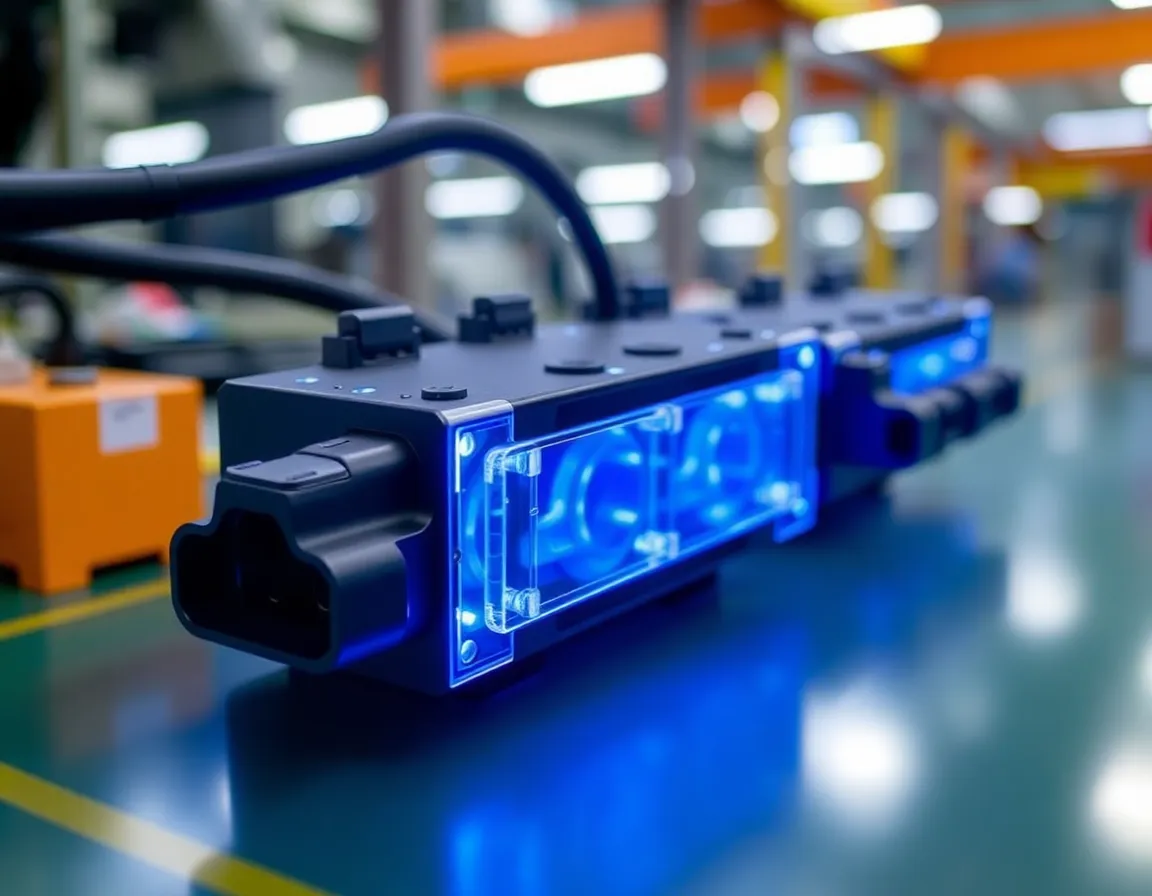
The Paradigm Shift in Automotive Manufacturing
The automotive industry is undergoing a profound transformation, driven by the relentless pursuit of lightweighting, fuel efficiency, y design freedom. At the heart of this revolution lies a critical but often overlooked discipline: automotive plastic assembly services. Gone are the days when plastics were merely relegated to interior trim pieces. Today, advanced polymers and sophisticated joining technologies are redefining how vehicles are built, from structural body panels to complex under-the-hood components and intricate electrical systems.
This shift is not just about replacing metal with plastic. It is about reimagining the entire assembly process. Modern vehicles integrate dozens of different plastic materials—each with unique thermal, mechanical, and chemical properties. The challenge, and the opportunity, lies in how these dissimilar materials are joined, sealed, and finished. Automotive plastic assembly services have evolved into a specialized engineering discipline that combines material science, precision tooling, and process automation to create assemblies that are lighter, stronger, and more durable than ever before.
Core Technologies in Modern Plastic Assembly
To understand the impact of these services, one must first appreciate the variety of joining techniques available. Each method offers distinct advantages depending on the plastic type, part geometry, production volume, and performance requirements. Below are the primary technologies driving this field.
Vibration and Ultrasonic Welding
These friction-based welding techniques are among the most widely used in high-volume automotive production. Ultrasonic welding uses high-frequency mechanical vibrations (typically 20-40 kHz) to generate localized heat at the joint interface, melting the plastic and creating a molecular bond in milliseconds. It is ideal for small to medium-sized parts like sensors, connectors, and interior panels. Vibration welding, on the other hand, uses lower frequency but higher amplitude linear motion to join larger parts, such as intake manifolds, instrument panels, and bumper assemblies. Both methods offer exceptional joint strength, repeatability, and speed, making them indispensable for automotive plastic assembly services.
Laser Welding
For applications requiring hermetic seals, minimal aesthetic impact, or joining of complex 3D geometries, laser welding has become a preferred solution. In this process, a laser beam passes through a laser-transparent upper part and is absorbed by a laser-absorbent lower part, melting the interface without contacting the material. The result is a clean, flash-free, and highly precise weld. This technology is increasingly used for LED lighting assemblies, fluid reservoirs, y electronic control unit (ECU) housings where particle contamination cannot be tolerated.
Hot Plate and Hot Gas Welding
For large, thick-walled, or highly filled plastic parts, hot plate welding remains a robust and reliable method. A heated platen melts the joining surfaces, which are then pressed together to form a bond. This technique is commonly employed for battery trays in electric vehicles, ducting systems, y heavy-duty underbody shields. Hot gas welding, using a stream of heated air or nitrogen, is often used for repair or low-volume production of thermoplastic parts.
Mechanical Fastening and Press-Fit Solutions
While welding creates permanent bonds, many automotive assemblies require serviceability or the ability to disassemble for recycling. Automotive plastic assembly services have perfected mechanical fastening techniques, including push-pin clips, screw bosses, barbed fittings, y snap-fit designs. These methods are critical for attaching interior trim, door panels, and electrical components. Advanced press-fit technologies, such as heat staking y cold forming, provide a hybrid approach—creating a permanent mechanical lock without the need for additional fasteners.
Strategic Benefits for OEMs and Tier Suppliers
The adoption of specialized automotive plastic assembly services delivers measurable advantages across the entire vehicle lifecycle. These benefits extend far beyond simple cost savings.
Reducción de Peso y Eficiencia de Combustible
Replacing metal assemblies with plastic equivalents can reduce component weight by 30% al 50% or more. For every 10% reduction in vehicle weight, fuel economy improves by approximately 6-8%. In electric vehicles, weight reduction directly translates to increased range. Advanced assembly techniques allow engineers to design thin-walled, hollow, or ribbed structures that maintain strength while shedding mass. By partnering with experienced automotive plastic assembly services, manufacturers can optimize material usage without compromising structural integrity.
Libertad de Diseño y Consolidación de Piezas
Plastics can be molded into complex shapes that are impossible or prohibitively expensive with metal. When combined with sophisticated assembly methods, this enables consolidación de piezas—replacing multi-component metal assemblies with single or fewer plastic components. For example, a traditional engine intake manifold might consist of 10-15 metal parts welded together. A modern plastic version can be molded as two halves and vibration-welded into one unit, reducing weight, assembly time, and potential leak paths. This design freedom also allows for the integration of features like snap-fits, living hinges, and integrated seals directly into the part.
Corrosion Resistance and Durability
Unlike metals, plastics do not rust or corrode. This makes them ideal for components exposed to road salt, moisture, chemicals, and extreme temperatures. Automotive plastic assembly services ensure that joints are not only strong but also sealed against environmental ingress. Properly welded plastic assemblies can withstand thousands of hours of thermal cycling, vibration, and chemical exposure without degradation. This durability is particularly critical for underhood applications, fuel systems, y cooling circuits.
Noise, Vibration, and Harshness (NVH) Reduction
Plastics naturally dampen vibration and reduce noise transmission compared to metal. Advanced assembly techniques, particularly those using elastomeric seals or overmolded gaskets, can further improve NVH performance. For example, vibration-welded air intake ducts can be designed with integrated resonators to cancel specific frequencies, resulting in a quieter, more refined cabin experience. This is a key selling point for premium vehicles.
Critical Applications Across the Vehicle
The scope of automotive plastic assembly services touches nearly every subsystem of a modern car, truck, or SUV. Below are some of the most demanding and innovative applications.
Powertrain and Underhood Systems
Engine compartments have become increasingly hostile environments, with temperatures exceeding 150°C and constant exposure to oil, coolant, and fuel. Plastics like nylon (PA) with glass fiber reinforcement, sulfuro de polifenileno (PPS), y poliéter éter cetona (PEEK) are now standard for air intake manifolds, engine covers, oil pans, y coolant pumps. These components are often assembled using vibration or laser welding to ensure leak-tight joints that can withstand extreme pressure cycles.
Lighting and Optical Systems
Modern headlights and taillights are complex assemblies of polycarbonate (PC) lenses, polybutylene terephthalate (PBT) housings, and multiple electronic modules. Automotive plastic assembly services use hot plate welding and adhesive bonding to create hermetic seals that prevent fogging and moisture ingress. Laser welding is also employed for attaching lens covers to housings, providing a clean, invisible joint that meets strict optical clarity requirements.
Interior Trim and Structural Components
The passenger cabin is a showcase for plastic assembly innovation. Instrument panels are often assembled from multiple layers of different plastics—a rigid substrate for structure, a foam layer for soft-touch feel, and a skin for aesthetics—all bonded using adhesives or heat staking. Door panels, center consoles, y seat structures increasingly use vibration welding to join hollow, lightweight components that reduce weight while meeting safety standards. Even airbag deployment chutes are precision-welded to ensure reliable, controlled opening during a crash.
Battery Enclosures and Thermal Management
The electric vehicle (EV) revolution has created entirely new demands for plastic assembly. Battery pack enclosures require materials that are electrically insulating, flame-retardant, and capable of dissipating heat. Automotive plastic assembly services now offer solutions using glass-filled polypropylene (PP) o polyamide (PA) that are vibration-welded or adhesive-bonded to create lightweight, crash-resistant enclosures. Additionally, coolant manifolds y thermal interface materials are assembled using precision techniques to ensure efficient battery thermal management.
Best Practices for Optimal Results
Success in automotive plastic assembly services requires more than just selecting the right welding machine. It demands a holistic approach that begins at the design stage and extends through production quality control.
Design for Assembly (DFA) Principles
The most successful plastic assemblies are designed with the joining process in mind. Key considerations include:
- Uniform wall thickness near weld joints to ensure consistent melting.
- Energy directors (small triangular ridges) on parts to be ultrasonic or vibration welded, which concentrate energy and initiate melting.
- Adequate draft angles for molded parts to ensure proper fit-up.
- Clearance for weld flash and venting of trapped air.
- Accessibility for welding tools or robotic end-effectors.
Material Selection and Compatibility
Not all plastics can be welded together. Amorphous polymers (like PC, ABS, and acrylic) generally weld well to themselves and each other. Semi-crystalline polymers (like PA, PP, and POM) weld well to themselves but poorly to amorphous materials. Automotive plastic assembly services providers maintain extensive databases of material compatibility and can recommend alternative materials or surface treatments (such as plasma or flame treatment) to enable bonding of dissimilar plastics. Always consult a specialist before specifying a material combination.
Process Validation and Quality Control
Rigorous testing is essential to ensure joint integrity. Standard quality control measures include:
- Destructive tensile or peel tests on sample parts to measure weld strength.
- Pressure decay or helium leak testing for sealed assemblies.
- Microscopic cross-sectioning to examine weld bead morphology.
- In-line process monitoring using power curves, displacement sensors, and temperature feedback to detect anomalies in real time.
- Thermal shock and vibration testing to simulate vehicle life cycles.
Partnering with Experts
Given the complexity of modern materials and processes, most OEMs and Tier 1 suppliers choose to partner with specialized automotive plastic assembly services providers. These partners bring deep expertise in tooling design, process optimization, and automation integration. They can also manage the entire supply chain—from molding to assembly to final inspection—ensuring consistent quality and on-time delivery. When selecting a partner, look for certifications such as IATF 16949 (automotive quality management), proven experience with your specific materials, and a track record of innovation in joining technology.
The Future of Automotive Plastic Assembly
As the industry moves toward autonomous vehicles, electrification, y sustainable materials, the role of automotive plastic assembly services will only grow. Emerging trends include the use of bio-based and recycled plastics, which present new joining challenges due to variable material properties. Additive manufacturing (3D printing) is also entering the assembly space, enabling the production of custom tooling or low-volume parts with integrated features. Furthermore, Industry 4.0 technologies—such as digital twins, machine learning for process optimization, and IoT-enabled quality tracking—are making plastic assembly lines smarter and more efficient.
In conclusion, automotive plastic assembly services are no longer a secondary consideration but a core strategic capability. They enable the lightweight, durable, and complex designs that define modern vehicles. By understanding the technologies, benefits, and best practices outlined above, manufacturers can harness the full potential of plastics to build better, safer, and more sustainable automobiles. The revolution in auto assembly is here, and it is built on a foundation of advanced plastic solutions.