
Accelerating product development schedules requires validating functional hardware designs using production-intent engineering polymers. Additive manufacturing techniques like 3D printing provide fast conceptual models, but photopolymers fail to replicate the mechanical toughness, heat resistance, and chemical immunity of injection molded thermoplastics. Specifying professional prototype injection molding bridges the gap between R&D checks and series production, allowing engineers to test functional parts with exact material properties. JUCHENG delivers rapid prototype tooling and low-volume bridge production, producing functional components strictly according to customer CAD specifications.
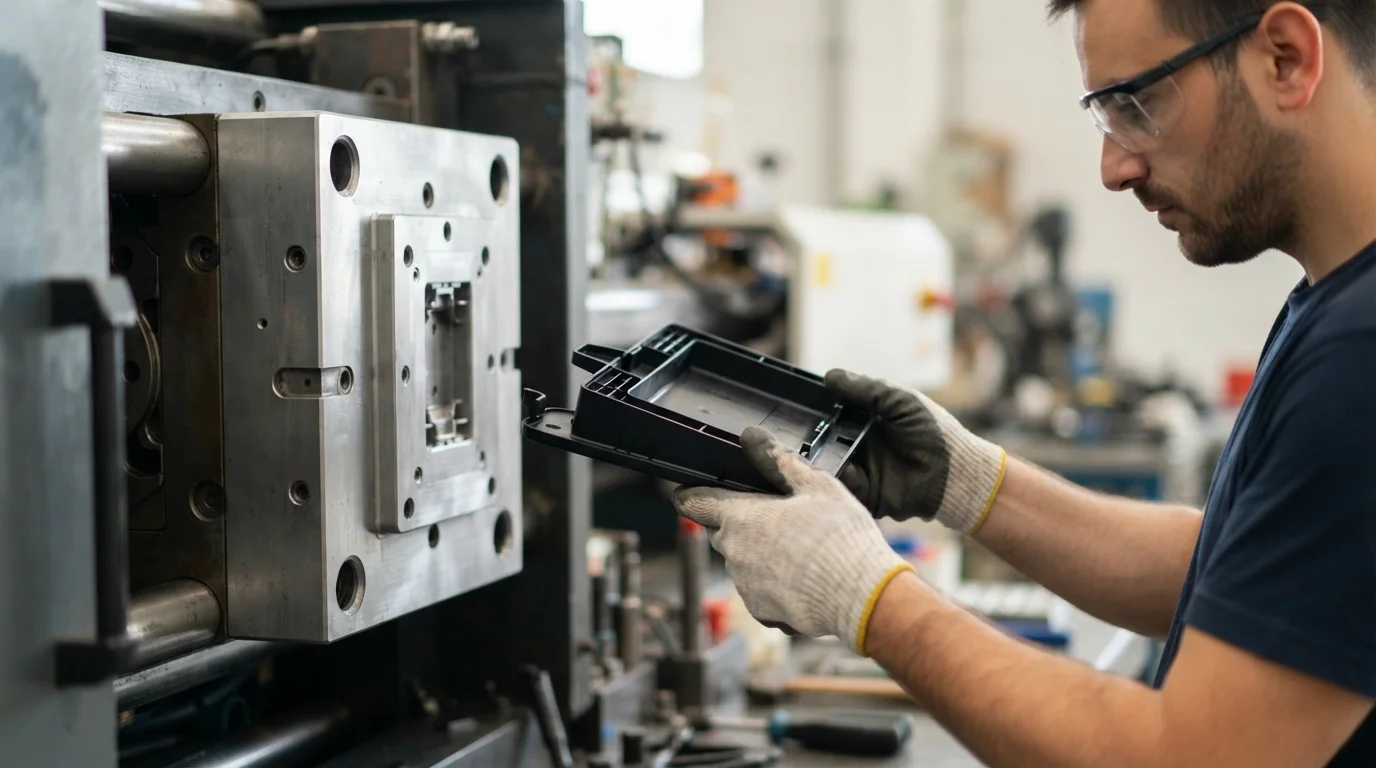
Table of Contents
7-10 Business Days T1 Sample Delivery via Rapid Tooling
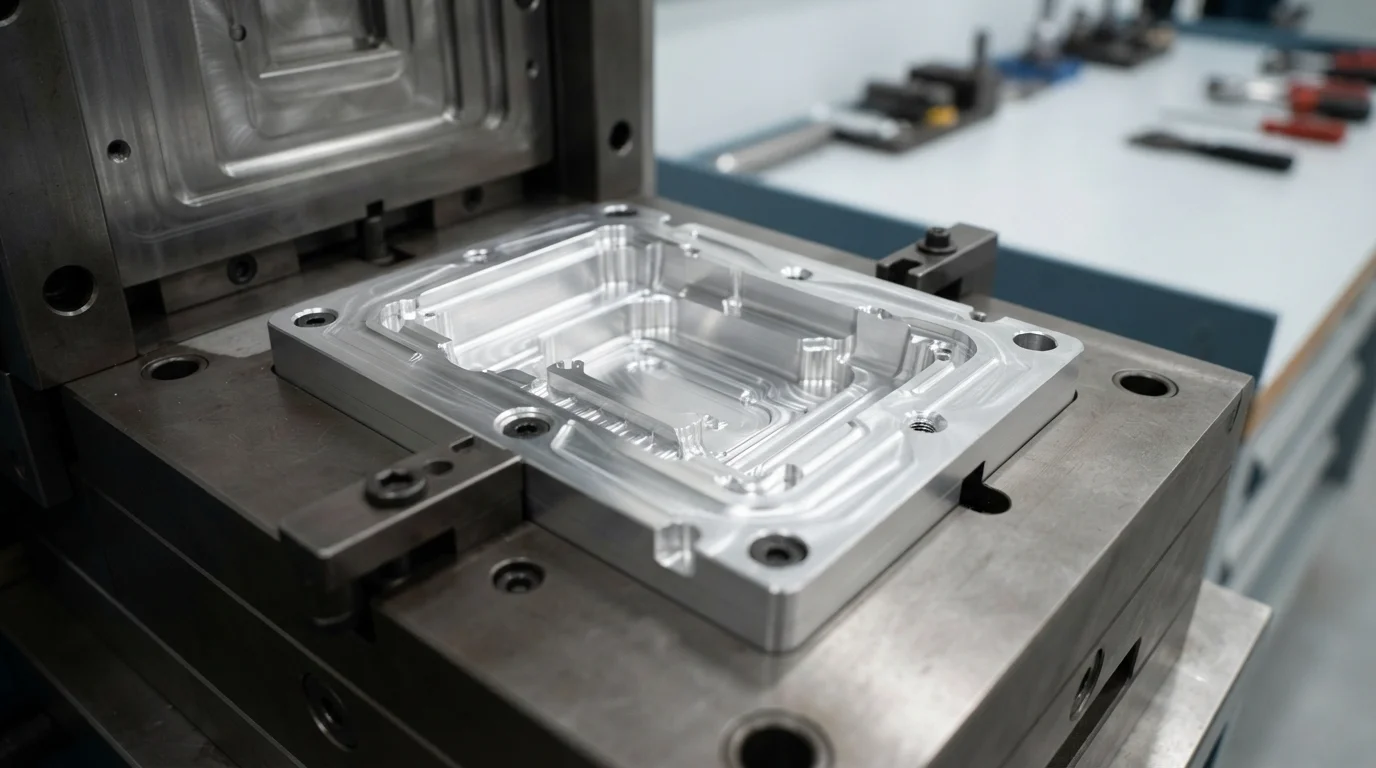
Delivering fast-turn prototype components relies on modular master unit die (MUD) frames and rapid toolmaking protocols. Machining custom core inserts from high-strength Al7075 aluminum or pre-hardened P20 soft steel cuts mold fabrication timelines drastically. High-speed CNC milling cuts aluminum cavities up to three times faster than processing hardened tool steels, enabling T1 sample delivery in 7 to 10 business days. Reusing master bolster frames eliminates the high capital cost of raw steel plates, making low-volume prototype runs highly economical.
Rapid prototyping tooling workflow steps include:
- MUD frame integration—Installing custom cavity inserts into standardized master unit die bases eliminates bolster plate machining costs.
- High-speed aluminum milling—Cutting Al7075-T6 billet cores rapidly compresses tool fabrication timelines.
- Automated T1 trial molding—Injecting production-intent resins generates functional sample parts for physical validation within days.
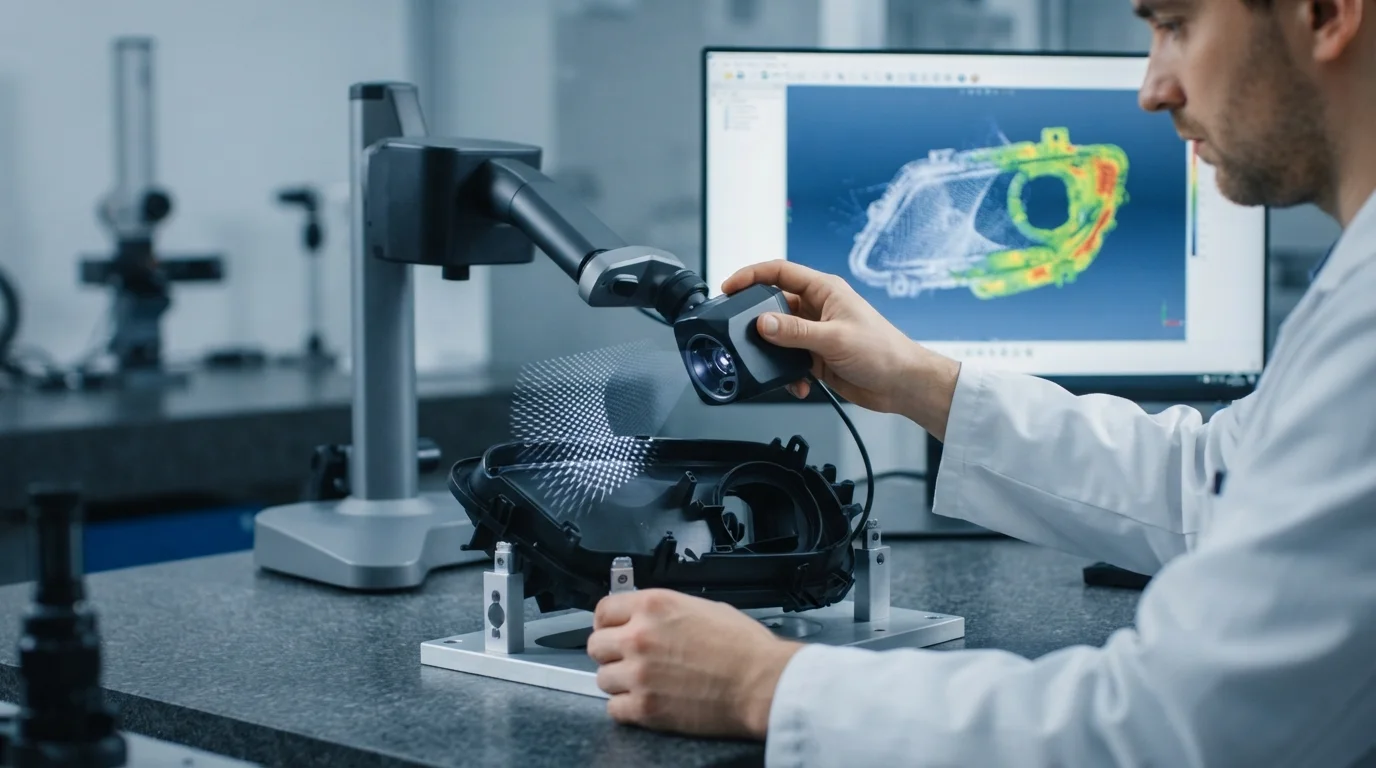
- Dimensional verification reporting—Measuring first article samples verifies critical tolerances before committing to high-cavitation tooling.
Production-Grade Plastics (PEEK, PC, ABS, PA66) for Functional Testing
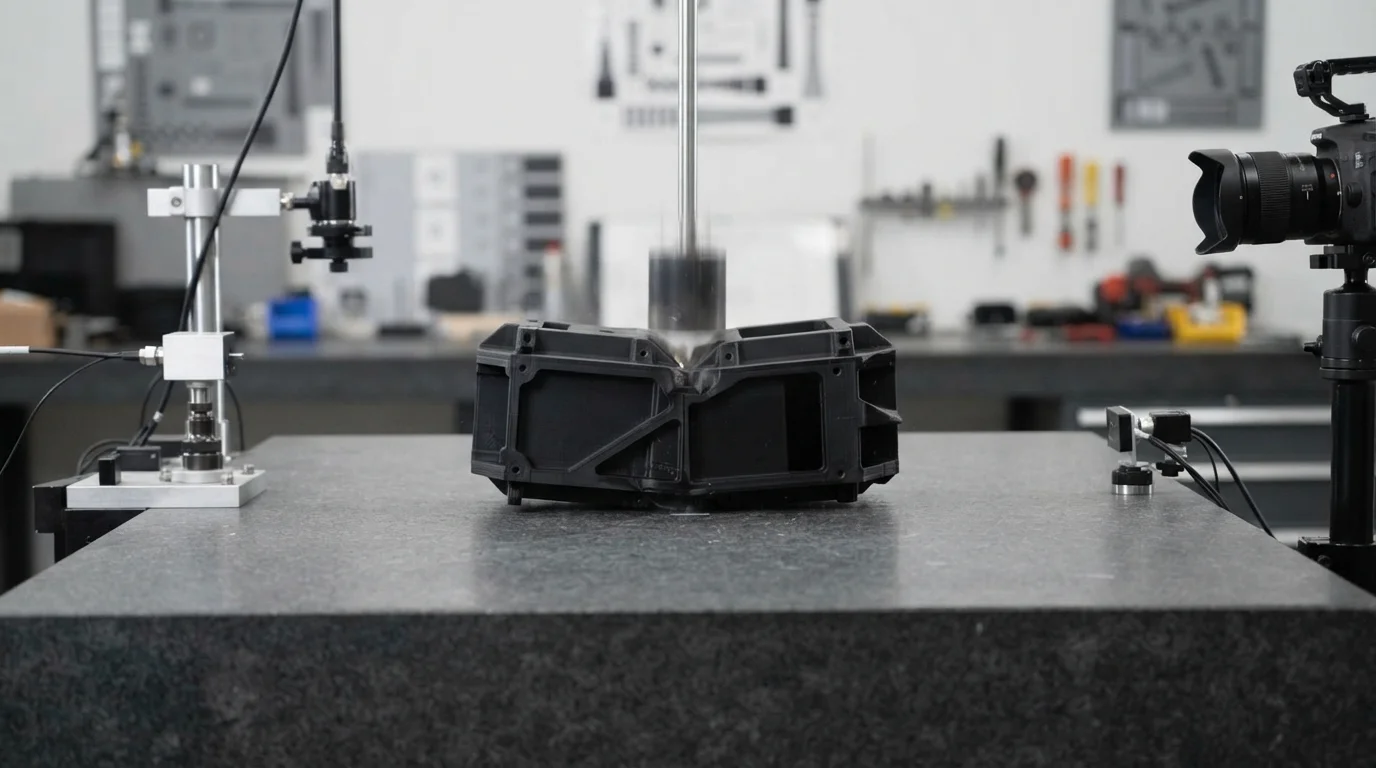
Evaluating physical snap-fits, dynamic vibration resistance, and thermal deflection requires testing components molded from actual production polymers. Prototype tooling processes the complete spectrum of engineering thermoplastics, including ABS, polycarbonate (PC), PA66, and super-polymers like PEEK. Molding a prototype in the intended resin helps assess functional performance, but gates, cooling, cavity layout and processing can change the actual part properties. Use prototype tests to identify risks, then verify the required performance on parts made with the final production process. Material data below are typical; do not compare HDT values directly across different test loads or conditions.
| Prototype Injection Resin | 3D Printing Alternative | Tensile Modulus (MPa) | Heat Deflection Temp (°C) | Primary Functional Benefit |
|---|---|---|---|---|
| PC / ABS (Bayblend FR3010) | SLA Rigid Photopolymer | 2,400 MPa | 100°C HDT (0.45 MPa, ISO 75); 110°C Vicat B120 is a separate test | Real-world impact testing & ultrasonic welding validation |
| PA66-GF30 (Zytel 70G33L) | SLS Sintered Nylon 12 | 8,500 MPa | 240°C | Automotive under-hood thermal & vibration testing |
| PEEK (Victrex 450G) | FDM Filament PEEK | 4,000 MPa (23°C, ISO 527-1) | 152°C HDT (1.8 MPa, unannealed, ISO 75-2/Af) | Industrial component testing against specified thermal and mechanical requirements |
Low-Volume Bridge Production (100 to 5,000 parts) before High-Cavitation Tools
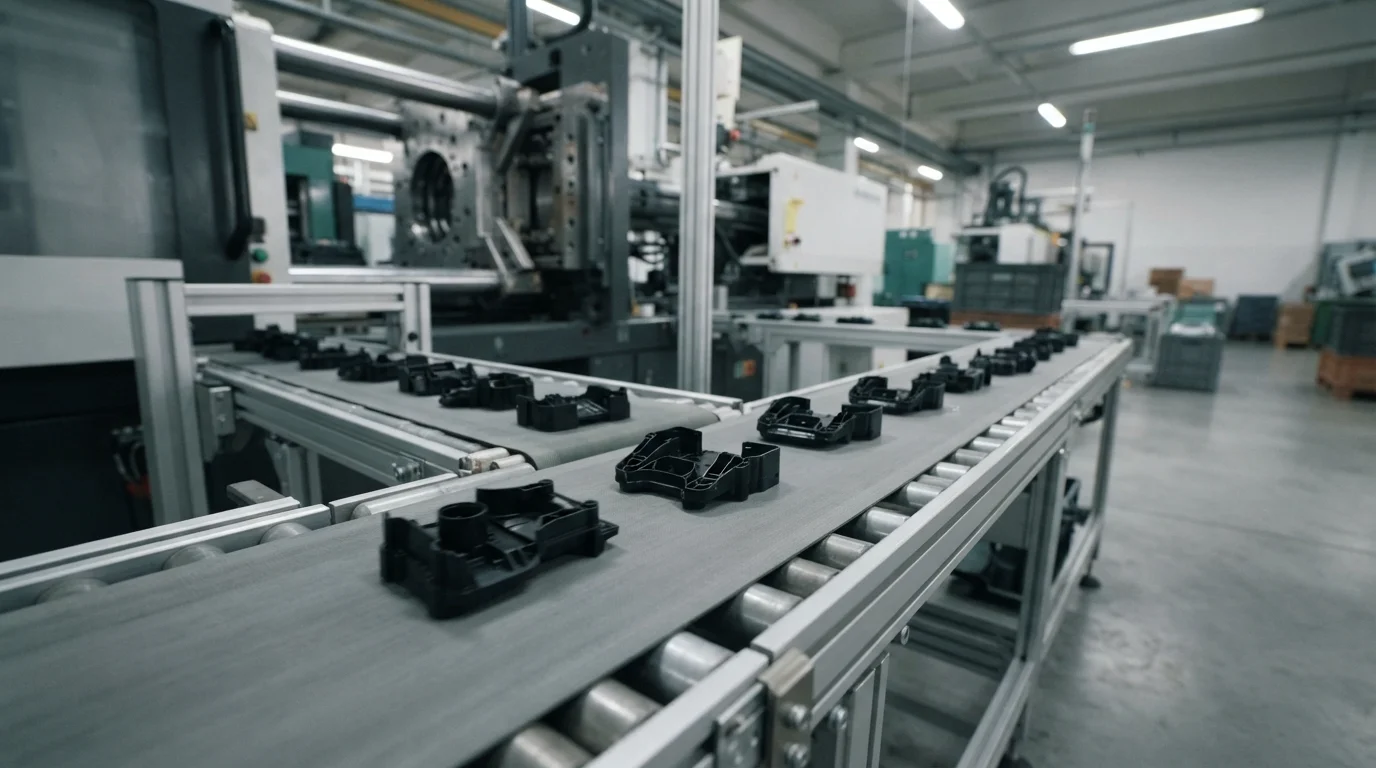
Filling early market demand or supporting clinical pilot trials requires flexible bridge manufacturing options. Low-volume bridge production supplies 100 to 5,000 production-grade parts, generating revenue while multi-cavity hardened steel tools undergo fabrication. Capturing real-world molding parameters—such as exact resin shrinkage, gate freeze time, and cavity pressure—informs final production mold design. Bridge runs can reveal tooling and process risks, but do not guarantee first-pass success. Recheck the required dimensions and performance with samples from the final production tool and process.
Frequently Asked Questions (FAQs)
Why is prototype injection molding superior to 3D printing for functional testing?
The best prototype process depends on what needs testing. Prototype molding in the intended grade can help evaluate molding-dependent behavior, but using the same resin does not make a bridge tool equivalent to the production tool. Confirm fit and any required mechanical, thermal or electrical performance on parts made with the final cavity, gate, cooling and process settings.
What is the difference between aluminum rapid molds and P20 steel molds?
Aluminum molds (Al7075-T6) offer faster CNC machining speeds and superior thermal conductivity, making them ideal for quick-turn prototype runs of 100 to 2,000 parts using unfilled resins. Pre-hardened P20 soft steel molds provide higher wear resistance against abrasive glass-filled or flame-retardant polymers, extending tool life up to 10,000 shots.
How does prototype tooling help optimize high-volume production mold design?
Molding parts in a rapid prototype tool collects real-world processing data, including actual polymer shrinkage rates, knit line formations, and cooling behavior. Analyzing this physical molding data allows engineers to refine gate locations and pre-compensate core steel dimensions before cutting expensive multi-cavity production molds.